
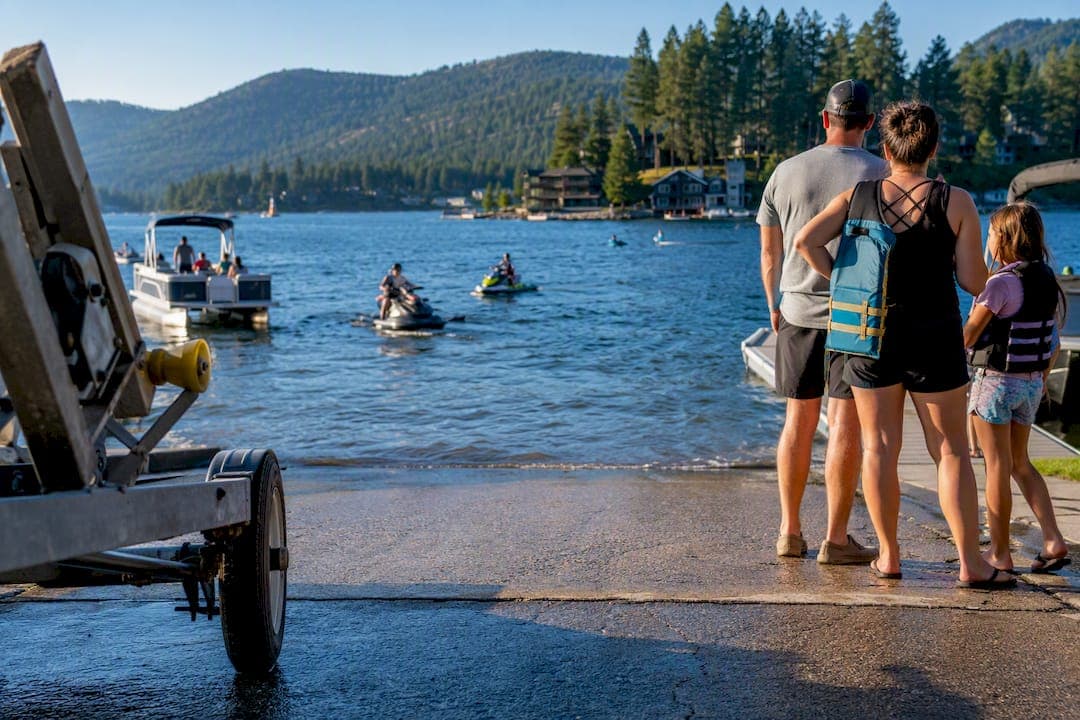
Boat ramp etiquette comes down to one rule: do your prep in the staging area, launch fast, and clear the lane the second your trailer is off the ramp. The moment you arrive, pull into the staging area first, not the launch lane, and run your quick prep checklist (drain plug, dock lines, winch ready) before you ever back down. This mirrors what Discover Boating and most state DNR offices recommend to keep public ramps moving.
TL;DR:
- Most ramp delays stem from incomplete prep in staging areas, including missing drain plugs, loose transom straps, and untested engines, which slow launch times.
- Proper backing technique using mirrors and low-hand steering reduces jackknifing and shortens ramp wait times, especially for beginners.
- Retrieving boats efficiently requires waiting for trailers and securing them before finishing staging, to avoid ramp congestion and damage.
- Right-of-way goes to the first-come, first-served for launching, with conflicts best resolved by ramp staff or local customs rather than aggressive behavior.
- Keeping wake and noise levels low near docks, and cleaning trailers of weeds and vegetation, helps maintain safe and courteous public ramp environments.
Table of Contents
- What to Prep in the Staging Area Before You Back Down
- How to Launch Your Boat Quickly and Safely
- The Right Way to Retrieve Your Boat Without Blocking the Ramp
- Common Ramp Mistakes and Who Actually Has the Right of Way
- Wake, Noise, and Courtesy Near the Ramp
- Safety Checks and Clean, Drain, Dry Before You Leave
- Your One-Screen Ramp Checklist
- What Rental Guests Teach Us About Ramp Mistakes
- Why Small Courtesies Keep Ramps Usable for Everyone
- Sources
What to Prep in the Staging Area Before You Back Down
A ramp lane is for launching and retrieving, not for tying your shoes and rigging fenders while three trucks idle behind you. Every task that can happen away from the water should happen there.
Handle this in staging:
- Install the drain plug (the number one forgotten item at any ramp)
- Attach dock lines to bow and stern, and set fenders out
- Remove transom straps and coil them so they don't tangle underfoot
- Confirm the engine starts and idles before you commit to backing down
- Disconnect trailer lights if they aren't waterproof
- Confirm your parking permit or day pass is paid and displayed
If you're launching with a crew, assign roles before you move: one person drives and backs the trailer, one handles dock lines, one deals with the truck and parking. Oregon's Marine Board specifically calls out finishing prep in staging as the biggest single factor in keeping launch lanes moving.
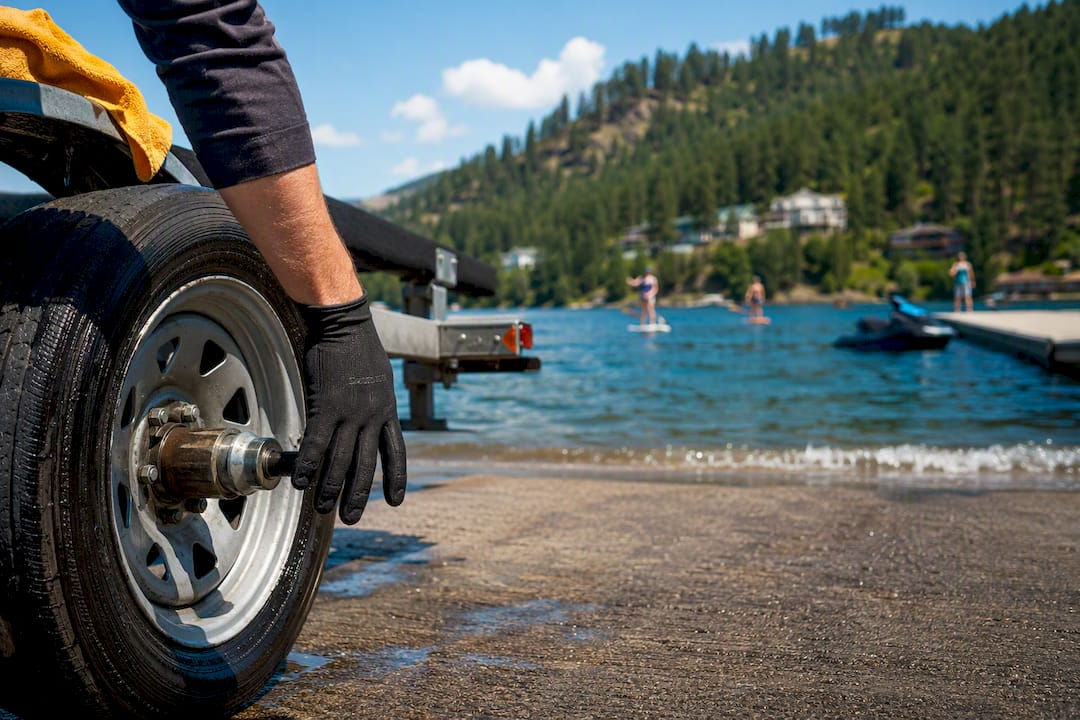
Pro Tip: If you towed any real distance on a hot day, touch your trailer hubs before backing down. If they're too hot to hold, wait a few minutes. Dunking scorching hubs into cold lake water can crack them from thermal shock.
How to Launch Your Boat Quickly and Safely
Once you're waved forward, the clock is running, not because anyone's rude, but because every extra minute you spend in the lane is a minute someone else waits. Here's the sequence that keeps it tight:
- Back down slowly, using your mirrors. Don't crane your neck out the window; watch both mirrors and adjust in small corrections.
- Use the low-hand steering trick. Put your hand at the bottom of the steering wheel. Move it left, and the trailer goes left in your mirrors. It sounds backwards until you try it, then it clicks. Discover Boating recommends this exact technique for a reason: it removes the guesswork that causes most jackknifed trailers.
- Stop at the right depth. You want the boat floating just off the bunks or rollers, not still resting on them.
- Unhook the winch, then the safety chain, in that order. Never reverse it. The chain is your backup if the winch line lets go.
- Start the engine before you release anything. You want power ready the instant the boat is free.
- Move immediately to the courtesy dock or hold just offshore. Tie off or idle clear of the lane so your truck and trailer can pull out.
Backing a trailer is the single moment most beginners dread, and it's also where most ramp bottlenecks start. A calm, repeatable routine that begins back in staging, not at the water's edge, is what actually removes the stress, according to boat launching guides like BetterBoat. Rushing the backing step is how trucks end up jackknifed sideways in the lane while six boats wait behind them.
The Right Way to Retrieve Your Boat Without Blocking the Ramp
Retrieval causes more ramp gridlock than launching does, mostly because drivers try to do everything at once instead of in sequence.
- Tie off at the courtesy dock or hold offshore while your driver goes to get the truck and trailer.
- Wait until the trailer is backed into position before you approach; don't idle toward an empty ramp lane hoping it clears faster.
- Center the boat on the trailer and load gently. Power-loading (gunning the engine to winch the boat up under its own power) digs out the ramp bed and creates holes that damage other trailers. Idle it on, let the bunks catch it.
- Secure the winch line, then the safety chain, and immediately pull the vehicle and trailer out of the lane, even if you're not fully strapped down yet.
- Finish everything else in staging: transom straps, trailer lights, and pulling any aquatic weeds off your trailer and prop.
That last step matters more than most boaters realize. Idaho Fish and Game notes that ramps run smoothest when retrieval order follows the same first-come courtesy as launching, so holding your spot in line and finishing details off the ramp keeps everyone moving.
Common Ramp Mistakes and Who Actually Has the Right of Way
Most ramp conflicts trace back to the same handful of habits. Here's what to avoid:
- Rigging or de-rigging your boat while parked in the launch lane
- Parking your truck and trailer across multiple spaces or blocking the turnaround
- Tying your boat directly to the ramp itself instead of the courtesy dock
- Blasting music loud enough to drown out conversation on nearby docks
- Walking away from a running vehicle or an unattended trailer in the lane
As for right-of-way, it's simpler than people assume: it's first-come-first-served for launching. Whoever backs down next follows arrival order at the lane, not who's loudest or biggest. Retrieval can work the same way or follow a dock queue, and local custom varies enough that it's worth watching what regulars do for a minute before assuming. If someone's clearly new and fumbling, offer to help instead of honking or muttering. If a real conflict flares up, don't argue in the parking lot. Loop in ramp staff or local authorities and let them sort it.
Wake, Noise, and Courtesy Near the Ramp
Wake and volume complaints are the ramp friction nobody talks about until it's their dock getting hammered.
- Keep meaningful distance from docks, moored boats, and swimmers. Even at low speed, wake boats can throw enough water to rock nearby craft and chew up shoreline, a concern serious enough that North Carolina's wildlife agency built dedicated guidance around it.
- If your music can be heard clearly from about 80 feet away, turn it down. That's roughly the distance from one dock slip to the next.
- Don't make repeated passes right off the ramp or a private dock. One reasonable run and move on. Circling the same 200 yards all afternoon is how erosion complaints and noise complaints both start.
Minnesota's DNR frames all of this as simply an extension of safe seamanship, not just politeness for its own sake, and treats wake behavior as part of respecting property and other boaters on the water.
Safety Checks and Clean, Drain, Dry Before You Leave
Run your engine blower before starting up, and check fuel, battery, and flares before you back down, not after you're already in the lane.
- Drain live wells and bilge water before you tow away
- Pull off any visible weeds, mud, or vegetation clinging to your trailer or prop
- Dispose of bait bucket water on land, never back into the lake
- Let hot trailer hubs cool before submerging them again on your next launch
This routine, often called Clean, Drain, Dry, is standard guidance across state agencies because a few minutes of effort keeps invasive species from hitching a ride to the next lake you visit.
Your One-Screen Ramp Checklist
| Stage | Quick actions |
|---|---|
| Staging | Pay/permit confirmed, drain plug in, dock lines attached, straps off, engine tested |
| Launch | Back down slowly, stop at proper depth, unhook winch then chain, move boat to dock, clear trailer |
| Retrieve | Tie off, wait for trailer, center boat, secure winch and chain, move vehicle to staging |
Print it, screenshot it, tape it to your dashboard. It covers the entire trip in three rows.
What Rental Guests Teach Us About Ramp Mistakes
Renting boats and jet skis all season means watching the same small mistakes repeat themselves. Forgetting the drain plug tops the list, followed closely by leaving transom straps on until the last second and showing up without dock lines already attached.
- Check your plug twice. Once in staging, once right before backing down.
- Rig your lines and fenders before you're in line, not after.
- If you're new to a specific ramp, our Liberty Lake launch guide walks through the exact local layout.
- First-time renters should also skim our lake rental tips guide before their trip.
If you'd rather skip a crowded public ramp entirely, ask about delivery options that put the boat in the water for you before you arrive.
Why Small Courtesies Keep Ramps Usable for Everyone
Ramp etiquette isn't really about rules; it shares principles with surf etiquette basics every beginner needs to know, emphasizing respect and courtesy for all users. It's about the fact that one distracted boater can turn a five-minute launch into a twenty-minute backup for everyone behind them. The staging-first approach works because it separates the parts of boating that require patience from the parts that require speed, and it keeps those two things from colliding in the one spot where colliding causes the most damage: the lane itself.
If you're renting for the first time and want a local launch walked through step by step, our team is happy to talk you through it before you ever back down. Consult our local launch guides or call ahead. A little patience at the ramp, and a little preparation beforehand, is what keeps the whole system working for the next boater in line.
— Life is better on water.
Ready to skip the guesswork on your next outing? Golden Water Sports offers jet ski and boat rentals near Coeur d'Alene with flexible hours and gear that's staged and ready before you arrive, so your first trip to the ramp is a smooth one. If you're headed to Newman Lake or Liberty Lake, check our Newman Lake jet ski rental or Liberty Lake jet ski rental pages for location-specific options that can help you avoid the busiest public launch windows altogether.
Sources
- Discover Boating
- Oregon State Marine Board: Courtesy and Etiquette
- Idaho Fish and Game: Boating etiquette
- NC Wildlife: Wake responsibly