

Renters, not rental companies, generally cover the cost of damage to a boat unless a waiver or insurance policy says otherwise. A damage waiver typically costs an amount in the tens of dollars per rental and can cap what you owe out of pocket. Take your own photos before you leave the dock, insist on a signed condition checklist, and you'll avoid most disputes before they start.
TL;DR:
- Most damage costs for boat rentals are under a few hundred dollars for cosmetic issues, but serious damage like groundings or drivetrain failures can reach thousands.
- Operators usually place a hold on your card, which is temporary, and only charge after documented damage with a repair estimate within a standard notification window of 48 hours.
- Damage waivers cost around $25 to $75 per day, covering repair costs up to about $1,000, making them worth considering for boats with higher potential repair bills.
- Personal boat insurance generally does not cover damage to rental boats, so renters should verify coverage and consider additional protection before booking.
- Proper documentation, including photos and signed condition checklists, can prevent disputes if damage charges are later applied, and rental companies should clearly disclose policies upfront.
Table of Contents
- What Do Boat Rental Damage Charges Typically Cost?
- How Do Deposits, Holds, and Charges Actually Work?
- Are Damage Waivers Worth Buying?
- Will Your Own Insurance Cover a Rental?
- What to Do If You're Charged for Damage
- What Transparent Rental Policies Look Like
- Prevention Beats Every Dispute
- How Golden Water Sports Handles Deposits and Waivers
- Sources
- FAQ
What Do Boat Rental Damage Charges Typically Cost?
Costs split into two camps: cheap, common, and annoying, or rare and expensive. A scuffed gelcoat panel or a small upholstery tear usually runs tens to a few hundred dollars. A bent or nicked propeller can cost several hundred dollars depending on the boat. Beyond that, the numbers climb fast.
- Cosmetic damage (scratches, minor gelcoat chips): generally a few hundred dollars
- Upholstery tears or stains: moderate repair costs
- Propeller damage: moderate to higher repair costs depending on the prop type
- Electronics damage (GPS units, stereos, depth finders): can be several hundred up to around a thousand dollars
- Lower-unit or drivetrain failure from grounding: often costs can be in the thousands range
Marine-industry cost breakdowns point to hull and lower-unit repairs as the biggest financial risk in any rental fleet, and a single grounding incident can wipe out several months of a waiver's premium in one afternoon, according to LendControl's boat insurance guide. Running aground, hitting a submerged rock, or clipping a dock at speed are the scenarios that turn a $200 problem into a $3,000 one. Everyday scuffs and minor prop nicks are far more common than catastrophic failures, but it's the rare event that actually determines whether a waiver was worth buying.
How Do Deposits, Holds, and Charges Actually Work?
Most operators put a hold, not a charge, on your card before you leave. A hold is a temporary authorization; it disappears from your statement within 3 to 7 business days if nothing gets damaged. A charge is different: it's an actual withdrawal, and it should only happen after documented damage and a real repair estimate.
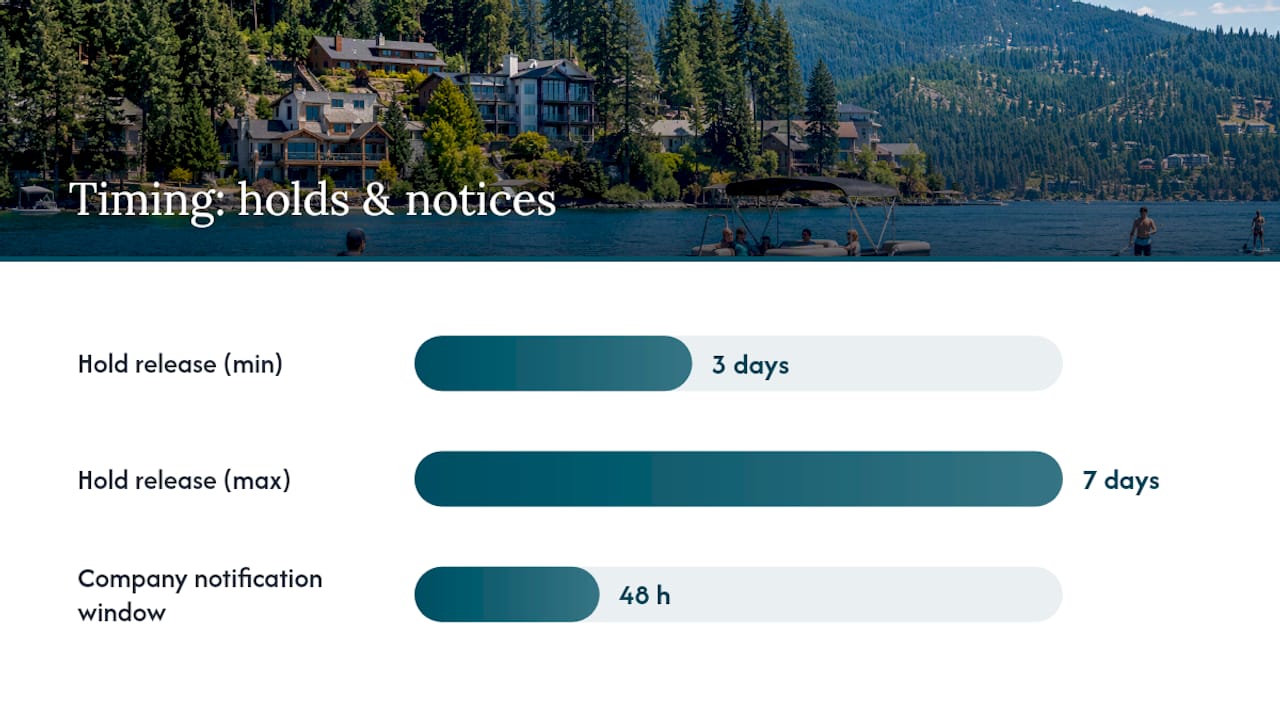
Hold amounts usually scale with the boat. For example, larger or more valuable boats carry higher holds. Operators who set deposit amounts based on a boat's actual repair history, rather than one flat number for the whole fleet, tend to see fewer disputes and better outcomes at checkout, according to EquipDash's damage-policy research.
Before you leave the dock, confirm these four things:
- The exact hold amount and how many days it takes to release
- Whether a damage charge (if one happens) arrives as a written letter with photos and a repair invoice
- The window the company has to notify you (48 hours is the common industry standard)
- Who signs the pre-rental condition checklist, and whether you get a copy
Pro Tip: Ask the staff to walk the boat with you and photograph every existing scratch together before you sign anything. A joint inspection, not a solo one, is what actually protects you later.
Are Damage Waivers Worth Buying?
A damage waiver is basically an insurance-lite product the rental counter sells you at checkout. It typically costs tens of dollars a day and covers the first several hundred to around a thousand dollars of repair costs, sometimes more depending on the operator. That's the entire trade: a small guaranteed cost now versus an unknown, potentially large cost later.
- Waivers almost always exclude damage from reckless operation, operating while intoxicated, or letting an unauthorized driver take the wheel
- Coverage caps vary. Read the dollar limit, not just the word "covered"
- Usage-based renter insurance products, like Buoy's per-trip coverage, can offer hull protection alongside liability limits up to $500,000 per person and $1,000,000 per occurrence in some plans, well beyond what a standard operator waiver includes
The decision rule is simple: compare the waiver's daily price to the worst realistic repair bill for the boat class you're renting. For example, a modest waiver may be worth buying if potential repair costs for the specific boat class are significant.
Will Your Own Insurance Cover a Rental?
Probably not the way you'd hope. Personal boat insurance often covers liability, meaning injury or property damage you cause to someone else, but it typically excludes damage to the rented boat itself, according to Progressive's boat rental insurance guidance. That gap catches a lot of renters off guard.
- Personal boat insurance: usually covers liability to others but generally does not cover damage to the rental craft itself.
- Homeowners insurance: may cover a third-party injury claim in rare cases, almost never hull damage
- Credit card protection: some cards offer purchase protection or a dispute process, but that's not the same thing as an insurance payout, and coverage varies wildly by card issuer
Call your insurer before you book, not after you're billed, and get the answer in writing. A five-minute phone call beats a $2,000 surprise every time.
What to Do If You're Charged for Damage
Getting hit with a damage charge doesn't mean you have to pay it without question. Move fast and stay organized.
- Preserve everything immediately. Save the dispatch photos, take your own return photos from multiple angles, and request a written damage report on the spot.
- Request the paperwork. Ask for the itemized repair invoice or a third-party marine-shop estimate, and check that the charge letter arrived within the operator's stated notification window, commonly 48 hours.
- Compare timelines and evidence. If the company can't produce timestamped photos or a signed pre-rental checklist, the charge is much harder for them to defend.
- Negotiate before disputing. Ask about splitting costs, especially if the "damage" looks like normal wear. Most reasonable operators will talk.
- File a chargeback only as a last resort, and include your own photos, the rental agreement, and any email correspondence in the dispute package.
- Consider small claims court only if the amount is significant and the operator won't produce documentation. This is rare.
Pro Tip: Send your dispute in writing, not by phone. A paper trail is what actually wins these arguments, not a tense phone call with a manager.
What Transparent Rental Policies Look Like
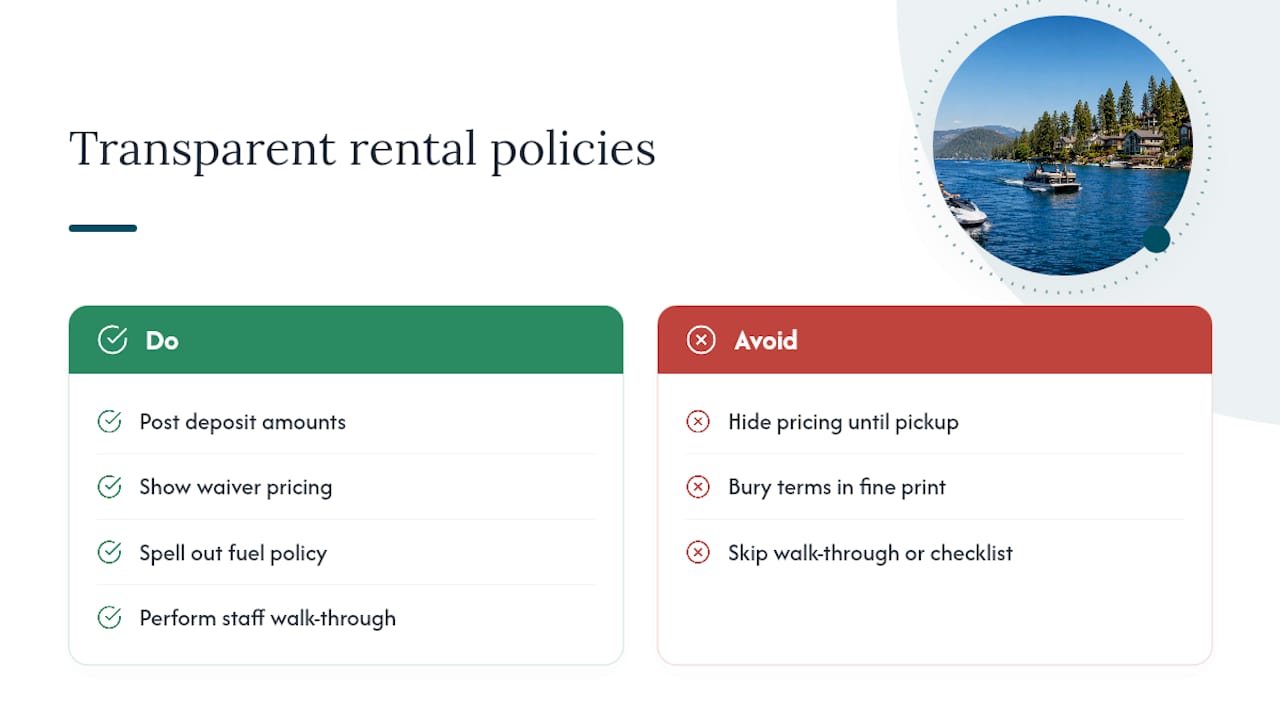
A trustworthy rental company puts its numbers where you can see them before you book. That means posted deposit amounts, waiver pricing, and fuel policy spelled out on the pricing page, not buried in fine print at pickup. It also means a staff-led walk-through and a signed condition checklist every single time, no exceptions.
If a company won't show you pricing until you're standing at the counter, that's worth noticing. Readers comparing their own rental terms should look at how policies get disclosed in a rental agreement for watercraft and how pricing structures typically work across the industry.
Prevention Beats Every Dispute
Most damage charges trace back to something preventable: unfamiliarity with the boat, running too fast near shore, or skipping the safety briefing. USCG accident data consistently shows operator inexperience and grounding among the leading causes of boating incidents. A calm approach to documentation resolves nearly everything else.
— Life is better on water.
How Golden Water Sports Handles Deposits and Waivers
Some rental companies keep deposit amounts and waiver pricing visible on the booking page, so you know your exposure before you ever touch a throttle.

Every rental can start with a walk-around and a condition checklist signed together with staff, a practice that helps keep disputes rare. If you're weighing a waiver against the risk of a bigger repair bill, check the current prices and deposit details before your trip. Planning to bring the family out on a jet ski instead? The Newman Lake rental page and the Liberty Lake rental page both list availability and pricing so you can book with the numbers already in hand.
Sources
- Boat rental insurance (Progressive)
- Buoy — usage-based insurance overview
- Boat Damage Deposits & Customer Communications | EquipDash
FAQ
How Much Does a Damage Waiver Cost?
Most damage waivers run $25 to $75 per rental day, and they typically cover the first $500 to $1,000 of repair costs depending on the operator.
How Much Is Boat Insurance on a $20,000 Boat?
Personal boat insurance costs vary by coverage level and boat type, but it's a separate policy from a rental waiver and, per Progressive, usually won't cover damage to a boat you're renting rather than one you own.
What Does a Rental Damage Waiver Actually Cover?
A standard waiver covers a set dollar amount of accidental damage to the hull, engine, or equipment, but it almost always excludes reckless operation, intoxication, and unauthorized drivers.
What Happens When You Damage Rental Equipment?
The operator documents the damage with photos, gets a repair estimate, and typically sends a written charge letter within 48 hours; you can request the invoice and dispute the charge if the documentation is incomplete.