
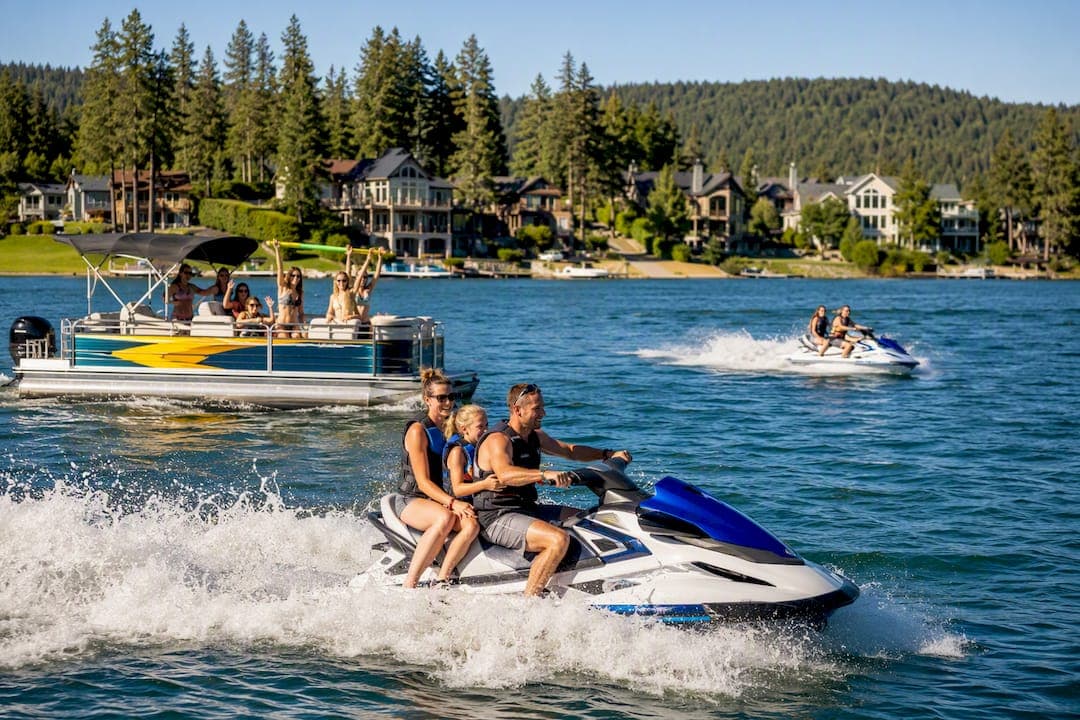
Alcohol is not banned outright on Golden Water Sports rentals, but operating a Yamaha WaveRunner or any rental boat while impaired is. The operator must stay sober from launch to return; passengers may drink responsibly while anchored or docked. Break that rule and staff will end your rental on the spot, keep your security deposit, and hold you liable for any damage that follows.
TL;DR:
- Operators must remain sober from launch to return, with no alcohol consumption allowed at any point during the rental, regardless of whether the craft is underway or anchored.
- Passengers are permitted to drink while the vessel is docked or anchored, but glass containers are strictly banned for safety reasons.
- The security deposit is at risk if impairment leads to damage, with the possibility of forfeiture and liability for repair or towing costs.
- Staff conduct pre-rental safety and sobriety checks; arriving impaired or without proper ID typically results in rental denial or rescheduling.
- The legal blood alcohol limit for boat operators in Idaho is 0.08%, but the company enforces a stricter, zero-tolerance policy for anyone controlling the craft.
Table of Contents
- What Are the Coeur d'Alene Boating Alcohol Rules at Pickup?
- Who Covers Damage and Deposits If Alcohol Is Involved?
- What Safety Gear and Checks Happen Before You Launch?
- What Do You Need to Bring at Pickup?
- How Do You Protect Your Deposit and Have a Safer Day?
- What Happens If There's an Accident or Injury?
- What Are Idaho's Legal BAC Limits for Boat Operators?
- Are Open Containers Allowed on Lake Coeur d'Alene?
- How Does Coeur d'Alene Enforce Boating Under the Influence?
- Why Does Alcohol Hit Harder on Coeur d'Alene's Water?
- A Note From Golden Water Sports on Why This Policy Exists
- Ready to Book Your Coeur d'Alene Rental?
- Where to Verify These Details
- Sources
What Are the Coeur d'Alene Boating Alcohol Rules at Pickup?
Golden Water Sports built its alcohol policy around one idea: the person driving stays clear-headed, full stop. Everyone else on board has more flexibility, but only once the craft is stopped and secured.
Here's the breakdown renters need before they ever touch a throttle:
- Allowed: Passengers may drink while the boat or WaveRunner is anchored, docked, or otherwise not underway.
- Prohibited: No alcohol consumption by the operator at any point during the rental, moving or not.
- Prohibited: Glass containers of any kind. Rental agreements built around this equipment flag glass as a banned item on every trip, since a shattered bottle on a jet ski deck is a hazard nobody wants to deal with mid-lake.
- Operator standard: Whoever runs the throttle must hold a valid license or state-required boater education card and show no signs of impairment.
- Sober operator rule: If your group plans to drink, designate one person as the operator for the entire outing. Trading the wheel between people who've been drinking doesn't satisfy the policy.
- Consequences: Staff who suspect impairment will end the rental immediately, forfeit the security deposit, and bill for any resulting damage or towing fees.
That last point isn't a formality. Golden Water Sports staff are trained to make that call at the dock, not after something goes wrong on the water.
Who Covers Damage and Deposits If Alcohol Is Involved?
Every rental starts with a refundable security deposit, and alcohol-related incidents are the fastest way to lose it. A common example in the industry is a $500 refundable deposit held against damage to the craft, trailer, or included gear. It gets returned once the equipment comes back in the condition it left in.
Renters carry more responsibility than most people expect walking in:
- You're financially responsible for damage to the jet ski, boat, trailer, or accessories during your rental window, including damage caused by negligent operation.
- If alcohol contributed to an accident, that shifts the incident from "unfortunate" to "renter negligence," which affects both your deposit and any injury or property claims that follow.
- Rental FAQ guidance makes clear that operators remain responsible for damage or negligent acts committed while they control the craft, deposit or no deposit.
- Check your own auto or homeowner's policy for non-owned watercraft coverage before you rent. Golden Water Sports' liability protections don't extend to cover a renter's own negligence, and FAQ guidance from rental operators recommends confirming your personal coverage ahead of time rather than assuming you're protected.
Think of the deposit less as a formality and more as skin in the game. It's there so everyone treats the equipment, and the lake, the way they would if it were their own.
What Safety Gear and Checks Happen Before You Launch?
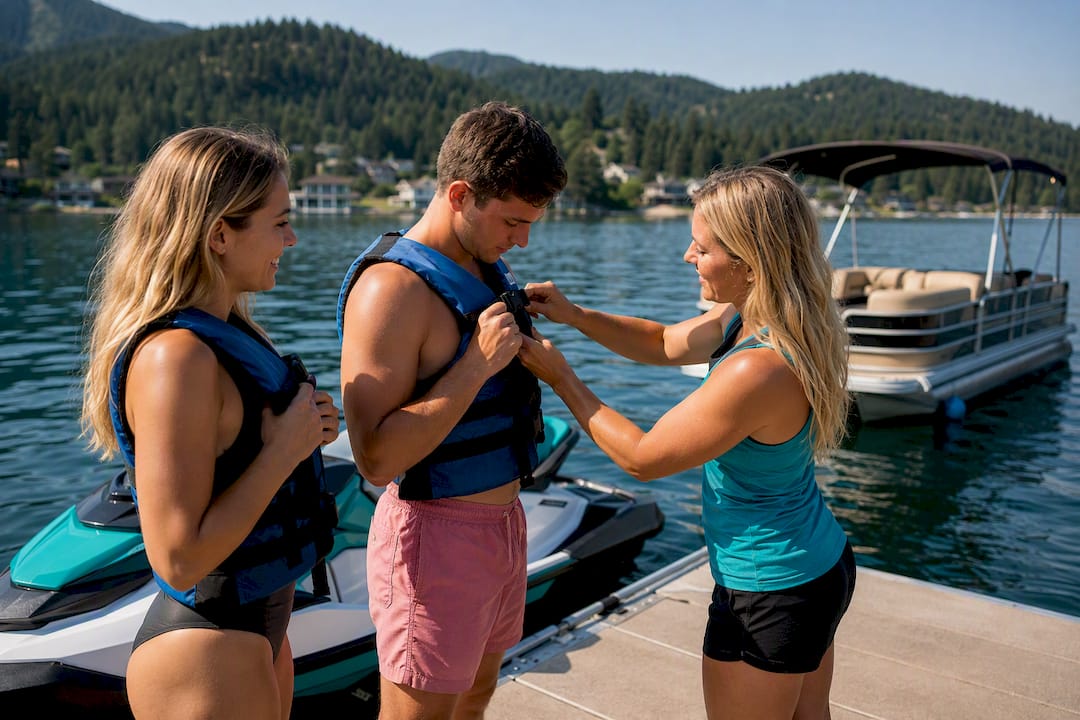
Every rental includes the equipment you'd expect from a company that puts safety first, plus a walkthrough that doubles as an informal sobriety check with sailing vacation safety tips that actually matter. Golden Water Sports provides Coast Guard–approved life jackets and safety kits with each WaveRunner and boat rental, along with an anchor and other required gear depending on the craft.
Before anyone leaves the dock, staff run through:
- A hands-on demo of throttle, steering, and shutoff controls specific to that craft.
- A rundown of local hazards, no-wake zones, and traffic patterns particular to that day's launch site.
- Trailer and tow setup instructions for anyone hauling a WaveRunner to a different lake.
- Life jacket fit and required use for every passenger, not just the operator.
That orientation isn't just a courtesy. It's also where staff get their clearest look at whether an operator is fit to run the equipment. If someone shows up glassy-eyed or slurring, staff have the standing to refuse the launch entirely, delay it, or hand the controls to a different member of the group.
Pro Tip: Show up to your pre-rental orientation before anyone starts drinking, even if the plan is to relax later. Staff remember who paid attention during the safety walkthrough, and that goodwill matters if a question comes up later about how the craft was operated.
What Do You Need to Bring at Pickup?
Pickup windows exist for a reason beyond scheduling. They give staff a clear window to check documentation and gauge everyone's condition before the keys change hands.
Bring these to avoid delays:
- A valid photo ID and a credit card on file, standard practice across rental agreements for security and damage coverage.
- A signed liability waiver, which you can often complete ahead of time to speed up the dock process.
- An appropriately rated tow vehicle and hitch if you're trailering a WaveRunner offsite.
If a renter arrives without ID, without a card, or showing signs of impairment, staff will decline the rental. That typically means rescheduling, and depending on the situation, forfeiting part of your booking. Current pricing and pickup windows are posted online, and it's worth checking them the morning of your trip since seasonal hours shift.
How Do You Protect Your Deposit and Have a Safer Day?
Most deposit losses trace back to a handful of avoidable decisions, and nearly all of them involve alcohol in some form. Picking one sober operator for the whole day, not a rotation, is the single biggest factor.
A few practical habits go a long way:
- Name one operator for the entire rental and stick with them. Swapping the wheel among people who've had a few drinks defeats the purpose of the rule.
- Use plastic cups and soft-sided coolers instead of glass. It's required, and it's also just smarter around water and rocking decks.
- Stay hydrated. Sun and lake heat accelerate the effects of alcohol faster than most people expect, which catches even experienced drinkers off guard.
- Respect the passenger and weight limits printed on your rental agreement. Overloading a WaveRunner because "everyone wants a turn" is its own safety risk, alcohol aside.
- Line up a sober ride home before you launch. If your group drove separate vehicles, sort out designated drivers or a rideshare plan in advance so nobody's scrambling at 6 p.m.
Pro Tip: Pack a dry bag for phones, keys, and wallets before you launch. A soaked phone at the dock has ruined more people's evenings than a strict alcohol rule ever will. For more first-timer pitfalls, the company's own rundown of common jet ski rental mistakes is worth a read before your trip.
What Happens If There's an Accident or Injury?
If something goes wrong on the water, what you do in the next few minutes matters more than anything that happened before it. Follow this order:
- Stop operation immediately and secure the craft and everyone aboard.
- Call 911 for any injury, no matter how minor it looks at first.
- Notify Golden Water Sports right away, even if the damage seems small.
- Take photos and notes on what happened while details are fresh.
From there, staff assess the equipment, and repair costs typically come out of the security deposit first. Serious incidents get reported to the appropriate authorities, and insurance carriers get looped in when damage or injury exceeds the deposit amount. Continuing to operate after an incident, or failing to report it promptly, is one of the fastest ways to turn a manageable situation into full personal liability. Report early, report honestly, and let the process work the way it's designed to.
What Are Idaho's Legal BAC Limits for Boat Operators?
Idaho treats boating under the influence with the same seriousness as driving under the influence. The state's legal blood alcohol concentration limit for operating a vessel sits at 0.08%, matching the threshold for cars and trucks on the road.
That number applies to anyone at the controls of a powered vessel, jet ski included, anywhere on Idaho waters, Lake Coeur d'Alene among them. Officers don't need a full field test to act on suspicion. Erratic steering, excessive speed near other boats, or an operator who can't answer basic questions during a stop are enough to trigger further evaluation.
What surprises a lot of first-time renters is how fast impairment sets up on the water compared to on land. Sun exposure, wind, engine vibration, and dehydration all compound the effects of alcohol, so a blood alcohol level that might feel manageable in a bar can translate to noticeably slower reaction time at the helm. That's part of why Golden Water Sports holds the operator to a stricter, zero-tolerance standard rather than trying to gauge where someone falls relative to the legal limit. It's simpler, and it's safer, to keep the person driving completely sober rather than cutting it close to a number that hits differently once you're bouncing across wake at 30 miles per hour.
Passengers aren't held to the same operating standard since they're not controlling the craft, but the operator's responsibility for everyone aboard doesn't change based on who's had a drink and who hasn't.
Are Open Containers Allowed on Lake Coeur d'Alene?
Open containers of alcohol are legal for passengers on Idaho waterways, including Lake Coeur d'Alene as long as the person drinking isn't operating the vessel. This is one of the more misunderstood parts of boating law, since it differs sharply from open-container rules for vehicles on public roads.
The distinction that matters is operator versus passenger. A passenger can have a drink in hand while the boat is underway, but the moment that same person takes the controls, they're subject to the same 0.08% standard as any other operator. Glass containers are a separate issue entirely, restricted on most rental equipment regardless of the state's open-container stance, simply because broken glass on a wet deck is a hazard nobody wants to manage on the water.
Public docks and busy summer stretches of the lake add another layer worth knowing. Local launch points get crowded fast during peak season, and Coeur d'Alene's public dock guide covers etiquette and space limits that make a difference when everyone's trying to load or unload gear, cooler included, at the same ramp.
Golden Water Sports' own policy is stricter than what state law technically requires. The company prohibits any operator consumption, period, rather than trying to draw a line based on how many drinks someone has had. That's a deliberate choice, not an overcautious one. State minimums exist as a legal floor, not a safety recommendation.
How Does Coeur d'Alene Enforce Boating Under the Influence?
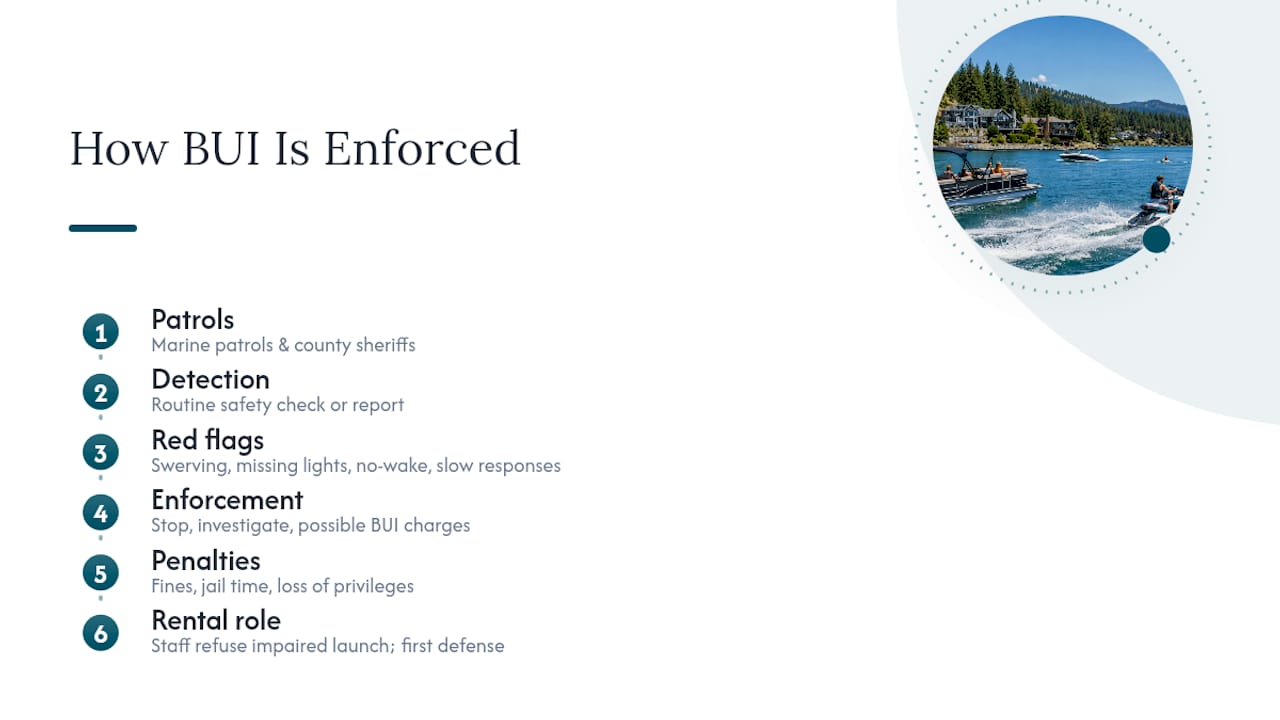
Boating under the influence, commonly shortened to BUI, is treated as a criminal offense in Idaho with penalties that scale with the severity and repeat nature of the violation. Marine patrol officers and county sheriff's deputies actively monitor Lake Coeur d'Alene during peak boating season, particularly on summer weekends when traffic on the water spikes.
Enforcement typically starts with a routine safety check or a report of erratic operation. Officers look for the same red flags they'd watch for on the road: swerving between wakes, running without required lights at dusk, ignoring no-wake zones, or an operator who seems slow to respond to basic questions. A confirmed BUI can carry fines, potential jail time, and loss of boating privileges, with penalties increasing for repeat offenses or incidents involving injury.
Rental companies factor into enforcement more than most renters realize. Staff who refuse to launch an impaired customer aren't just protecting their own equipment. They're also the first line of defense against an incident that could otherwise end up as a law enforcement matter out on the water. That refusal at the dock, while frustrating in the moment for the renter involved, is almost always the better outcome compared to what happens if the same situation plays out an hour later, farther from shore, with less room to course correct.
Lake Coeur d'Alene's size and the volume of boat traffic during July and August mean patrol coverage is real, not theoretical. Assume you'll be seen.
Why Does Alcohol Hit Harder on Coeur d'Alene's Water?
Lake Coeur d'Alene's conditions make alcohol's effects more dangerous than most renters expect walking in. The lake spans roughly 25 miles and draws heavy recreational traffic through summer, meaning an impaired operator isn't just risking their own safety. They're sharing tight channels and open stretches with dozens of other boats, jet skis, paddleboarders, and swimmers.
Heat plays a bigger role than most people account for. Direct sun reflecting off the water, combined with wind and constant engine vibration, accelerates dehydration and amplifies alcohol's effects well beyond what someone would feel on land after the same number of drinks. Reaction time slows, depth perception shifts, and the ability to judge closing speed with another vessel degrades, right as the margin for error on crowded water gets smaller.
Afternoon wind patterns on Coeur d'Alene can also pick up with little warning, kicking up chop that catches inexperienced or impaired operators off guard. An operator who's sharp can adjust speed and course to handle sudden chop. An impaired one often can't react in time.
None of this is meant to scare anyone off the water. It's meant to explain why Golden Water Sports holds its sober-operator standard so firmly. The lake doesn't forgive slow reactions, and neither does a jet ski moving at speed through a crowded bay.
A Note From Golden Water Sports on Why This Policy Exists
We didn't write this policy to be the fun police. We wrote it because we've seen what a good day on the water looks like, and we've seen how fast one bad decision can end it. Every WaveRunner and boat in our fleet gets maintained to a standard we'd want for our own families, and the alcohol policy exists for the same reason the life jackets do: to protect the people using this equipment, not to slow anyone down. Lake Coeur d'Alene is one of the best places in the country to spend a summer afternoon, and the rules we enforce at pickup are what keep it that way, trip after trip, for everyone who rents from us.
— Life is better on water.
Ready to Book Your Coeur d'Alene Rental?
Compared to figuring out your own boat, insurance, and towing setup, renting from Golden Water Sports means you show up, sign the waiver, get the safety walkthrough, and you're on the water within minutes. No trailer maintenance, no storage headaches, no guessing whether your equipment is up to code.
Current rates, availability, and pickup windows are all listed on our pricing and booking page, and it's worth checking before your trip since summer weekends fill up fast. If you're planning a jet ski day at a specific lake, we've got dedicated details for Newman Lake rentals and Liberty Lake rentals as well. Just remember that the rules covered here get enforced at the dock, not just written on a page, so plan your group's drinking around your sober operator, not the other way around. Head to the booking page, pick your date, and reserve your WaveRunner or boat before the slots for your weekend disappear.
Where to Verify These Details
For current terms and to book, visit Golden Water Sports directly. Check current pricing before your trip, and review the local dock guide for launch-day specifics around Coeur d'Alene.