
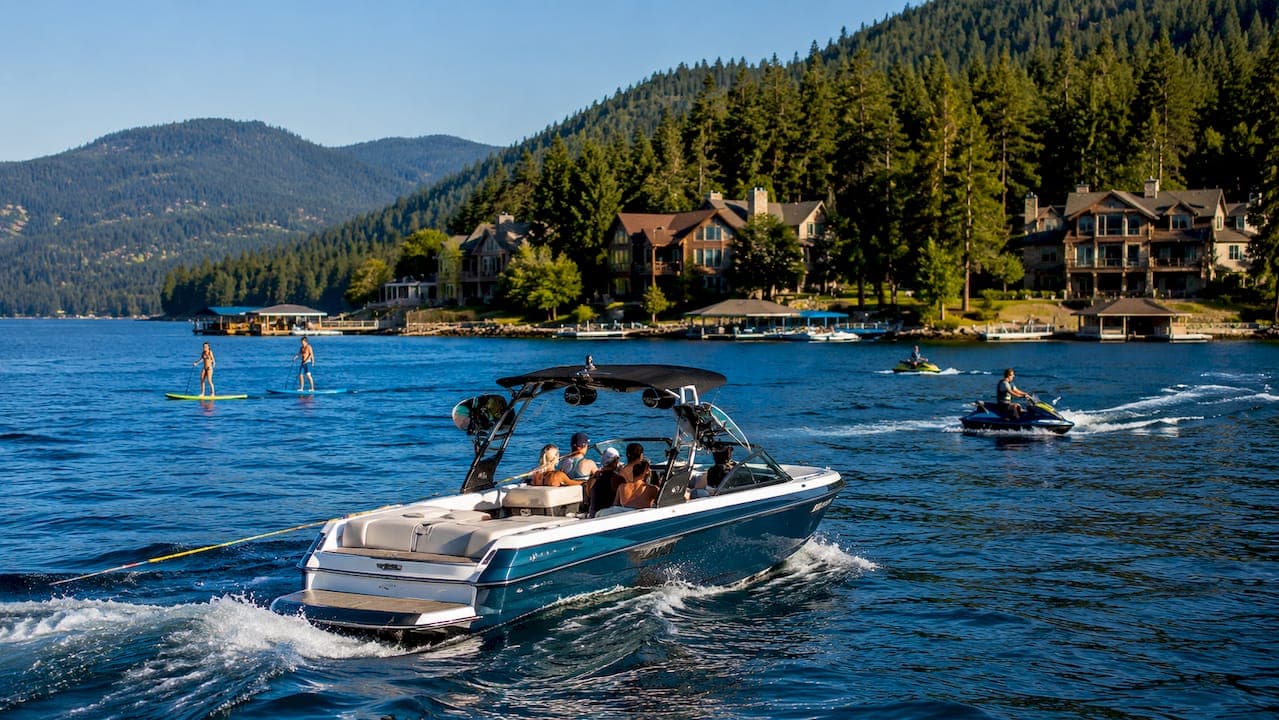
A tow rope behind a ski boat is a specialized line that transmits the boat's pulling power directly to the skier or wakeboarder, making it the single most important piece of equipment for control, balance, and performance on the water. Understanding how tow rope works behind a ski boat goes beyond just clipping a line to the stern. The rope's length, material stretch, and attachment point all determine whether your ride feels smooth and controlled or jerky and dangerous. Get these three variables right, and the difference on the water is immediate.
How does a tow rope work behind a ski boat?
The tow rope functions as a force transfer system. When the boat accelerates, the rope transmits that pulling energy from the boat's tow point to the handle gripped by the rider. The rider uses that tension to rise out of the water, maintain balance, and steer by shifting body weight against the pull.
Rope stretch plays a bigger role than most beginners expect. Stretch stores momentum like elastic energy, smoothing out sudden surges in boat speed so the rider feels a gradual, controlled pull rather than a sharp jolt. This is a design feature, not a flaw. Beginners benefit most from ropes with moderate stretch because it forgives uneven throttle and reduces the chance of a hard fall on startup.
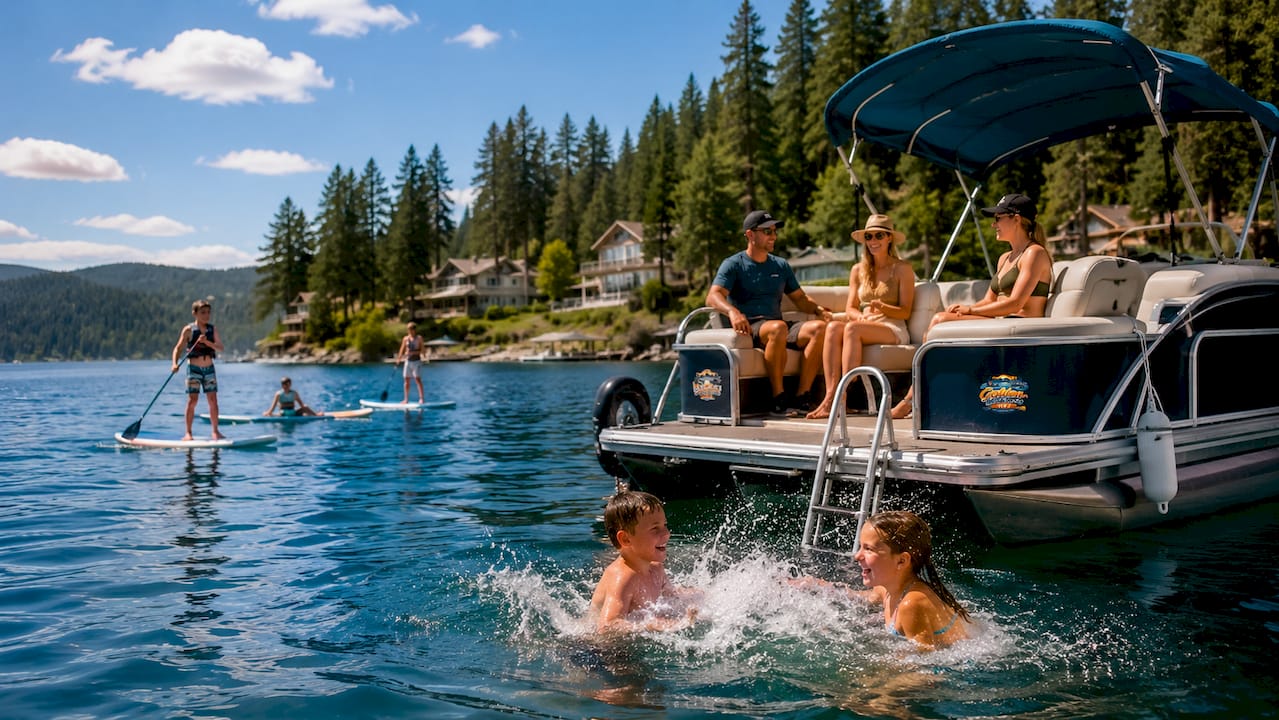
The handle at the rider's end completes the system. Handles for waterskiing are typically straight bars, while wakeboarding handles are wider to allow for tricks and grabs. The rope and handle work together as one unit.
What rope length and stretch work best for each water sport?
Rope length changes everything about how a tow feels. Optimal rope lengths vary by activity: wakeboarding uses 65–75 ft, waterskiing uses approximately 75 ft, and tubing uses 50–60 ft. Shorter ropes place the rider closer to the boat's wake, which is wider and more turbulent. Longer ropes move the rider into cleaner, flatter water.
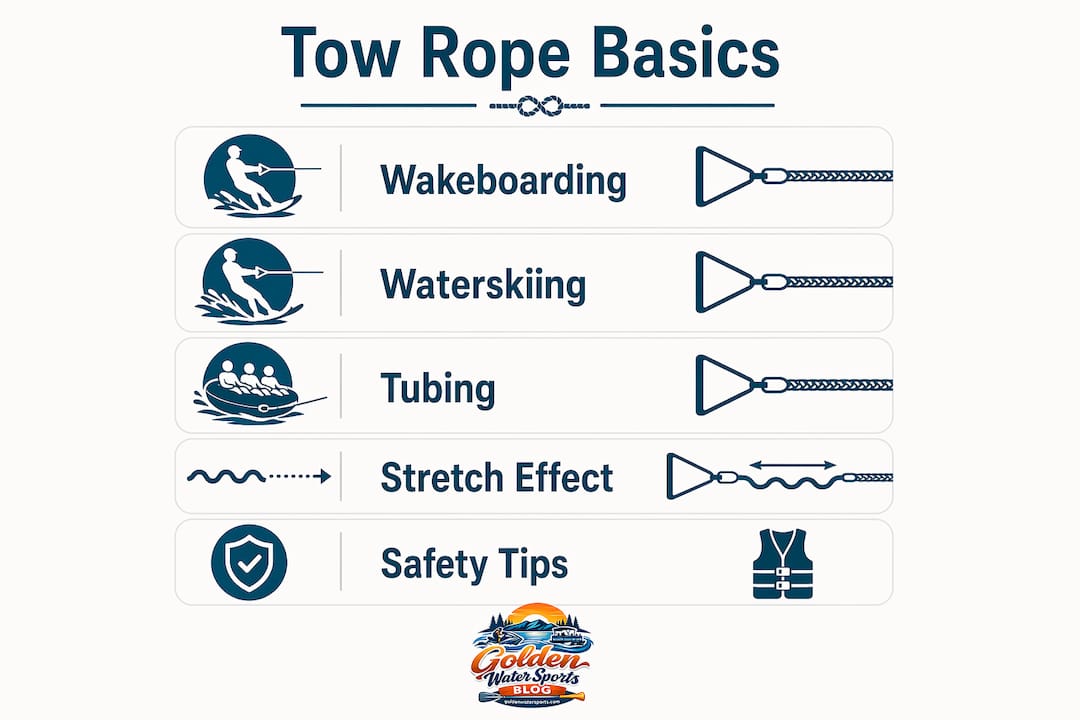
Here is how length and stretch break down by activity:
| Activity | Rope Length | Stretch Level | Why It Matters |
|---|---|---|---|
| Wakeboarding | 65–75 ft | Low stretch | Direct power transfer for tricks and edge control |
| Waterskiing | ~75 ft | Low to moderate | Precision and speed with minimal lag |
| Tubing | 50–60 ft | Higher stretch | Softer pull reduces whiplash for passengers |
| Beginner skiing | ~75 ft | Moderate stretch | Forgives throttle surges during water starts |
Low-stretch ropes, often made from materials like Spectra or Dyneema, give advanced riders the direct, responsive feel needed for jumps and slalom runs. High-stretch ropes, typically made from polyethylene blends, absorb shock and work better for recreational riders and tubing passengers.
- Buoyant ropes float on the surface, making them far safer around propellers.
- Non-buoyant ropes sink and risk fouling the prop if the rider falls.
- Always choose a rope rated for the activity. Tubing ropes handle higher tension loads than ski ropes.
Pro Tip: Start beginner wakeboarders at 65 ft. As their skills improve, shorten the rope in 5 ft increments to move them into the wake's peak for bigger air.
How does tow point position affect your ride?
The tow point is where the rope attaches to the boat, and its height above the water changes the entire character of the pull. Towers and pylons should sit at least 6 ft above the waterline for wakeboarding. That elevation angles the rope upward, which lifts the rider's hands and helps generate the pop needed for jumps and tricks.
Low tow points, like transom eyes mounted near the stern, keep the rope angle flat. This suits tubing and recreational skiing because it improves stability and reduces the chance of the tube or skier flipping. A flat pull is a stable pull.
The structural integrity of the mounting hardware is non-negotiable. Through-bolted connections are mandatory for towers and pylons because the leverage forces at height are enormous. Standard screws risk catastrophic failure under load. A tower that pulls free at speed is a serious danger to everyone on the water.
Outboard motor boats require a tow bridle. A tow bridle routes the rope from two attachment points on either side of the stern to a single centerline tow point, keeping the rope clear of the propeller. Skipping the bridle on an outboard boat is one of the most common and dangerous mistakes in ski boat towing setup.
Pro Tip: If your boat has a wakeboard tower, always use the tower attachment for wakeboarding and switch to the transom eye for tubing. Using the tower for tubing creates an unstable, high-angle pull that can flip the tube violently.
What are the safety rules for towing riders behind a ski boat?
Safe towing requires a qualified driver and a designated spotter on board at all times. Safety regulations mandate that the driver focuses entirely on navigation while the spotter watches the rider and relays hand signals. One person cannot do both jobs safely.
Universal hand signals keep communication clear when engine noise makes shouting useless:
- Thumbs up: speed up.
- Thumbs down: slow down.
- Flat hand, palm down: stop or cut the engine.
- Pat on head: return to dock.
- OK sign: speed and conditions are good.
After a rider falls, the driver must circle back slowly and approach from the downwind side. The engine must be off before the rider gets anywhere near the boat. Propeller injuries during rider recovery are preventable. They happen when drivers idle too close with the engine still running.
Inspect the rope before every session. Look for frays, UV damage, and worn sections near the handle and tow point attachment. A damaged rope can snap under load and snap back toward the rider or the boat with serious force.
Pro Tip: Throw a brightly colored ski flag overboard the moment a rider is in the water. It signals other boaters to stay clear and is required by law in most states.
For more on safe boat operation on regional lakes, Goldenwatersports covers the specifics of driving a ski boat near Spokane Valley.
How do you attach and maintain a tow rope correctly?
Attach the tow rope only to dedicated tow hardware. Mooring cleats cannot handle the dynamic loads of towing and risk ripping free from the deck. Use tow pylons, tow eyes, or wakeboard towers built and rated for the purpose.
Maintenance habits that extend rope life and protect riders:
- Rinse the rope with fresh water after every lake session to remove grit and minerals.
- Store the rope loosely coiled, never tightly wound, to prevent kinks that weaken fibers.
- Keep the rope out of direct sunlight during storage. UV exposure degrades polyethylene and Spectra fibers faster than water use does.
- Replace any rope that shows visible fraying, stiffness, or discoloration near stress points.
- Never leave a rope trailing in the water with the engine running. It takes seconds for a loose rope to foul a propeller.
Proper water toy loading and rope storage before departure prevents tangles and keeps the deck clear for safe boarding. Goldenwatersports staff walk guests through this process at every rental.
If you are planning a day on Lake Coeur d'Alene or nearby lakes, checking a water sports safety guide for general best practices is a smart step before getting on the water.
Key Takeaways
A tow rope works by transferring the boat's pulling force to the rider through a length-matched, stretch-appropriate line attached to a structurally sound tow point.
| Point | Details |
|---|---|
| Rope length by activity | Use 65–75 ft for wakeboarding, ~75 ft for skiing, and 50–60 ft for tubing. |
| Stretch is a feature | Moderate stretch smooths the pull for beginners; low stretch gives advanced riders direct control. |
| Tow point height matters | High points (6+ ft) create lift for tricks; low points improve stability for tubing. |
| Through-bolt all hardware | Towers and pylons must be through-bolted. Standard screws fail under towing loads. |
| Engine off near riders | Always cut the engine before a rider enters or exits the water to prevent propeller injuries. |
What I have learned from watching beginners get this wrong
Most first-timers focus entirely on the rider and ignore the rope setup. That is the wrong priority. A rope attached to a mooring cleat, set to the wrong length, or connected to a low tow point for wakeboarding will produce a frustrating and potentially dangerous experience no matter how athletic the rider is.
The insight that surprises most people is that rope stretch is intentional. Beginners often ask for the "tightest" rope possible, thinking less stretch means more control. The opposite is true. A rope with zero stretch transmits every throttle surge directly to the rider's arms and shoulders. That is exhausting and increases fall risk on water starts.
Elevated tow points are the other area where I see shortcuts taken. A tower bolted with deck screws instead of through-bolts looks fine until someone puts real load on it. The failure is sudden and the consequences are serious. If you are renting a boat and the tow hardware looks improvised, ask questions before you clip in.
The spotter role gets underestimated constantly. Drivers who try to watch the rider and navigate at the same time miss falls, miss signals, and miss other boats. Put a dedicated spotter on board every single time. It is the simplest safety upgrade available and costs nothing.
— Life is better on water.
Goldenwatersports has you covered on the water
Ready to put this knowledge to use on the lake? Goldenwatersports serves Spokane Valley, Liberty Lake, and Coeur d'Alene with ski boats and water sports gear set up correctly from the start.
Every ski boat rental through Goldenwatersports comes with properly rated tow ropes, correct hardware, and a team that walks you through the setup before you leave the dock. No guessing about rope length, no improvised tow points, and no missing safety gear. Whether you are a first-time wakeboarder or an experienced skier looking for a hassle-free day on the water, Goldenwatersports makes it straightforward. Check available boats and rental options for your next lake day.
FAQ
What is the correct tow rope length for wakeboarding?
Wakeboarding uses a rope length of 65–75 ft. Shorter lengths place the rider in the wake's peak for bigger jumps, while longer lengths move them into flatter water for learning.
Can you use any rope to tow a skier behind a boat?
No. Standard ropes and mooring lines cannot handle dynamic towing loads and risk snapping or pulling free from the boat. Always use a rope rated specifically for waterskiing or wakeboarding.
Why does the engine need to be off when a rider is in the water?
Propeller injuries during rider recovery are a leading cause of serious boating accidents. Turning the engine off before the rider approaches the boat eliminates that risk entirely.
What is a tow bridle and when do you need one?
A tow bridle connects to two stern attachment points and creates a single centerline tow point. Outboard motor boats require one to keep the rope away from the propeller during towing.
How often should you inspect a tow rope?
Inspect the rope before every session. Look for fraying, UV discoloration, and stiffness near the handle and attachment ends. Replace any rope showing visible damage before use.