
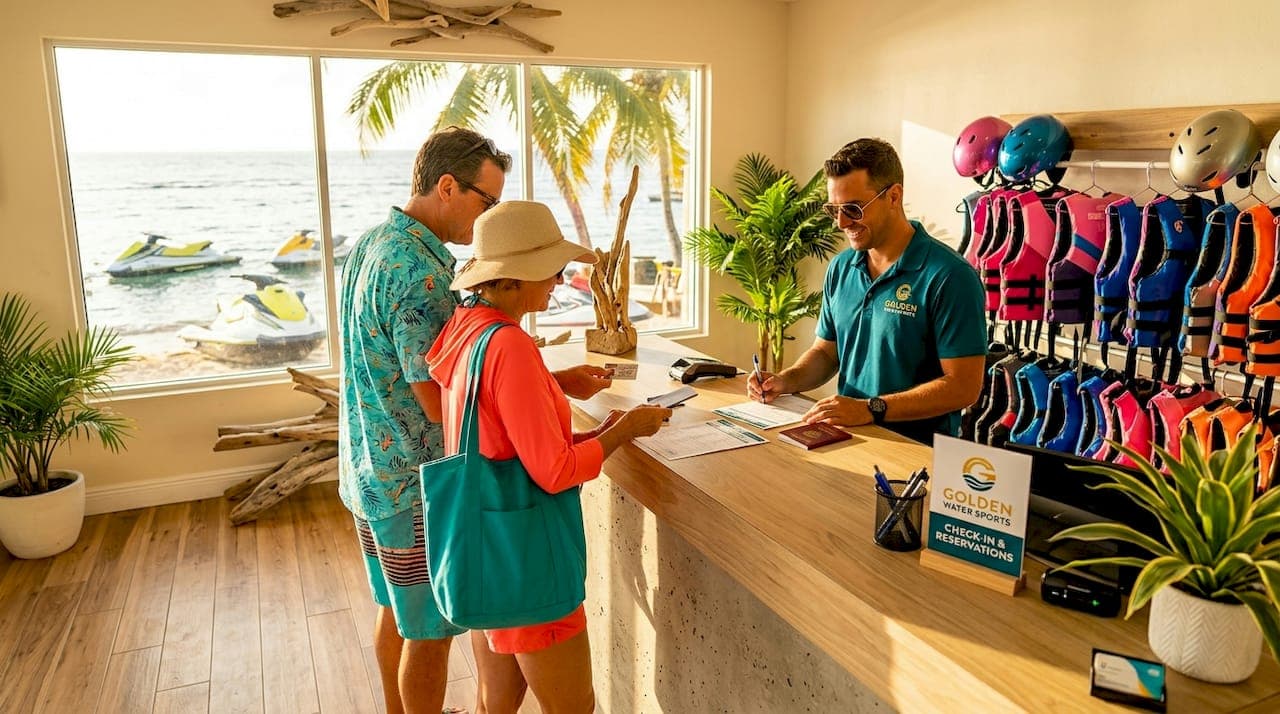
Most first-time renters expect to show up, hand over a credit card, and hit the water in five minutes. The reality of how jet ski rental check-in works is a bit more involved than that, and knowing what to expect makes the whole experience faster and more enjoyable. The formal term for this process is the pre-rental orientation, and it typically covers paperwork, safety gear fitting, a thorough briefing, and a physical inspection of your watercraft. This article walks you through every step so you arrive prepared, confident, and ready to ride.
Table of Contents
Key Takeaways
| Point | Details |
|---|---|
| Arrive 30 minutes early | Getting there ahead of your rental window gives you time to complete paperwork and gear fitting without stress. |
| Bring ID and a credit card | Valid government-issued photo ID and a credit card for the security deposit are required at every rental location. |
| Safety briefing is mandatory | Every renter receives an orientation covering operation, life jacket use, and local waterway rules before departure. |
| Inspect the jet ski with staff | A joint pre-departure inspection protects you from being held responsible for pre-existing damage on return. |
| Prepare documents in advance | Reading rental terms and completing any online forms before arrival cuts check-in time significantly. |
How jet ski rental check-in works, step by step
The jet ski rental process is more structured than most tourists expect, and that structure exists for good reason. Rental companies are responsible for your safety on the water, and check-in procedures protect both you and the operator. Here is exactly what happens from the moment you walk up to the dock.
Arrival and identity verification
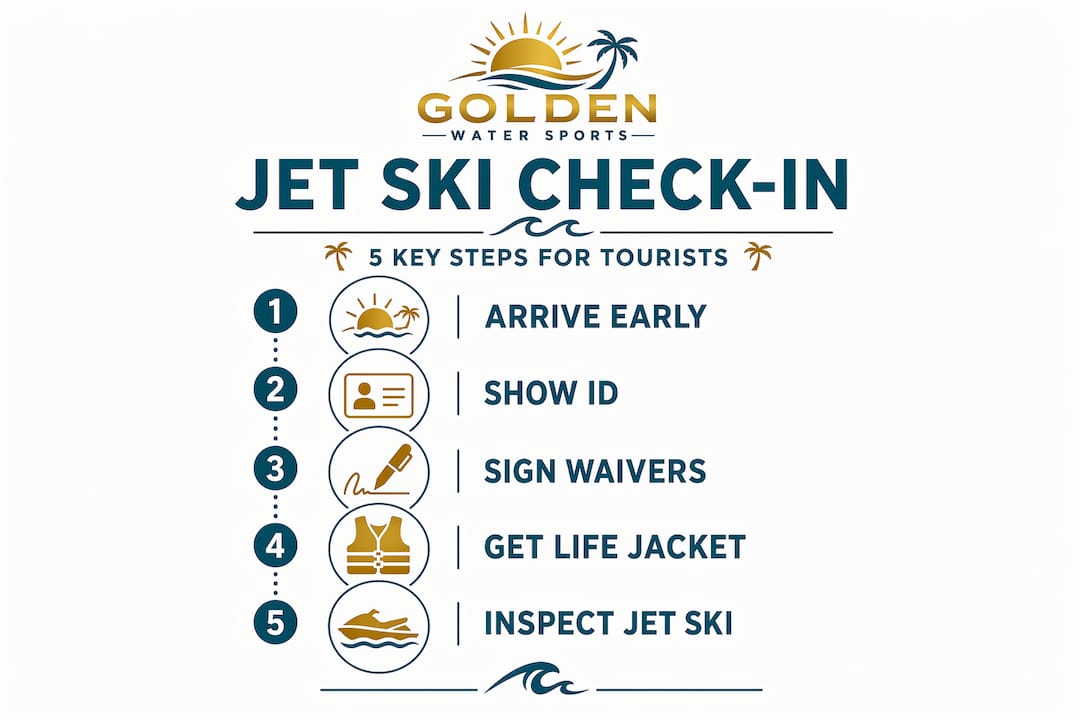
Arriving 30 minutes early is the standard recommendation from most rental operators, and it is not just a suggestion. That window exists because the steps between arrival and departure take real time. You will present a valid, government-issued photo ID along with your payment method. Most locations place a credit card hold for a security deposit at this stage.
Pro Tip: Bring a physical credit card rather than a debit card. Many rental locations will not accept debit for security deposits, and a declined card at check-in means a delayed start or a cancelled booking.
Paperwork and waivers
Once your identity is confirmed, you will sign a rental agreement and a liability waiver. These documents are standard across the industry. Liability waivers cover safe operation acknowledgment and clarify your financial responsibility if the equipment is damaged during your rental. Read them. Most people sign without reading, then are surprised by damage policies later. Rental agreements also spell out the return time, fuel requirements, and any restricted zones you cannot enter.
Safety gear fitting
After paperwork, a staff member will fit you with a U.S. Coast Guard-approved life jacket. This is not optional. Proper life jacket use is enforced strictly at check-in, and staff will verify that your jacket is clipped and zipped correctly before you leave the dock. Some locations also provide wetsuits, rash guards, or water shoes depending on conditions.
Equipment inspection
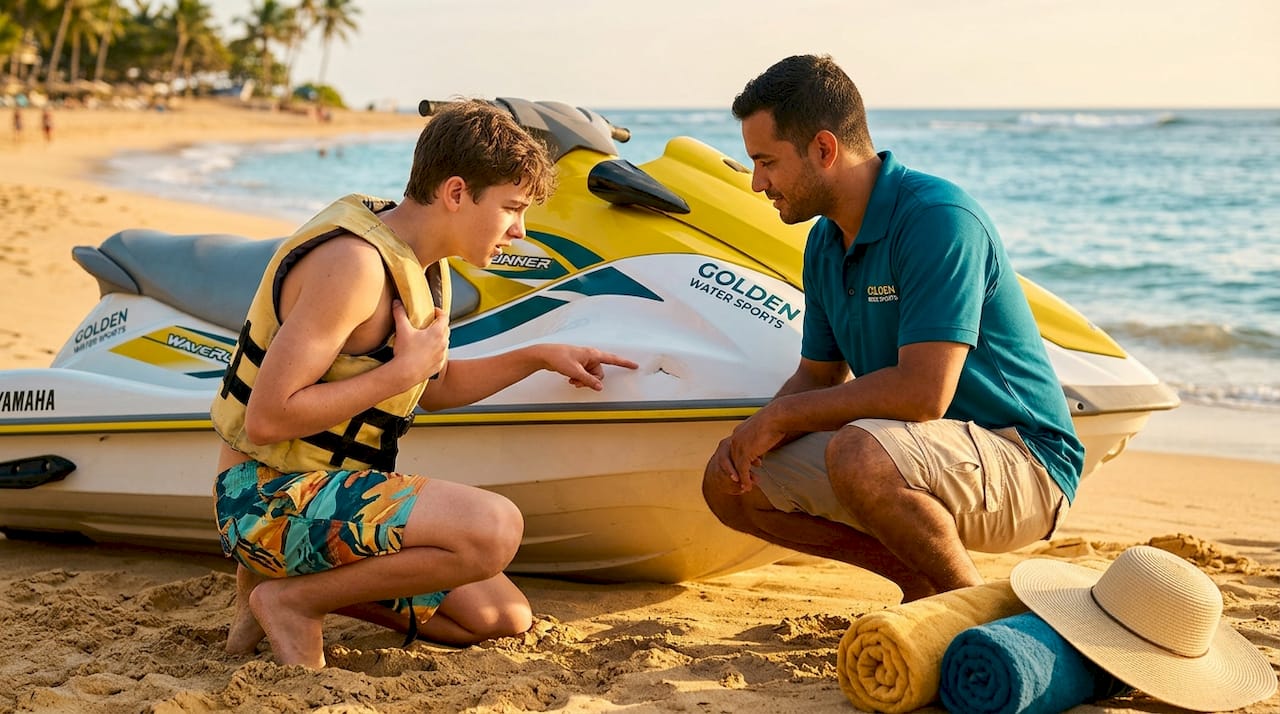
The final step before the safety briefing is a physical walkthrough of your jet ski with a staff member. A joint inspection documents any pre-existing scratches, dents, or mechanical issues so neither party disputes the condition of the equipment on return. Point out anything you notice, even if it seems minor. A photo on your phone is not a bad idea either.
Safety briefing and regulatory compliance
The safety briefing is the part of the jet ski check-in process that most tourists underestimate. It is not a formality. A full safety briefing covers watercraft operation, emergency procedures, and the specific local rules that apply to the lake or waterway you are renting on. Skipping mentally during this part is a mistake you will feel the moment something unexpected happens on the water.
Here is what a standard safety briefing covers:
-
How to start, stop, and steer the jet ski, including what to do if you fall off.
-
Life jacket requirements, including confirmation that your jacket is fitted correctly and will not come off in the water.
-
Safety lanyard attachment. The lanyard stops the engine if you fall off the watercraft, and staff will show you exactly how to clip it to your life jacket or wrist.
-
Speed zones and no-wake areas, which vary by lake and are legally enforced in most jurisdictions.
-
Navigation rules, including right-of-way, minimum distances from shore and other watercraft, and restricted areas.
-
Emergency procedures, including how to signal for help and what to do if the jet ski stalls or takes on water.
“Operators typically provide a thorough orientation before you leave the dock, emphasizing life jacket use and safety procedures.” WPSD Local 6
One detail that surprises many renters: life jacket rules are not universal. Some jurisdictions prohibit inflatable life jackets entirely, accepting only rigid U.S. Coast Guard-approved models. Your rental operator will provide the correct type for your location, but knowing this ahead of time helps you understand why you cannot use the inflatable vest you brought from home.
Pro Tip: Ask the staff member conducting your briefing to point out the no-wake zones on a map before you leave. Violations can result in fines, and “I didn’t know” is not a defense on the water.
Common check-in requirements and potential obstacles
Understanding what you need before you arrive is half the battle. Here is a breakdown of the standard requirements and the issues that most commonly delay or derail check-in.
What you need to bring
-
Valid government-issued photo ID. A driver’s license or passport works at most locations. Renters must be at least 18 years old at the majority of rental operations, though some locations allow riders as young as 16 with a parent or guardian present.
-
A credit card for the security deposit. Deposit amounts vary but typically range from $200 to $500 as a hold on your card.
-
Boating certificate if required. Some states and Canadian provinces require a boating safety certificate to operate a personal watercraft. Check local requirements before your trip.
-
Appropriate clothing. Swimwear, water shoes, and a change of clothes for afterward. Leave jewelry and loose accessories in the car.
Common obstacles and how they cause delays
| Obstacle | Why it happens | How to avoid it |
|---|---|---|
| Missing or expired ID | Renters forget or bring an expired license | Double-check ID expiration date the night before |
| Debit card declined for deposit | Many operators require credit cards only | Confirm payment policy when booking |
| Late arrival | Traffic, parking, or underestimating travel time | Add 15 extra minutes to your planned arrival |
| Incomplete waiver | Skipping fields or missing signatures | Read and complete forms fully before signing |
| Age restriction surprise | Minors showing up without a guardian | Call ahead to confirm age policies |
One scenario that catches tourists off guard is the late arrival policy. If you miss your check-in window, most operators will not extend your rental time to compensate. You lose that time, not the company. Arriving late by 20 minutes on a one-hour rental means you get 40 minutes on the water.
How to prepare for a hassle-free check-in
The good news is that a smooth jet ski rental experience is almost entirely within your control. Most of the friction people encounter at check-in comes from showing up unprepared. These steps take less than 10 minutes the night before your rental and eliminate the most common delays.
-
Confirm your booking details. Know your exact rental start time, location address, and any specific instructions the operator sent after booking.
-
Read the rental agreement in advance. If the company emails terms ahead of time, read them. Pay attention to the damage policy, fuel requirements, and cancellation terms.
-
Complete online forms before arrival. Many rental companies now offer digital waivers you can sign from your phone before you arrive. This alone can cut 10 to 15 minutes off your check-in time.
-
Pack smart. Bring your ID, credit card, and any required boating certificates in a waterproof pouch or leave them with someone on shore. Losing your ID in the water is a miserable way to end a rental.
-
Dress for the water, not the dock. Wear your swimwear under your clothes so you are ready the moment the briefing ends.
-
Write down questions before you go. If you are unsure about anything, the safety briefing is the right time to ask. Staff would rather answer five questions at the dock than respond to a distress call on the water.
Pro Tip: Call the rental location the morning of your booking to confirm your reservation is active and ask about current water conditions. Weather and wind can affect operations, and a two-minute call saves a wasted trip.
What I’ve learned from watching tourists check in
I’ve watched a lot of people go through the rental check-in process, and the pattern is consistent. The tourists who have the best time on the water are almost always the ones who treated check-in as part of the experience rather than an obstacle between them and the fun.
The biggest mistake I see is mentally checking out during the safety briefing. People have already decided they know how to ride, so they nod along without actually listening. Then they get 200 yards from the dock and realize they do not know how to re-board after a fall, or they do not recognize a no-wake zone buoy. That is when the anxiety kicks in.
What I’ve found is that the renters who ask questions during the briefing, who actually try on the life jacket and test the lanyard clip, and who take 60 seconds to look at the map of the waterway, those people come back smiling. The check-in process is not bureaucracy for its own sake. It is the difference between a confident ride and a nervous one.
Being on time matters more than most people think, too. When you arrive late, you are not just losing rental time. You are rushing through the briefing, skipping the inspection, and starting your ride already flustered. Showing up early puts you in control of the whole experience.
— Lex
Get on the water with Goldenwatersports
If you want a rental experience where the check-in process feels like the beginning of something great rather than a chore to get through, Goldenwatersports is built exactly for that. Their team at Liberty Lake and Coeur d’Alene walks every renter through a clear, unhurried orientation covering safety gear, local waterway rules, and equipment inspection before departure.
Goldenwatersports operates well-maintained Yamaha WaveRunners with all safety equipment included, and their staff genuinely takes time with first-timers. You can book your rental online before you arrive, and their damage and deposit policies are spelled out clearly so there are no surprises at the dock. If you want a day on the water done right, this is where to start.
FAQ
How long does jet ski rental check-in take?
Most check-in processes take 20 to 30 minutes from arrival to departure, covering paperwork, safety gear fitting, equipment inspection, and the safety briefing. Arriving at least 30 minutes before your rental start time keeps the process smooth.
What ID do you need to rent a jet ski?
A valid, government-issued photo ID such as a driver’s license or passport is required at check-in. Most rental operators also require renters to be at least 18 years old.
What is the safety lanyard and why does it matter?
The safety lanyard is a cord that connects the jet ski’s engine shutoff to your life jacket or wrist. If you fall off, the engine stops automatically, preventing the watercraft from running unmanned. Staff will show you how to attach it during check-in.
Can you use a debit card for the security deposit?
Many rental companies require a credit card for the security deposit hold, which typically ranges from $200 to $500. Call ahead to confirm the payment policy before your rental day to avoid delays at check-in.
What happens if you arrive late for your rental?
If you miss your check-in window, most operators will not extend your rental time. You lose the time you missed, not the company. Arriving 30 minutes early protects your full rental period and gives you time to complete all check-in steps without rushing.