
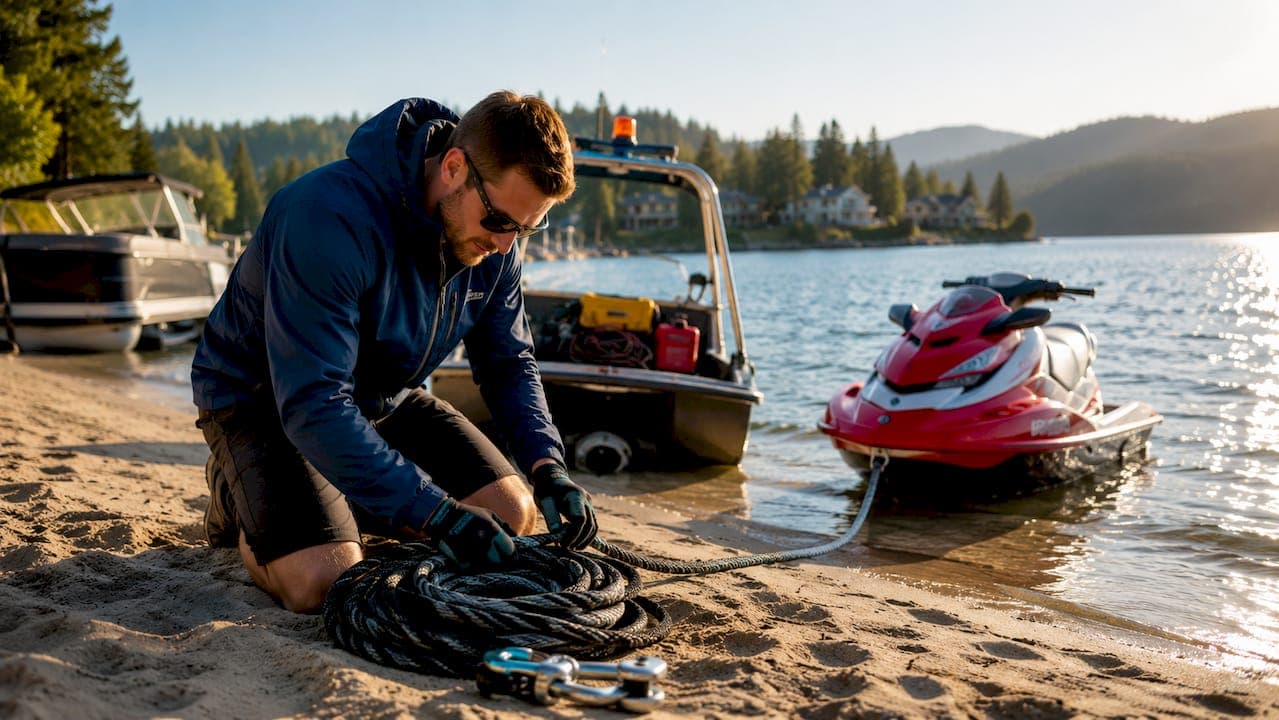
A jet ski towing service is a specialized operation that safely recovers disabled or stranded personal watercraft using factory-designated tow points, marine-grade tow lines, and controlled speeds to prevent damage. The industry term for on-water recovery is marine towing, and professional providers like Sea Tow operate across coastal and inland waterways. Understanding how jet ski towing service works before you need it is the difference between a minor inconvenience and a costly repair bill.
How does on-water jet ski towing work step by step?
On-water jet ski towing follows a specific sequence. Skipping any step risks damage to the hull, the tow rope, or both craft involved.
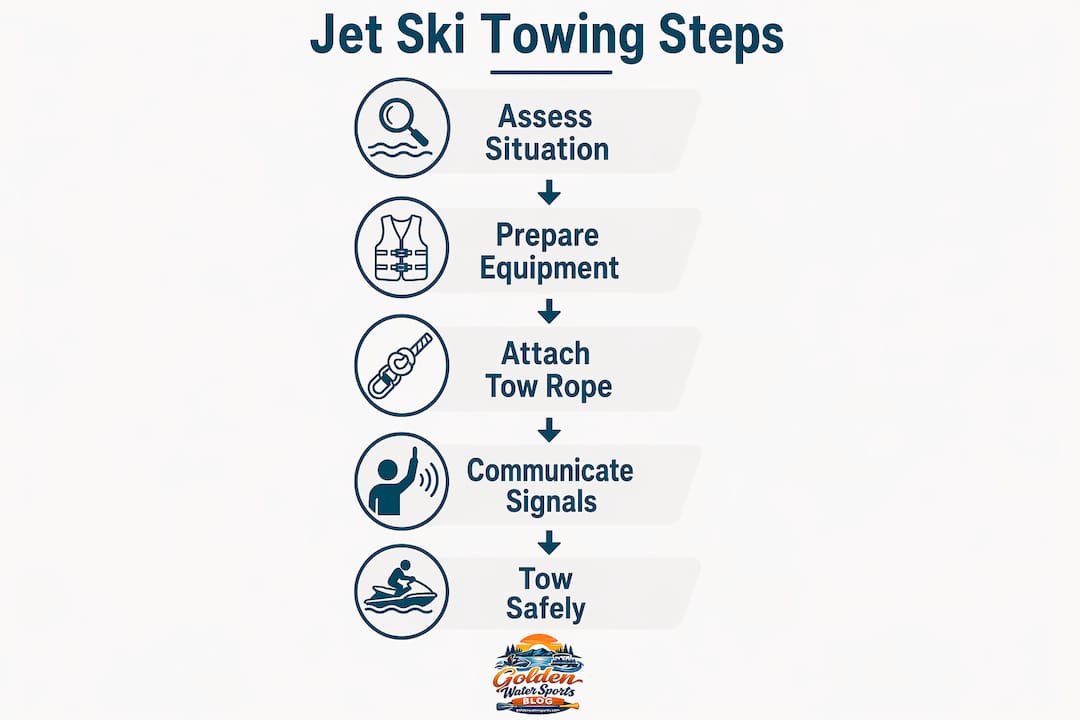
- Assess the situation. The towing operator confirms the disabled jet ski is stable and the rider is safe before attaching any lines.
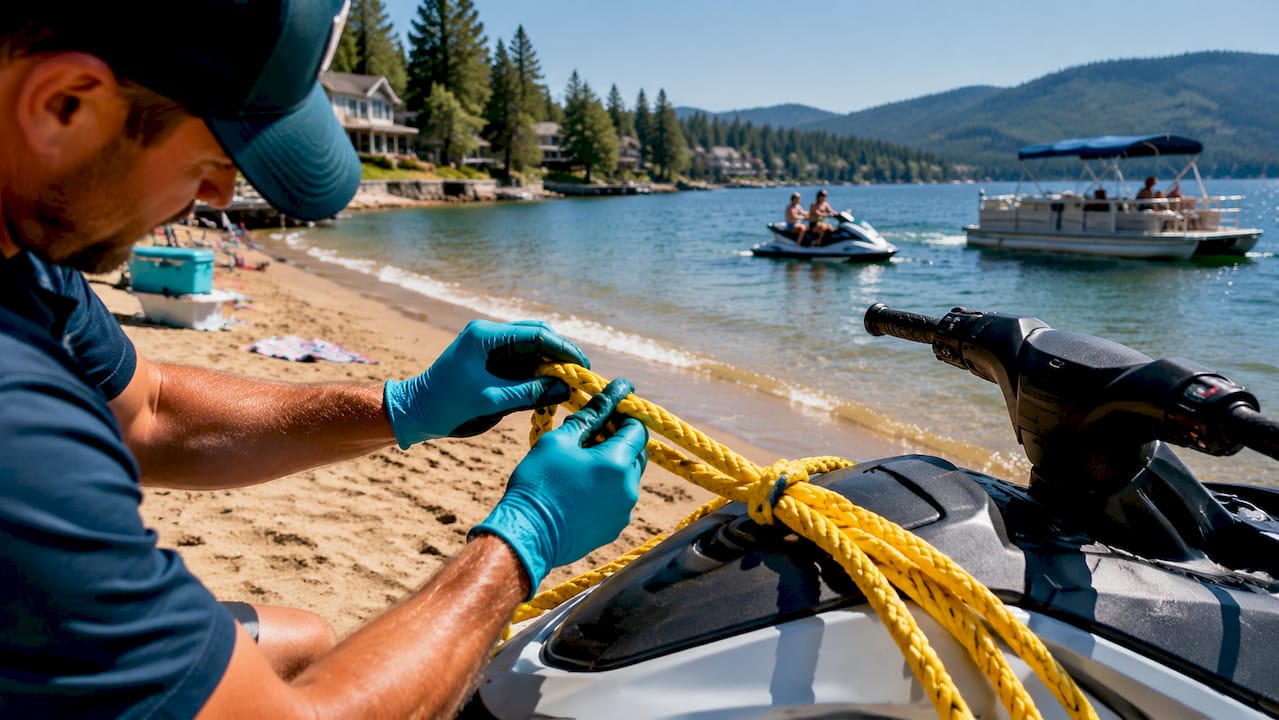
- Attach to the correct tow point. Factory tow eyelets at the bow or stern are the only safe attachment points. Tow points serve different purposes: the rear eyelet handles tube towing, while a ski pylon is designed for wakeboarders and skiers. Using the wrong point risks hardware failure.
- Rig the tow line. Marine-grade tow lines rated above 2,000 pounds breaking strength are the standard. Bungee cords and standard nylon ropes lack the shock absorption needed to protect the tow eyelet under load.
- Set the correct rope length. Tow ropes should measure 50–65 feet to keep the towed craft out of the towing vessel's wake turbulence.
- Put the disabled jet ski in neutral with steering unlocked. Neutral gear and unlocked steering reduce drag and allow the towed craft to track properly behind the lead vessel.
- Maintain safe speed. Towing speed must stay below 10 mph to prevent the towed craft from becoming unstable or diving.
- Make only wide, gradual turns. Sharp turns cause dangerous swings because the towed craft has no steering power to correct itself.
Pro Tip: Inspect the tow rope and all shackles before every tow. A frayed line or a loose shackle can fail under load and send the towed craft drifting into other boaters.
Professional jet ski rescue services like Sea Tow typically cover towing ranges of 25–50 nautical miles from their service locations. That range covers most recreational lake and coastal situations, but riders venturing far from marinas should carry a membership card and a charged phone.
What does trailer towing a jet ski actually involve?
Trailer towing moves a jet ski over public roads, and the rules differ significantly from on-water recovery. Getting this wrong can damage the hull before you ever reach the water.
The most overlooked detail in trailer transport is weight distribution. Proper trailer hitch loading requires 10–15% of the total combined weight to sit on the hitch ball. Too little weight causes trailer sway at highway speeds. Too much weight lifts the rear wheels of the tow vehicle and reduces steering control.
Securing the jet ski correctly matters just as much as weight balance. Ratchet straps must attach only to designated tie-down points on the hull. Overtightening straps over plastic panels or sharp trailer edges causes abrasion and can warp fiberglass over time.
Pre-trip checklist for trailer towing:
- Confirm trailer lights, brake lights, and turn signals work before leaving the lot
- Check safety chains are crossed under the tongue and attached to the tow vehicle
- Verify the coupler latch is locked and the hitch ball size matches the trailer coupler
- Inspect all ratchet straps for fraying or worn hooks
- Confirm the jet ski is centered on the trailer bunks for even weight distribution
Pro Tip: Attach a life jacket safety guide reminder to your trailer checklist. Towing safely to the lake means nothing if you arrive without proper safety gear.
| Trailer check item | Why it matters |
|---|---|
| Hitch ball size match | Mismatched sizes cause coupler separation at speed |
| Safety chains crossed | Crossed chains cradle the tongue if the coupler fails |
| Strap placement on tie-down points | Prevents hull abrasion and fiberglass warping |
| Trailer light function | Required by law; prevents rear-end collisions |
| Weight on hitch (10–15%) | Prevents trailer sway and loss of vehicle control |
On-water towing vs. trailer towing: which method fits your situation?
The right towing method depends on where the breakdown happens and what equipment you have available.
| Factor | On-water towing | Trailer towing |
|---|---|---|
| Best use case | Breakdown on the water | Transport between locations |
| Equipment needed | Marine tow rope, tow eyelet | Trailer, ratchet straps, tow vehicle |
| Speed limit | Below 10 mph | Road speed limits apply |
| Risk if done wrong | Swamping, hull stress, rope failure | Hull damage, trailer sway, road accidents |
| Professional service available | Yes, Sea Tow and similar providers | Owner or transport company |
On-water towing is the only option when a jet ski breaks down mid-lake. Trailer towing is the right choice for planned transport, seasonal storage moves, or taking a jet ski to a different lake. Mixing up the methods, such as attempting to tow a jet ski on a trailer at highway speed without proper strap placement, causes the kind of damage that voids manufacturer warranties.
What safety mistakes do people make during jet ski towing?
Most towing accidents trace back to a small set of repeated errors. Knowing them in advance keeps you and your equipment safe.
- Using makeshift tow points. Attaching tow lines to handlebars or seats instead of factory eyelets risks structural damage and sudden line release. Use only rated factory tow eyelets.
- Towing too fast. Speeds above 10 mph destabilize the towed craft and increase the risk of swamping.
- Making sharp turns. Tight turns create violent lateral swings in the towed craft. Always turn wide and gradually.
- No spotter on board. The towing operator cannot watch the road ahead and monitor the towed craft simultaneously. A spotter watches the tow line and signals if something goes wrong.
- Skipping rope inspection. A worn tow line can snap under load. Check for fraying, UV damage, and worn hardware before every use.
- Overtightening trailer straps. Excessive strap tension warps fiberglass and cracks plastic panels over multiple trips.
Pro Tip: Establish hand signals with your spotter before you start moving. A thumbs-up for "all clear," a flat hand for "slow down," and a crossed-arm signal for "stop" covers most situations without needing a radio.
Riders who follow jet ski etiquette rules on the water also tend to tow more safely. Situational awareness and respect for other boaters carry over directly into towing behavior.
Key Takeaways
A jet ski towing service works safely only when operators use factory tow eyelets, marine-grade lines rated above 2,000 pounds, and speeds below 10 mph for on-water recovery.
| Point | Details |
|---|---|
| Use factory tow eyelets only | Makeshift attachment points like handlebars cause structural damage and line failure. |
| Marine-grade rope is non-negotiable | Tow lines must exceed 2,000 pounds breaking strength and measure 50–65 feet for safe on-water towing. |
| Speed and turns are the top risks | Stay below 10 mph and make only wide, gradual turns to prevent dangerous swings. |
| Trailer balance prevents road accidents | Keep 10–15% of combined weight on the hitch and use designated tie-down points only. |
| A spotter changes everything | One person drives, one person watches the tow. Never tow without a dedicated spotter. |
What I've learned watching people tow jet skis the wrong way
Most towing problems are not equipment failures. They are preparation failures. The riders who end up with cracked hulls or snapped tow lines almost always skipped one step they thought did not matter.
The mistake I see most often is attaching a tow line to whatever is closest and convenient, usually a handlebar or a cleat that was never rated for towing loads. It looks fine until the line goes taut and something gives. The second most common error is towing too fast because the operator wants to get back to the dock quickly. Speed is where things go wrong fast.
Professional towing services exist for exactly these situations. Sea Tow and similar providers carry the right equipment and know the procedures. For most recreational riders, a membership with a marine towing service costs less than a single hull repair. That math is worth thinking about before your next trip out on Lake Coeur d'Alene or Liberty Lake.
My honest recommendation: read the towing section of your jet ski owner's manual once before the season starts. It takes ten minutes and tells you exactly where your tow eyelets are and what loads they are rated for. That knowledge alone prevents the most common and most expensive mistakes.
— Life is better on water.
Goldenwatersports makes your day on the water easier
Goldenwatersports serves Spokane Valley, Liberty Lake, and Coeur d'Alene with Yamaha WaveRunner rentals, ski boats, and pontoon boats. Every rental comes with safety equipment and clear guidance so you know exactly what to do on the water.
Whether you are planning a family outing or a weekend adventure, the team at Goldenwatersports walks you through safety procedures before you launch. Check out the full range of jet ski and boat rentals at Goldenwatersports and book a rental that fits your group. For riders who want to explore multiple lakes in the region, the Coeur d'Alene rental options cover everything you need for a full day on the water.
FAQ
What tow points are safe to use on a jet ski?
Only factory-designated tow eyelets at the bow or stern are rated for towing loads. Handlebars, seats, and other attachment points are not load-rated and risk structural damage.
How fast can you tow a jet ski in water?
On-water towing speed must stay below 10 mph. Higher speeds destabilize the towed craft and increase the risk of swamping or rope failure.
How long should a jet ski tow rope be?
A tow rope for on-water jet ski recovery should measure 50–65 feet. That length keeps the towed craft clear of the towing vessel's wake turbulence.
Does Sea Tow cover jet skis?
Sea Tow covers personal watercraft including jet skis, with standard towing ranges of 25–50 nautical miles from service locations. Premium membership plans extend that range further.
What happens if trailer straps are too tight?
Overtightened ratchet straps placed over plastic panels or sharp trailer edges cause abrasion and can warp fiberglass hulls over multiple trips. Always attach straps only to designated tie-down points and tighten to snug, not maximum tension.