

Docking a pontoon boat is defined as the controlled process of bringing a flat-deck vessel alongside a fixed structure and securing it with lines. To dock a pontoon boat first time without incident, you need three things: a slow approach at a shallow angle, fenders set to rub-rail height, and lines ready before you get close. Pontoon boats are wide and catch wind easily, which makes preparation more important than raw skill. Get those three elements right, and your first docking will feel far less stressful than you expect.
What are the essential preparations before docking a pontoon boat?
Preparation is the single biggest factor in a clean first dock. Most beginners focus on the moment of contact, but the real work happens five minutes before you get close.
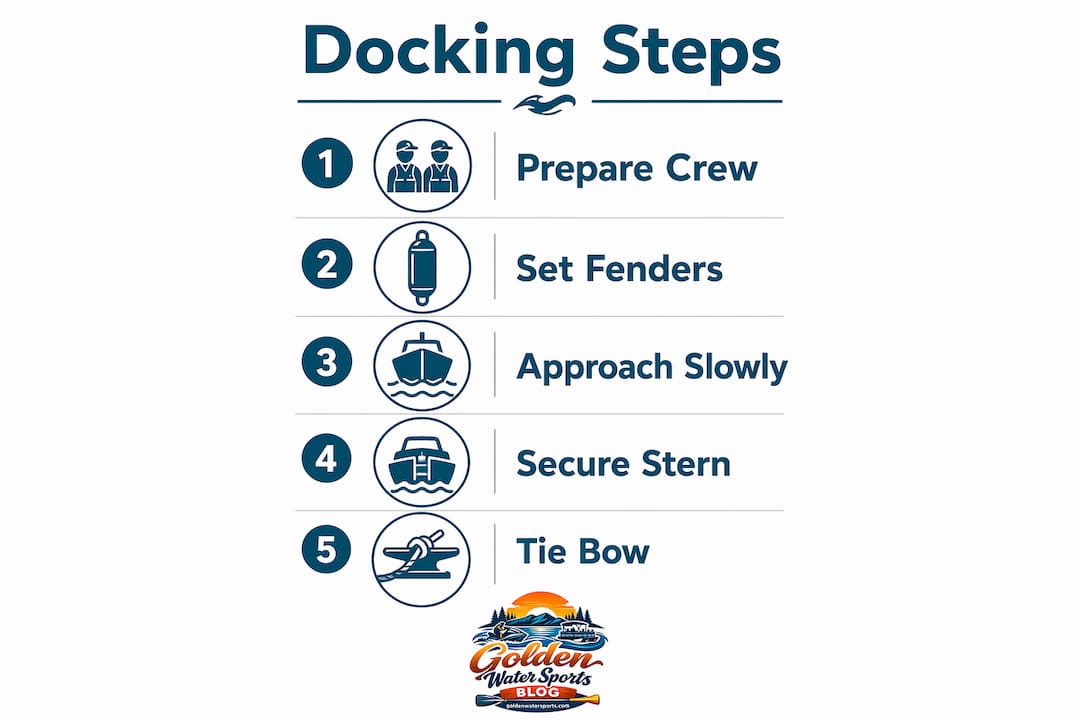
Start with a crew briefing. Assign one person to handle the bow line, one for the stern line, and one to manage fenders. Clear roles prevent everyone from grabbing the same rope while nobody watches the dock. Panic during docking almost always traces back to a crew that never talked through the plan.
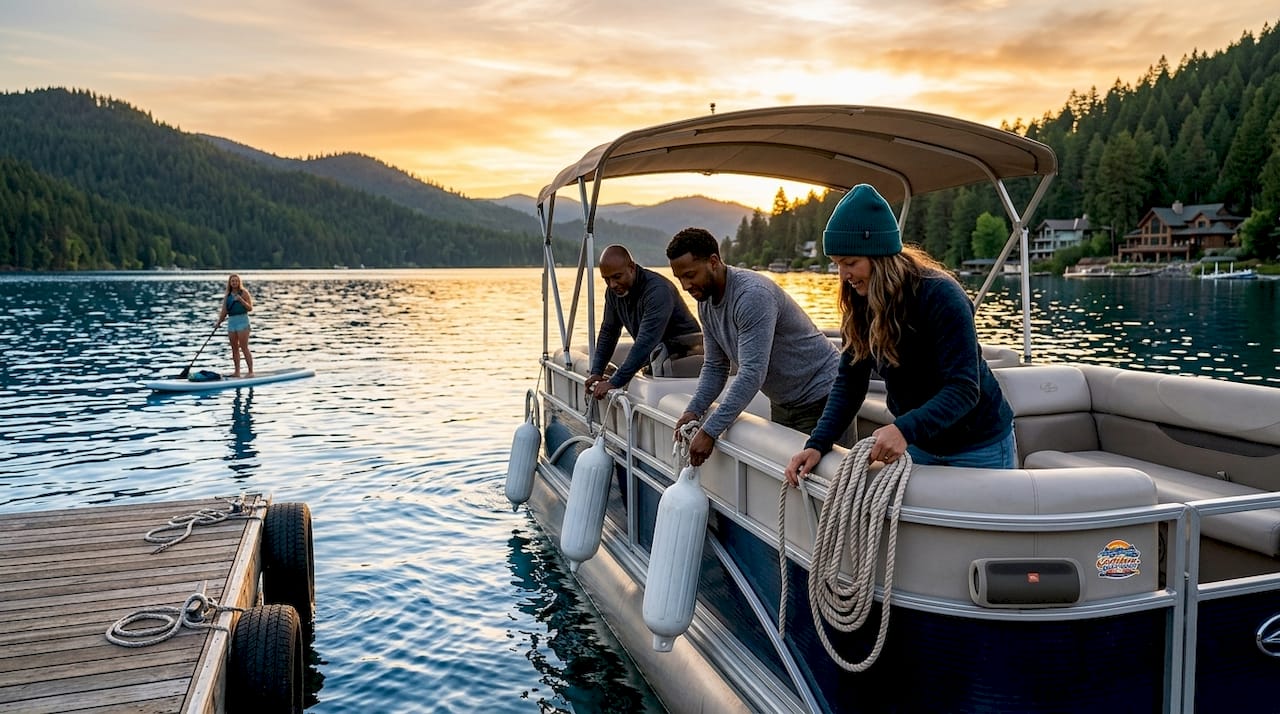
Next, set your fenders. Dock height varies from one marina to the next, so do a slow recon pass along the dock before committing. Adjust fender height to match the dock's rub-rail contact point. A fender set too high or too low does nothing to protect the hull.
Have your dock lines pre-coiled and ready to throw or hand off. Searching for a tangled line while the boat drifts toward a piling is a fast way to scratch fiberglass. If you're anchoring or mooring in unfamiliar water, the same principle applies: prepare before you commit.
Pro Tip: Do your recon pass at idle speed. Look for cleats, dock edges, and any shallow spots. That 60-second pass saves you from a costly surprise.
How do you approach and maneuver a pontoon boat to the dock for the first time?
The approach is where most first-time docking attempts go wrong. Speed is the enemy. Slow is smooth, and smooth is safe.
The recommended approach angle is 10–45 degrees depending on wind and current conditions. A shallow angle gives you more time to correct your line. A steep angle closes the gap too fast and leaves little room to adjust.
Follow these steps for a controlled approach:
- Reduce speed to idle well before the dock comes into range.
- Aim for a 10–30 degree angle on calm days, up to 45 degrees in a crosswind.
- Shift to neutral 10–20 feet from the dock and let the boat coast in.
- Use short, gentle throttle pulses to control momentum. Never use a hard reverse burst.
- If the bow drifts off target, correct with a brief forward pulse on the appropriate side.
Wind and current are your tools, not your enemies. Approaching into the wind slows your drift and gives you more control. If the wind is pushing you off the dock, approach slightly faster, then shift to neutral early and let the wind set the boat against the dock naturally.
"If the approach angle is off or wind catches the bow, the best move is to abort. Shift to neutral, drift clear, and retry. Forcing a bad approach causes more damage than any second attempt."
Pro Tip: Pick a fixed point on the dock and keep your eyes on it throughout the approach. Boaters who look at the water lose their reference point and oversteer.
What are the best practices for securing your pontoon boat once alongside the dock?
Getting the boat to the dock is only half the job. Securing it correctly prevents damage, injury, and the embarrassment of watching your boat drift away while you're on the dock.
Follow this sequence every time:
- Toss or hand off the stern line first. Securing the stern prevents the boat from pivoting and swinging its bow into neighboring boats or dock structures.
- Secure the bow line next to hold the front in place.
- Add spring lines running diagonally fore and aft to limit forward and backward movement.
- Adjust fenders after the boat is tied so they sit flush against the dock surface.
A few safety rules that are non-negotiable:
- No one jumps off the boat before it is stable and the engine is in neutral or off.
- Never step onto the dock while the boat is still moving.
- Keep hands away from the gap between the boat and the dock.
Solo docking is manageable with the right setup. Pre-looped lines on midship cleats let you hook a dock cleat with a boat hook without jumping or overreaching. This technique is standard practice for single-handed operators and works well on calm lake days.
Pro Tip: Tie your stern line to a cleat with a simple cleat hitch. It holds firmly and releases fast. Skip the complex knots until you have more time on the water.
How can you handle common challenges when docking a pontoon boat?
The most common beginner mistake is coming in too fast and relying on a last-second reverse burst to stop. Hard reverse throttle swings the stern wide and can push the bow into the dock at an angle. The fix is simple: slow down earlier and use the coast-in method from the approach section.
Here are the most frequent challenges and how to handle them:
- Wind pushes the bow away from the dock. Approach at a slightly steeper angle and shift to neutral sooner. Let the wind do the final work of setting the boat.
- Current pulls the stern downstream. Angle the bow upstream and use short forward pulses to hold position while crew secures lines.
- Bad approach angle mid-run. Abort the approach by shifting to neutral, drifting clear, and starting over. Professional boaters do this regularly. It is not a failure.
- Crew confusion at the last moment. Stop the boat, hold position with gentle throttle, and re-assign roles before continuing.
- Dock wheels or bumpers on the dock. Use them. They exist to protect both the dock and the boat during contact.
Clear, calm communication between the helm and crew solves most of these problems before they escalate. One person calls out distances. Everyone else stays quiet and focused on their assigned task.
Pro Tip: Practice docking in an open area of the lake first. Pick a buoy or a floating object and practice coasting to a stop alongside it. Ten minutes of that drill builds more confidence than reading any guide.
Key Takeaways
Docking a pontoon boat safely the first time requires slow speed, a shallow approach angle, pre-set fenders, and stern-first line securing to prevent pivoting and hull damage.
| Point | Details |
|---|---|
| Prepare before you approach | Brief the crew, set fenders to rub-rail height, and pre-coil lines before getting close. |
| Use a shallow approach angle | Aim for 10–45 degrees and shift to neutral 10–20 feet from the dock to coast in safely. |
| Approach into wind or current | Wind and current slow your drift and give you more control during the final approach. |
| Secure the stern line first | Tying the stern first prevents the boat from pivoting into nearby boats or dock structures. |
| Abort a bad approach | Drifting clear and retrying is always safer than forcing a difficult landing. |
What I've learned from watching first-timers dock a pontoon boat
The biggest mistake I see is not speed. It's pride. First-time boaters feel the pressure of an audience on the dock and push through a bad approach rather than abort and try again. That decision causes nearly every docking scratch I've witnessed.
Preparation fixes most of what goes wrong. When every crew member knows their job before the boat gets close, the whole sequence slows down mentally. You stop reacting and start executing. That shift in mindset is worth more than any technique tip.
I also recommend watching an experienced boater dock two or three times before you try it yourself. You'll notice they barely touch the throttle in the final 20 feet. The boat does most of the work. If you're renting a pontoon boat for families or a group outing, ask the rental staff to walk you through their specific boat's handling before you leave the dock. Every pontoon behaves slightly differently in wind.
Patience is the real skill. The boaters who dock cleanly on their first try are not the most talented. They are the most patient.
— Life is better on water.
Pontoon boat rentals at Goldenwatersports on Lake Coeur d'Alene
Goldenwatersports makes it easy to put these docking skills into practice on one of the most beautiful lakes in the Pacific Northwest.
Goldenwatersports offers pontoon boat rentals at Lake Coeur d'Alene with full safety briefings for first-time renters. The team walks you through the boat's controls, handling characteristics, and docking basics before you leave the dock. That pre-rental briefing is exactly the kind of preparation this guide recommends. Whether you're planning a family day, a group outing, or a summer celebration, Goldenwatersports provides the equipment, the safety gear, and the local knowledge to make your time on the water both safe and memorable.
FAQ
What is the best approach angle for docking a pontoon boat?
The recommended approach angle is 10–45 degrees depending on wind and current. Shallower angles work best on calm days; steeper angles help when wind pushes the boat off course.
Should you tie the bow or stern line first?
Always tie the stern line first. Securing the stern prevents the boat from pivoting and swinging the bow into nearby boats or dock structures.
What should you do if the docking approach goes wrong?
Shift to neutral, drift clear of the dock, and retry from the beginning. Aborting a bad approach is standard practice and far safer than forcing a difficult landing.
Is it safe to jump off a pontoon boat to the dock?
No one should jump from the boat to the dock. The boat must be fully stable and the engine in neutral or off before anyone steps off to prevent injuries.
Can one person dock a pontoon boat alone?
Solo docking is possible using pre-looped lines on midship cleats and a boat hook to secure the lines without jumping or overreaching from the deck.