
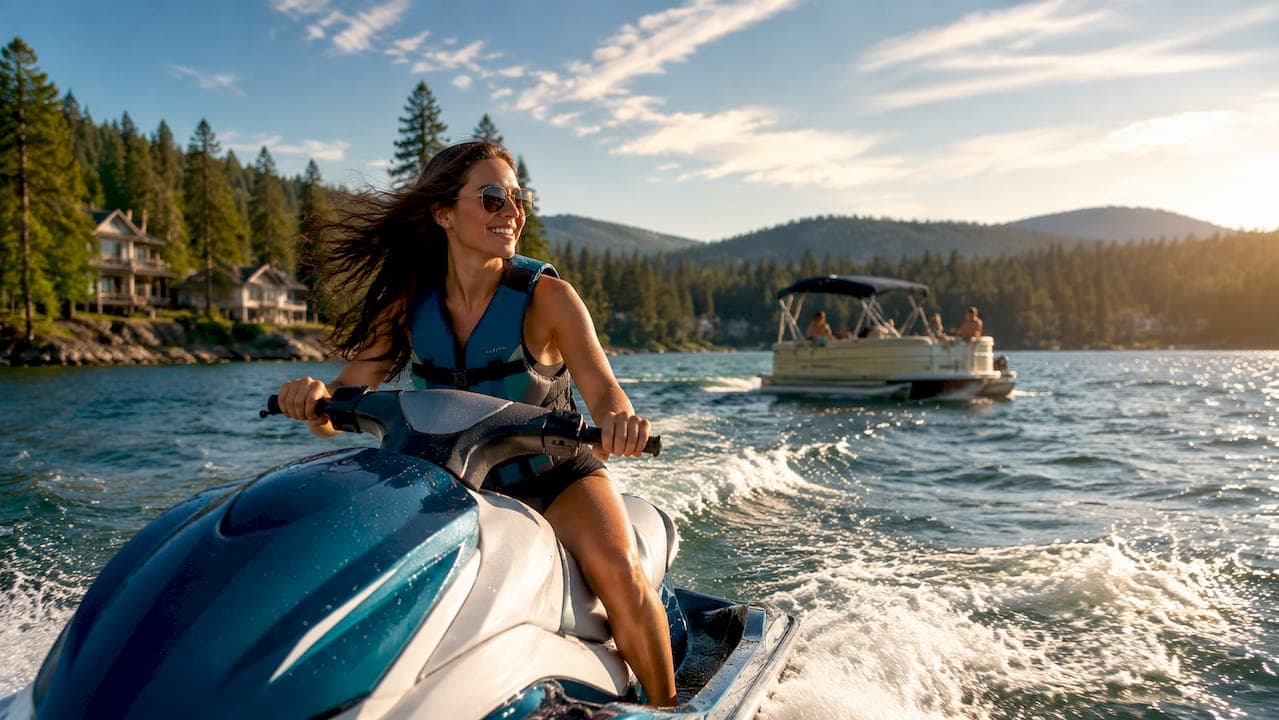
Staying safe while jet skiing in open water requires proper equipment, awareness of environmental conditions, and strict adherence to recognized safety standards. Open water jet skiing, the industry term for riding personal watercraft beyond sheltered bays or inland lakes, exposes riders to wind, waves, currents, and boat traffic that calmer environments do not. The U.S. Coast Guard classifies personal watercraft as Class A motorboats, which means federal safety rules apply to every rider. This guide covers the gear, conditions, techniques, and emergency steps you need to ride with confidence.
What essential gear do you need to stay safe jet skiing in open water?
The right gear is the first line of defense on open water. Cutting corners here creates real risk, not just legal exposure.
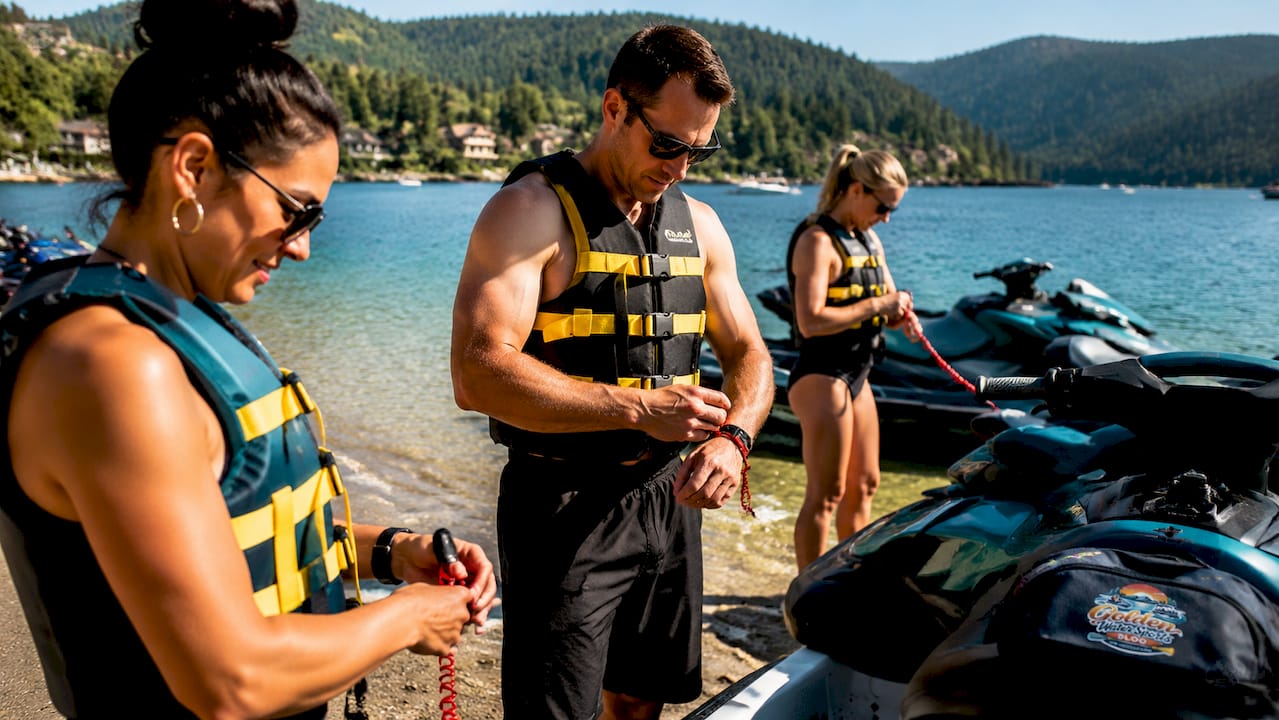
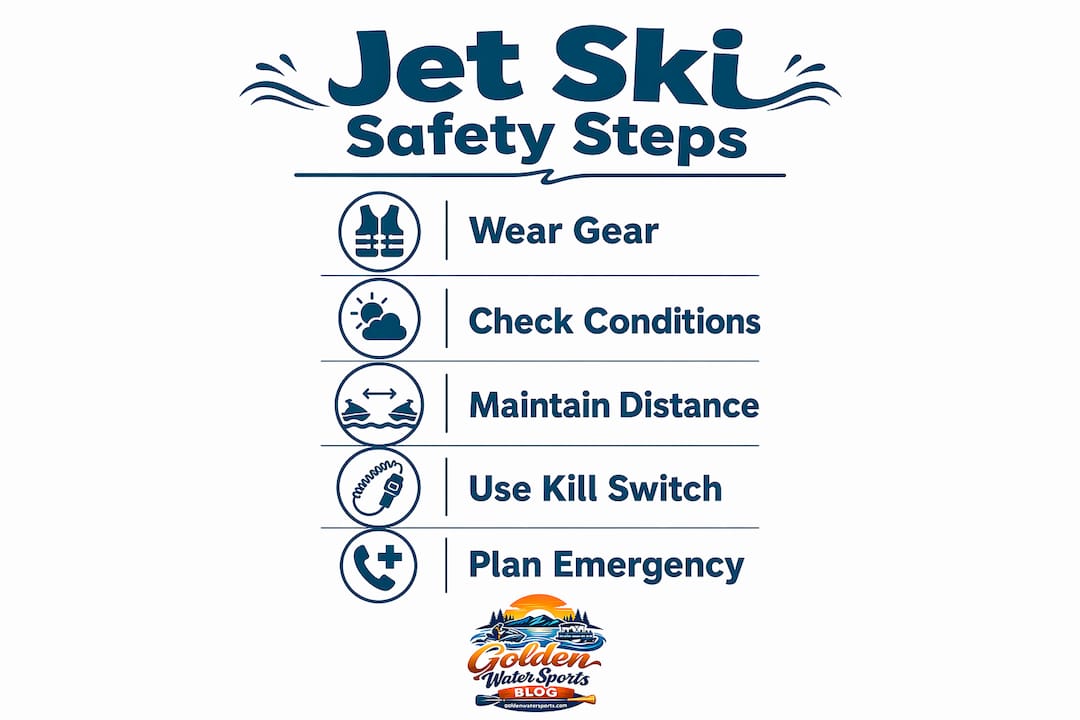
A U.S. Coast Guard–approved life jacket is non-negotiable. It must fit snugly, not ride up when you raise your arms, and be rated for your body weight. A loose life jacket provides almost no protection in a fall at speed.
The kill switch lanyard is equally critical. This wrist or vest clip cuts the engine if you fall off. Without it attached, a riderless jet ski can circle back and strike you. Clip it on before you start the engine, every single time.
For cold or open ocean water, gear up beyond the basics:
- Wetsuit: A 3mm to 5mm wetsuit provides thermal protection. In colder water, add a hood and gloves to prevent hypothermia.
- Helmet: A water sports helmet protects against head injuries during falls or collisions. Full-face models add facial protection at high speeds.
- Polarized sunglasses: Glare off open water reduces visibility significantly. Polarized lenses cut that glare and help you spot hazards earlier.
- Marine-grade sunscreen: Sun exposure doubles on open water due to reflection. Apply before you launch and reapply every 90 minutes.
Pro Tip: Standard recreational gear is often insufficient for open ocean demands. Salt spray, wind, and potential submersion require ocean-rated equipment built for those specific stresses. Check that every piece of gear carries an appropriate rating before you head out.
How do weather and water conditions affect jet ski safety?
Environmental conditions are the most underestimated risk factor in open water jet skiing. Riders who ignore them account for a disproportionate share of accidents.
Wind-related accidents are three times more likely in open water than in sheltered areas. That gap exists because open water offers no natural windbreaks, so conditions escalate quickly. Industry guidance recommends avoiding launching if winds exceed 10 mph. Winds above 15 mph create choppy, unsafe conditions for most riders.
Waves compound the problem. Waves above 2 feet destabilize jet skis, especially for beginners who have not yet developed the balance and throttle control to compensate. Strong currents and submerged debris add further hazards that are invisible until you are already on top of them.
Before every ride, check these conditions:
- Wind speed and direction using a real-time marine forecast app or the National Weather Service marine forecast
- Wave height at your specific launch point, not just the general area
- Current warnings from local harbor authorities or coast guard notices
- Boat traffic patterns, since open water often intersects with commercial and recreational vessel lanes
Maintain at least 100 feet of distance from other vessels, swimmers, docks, and shorelines. This 100-foot standard is mandated by 2026 boating safety regulations across most U.S. states. That distance gives you reaction time and keeps you out of collision zones.
Pro Tip: Build a personal go/no-go checklist before every session. If wind, waves, or visibility fail even one criterion, stay ashore. No ride is worth a rescue.
What safe riding techniques prevent accidents on open water?
Technique separates riders who stay in control from those who become accident statistics. The most counterintuitive rule is also the most important.
Releasing the throttle removes steering control on a jet ski. Unlike a car, a jet ski steers through thrust. No throttle means no ability to steer around a hazard. Riders who instinctively let go when they see danger ahead lose exactly the control they need. Keep throttle engaged and steer around the obstacle instead.
Follow these techniques to build safe riding habits:
- Scan constantly. Look 360 degrees every few seconds. Anticipate other watercraft, swimmers, and debris before they become emergencies.
- Practice emergency turns. Find a calm, open area and rehearse sharp turns at moderate speed. Muscle memory built in practice works when stress hits.
- Respect no-wake zones. Slow down and follow posted speed limits near docks, beaches, and congested areas. Violations create hazards for others and carry legal penalties.
- Never ride impaired. Operating a jet ski under the influence of alcohol is illegal in every U.S. state and dramatically increases accident risk.
- Reboard from the rear. After a fall, approach the jet ski from the rear platform. Boarding from the side risks flipping the machine. The rear platform provides stability and leverage to pull yourself back on.
- Maintain the 100-foot rule. Keep that distance from hazards, people, and structures at all times, not just when conditions feel rough.
Pro Tip: Break complex maneuvers into progressive practice sessions in calm, shallow water. Master slow-speed control before pushing into open water at higher speeds. Confidence built on real skill lasts; confidence built on luck does not.
How do you prepare for and handle emergencies while jet skiing?
Emergency preparedness starts before you leave the dock. Riders who plan for problems solve them faster and safer.
Always wear your life jacket and keep the kill switch lanyard attached to your wrist or vest. These two habits alone prevent the majority of serious open water incidents. Carry a whistle or air horn as a signaling device. These are required by law in many U.S. states and can attract rescue attention when a radio or phone fails.
Dehydration causes fatigue and poor decision-making on the water. Drink water before, during, and after your ride. Hydration is as critical as any piece of safety gear you carry. On longer trips, follow the one-third fuel rule: use one-third of your fuel going out, one-third returning, and keep one-third in reserve for emergencies. Running dry in open water is a preventable crisis.
Before every ride, tell someone onshore your plan. Share your launch point, intended route, and expected return time. If something goes wrong, that information guides rescuers directly to you.
Pro Tip: Carry a waterproof phone case or a dedicated waterproof VHF radio. Cell coverage disappears quickly offshore, and a marine radio connects you to the coast guard on Channel 16 regardless of cell towers.
Key takeaways
Staying safe jet skiing in open water requires the right gear, a clear read of conditions, sound riding technique, and a solid emergency plan before you ever start the engine.
| Point | Details |
|---|---|
| Wear certified gear | A U.S. Coast Guard–approved life jacket and attached kill switch lanyard are required on every ride. |
| Check conditions first | Avoid launching in winds above 10 mph or waves above 2 feet, and use a marine forecast tool before every session. |
| Keep the throttle engaged | Releasing throttle removes steering control; maintain pressure and steer around hazards proactively. |
| Follow the 100-foot rule | Stay at least 100 feet from other vessels, swimmers, docks, and shorelines at all times. |
| Plan for emergencies | Apply the one-third fuel rule, carry a signaling device, and tell someone onshore your route and return time. |
What I've learned watching riders underestimate open water
Most beginner mistakes I see come down to one thing: riders treat open water like a bigger version of a calm lake. It is not. Open water is a different environment with different physics, different hazards, and far less margin for error.
The riders who get into trouble fastest are usually the ones who feel most confident. They skip the weather check because the sky looks clear. They skip the gear check because they are only going out for an hour. They release the throttle the moment they see something ahead, which is exactly the wrong move. Confidence without preparation is the most dangerous combination on the water.
What actually works is a pre-ride routine treated as seriously as the ride itself. Check conditions. Inspect gear. Attach the lanyard. Tell someone your plan. Drink water before you feel thirsty. These habits feel tedious until the one day they save you.
Skill matters too, but it builds slowly. Riders who practice on freshwater lakes before moving to open water develop real control before they face real consequences. That progression is not timid. It is smart. The water will always be there. Take the time to be ready for it.
— Life is better on water.
Goldenwatersports makes your open water ride safer from the start
Goldenwatersports serves riders on Lake Coeur d'Alene, Liberty Lake, and Spokane Valley with reliable Yamaha WaveRunners, certified safety equipment, and a team that takes preparation seriously. Every rental includes a safety briefing so you understand the gear, the rules, and the conditions before you leave the dock.
Whether you are a first-time rider or a returning guest, Goldenwatersports makes it straightforward to get on the water with the right equipment and the right knowledge. Check out the full jet ski and boat rental options and plan your next day on Lake Coeur d'Alene with confidence. The team is ready to help you ride safely and enjoy every minute of it.
FAQ
What gear is required to jet ski safely in open water?
A U.S. Coast Guard–approved life jacket and an attached kill switch lanyard are the two non-negotiable items. Helmets, wetsuits, and signaling devices add significant protection in open water conditions.
How far should you stay from other boats and swimmers?
Maintain at least 100 feet of distance from other vessels, swimmers, docks, and shorelines. This distance is required by 2026 boating safety standards in most U.S. states.
What wind speed is too dangerous for jet skiing?
Industry guidance recommends avoiding launch if winds exceed 10 mph. Winds above 15 mph create choppy, unsafe conditions, and waves above 2 feet destabilize jet skis for most riders.
What should you do if you fall off a jet ski in open water?
Stay calm, let the jet ski drift to a stop, then approach it from the rear platform. Boarding from the side risks flipping the machine. Reboard carefully using the rear platform for stability.
How do you manage fuel safely on a longer open water ride?
Follow the one-third fuel rule: use one-third going out, one-third returning, and keep one-third in reserve for emergencies. Running low on fuel in open water is a preventable and serious risk.