
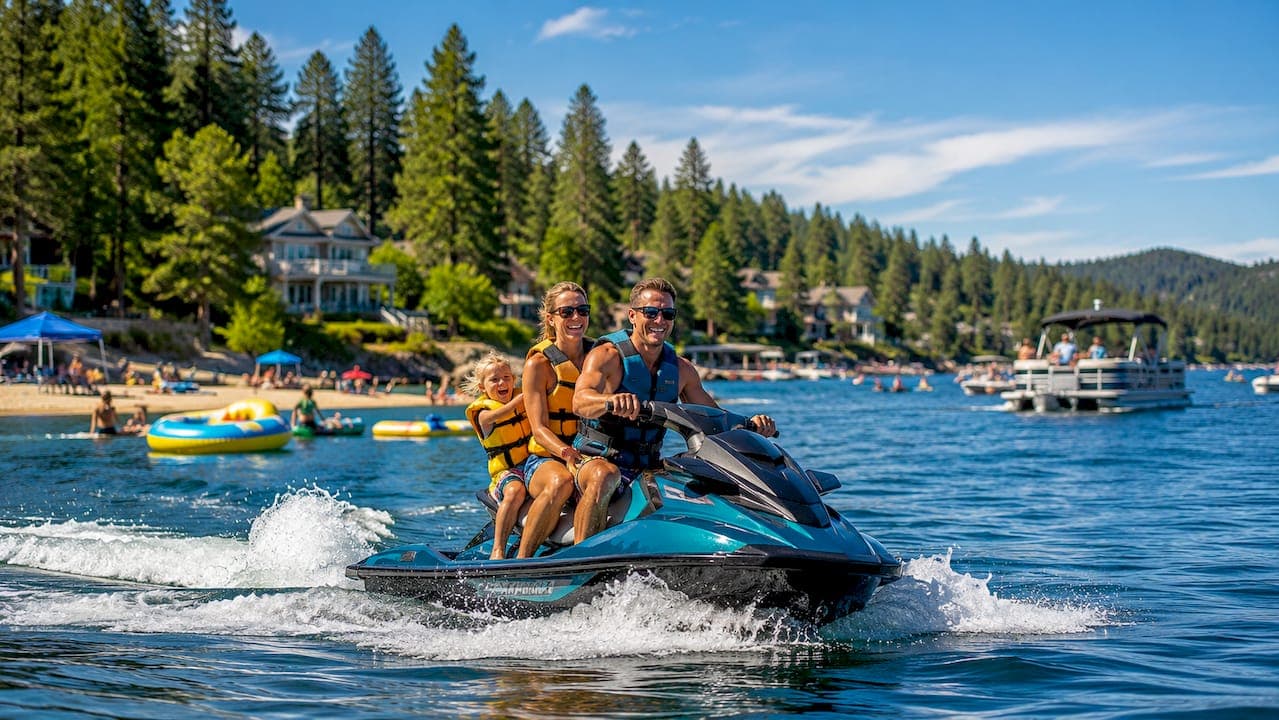
Teaching a child to ride a personal watercraft, the industry term for what most families call a jet ski, requires clear preparation, the right safety gear, and a step-by-step approach built around your child's readiness. To teach kid jet ski basics safely, parents need to understand age and maturity requirements, assemble Coast Guard-approved equipment, and establish communication signals before the engine ever starts. State regulations, life jacket fit standards, and proper seating position are the three pillars every parent must get right first. This guide covers each one in practical, actionable order.
What age and physical requirements should parents consider before teaching kids to jet ski?
Age is a starting point, not the whole picture. Minimum age guidelines set 7 years old as the floor for riding as a passenger, with 46 pounds as the minimum weight to support a properly fitted life jacket. Children below that threshold often lack the grip strength and core stability to hold on safely at even low speeds.
For independent operation, the bar is higher. Independent jet ski operation typically requires an operator to be between 12 and 16 years old, depending on state law and boater safety certification. Many states also require a completed boater education course before a minor can operate a personal watercraft alone. Check your state's specific rules before any lesson begins. Goldenwatersports staff can point families toward the right local resources when they book.
Maturity matters as much as age. A child who cannot follow multistep instructions, stay focused for 20 minutes, or communicate distress clearly is not ready to ride, regardless of birthday. Practical preparation emphasizes maturity and focus over age alone as the real readiness test.
Pro Tip: Before booking a rental or heading to the lake, review the jet ski age restrictions in your state. Rules vary significantly, and knowing them in advance prevents surprises at the dock.
| Readiness Factor | Minimum Requirement |
|---|---|
| Passenger age | 7 years old |
| Passenger weight | 46 pounds |
| Operator age | 12–16 years (varies by state) |
| Certification | Boater safety course (many states require it) |
| Maturity | Able to follow instructions and signal distress |
Which safety gear and preparation steps are essential before teaching jet ski basics to kids?
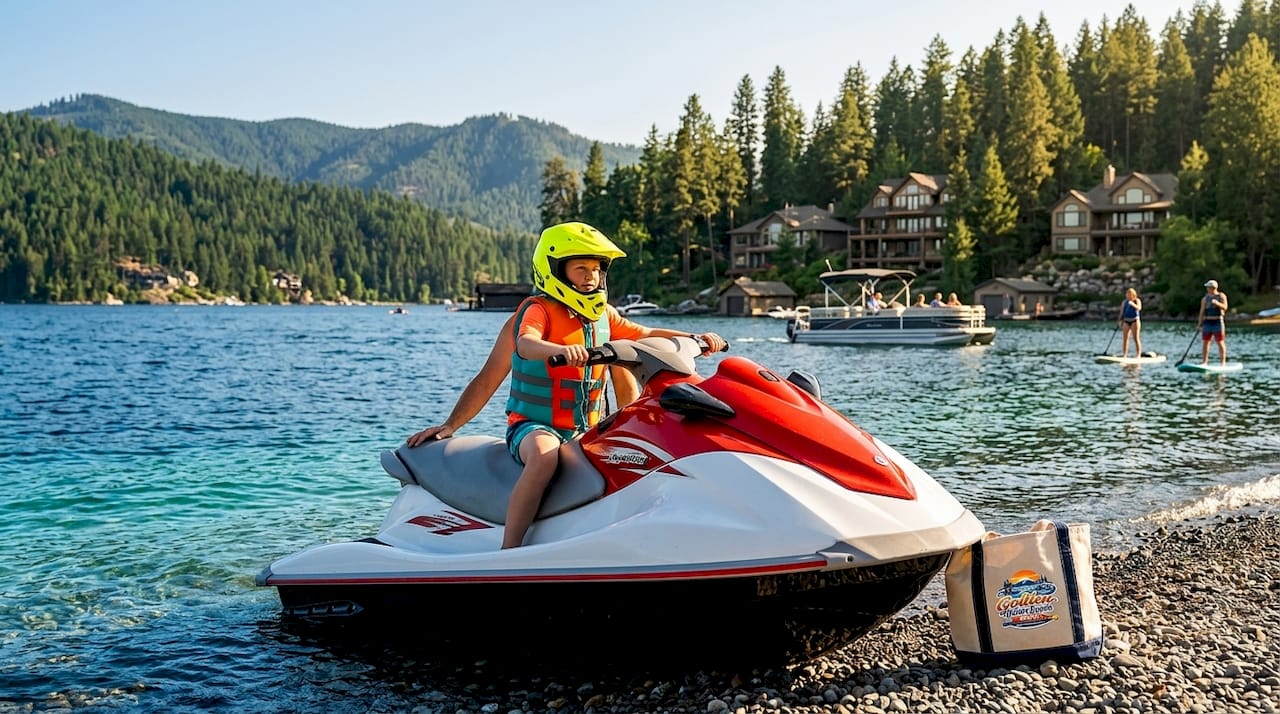
The right gear prevents the most common injuries. Start with the life jacket, because a poorly fitted vest is nearly as dangerous as no vest at all. Use the 3-inch test: pull up on the shoulders of the vest. If it rises more than three fingers, it is too loose. A properly fitted vest includes crotch straps and back padding to keep the jacket in place if your child enters the water unexpectedly.
Every child's life jacket must be Coast Guard-approved and sized for their weight, not their age. Beyond the vest, assemble the full gear list before leaving home:
- Safety lanyard (kill switch): Attach this to the driver's wrist. If anyone falls off, the engine stops automatically.
- UV-protective rash guard or wetsuit: Sun exposure on open water is intense, even on cloudy days.
- Water shoes: Protect feet during boarding and reboarding, which is when most minor injuries happen.
- Helmet: Recommended for younger or first-time riders, particularly in areas with boat traffic.
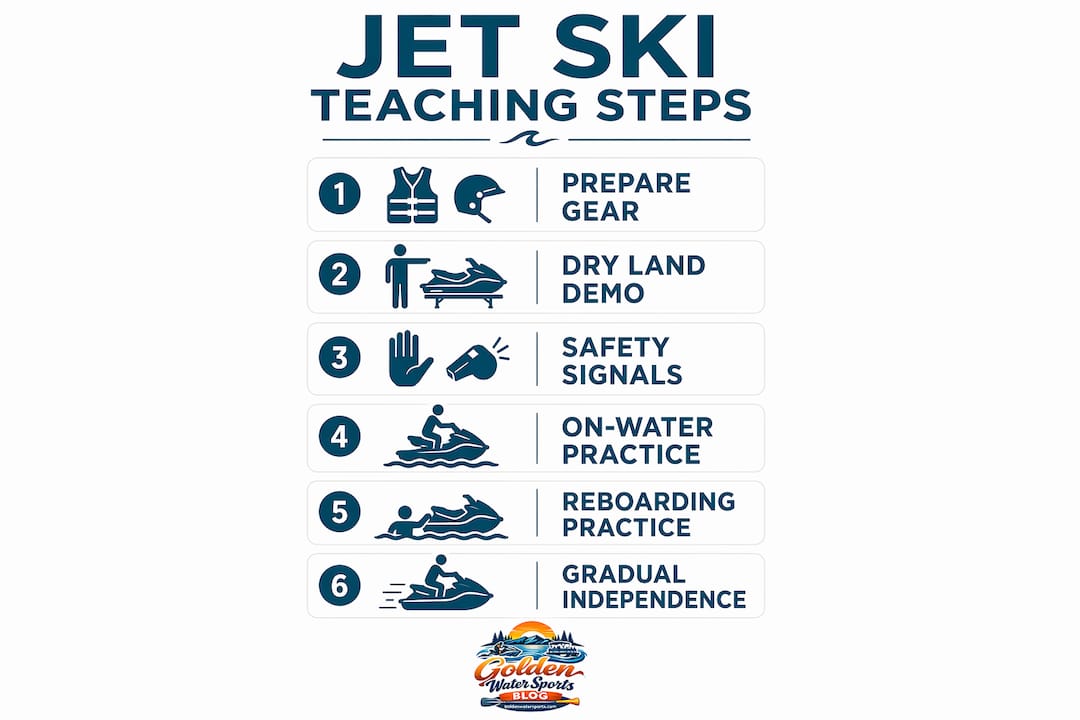
Preparation on dry land is just as critical as gear. Hands-on dry land demonstration helps children familiarize themselves with seating, controls, and engine sounds before they ever touch the water. Walk your child through where to sit, where to hold on, and what the throttle sounds like at idle. This reduces anxiety and builds realistic expectations. Pair that with a review of the importance of life jackets so your child understands why the gear matters, not just that they have to wear it.
Pro Tip: Set up non-verbal hand signals before you leave shore. Engine noise and wind make verbal communication nearly impossible at speed. Agree on three signals at minimum: thumbs up for "okay or go faster," thumbs down for "slow down or I'm scared," and tapping the head for "return to dock."
How should parents step-by-step teach jet ski basics on the water?
A structured sequence makes the difference between a child who loves jet skiing and one who refuses to go back. Follow these steps in order, and resist the urge to skip ahead.
- Start at idle in calm, open water. Choose a no-wake zone or a quiet cove away from boat traffic. Keep speed at idle for the first 5–10 minutes while your child gets used to the motion and sound.
- Position your child correctly. Children must sit behind the driver, sandwiched between the driver and the seat back. Never place a child in front. The front position creates serious injury risk during sudden stops.
- Establish the hand signal system. Run through the agreed signals before accelerating. Ask for a thumbs up before increasing speed even slightly.
- Increase speed gradually. Only move from idle to low speed after your child gives a clear thumbs up. Gradual speed increases should top out at 15–20 mph only when the child clearly approves and shows comfort at the current speed.
- Keep turns wide and gentle. Sharp turns shift weight suddenly and can frighten or destabilize a child. Avoid wakes from other boats during early sessions.
- Limit sessions to 20–30 minutes. Short initial sessions reduce fatigue and keep the experience positive. End on a high note before your child gets tired.
Pro Tip: Practice reboarding on land before you need to do it on water. Show your child exactly how to grab the handle and pull up from the water side. Knowing the process in advance removes panic from the equation.
Reducing wobble is one of the most underrated parts of teaching children to ride. Inflatable jet ski collars add raft-like stability at low speeds, eliminating the side-to-side motion that frightens most first-time young riders. If your child seems tense at idle, a collar is the fastest fix.
What common mistakes should parents watch for when teaching kids to jet ski?
Most safety mistakes happen before the engine starts. Catching them early protects your child and keeps the experience fun.
- Wrong seating position: Placing a child in front of the driver is the single most dangerous mistake. Always position the child behind you.
- Loose life jacket: A vest that passes the visual check but fails the 3-inch shoulder test can ride up in water and restrict breathing. Recheck the fit every session.
- Skipping hand signals: Without pre-agreed signals, you have no way to know if your child is scared or in pain. Engine and wind noise make shouting useless above 10 mph.
- Ignoring weather and water conditions: Choppy water, strong wind, or heavy boat traffic makes a first session significantly harder. Choose calm mornings on quieter stretches of water.
- Pushing through discomfort: Parents should never force a child who shows anxiety about wind, waves, or speed. Building a positive association with the water matters more than finishing a planned session.
"Building trust and a positive association with jet skiing is more important than pushing through fears. Taking breaks or returning to shore when needed maintains a safe, fun environment and sets the foundation for a lifelong love of the water."
For families new to water activities with children, kid-friendly boat tours offer a lower-stakes way to build comfort on the water before introducing a personal watercraft.
Pro Tip: Check local no-wake zones and speed limits before every outing. Many lakes near Coeur d'Alene have designated slow zones, and violating them carries fines and creates real hazards for other families.
Key takeaways
Teaching kids jet ski basics safely requires age and maturity screening, properly fitted Coast Guard-approved gear, pre-established hand signals, and a gradual, session-limited approach on calm water.
| Point | Details |
|---|---|
| Age and weight minimums | Passengers need to be at least 7 years old and 46 pounds for proper life jacket fit. |
| Life jacket fit check | Use the 3-inch shoulder test and confirm crotch straps are fastened before every ride. |
| Seating position | Always place the child behind the driver, never in front, to prevent injury during stops. |
| Hand signals | Agree on thumbs up, thumbs down, and head tap before leaving shore to communicate on water. |
| Session length | Limit first rides to 20–30 minutes at low speed to prevent fatigue and build confidence. |
What I've learned from watching families get this right and wrong
The parents who create the best first experiences share one habit: they treat the dry land preparation as seriously as the ride itself. Most families rush through the gear check, skip the hand signals, and head straight for open water. Then they wonder why their child is gripping their arms hard enough to leave marks.
The wobble issue surprises almost everyone. Kids are not scared of speed. They are scared of instability. A jet ski at idle rocks more than one at 15 mph, and that slow-speed wobble is what sends most young riders into a panic. Inflatable collars solve this almost instantly, and almost no one uses them.
The other thing I have seen consistently: the sessions that end early because a child signals discomfort always produce kids who want to come back. The sessions that push through tears or white-knuckle gripping rarely do. Patience is not just a virtue here. It is the strategy that actually works.
— Life is better on water.
Goldenwatersports makes family jet ski days easier
Goldenwatersports serves families on Lake Coeur d'Alene with Yamaha WaveRunners, full safety equipment, and staff who know how to set up first-time riders for success. Parents do not have to figure out gear selection or local regulations alone.
Every rental includes safety equipment and a team briefing so your child's first ride starts with the right foundation. Goldenwatersports offers flexible rental periods that fit short introductory sessions, which is exactly what young learners need. Book your family jet ski rental and spend the day building memories on one of the most beautiful lakes in the Pacific Northwest.
FAQ
What is the minimum age for a child to ride a jet ski?
Children as young as 7 years old can ride as passengers, provided they weigh at least 46 pounds and can wear a properly fitted life jacket. Independent operation typically requires ages 12–16 depending on state law.
Where should a child sit on a jet ski?
A child must always sit behind the driver, positioned between the driver and the seat back. Placing a child in front of the driver creates serious injury risk during sudden stops.
How do I communicate with my child during a jet ski ride?
Establish three hand signals before leaving shore: thumbs up for "okay or faster," thumbs down for "slow down or scared," and tapping the head for "return to dock." Engine and wind noise make verbal communication unreliable above low speeds.
How long should a child's first jet ski session last?
Limit the first session to 20–30 minutes at idle or low speed. Short sessions reduce fatigue, keep the experience positive, and make children more likely to want to ride again.
Do children need a boater safety certification to ride a jet ski?
Passengers do not require certification, but operators between 12 and 16 years old may need a completed boater education course depending on the state. Always check your local regulations before teaching independent operation.