
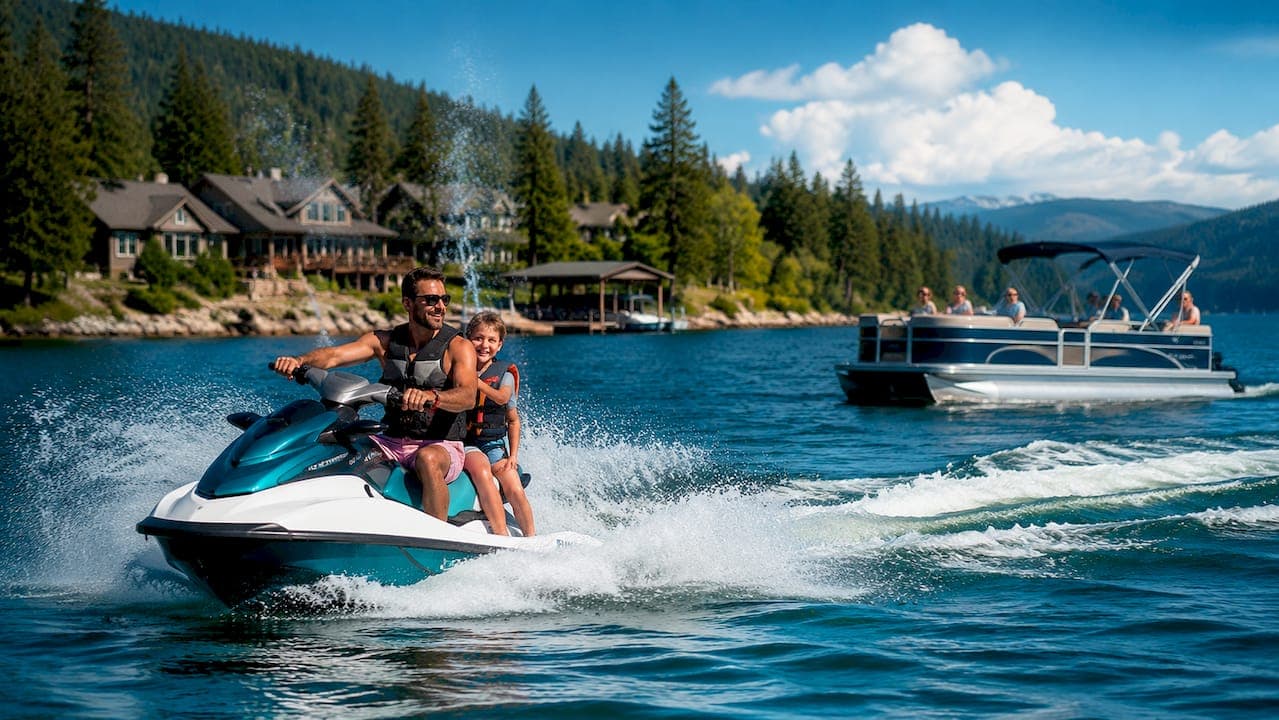
The age restriction for jet skiing is the minimum legal age a person must be to operate a personal watercraft (PWC), typically ranging from 12 to 16 years depending on the state. These limits exist because operating a jet ski demands quick judgment, physical coordination, and the ability to read water conditions fast. Most states also require a NASBLA-approved boating safety certificate on top of meeting the minimum age. Knowing the rules before you book protects your family and keeps you on the right side of the law.
What is the age restriction for jet skiing across U.S. states?
Minimum ages to operate a PWC vary widely by state, typically falling between 12 and 16 years old. That range matters because a 12-year-old in Wisconsin faces very different rules than a 14-year-old in Michigan or Florida.
| State | Minimum operator age | Additional requirements |
|---|---|---|
| Michigan | 14 years | Boating safety certificate required |
| Wisconsin | 12 years | Certification and adult supervision required |
| Florida | 14 years | Safety course + helmet for ages 14–17 (2026) |
| California | 16 years | Boating safety card required |
A few details stand out in that table. Wisconsin sets the lowest bar at 12, but no child under 12 can operate a PWC under any circumstances, even with a parent on board. Florida added a new layer in 2026: operators aged 14 to 17 must now wear a DOT, ECE, or Snell-approved helmet while riding. That rule is the first of its kind in the U.S. and reflects growing awareness of head injury risk on the water.
Certification requirements are equally strict. Operators under 18 must complete a NASBLA-approved boating safety course in Michigan, Wisconsin, Florida, and California. Michigan goes further: anyone born after 1978 must carry a boating safety certificate for life, regardless of age. That lifetime rule catches many adult renters off guard.
Key rules to remember across most states:
- Operators under a certain age must ride with a licensed adult supervisor nearby.
- A boating safety certificate must be carried on the water, not just completed online.
- U.S. Coast Guard-approved PFDs are mandatory for every operator and passenger.
- Helmets are now required for minors in Florida as of january 1, 2026.
Pro Tip: Check your specific state's boating authority website before your trip. Rules change, and a quick five-minute search can prevent a fine or a denied rental.
How do rental company age policies compare to legal minimums?
Rental companies commonly require renters to be at least 18 years old, even when state law permits younger operators. The gap between legal age and rental age is wider than most people expect.
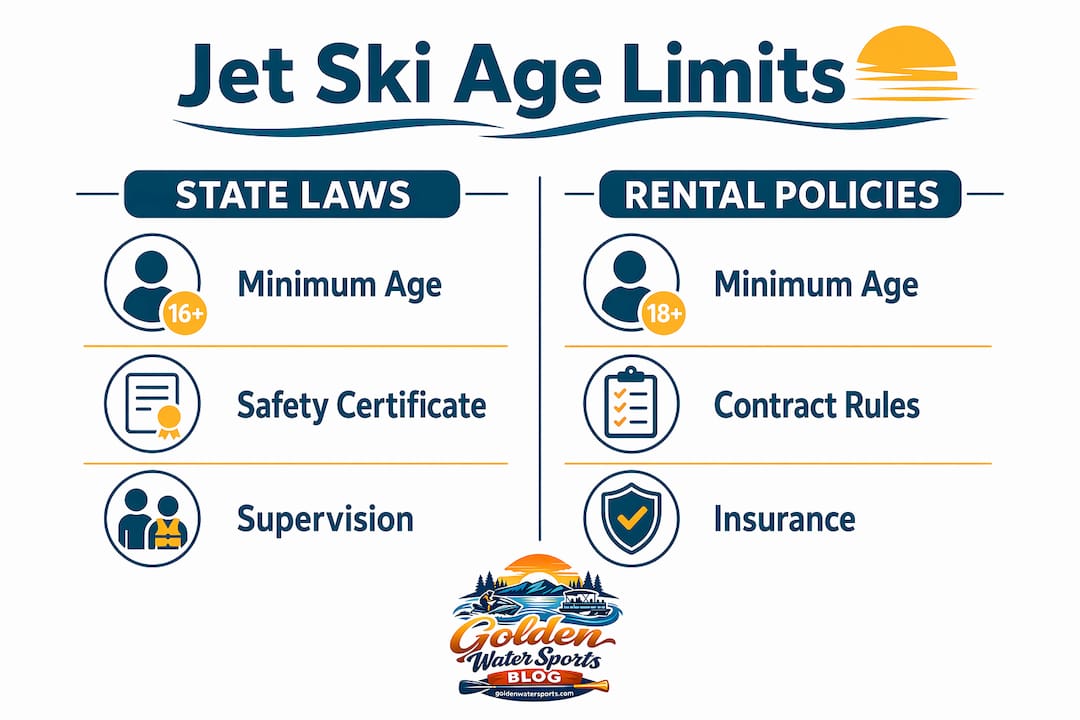
The reason is straightforward. Rental contracts are legally binding documents. A person under 18 cannot sign a binding contract in most U.S. states, which means the rental company has no legal recourse if something goes wrong. Insurance policies for rental fleets also typically exclude coverage for operators under 18. Those two factors together push nearly every commercial rental operation to set 18 as the floor.
Wisconsin rental rules illustrate this clearly. The state allows 12-year-olds to operate a PWC with supervision, but rental companies in Wisconsin require renters to be at least 16. Most national and regional operators go further and require 18.
What this means for families planning a trip:
- Parents can rent the jet ski and take younger teens as passengers.
- Teens aged 16 or 17 may find some local operators willing to rent with a parent co-signing, but this is not guaranteed.
- Always call ahead and confirm the rental company's specific age policy before arriving at the dock.
Pro Tip: When booking a jet ski rental for a family outing, ask about the minimum operator age and whether a parent can serve as the primary renter while a teen rides supervised.
Why do age restrictions exist for jet skiing?
Legal age limits exist because younger operators lack the judgment and coordination needed to safely manage high-powered, maneuverable watercraft in busy conditions. A jet ski can reach speeds above 60 mph and responds instantly to rider input. That combination demands fast, accurate decisions.
Developmental psychology supports this position. Adolescents are still building the prefrontal cortex functions that govern impulse control and risk assessment. On open water, where other boats, swimmers, and wakes appear without warning, those gaps in judgment translate directly into collision risk. Safety courses help close that gap, but they do not replace the cognitive maturity that comes with age.
"Age limits on personal watercraft reflect the developmental readiness of operators to safely handle powerful, maneuverable watercraft in varying conditions." — captainpropeller.com
Supervision requirements reinforce this logic. States that allow 12 or 13-year-olds to operate a PWC almost always require a licensed adult to be within visual range. That adult serves as a real-time safety check, not just a legal formality. Reviewing jet ski etiquette rules before any ride, regardless of age, reduces risk for everyone on the water.
What are the rules for jet ski passengers vs. operators?
Passengers face a different set of rules than operators. No minimum age is typically set for jet ski passengers in most states, but every passenger must wear a properly fitting USCG-approved life jacket.
The practical limit for very young passengers is equipment fit, not law. A toddler cannot safely wear an adult PFD, and most infant-sized PFDs are not designed for the impact forces of a moving jet ski. Most safety experts and rental operators advise against taking children under 5 as passengers for this reason.
For parents planning to bring older children as passengers, follow these steps:
- Fit the child's PFD before arriving at the water. It should be snug, with no more than two fingers of slack at the shoulders.
- Confirm the child can hold on firmly to the operator or the designated handles for the full duration of the ride.
- Keep speeds low and avoid sharp turns when carrying a child passenger.
- Check whether your rental company has its own minimum passenger age policy, since many set a floor of 6 or 8 years old.
Pro Tip: Bring your child's PFD from home if you own one that fits well. Rental PFDs are safe and approved, but a familiar, well-fitted jacket gives kids more confidence on the water.
How do international jet ski age restrictions compare to U.S. rules?
U.S. age requirements are generally more permissive than those in Europe. France sets the minimum operator age at 16, while Spain requires riders to be 18 for solo operation, or 16 with parental consent.
| Country | Minimum operator age | Notes |
|---|---|---|
| United States | 12–16 (varies by state) | Certification often required |
| France | 16 | License required |
| Spain | 18 (or 16 with consent) | Parental consent form needed |
The difference reflects broader cultural and legal approaches to youth water safety. European countries tend to treat PWC operation more like driving a motor vehicle, with formal licensing tied to age. U.S. states rely more heavily on safety courses and supervision as substitutes for higher age floors. If you plan to ride abroad, research the local rules well in advance. A U.S. boating certificate does not automatically satisfy foreign licensing requirements.
Key Takeaways
The minimum age to operate a jet ski in the U.S. ranges from 12 to 16 years depending on the state, and most operators under 18 must also hold a NASBLA-approved boating safety certificate.
| Point | Details |
|---|---|
| State minimums vary | Legal operator age ranges from 12 (Wisconsin) to 16 (California) across U.S. states. |
| Certification is mandatory | Most states require a NASBLA-approved boating safety course for operators under 18. |
| Rentals require age 18+ | Rental companies set stricter minimums than state law due to insurance and contract rules. |
| Passengers have no age floor | No legal minimum age exists for passengers, but a properly fitting USCG-approved PFD is required. |
| International rules are stricter | France requires age 16 and Spain requires 18 (or 16 with parental consent) for solo operation. |
Age rules matter more than most riders think
I have seen families arrive at the dock with a 15-year-old ready to rent, only to learn the hard way that the legal minimum and the rental minimum are two completely different numbers. The frustration is real, and it is entirely avoidable with five minutes of research beforehand.
My honest take: the age limits are not arbitrary. A jet ski is not a paddleboard. It is a 300-plus-pound machine that accelerates faster than most cars. The states that require safety courses are doing riders a genuine favor, not just adding paperwork. I would go further and say every rider, regardless of age, should complete a boating safety course before their first time on the water.
For parents, the smartest move is to ride together first. Let your teen ride as a passenger on your rental before they ever touch the controls. They learn the feel of the water, the speed, and the turning radius without any of the responsibility. When they are old enough and certified, they will be far better prepared. That approach turns a legal requirement into a real learning experience.
— Life is better on water.
Ready to ride with Goldenwatersports?
Goldenwatersports serves Spokane Valley, Liberty Lake, and Coeur d'Alene with Yamaha WaveRunner rentals that meet all state age and safety requirements. Every rental includes a safety briefing, U.S. Coast Guard-approved PFDs, and staff who know the local rules inside and out.
Families and first-time riders are welcome. The team at Goldenwatersports walks every guest through the check-in process, confirms operator eligibility, and answers questions before anyone hits the water. Book your Coeur d'Alene jet ski rental with confidence, knowing every detail is handled correctly from the start.
FAQ
What is the minimum age to operate a jet ski in the U.S.?
The minimum age varies by state, ranging from 12 to 16 years old. Wisconsin allows operators as young as 12 with certification and supervision, while California requires operators to be at least 16.
Can kids ride jet skis as passengers?
Most states set no minimum age for passengers, but every passenger must wear a properly fitting USCG-approved life jacket. Very young children may be restricted by equipment fit rather than law.
Do rental companies follow the same age rules as state law?
No. Rental companies typically require renters to be at least 18 years old for insurance and contract reasons, even when state law permits younger operators.
Is a boating safety certificate required to jet ski?
Yes, in most states for operators under 18, and in some states for all operators regardless of age. Michigan requires anyone born after 1978 to carry a boating safety certificate for life.
What are the new Florida jet ski rules for 2026?
Florida now requires operators aged 14 to 17 to wear a DOT, ECE, or Snell-approved helmet while operating a PWC. This 2026 Florida helmet rule applies on top of existing minimum age and boater safety card requirements.