
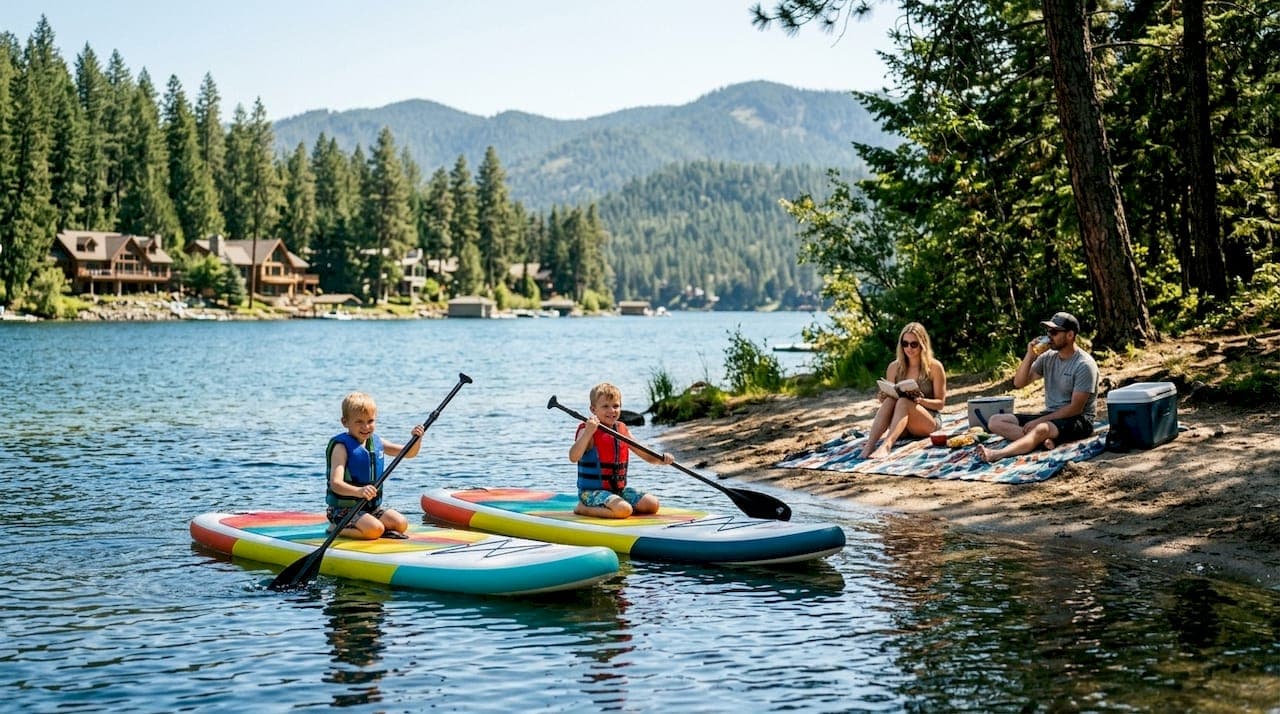
A paddleboard rental is a service that gives you temporary access to a stand-up paddleboard (SUP) and all the gear you need to get on the water, without buying anything. Most rental packages include the board, a paddle, a leash, and a Coast Guard-approved personal flotation device. For tourists and outdoor enthusiasts visiting lakes near Coeur d'Alene, Liberty Lake, or Spokane Valley, paddleboard rental services make it easy to try the sport on the same day you arrive. Goldenwatersports offers exactly this kind of ready-to-go experience for guests who want to spend more time paddling and less time shopping.
What is paddleboard rental and what does it include?
A standard SUP rental package includes a board, paddle, leash, and a personal flotation device, with renters required to return all equipment by a set time, often 5:00 PM. That return policy exists so the next renter gets clean, ready gear without delays. Most rental operators also run a short orientation before you launch, covering paddle grip, stance, how to fall safely, and how to remount the board. This is the part most first-timers skip in their excitement, and it is the part that matters most.
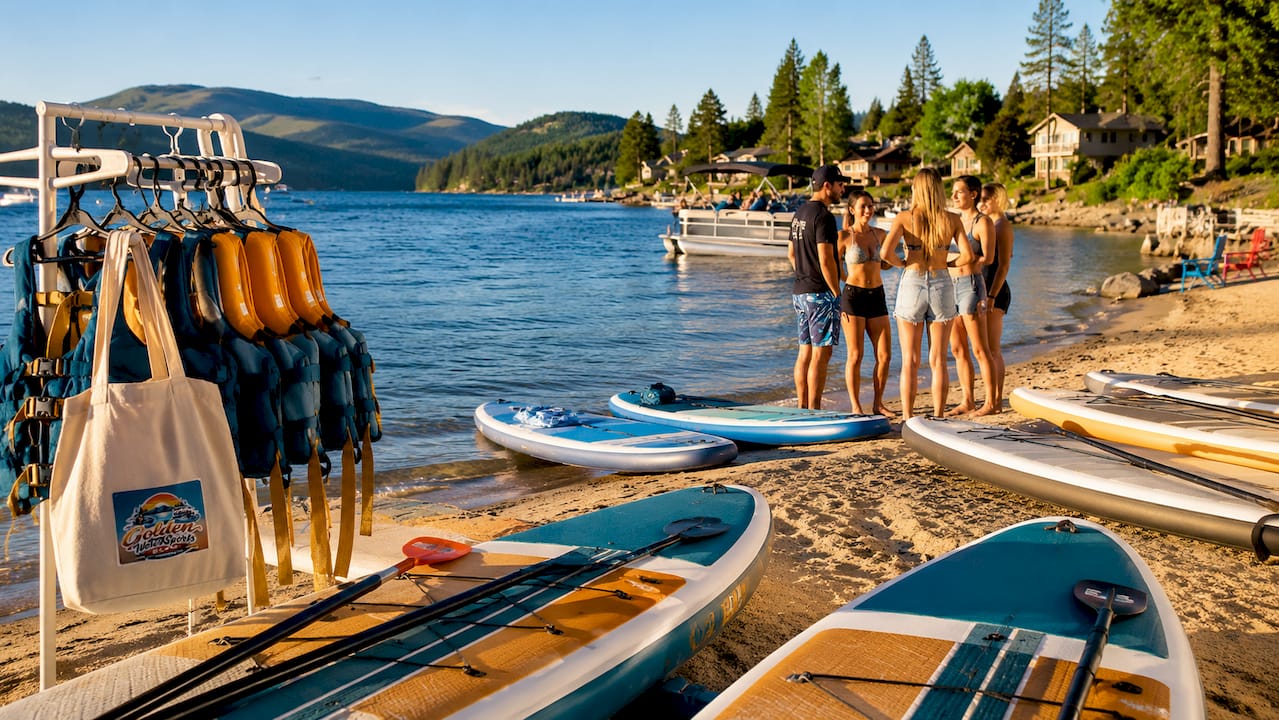
The industry term for the activity is stand-up paddleboarding, abbreviated as SUP. You will see both "paddleboard rental" and "SUP rental" used interchangeably at most rental locations. Knowing both terms helps when you search for paddleboard rental near me or call ahead to check availability.
How much does a paddleboard rental cost?
Paddleboard rental pricing follows a straightforward structure based on how long you want to be on the water.
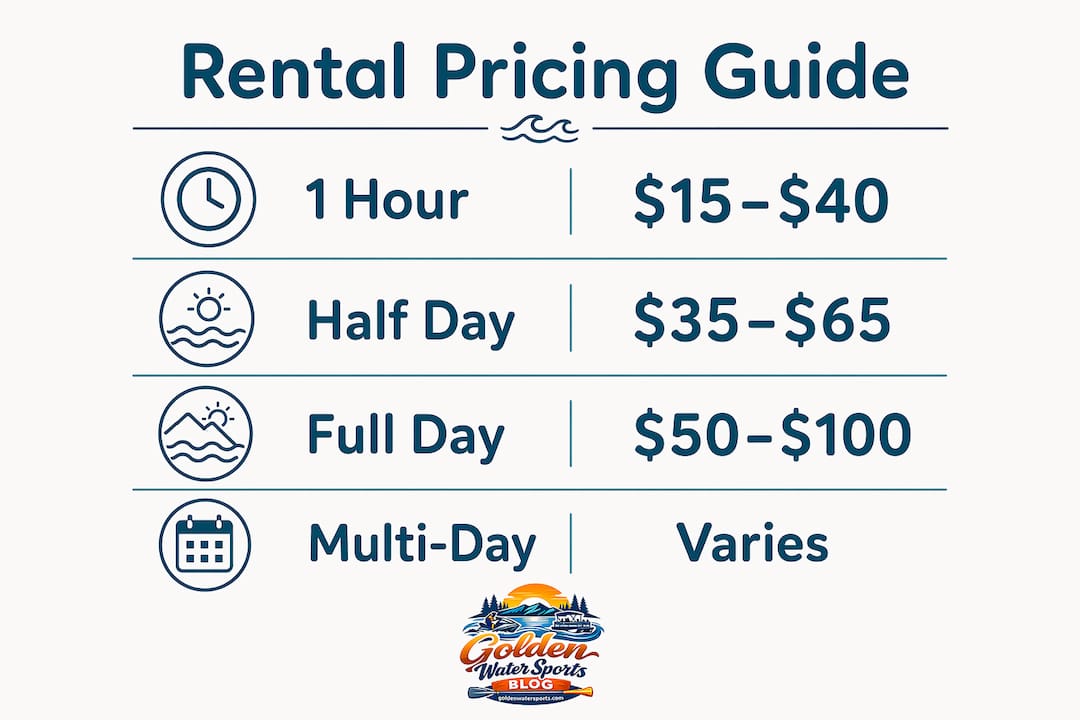
| Rental Duration | Typical Price Range |
|---|---|
| 1 hour | $15–$40 |
| Half day (3–4 hours) | $35–$65 |
| Full day | $50–$100 |
| Multi-day or group | Discounted rates vary |
Hourly rates range from $15 to $40, while full-day rentals typically fall between $50 and $100. That pricing gap rewards renters who plan ahead. Group discounts and multi-day deals are common, so if you are traveling with family or friends, ask about bundled rates before you book.
A few practical points on booking and returns:
- Book in advance during peak summer weekends. Boards sell out fast at popular lake destinations.
- Confirm the return time when you book, not when you arrive.
- Ask whether the clock starts when you pick up the board or when you hit the water.
- Check whether a credit card hold is required for the security deposit.
Pro Tip: Book the half-day option for your first rental. It gives you enough time to get comfortable without committing to a full day if conditions change or fatigue sets in.
Who can rent a paddleboard? Age, weight, and safety rules
Most rental centers require the primary renter to be at least 18 years old to sign the liability waiver. Younger paddlers can use the boards independently when they meet the minimum age of 10 and weigh at least 65 pounds. Those numbers exist because board stability and paddle control depend on the rider's size relative to the board.
Every renter signs a liability waiver before launching. Waivers should be drafted by legal professionals to clearly communicate risks, since generic forms may not hold up if an incident occurs. Read the waiver before you sign it. Rental operators use it to protect both parties.
PFD use is mandatory at all times on the water. Experienced paddlers often prefer traditional life jackets for better buoyancy, while belt-pack PFDs work for advanced users who want a lower profile. For beginners, a standard life jacket is the right call every time.
Pro Tip: Wear your PFD from the moment you step onto the board. Most rental incidents happen close to shore during the first five minutes, not out in open water.
Why renting beats buying for most casual paddlers
Renting is the best option for beginners who want to test different board types under staff guidance before spending hundreds of dollars on their own gear. A quality SUP board costs $400–$1,200 or more, plus you need storage space, a vehicle rack, and transport gear. Renting sidesteps all of that.
Here are the top reasons casual paddlers choose rentals over ownership:
- No upfront cost. You pay only for the time you use.
- No storage problem. Boards are large and awkward to store in apartments or small homes.
- Try before you buy. Rental fleets carry multiple board types so you can find what suits your paddling style.
- Local expertise included. Rental staff know the water conditions, best launch spots, and weather patterns for that specific lake.
- No transport headaches. Inflatable paddleboards are easier to move than rigid boards, but even inflatables require a pump and a bag. Rentals eliminate all of that.
Renting makes the most financial sense for paddlers who get on the water fewer than 10–15 times per year. Below that threshold, the cost of ownership rarely pays off compared to paying per session.
For a broader look at why lake rentals work well for families and weekend visitors, the pontoon boat rental guide from Goldenwatersports covers the same logic applied to larger watercraft.
How to choose the right paddleboard rental service near local lakes
The location of the rental matters as much as the price. Calm, protected waters such as no-wake zones, coves, or sheltered bays give beginners a much better first experience than open, choppy water. Ask the rental operator where beginners typically launch and whether the area is protected from wind and boat traffic.
When comparing rental services, check for these factors:
- Board selection. Does the fleet include stable, wide boards for beginners? Stable beginner boards build confidence faster than narrow performance boards.
- Gear included. A complete package covers board, paddle, leash, and PFD. Never rent from a service that charges extra for safety gear.
- On-site orientation. Reputable operators include a brief safety orientation covering stance, paddle grip, and remounting. Skip any service that skips this step.
- Board type. Inflatable SUPs dominate rental fleets because they are easier to transport and store. Rigid boards perform better in open water but require roof racks and more handling.
- Return policies. Confirm the return window and any late fees before you leave the dock.
For a deeper look at paddleboarding technique and water access points at popular destinations, the Lisbon paddleboarding guide from Lisbon by Boat offers a well-structured example of how local operators set up beginner-friendly experiences.
Pro Tip: Call ahead and ask what board width the rental fleet carries. Boards 32 inches wide or wider are the sweet spot for most adult beginners.
Key takeaways
A paddleboard rental gives you everything you need to get on the water for a set time, at a fraction of the cost of ownership, with no storage or transport burden.
| Point | Details |
|---|---|
| Rental package contents | Every rental should include a board, paddle, leash, and Coast Guard-approved PFD. |
| Pricing structure | Hourly rates run $15–$40; full-day rentals typically cost $50–$100. |
| Age and weight rules | Primary renters must be 18+; independent riders need to be at least 10 years old and 65 lbs. |
| Renting vs. buying | Renting beats buying for paddlers who go out fewer than 10–15 times per year. |
| Location matters | Choose calm, protected water for your first rental to build confidence safely. |
What I have learned from watching first-timers on the water
The biggest mistake new renters make is underestimating how much the board type affects their experience. I have watched guests struggle on narrow, performance-oriented boards when a wider, more stable option was sitting right next to it on the rack. Always ask for the most stable board in the fleet on your first outing. Pride is not worth a cold swim.
The second mistake is skipping the orientation. Rental staff cover remounting the board after a fall, which sounds simple until you are actually in the water trying to do it. Five minutes of instruction on shore saves twenty minutes of frustration out on the lake.
My honest advice on rental duration: first-timers should book two hours, not one. The first thirty minutes go to getting comfortable. The second thirty minutes are when paddleboarding actually becomes fun. One hour is almost never enough to feel the payoff. Two hours gives you the full experience without the fatigue of a full day.
— Life is better on water.
Paddleboard rentals with Goldenwatersports
Goldenwatersports serves Liberty Lake, Newman Lake, and the Coeur d'Alene area with beginner-friendly paddleboard rentals that include all necessary gear. Every rental comes with a board, paddle, leash, and PFD, so you show up and paddle.
Goldenwatersports offers flexible rental durations and competitive pricing designed for families, couples, and solo adventurers who want a straightforward day on the water. Check the full rental rates and availability to plan your outing, or explore jet ski options at Liberty Lake if you want to add more speed to your day.
FAQ
What does a paddleboard rental include?
A standard paddleboard rental includes a board, paddle, leash, and a Coast Guard-approved personal flotation device. Most reputable operators also provide a brief on-site orientation before you launch.
How much does it cost to rent a paddleboard?
Hourly rates typically run $15–$40, and full-day rentals range from $50–$100. Group and multi-day discounts are common at most rental locations.
What is the minimum age to rent a paddleboard?
The primary renter must be at least 18 years old to sign the liability waiver. Riders as young as 10 years old can use a board independently if they weigh at least 65 pounds.
Is a life jacket required during a paddleboard rental?
Yes. Rental operators require renters to wear a Coast Guard-approved PFD at all times on the water. This is both a safety standard and a legal requirement at most locations.
Should I rent or buy a paddleboard as a beginner?
Renting is the better choice for beginners and casual paddlers. It lets you try different board types without the upfront cost, storage demands, or transport hassle of ownership.