

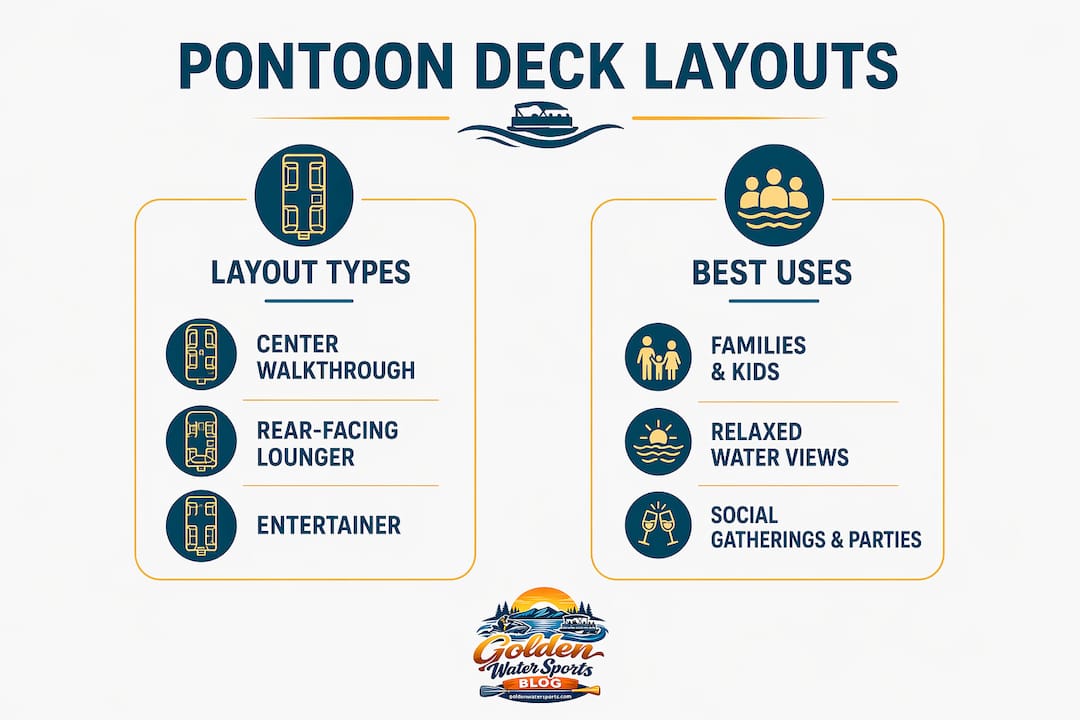
A pontoon boat deck layout is the deliberate arrangement of seating, open space, and functional zones on a pontoon deck to control traffic flow, social interaction, and on-water usability. The right floor plan determines whether your day on the lake feels effortless or cramped. Three layout types dominate 2026 design choices: the Center Walkthrough, the Rear-Facing Lounger, and the Entertainer. Each serves a different boating lifestyle, and choosing the wrong one costs you comfort every single trip.
What is a pontoon boat deck layout, and why does it matter?
A pontoon boat deck layout is the furniture and open space arrangement on the deck that directly affects traffic flow and how the boat gets used. Think of it as the floor plan of a room that moves at 25 mph. Every seat, aisle, and open zone either helps or hurts the experience.
Layout affects boarding, movement between zones, and how many people can use the boat comfortably at once. A poorly arranged deck forces passengers to squeeze past each other, blocks access to the water, and makes activities like fishing or wakeboarding awkward. Getting the floor plan right before you ever leave the dock is the single most impactful decision you make as a pontoon owner.
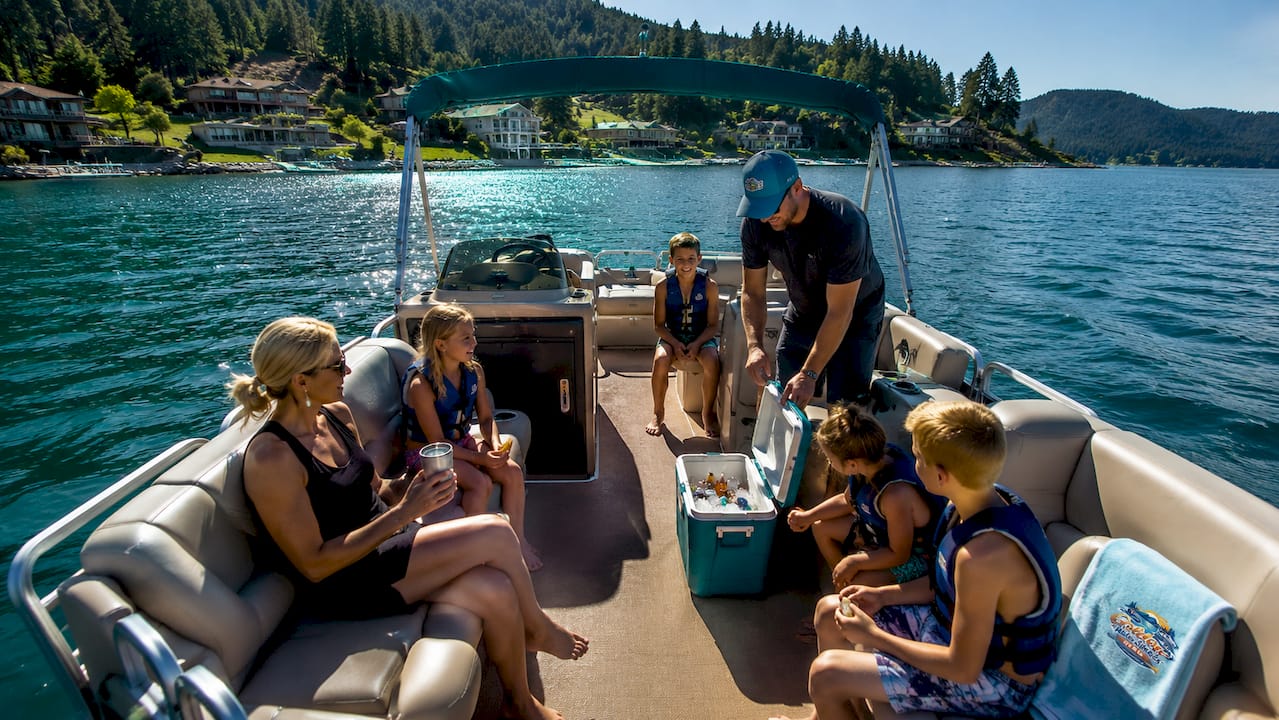
Goldenwatersports sees this firsthand with boaters on Lake Coeur d'Alene. Groups that rent pontoons with layouts matched to their activity, whether that is a family outing or a social gathering, consistently report better days on the water.
Common pontoon deck layouts and their best uses
The three most popular pontoon boat layout designs each solve a different problem.
| Layout | Best For | Key Feature | Typical Boat Size |
|---|---|---|---|
| Center Walkthrough | Families, general use | Unobstructed center aisle | 18–24 ft |
| Rear-Facing Lounger | Watersports, sunbathing | Rear seating faces the water | 22 ft and longer |
| Entertainer | Social gatherings | Fixed bar, wraparound seating | 22 ft and longer |
The Center Walkthrough layout places an open aisle down the middle of the deck. This gives passengers clear access from bow to stern without climbing over furniture. It is the most family-friendly option because children and pets move safely without obstacles. Boarding and exiting the boat is faster, which matters when you are anchoring at a busy beach.
The Rear-Facing Lounger layout positions seating at the stern so passengers face outward toward the water. Rear-facing layouts are favored for sunbathing and watching water sports because riders can see a wakeboarder or tuber without turning around. This layout works best on boats 22 feet or longer, where the stern has enough room to accommodate the lounger without eating into the main deck.
The Entertainer layout prioritizes social interaction. Fixed bars, wraparound seating, and defined social zones replace open deck space. This configuration suits groups that want to anchor up and spend the afternoon socializing rather than actively using the water.
How your lifestyle should drive your deck layout choice
Lifestyle dictates the best layout more than any other factor. A family with young children needs clear sightlines and open walking space. A group of adults hosting a lake party needs social zones and bar access. A fishing crew needs open deck space and easy access to the water's edge.
Here is how common boating lifestyles align with layout priorities:
- Families with children: Center Walkthrough for safe movement and clear adult sightlines
- Entertaining groups: Entertainer layout with fixed seating and bar zones
- Fishing enthusiasts: Open bow and stern areas with minimal fixed furniture
- Watersports crews: Rear-Facing Lounger for visibility and quick water access
- Mixed-use boaters: Modular layouts that shift between configurations without full renovations
Boat designers prioritize open space over maximum seating to create functional layouts that accommodate activities like wakeboarding and fishing. More seats sound appealing until you realize they eliminate the room you need to actually use the boat.
Pro Tip: Before finalizing any layout, walk through your typical day on the water. Count how many people move between zones, where they board, and what activities they do. That mental walkthrough reveals layout problems before they cost you money.
Modular furniture systems solve the mixed-use problem. Modern pontoon furniture often reconfigures without tools, letting you shift from an entertainer setup to a fishing layout in minutes. This flexibility adds long-term value and avoids the need for costly renovations when your boating habits change.
What flooring material works best for your deck layout?
Flooring is not a cosmetic choice. The material you choose affects safety, maintenance time, and how well the deck holds up to your specific activities.
| Flooring Type | Cost (per sq ft) | Durability | Best For | Maintenance |
|---|---|---|---|---|
| Woven Marine Vinyl | $15–$25 | Up to 10 years | All-purpose, luxury feel | Wipe clean, hose down |
| EVA Foam | Lower cost | Shorter lifespan | Families, high-traffic areas | Easy to clean, replace panels |
| Marine Carpet | Low | Moderate | Casual cruising | Difficult; traps debris |
| Synthetic Teak | High | Long-lasting | Aesthetics, barefoot comfort | Low maintenance |
Woven marine vinyl costs $15–$25 per square foot and lasts up to 10 years. It mimics teak woodgrain and handles heavy foot traffic without showing wear. EVA foam costs less upfront and cushions high-traffic family areas, but it requires more frequent panel replacement.
Marine carpet traps fish slime, scales, and blood in its fibers, making it a poor choice for fishing layouts. Vinyl and EVA foam surfaces hose down completely, which matters after a full day of fishing or watersports. Synthetic teak delivers the best barefoot comfort and aesthetics but carries the highest price.
Pro Tip: Match your flooring to your primary activity, not your favorite look. A fishing crew that installs marine carpet will spend more time scrubbing than fishing within one season.
How to arrange your pontoon boat deck for maximum usability
Getting the arrangement right requires a specific sequence of decisions. Skipping steps leads to expensive mistakes.
-
Map your boarding gates first. Gate placement is often overlooked during layout planning. Furniture placed in front of an ingress or egress point blocks safe boarding and creates a renovation problem. Measure every gate location before placing a single piece of furniture.
-
Use digital design tools. 2D and 3D design tools let you drag and drop furniture into a scaled deck plan before buying anything. DIY renovators prefer 2D layouts for precise control. Beginners benefit from 3D tools with preset configurations. Both approaches catch space problems that are invisible on paper.
-
Align aisles with drainage points. Traffic aisles aligned with drainage holes prevent water from pooling in corners and make post-trip cleanup faster. This detail is easy to plan in advance and difficult to fix after installation.
-
Choose modular furniture. Fixed furniture locks you into one configuration. Modular systems let you reconfigure the deck for fishing, entertaining, or relaxing without permanent changes. This flexibility protects resale value and adapts to how your boating habits evolve.
-
Balance seating with open zones. The most common mistake in pontoon layout design is filling every square foot with seating. Reserve at least one clear open zone for activities, gear storage, or simply moving around. Groups planning large gatherings on the lake consistently benefit from this balance.
For party-focused setups, the 2026 pontoon party planning guide covers zone arrangement in detail, including bar placement and traffic flow for larger groups.
Key Takeaways
A pontoon boat deck layout determines the entire on-water experience, and matching the floor plan to your lifestyle is the most important decision you make before hitting the lake.
| Point | Details |
|---|---|
| Layout type drives usability | Choose Center Walkthrough for families, Rear-Facing Lounger for watersports, Entertainer for social groups. |
| Lifestyle over seating count | Open space for activities outperforms maximum seating in real-world usability. |
| Gate placement comes first | Map boarding gate locations before arranging any furniture to avoid blocked access. |
| Flooring matches activity | Use marine vinyl or EVA foam for fishing and watersports; avoid marine carpet in high-mess environments. |
| Modular furniture adds flexibility | Reconfigurable furniture lets you shift between fishing, entertaining, and relaxing setups without renovation. |
My honest read on pontoon deck layouts after years on the water
The biggest mistake I see boaters make is designing their deck for the boat they wish they had instead of the boat they actually use. Someone buys a pontoon for family lake days, then fills it with an entertainer layout because it looks impressive at the dock. Three months later, the kids have no room to move and the adults are tripping over bar stools.
The layouts that hold up over time are the ones built around a single honest answer to one question: what does a typical Saturday on the water actually look like for your group? If the answer involves kids, fishing rods, and a cooler, the Center Walkthrough wins every time. If the answer is twelve adults and a Bluetooth speaker, the Entertainer earns its space.
I also think boaters underestimate how much flooring affects the whole experience. A deck with the right layout but the wrong flooring still frustrates you every trip. Wet marine carpet after a day of tubing is a miserable cleanup. Vinyl or EVA foam changes that completely.
One more thing worth saying: think about resale. A modular layout with quality vinyl flooring holds value far better than a fixed entertainer build with carpet. The next buyer wants flexibility, not your specific vision of a lake party.
— Life is better on water.
Pontoon rentals on Lake Coeur d'Alene with Goldenwatersports
Goldenwatersports offers pontoon boat rentals on Lake Coeur d'Alene with deck configurations suited for families, social groups, and watersports crews. You get to experience different layout styles firsthand before committing to any purchase or renovation decision.
Goldenwatersports serves Spokane Valley, Liberty Lake, and Coeur d'Alene with flexible rental periods and friendly service. Whether your group needs open deck space for tubing or a social setup for an afternoon anchor, the team matches you to the right boat. Families planning pontoon outings with kids will find layouts that prioritize safety and open movement. Book directly at goldenwatersports.com and get on the water with a layout that fits your day.
FAQ
What is a pontoon boat deck layout?
A pontoon boat deck layout is the planned arrangement of furniture, open zones, and functional areas on the deck. It controls traffic flow, seating capacity, and how well the boat supports activities like fishing, entertaining, or watersports.
Which pontoon layout is best for families?
The Center Walkthrough layout is best for families. It provides an unobstructed center aisle for safe movement, clear adult sightlines, and easy boarding access for children and pets.
How do I choose flooring for my pontoon deck?
Match flooring to your primary activity. Woven marine vinyl lasts up to 10 years and suits all-purpose use. EVA foam works well for high-traffic family areas. Avoid marine carpet if you fish regularly, as it traps debris and odors.
Can I reconfigure my pontoon deck layout without a full renovation?
Yes. Modern modular pontoon furniture systems allow you to shift between fishing, entertaining, and relaxing configurations without permanent changes or full renovations.
What should I plan first when arranging a pontoon deck?
Map your boarding gate locations first. Furniture placed in front of ingress or egress points blocks safe access and creates costly renovation problems that are difficult to fix after installation.