
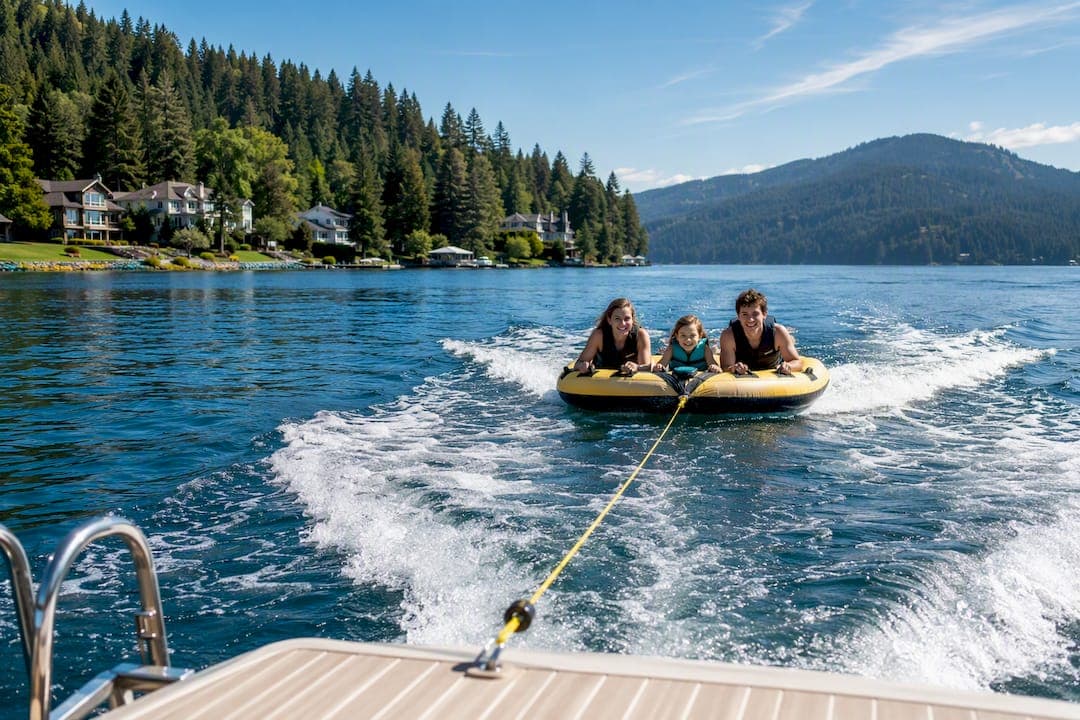
Yes, you can tube behind a pontoon boat, and most modern pontoons handle it well once three conditions are met: enough horsepower, a secure tow point, and a spotter watching the rider. Keep your speed in the 15 to 25 mph range and you've got a mellow, family-friendly ride rather than a stunt show. Skip any one of those three requirements and you're gambling with a rider's safety.
TL;DR:
- A tow point must be rated and positioned low at the transom with a Y-harness to ensure safe and balanced pontoon tubing.
- Engines under 50 HP struggle to get a tube planing, so at least 50 HP is needed for casual tubing, with 90 HP or more for multiple riders.
- Tubing ropes should be 50 to 75 feet long with rated shackles, and ropes should be inspected regularly for fraying or UV damage.
- Proper spotter presence with clear signals and quick power cuts is crucial for preventing tubing accidents and injuries.
- Maintaining tubes by rinsing, checking air pressure, and storing in a cool, dry place extends their lifespan and safety.
Table of Contents
- What Makes Pontoon Tubing Feel Different From Other Boats?
- How Do You Attach a Tow Rope to a Pontoon Boat?
- How Do You Choose the Best Tube for a Pontoon?
- What Horsepower and Speed Do You Need for Tubing?
- What Rope, Harness, and Hardware Do You Need?
- What Safety Rules and Laws Apply to Pontoon Tubing?
- How Do You Run a Safe Tubing Session Step by Step?
- How Golden Water Sports Sets Up Rentals for Safe Tubing
- How Do You Maintain Pontoon Tubes to Make Them Last?
- Where and How Should You Store Pontoon Tubes When Not in Use?
- What Are Common Problems With Pontoon Tubing Setups?
- How Does Pontoon Tubing Compare to Tubing Behind Other Boats?
- Tips for Beginner Tubers to Stay Safe and Have More Fun
- Editorial Take: What Actually Matters in Pontoon Tubing
- Sources
What Makes Pontoon Tubing Feel Different From Other Boats?
A pontoon's wide, flat hull pushes a low, rolling wake instead of the sharp, peaky wake a V-hull ski boat throws. That translates directly to the ride: less violent whip on turns, gentler bumps over the wake, and a generally softer experience for the person on the tube. It's part of why pontoon boat tubing has become the default choice for families with younger kids or nervous first-timers.
Tri-toon and performance pontoon models close the gap further. Extra pontoon logs and stronger engines mean better hole-shot power and more stable tracking at speed, which matters once you've got two or three riders on a tube instead of one.
- Standard single or double pontoons: fine for light, casual tubing with one rider.
- Tri-toons and performance pontoons: better suited to multiple riders or repeated hard runs.
- Ski or wake boats: still the better pick if your priority is aggressive speed, big air, or serious wake-crossing tricks.
If your idea of a good afternoon is calm laps around the cove with the kids screaming happily behind you, a pontoon does the job. If you're chasing high-speed thrills every weekend, a dedicated ski boat will always out-perform it.
How Do You Attach a Tow Rope to a Pontoon Boat?
Pontoons don't come with a ski-boat style tow pylon, so you need to set up an attachment point that spreads load evenly and sits low enough to keep the tube tracking flat. RAVE Sports notes that tow bars, pylons, and Y-harnesses attached to rear eyelets or U-bolts are the standard approaches, and manufacturers expect you to check weight ratings before loading them up.
- Check your pontoon's factory tow point rating in the owner's manual before attaching anything.
- Install a transom-mounted tow bar or rear pylon if your pontoon doesn't already have a dedicated tow point.
- Run a Y-harness from both rear cleats or U-bolts to center the pull point behind the boat.
- Use rated stainless shackles or quick links rather than tying rope directly to hardware.
- Test the connection under light load before adding riders.
A Y-harness matters more than most people think. Centering the pull reduces the sideways strain on your boat during turns, which lowers the odds of the tube fishtailing or the engine bogging down mid-turn.
Pro Tip: Avoid wake-tower style tow points designed for wakeboarding. Their upward pull angle can actually lift a tube off the water at the wrong moment. A rear-facing pylon or transom tow bar keeps the pull low and the ride predictable.
How Do You Choose the Best Tube for a Pontoon?
Not every towable performs the same behind a pontoon's softer wake, so tube selection matters more here than behind a ski boat. Look for a slick or "skim-fast" bottom material. RAVE Sports points out that this bottom style improves planing, which helps compensate for a pontoon's lower wake energy and gets riders up on top of the water faster.
- Match rider capacity to your engine: single riders for lower horsepower boats, 2 to 3 person tubes only if you're running higher HP.
- Look for reinforced handles with padded grips. Cheap handles are the first thing to fail on a busy rental day.
- Check the valve type. Boston valves hold air longer and make refills faster between rides.
- Heavier-gauge PVC or nylon covers resist punctures and sun damage better than bargain vinyl tubes.
Budget tubes for one or two riders typically run in the $150 to $350 range, while larger multi-rider models with reinforced covers can run $400 or more. If you're shopping, search "towables" or "boat tubes" rather than "pontoon float," since that's the terminology retailers actually use for this gear.
What Horsepower and Speed Do You Need for Tubing?
Horsepower is the real limiter on how much fun tubing behind a pontoon can be. River Valley Marine's guidance breaks it down clearly: pontoons under roughly 50 HP struggle to get a tube up and planing at all. The 50 to 90 HP range handles basic, casual tubing with a single lighter rider. Once you're running 90 HP or more, you can comfortably pull multiple riders or push closer to the top of the safe speed window.
Quick reference: Recommended tubing speeds generally fall between 15 and 25 mph, with the lower end best for kids and first-timers and the upper end reserved for experienced riders who can handle sharper turns.
Passenger and gear weight eat into your available power fast. A pontoon loaded with eight adults and a cooler has noticeably less pull than the same boat with three people aboard, so consider dropping off extra passengers before a tubing run if your engine is on the smaller side.
What Rope, Harness, and Hardware Do You Need?
Tubing ropes aren't the same product as ski ropes, and swapping one for the other is a common mistake. Ski ropes are built with almost no stretch for precise handling, while tubing ropes need controlled give to absorb the jolt when a tube bounces off a wake.
- Rope length: stick to the 50 to 75 foot range recommended for tubing behind a pontoon, which keeps the tube clear of prop wash and disturbed water.
- Y-harness setup: centers the pull, reduces boat-side load during turns, and is the better default for two-plus riders.
- Single-point tow: simpler to rig but puts more strain on one connection point and can pull the boat off-center.
- Connectors: rated stainless shackles or quick links rather than knots tied directly to cleats.
Pro Tip: Inspect ropes before every outing. Check for fraying near the handle and connector ends, and retire any rope showing UV damage or thinning, since a rope failure at 20 mph is far more dangerous than replacing a $40 rope.
What Safety Rules and Laws Apply to Pontoon Tubing?
Every rider on a tube needs a properly fitted, U.S. Coast Guard approved life jacket, no exceptions for strong swimmers or short rides. Beyond that baseline, most states require a dedicated spotter separate from the driver whenever someone is being towed.
"Many states require an observer onboard when towing a person behind a boat," a common rule that trips up first-time boaters who assume the driver alone is enough. Check your state's specific boating regulations before heading out, since spotter requirements and minimum ages vary.
- Assign one person as spotter with no other job besides watching the tuber.
- Agree on hand signals before starting: thumbs up for faster, flat hand for slow down, thumbs down for stop.
- Keep the tube out of the direct prop wash by using a rope long enough to clear turbulent water.
- Establish a clear emergency-stop signal and cut power the instant a rider falls or the tube flips.
Following this checklist every single time, not just on the first run of the day, is what actually prevents most tubing injuries.
How Do You Run a Safe Tubing Session Step by Step?
A good run has a rhythm to it. Skipping steps because "we've done this a hundred times" is exactly how minor mistakes turn into real problems.
- Inspect the tow point, rope, and shackles before anyone gets in the water.
- Balance passenger weight in the boat so it doesn't list to one side during turns.
- Brief the tuber on hand signals and what to do if they fall.
- Idle away from the swim area before applying throttle gradually, never a hard jump to speed.
- Keep the spotter's eyes on the tuber at all times, calling out position and status to the driver.
- Watch for the tuber signaling to slow down or stop and respond immediately.
- Circle back wide and slow for pickup, approaching from the side, never running directly at a rider in the water.
- If a tube flips or a rider looks hurt, cut the throttle to idle immediately and turn back at a safe, controlled pace.
How Golden Water Sports Sets Up Rentals for Safe Tubing
Golden Water Sports rigs every rental pontoon with an inspected tow rope, a rated Y-harness attachment, and tubes matched to the boat's horsepower before it ever leaves the dock. That prep work is exactly what most first-time renters don't think to check on their own equipment.
- Every tow rope gets inspected for wear before it's handed to a customer.
- Tubes are selected based on the boat's engine size, not just whatever's available that day.
- Staff walk renters through hand signals and spotter duties before departure.
- Life jackets are sized and issued for every rider, not just the minimum required.
For a first-timer, renting rather than buying removes most of the guesswork. You're not researching tow bar ratings or shopping for a Y-harness at 9 p.m. the night before your trip. The gear is already matched and checked.
How Do You Maintain Pontoon Tubes to Make Them Last?
Rinse the tube with fresh water after every outing, especially if you've been in a lake with any algae or after any exposure to salt or brackish water. Sun and chemical residue break down PVC and nylon covers faster than the physical wear from actual use.
Check air pressure before each trip rather than assuming last week's fill is still good. Underinflated tubes drag and plane poorly, while overinflated ones put extra stress on seams. Most tubes have a recommended PSI printed near the valve, and sticking close to that number extends the life of the seams significantly.
Inspect the cover for small punctures or abrasions after every few uses, paying particular attention to the bottom where it drags across docks, sand, or rocky shorelines. A pinhole leak caught early is a five-minute patch job. Left unaddressed, it turns into a blown seam mid-season.
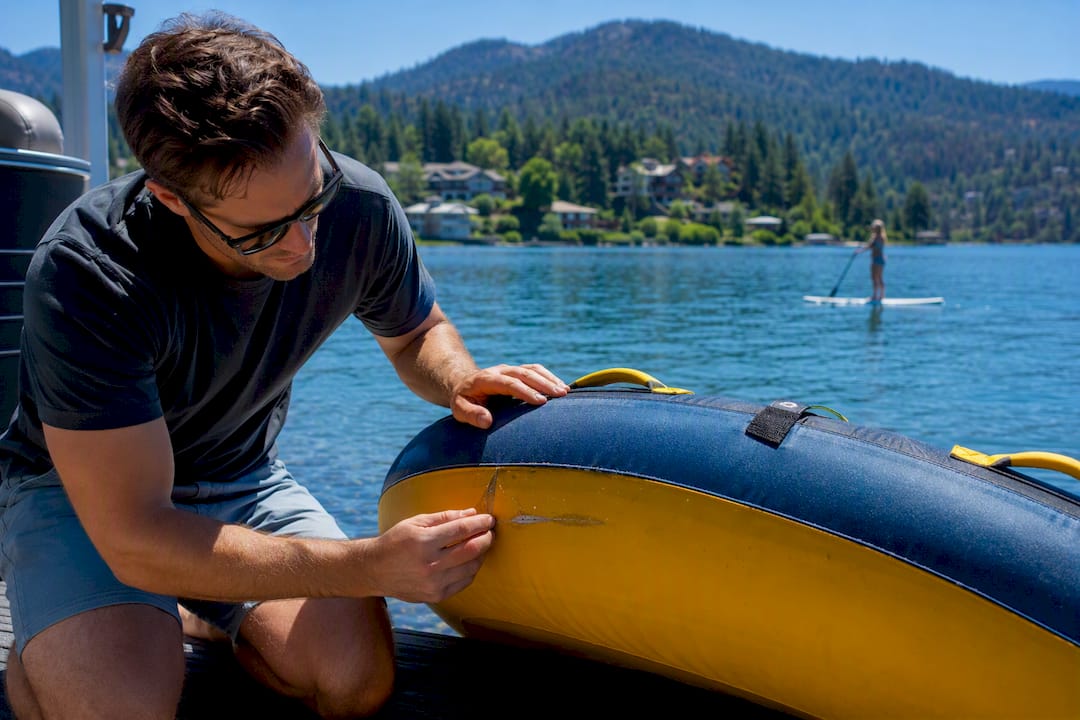
Keep tubes away from sharp dock hardware, boat trailers, and anything with exposed screws or rusted edges during transport and storage. Handles and tow points take the most abuse of any part of the tube, so check stitching and D-rings regularly for fraying or stretching.
Avoid dragging inflated tubes across pavement, gravel, or rocky beaches to get them to the water. That's one of the fastest ways to wear through a bottom cover, even a slick-bottom design built for durability. Carry them instead, or use a dock cart if you're moving a tube any real distance.
Where and How Should You Store Pontoon Tubes When Not in Use?
Fully deflate tubes before long-term storage rather than leaving them inflated in a garage or shed. Constant pressure on seams and valve stems over weeks or months creates weak points that show up as leaks the next time you inflate it.
Clean and completely dry the tube before folding it away. Trapped moisture inside a folded tube is a breeding ground for mildew, and mildew stains and weakens PVC material over a season of storage.
Store tubes in a cool, dry, shaded space away from direct UV exposure. Basements, closets, or a dedicated storage bin work better than a hot garage rafter or an attic that swings between temperature extremes. UV exposure is one of the biggest factors in premature cover cracking, even when a tube isn't in use.
Fold loosely rather than cramming a tube into the smallest possible bag. Tight folds create permanent crease lines that weaken material over time, especially at the valve stem and seams. A loose roll or a slightly larger storage bag beats a tightly stuffed sack.
Keep tubes away from rodents and pests if storing in a shed or barn over winter. Mice in particular will chew through vinyl and PVC covers looking for nesting material, and a tube that survives a whole boating season can get destroyed in a single winter in the wrong storage spot.
What Are Common Problems With Pontoon Tubing Setups?
The tube won't get up on plane. This is almost always a horsepower or weight problem rather than a tube defect. Check passenger count and gear load first, then confirm your rope length isn't so short that the tube is fighting turbulent prop wash.
The boat bogs down or stalls on hard turns. This usually points to a tow point that isn't centered. A single-point attachment on one side of the transom pulls the boat off balance during turns, which is exactly why a Y-harness spread across both rear eyelets solves the problem for most riders.
The tube yaws or fishtails behind the boat even at steady speed. Rope length is frequently the culprit. A rope that's too short keeps the tube inside disturbed water behind the hull. Lengthening toward the 75 foot end of the recommended range often settles this immediately.
Handles pull loose or stitching fails. This is a tube quality and maintenance issue more than a setup issue. Cheaper tubes with minimal reinforcement at handle points fail faster under repeated hard pulls, which is why checking handle construction before buying matters as much as checking the bottom material.
Rope frays or snaps unexpectedly. Almost always traceable to skipped inspections. A rope that looks fine coiled in a bag can have UV damage or internal fiber breakdown that only shows up under load, which is why a quick visual and tug-test before every outing is worth the thirty seconds it takes.
How Does Pontoon Tubing Compare to Tubing Behind Other Boats?
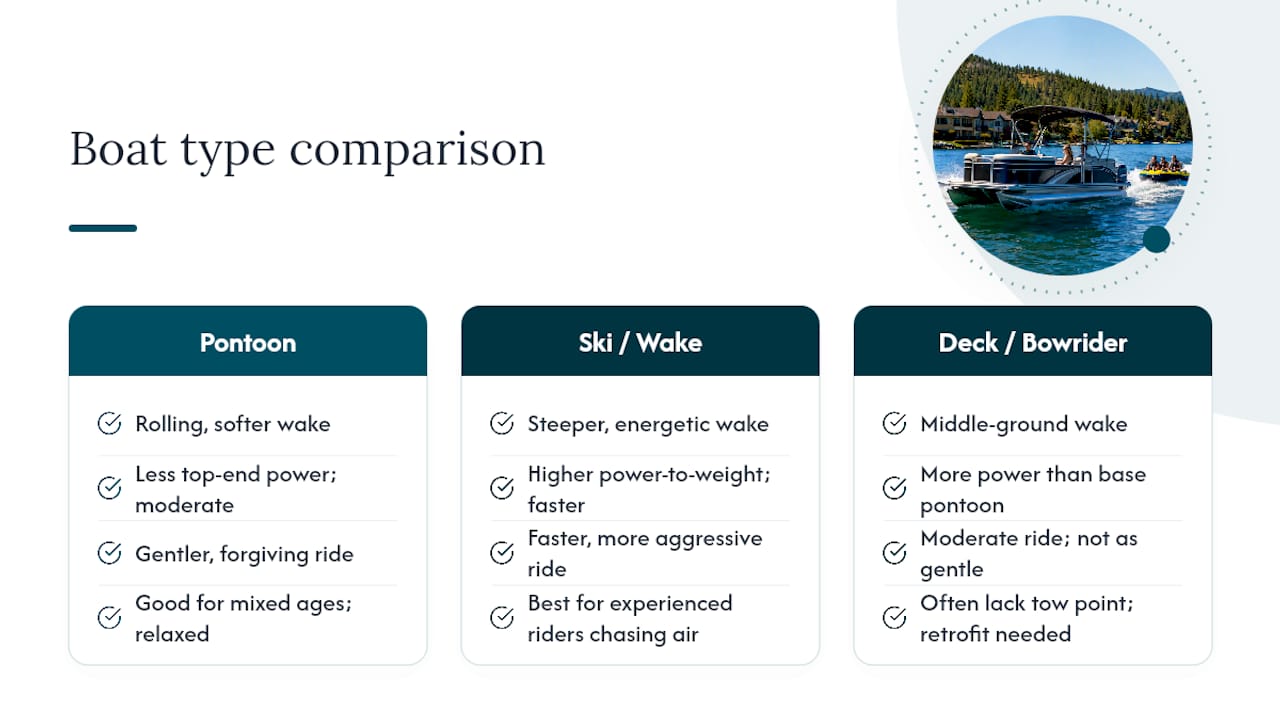
Pontoons trade top-end thrill for a gentler, more forgiving ride, and for a lot of families that's exactly the right trade. The wide hull produces a rolling wake instead of a sharp one, so falls tend to be softer and the overall experience feels less intimidating for younger or first-time riders.
Ski and wake boats generate a steeper, more energetic wake and typically carry more horsepower relative to their weight, which means faster acceleration and a more aggressive ride. That's appealing if your group wants speed and air, but it's also a rougher introduction for a nervous eight-year-old on their first tubing trip.
Deck boats and bowriders sit somewhere in the middle. They generally have more power than a base pontoon but still lack a dedicated tow point, so you're often retrofitting the same tow bar or Y-harness solution either way.
The practical takeaway: if your group is mixed ages, includes tubing beginners, or simply prioritizes a relaxed afternoon over adrenaline, a well-powered pontoon is arguably the better platform, not just the convenient one. If you're a group of experienced riders chasing bigger air and higher speeds every time out, a dedicated ski boat will outperform any pontoon setup.
Tips for Beginner Tubers to Stay Safe and Have More Fun
Start slower than you think you need to. New riders almost always overestimate how much speed they want once they're actually bouncing across the wake, so begin near 15 mph and build up only if the rider signals they want more.
Position yourself in the center of the tube with a firm grip on both handles before giving the go-ahead signal. Riders who sit off-center or grip loosely are far more likely to get thrown on the first turn.
Keep knees slightly bent and body relaxed rather than rigid. Tensing up against every bump actually makes falls harder and increases the chance of an awkward landing.
Learn the hand signals before you leave the dock, not after you're already being towed and can't hear anyone shouting. A thumbs up, flat hand, and thumbs down cover the three signals that matter most.
Never wrap the rope around your hand, wrist, or any part of your body. If you need to let go, you need to be able to let go instantly.
Trust your spotter and driver to watch for other boats and swimmers so you can focus entirely on staying on the tube. That division of attention is exactly why the spotter role exists in the first place.
Editorial Take: What Actually Matters in Pontoon Tubing
The conventional advice on pontoon tubing spends too much time on tube brands and not enough on tow point setup. That's backwards. A mediocre tube on a properly centered Y-harness beats a premium tube hanging off a single side cleat every time, because the physics of an unbalanced pull cause more falls and more boat handling problems than a slightly stiffer tube bottom ever will.
Horsepower gets treated as a nice-to-have when it should be treated as a gate. If your pontoon sits under 50 HP, you're not really choosing whether to tube, you're choosing how disappointing the attempt will be. Be honest about your engine before you buy a tube built for three riders.
The spotter requirement gets skipped more than any other rule, usually because groups assume the driver can watch and drive at once. They can't, not safely, and that single shortcut causes more preventable incidents than rope failures or tube defects combined. Get a dedicated spotter before you worry about anything else on this list.
— Life is better on water.
Ready to put this into practice without sourcing your own tow bar, rope, and tube? Golden Water Sports rigs pontoons for tubing before you ever step aboard, matching gear to the boat's horsepower and checking every attachment point in advance. Check current pontoon and boat rental pricing for your next lake day near Coeur d'Alene, and spend your afternoon on the water instead of troubleshooting hardware.
Sources
- Can You Pull an Inner Tube Behind a Pontoon Boat? Get the Real Answer — Pontoonopedia
- Can You Go Tubing on a Pontoon Boat? Exploring the Possibilities and Safety Tips — NG Cruise
- Tips for Pontoon Tubing — RAVE Sports
- Skiing, Wakeboarding and Tubing behind a Pontoon, What You Need to Know — River Valley Marine