
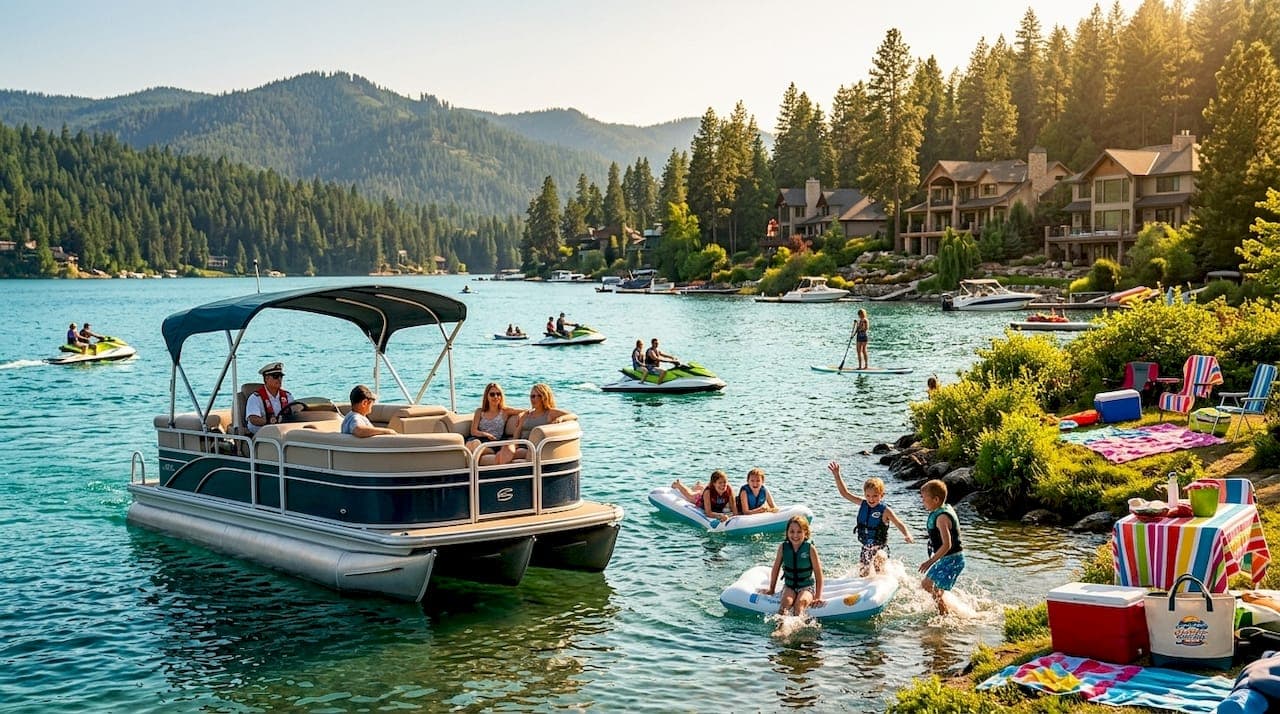
The captain on a rental boat is the licensed professional who assumes full responsibility for operating the vessel, navigating the water, and managing every on-water risk so guests can focus entirely on having a great time. This role, formally called the "master" under U.S. maritime law, covers far more than steering. The captain handles weather monitoring, emergency protocols, docking, and legal compliance. Guests on a captained boat are not required to have any boating experience or license, which makes the role of captain on a rental boat the single most important factor in making boating accessible to first-timers.
What are the primary responsibilities of a rental boat captain?
A rental boat captain's core duties span navigation, safety, hospitality, and vessel management. These responsibilities run from the moment guests board until everyone is safely back on the dock.
The captain's daily duties include:
- Route planning and navigation. The captain selects safe, scenic routes based on current conditions, local knowledge, and guest preferences.
- Weather and water monitoring. Conditions on lakes like Lake Coeur d'Alene can shift quickly. The captain watches for wind changes, storm cells, and wave height throughout the trip.
- Docking and anchoring. Safely anchoring a boat requires skill and situational awareness. The captain handles all vessel handling in tight spaces and busy marinas.
- Emergency safety protocols. The captain briefs guests on life jacket use, emergency exits, and overboard procedures before departure.
- Guest experience and local knowledge. A good captain doubles as a local guide, pointing out hidden coves, swimming spots, and points of interest that no GPS app lists.
Pro Tip: Ask your captain before departure about the best swimming stops or scenic anchoring spots. Captains with local experience know places that don't appear on any map.
USCG-licensed captains are required for commercial vessel operation, which means every professional rental captain has passed federal standards for safety and navigation. That credential is your assurance that the person at the helm is qualified, not just experienced.
How does a rental boat captain's authority work under maritime law?
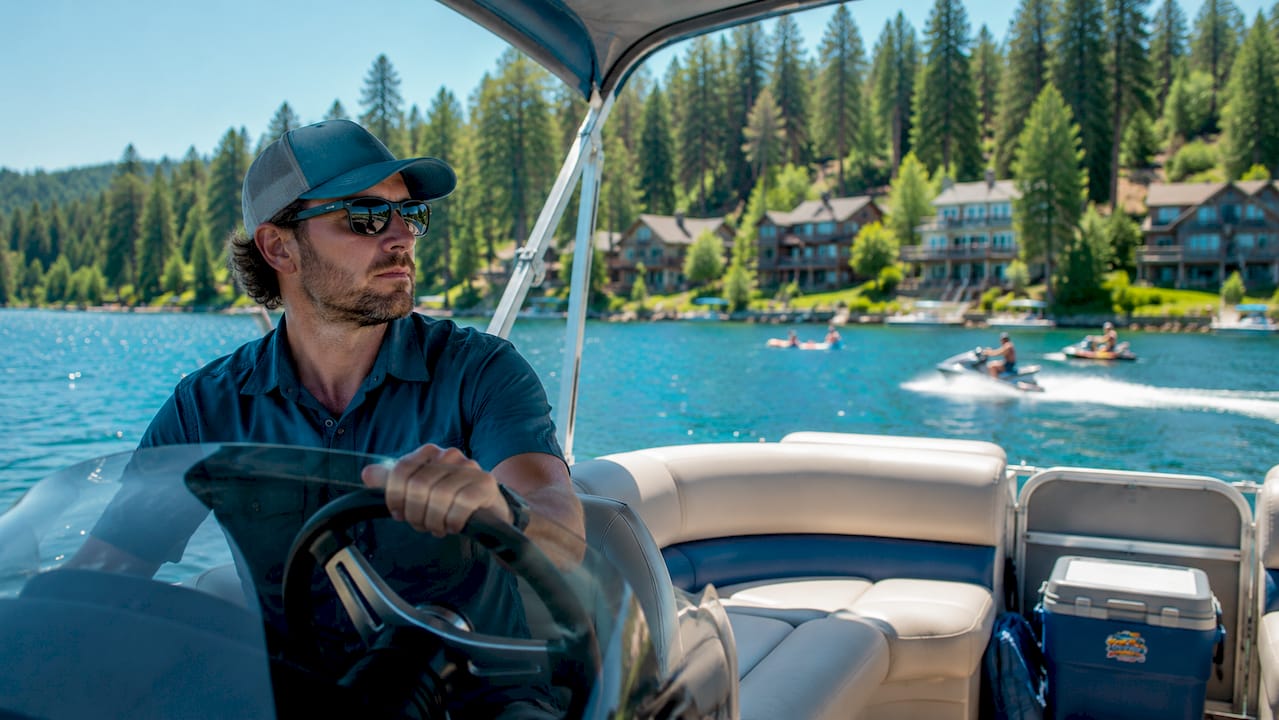
The captain's authority on a rental boat is absolute within the scope of safety and navigation. This is not a courtesy title. Maritime law grants the captain the legal power to override guest preferences when safety is at stake.
Here is how that authority plays out in practice:
- Route changes. The captain can alter or cancel a planned route at any time due to weather, mechanical issues, or hazardous conditions, without guest approval.
- Conduct enforcement. The captain enforces alcohol policies and behavior standards onboard. Guests who violate these rules can be removed from the vessel.
- Charter termination. A captain can legally end a charter mid-trip for safety or behavior concerns, with no refund obligation to guests.
- Emergency decisions. In any emergency, the captain makes unilateral calls on evacuation, distress signals, and vessel operation.
The captain's authority under maritime law is broad, covering unilateral decisions in emergencies, enforcement of discipline and safety rules, and legal compliance for navigation. Guests must acknowledge this authority before boarding, typically through a liability waiver that explicitly affirms the captain's command over weather decisions, conduct, and alcohol policies.
The difference between captained and bareboat charters is significant. In a bareboat charter, the renter takes on operational responsibility and must hire their own captain. In a captained rental, the captain comes with the boat as part of the service, and the rental company holds operational liability. For leisure renters with no boating background, a captained rental is the only arrangement that makes sense.
What skills and certifications must a rental boat captain have?
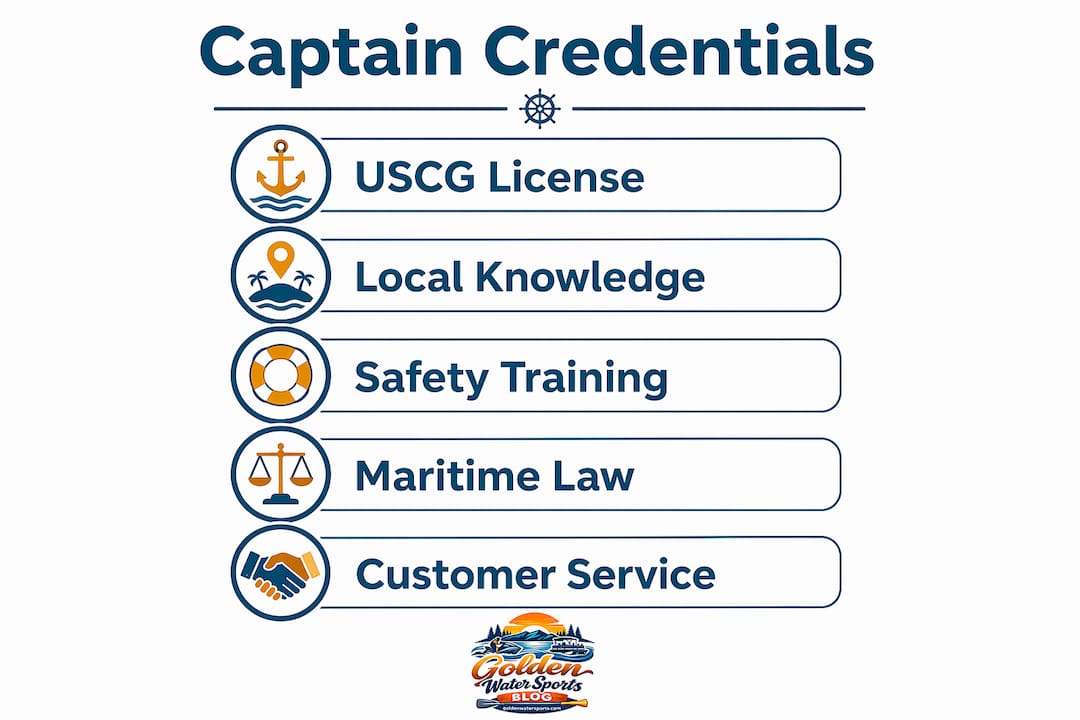
A professional rental boat captain must hold a U.S. Coast Guard (USCG) Merchant Mariner Credential. The specific license type depends on the vessel's tonnage, the number of passengers carried, and the waters traveled.
| Qualification | Details |
|---|---|
| USCG Merchant Mariner Credential | Federal license required for all commercial passenger vessel operators |
| Tonnage and route endorsements | License scope varies by vessel size and whether routes are inland or coastal |
| Emergency response training | Captains complete certified training in first aid, fire suppression, and man-overboard recovery |
| Local waterway knowledge | Familiarity with unmarked hazards, shallow zones, and seasonal conditions specific to operating waters |
| Ongoing compliance | Captains must renew credentials and stay current with U.S. Coast Guard regulatory updates |
Licenses vary based on tonnage, passenger count, and route types, which means a captain operating a large pontoon on Lake Coeur d'Alene holds different credentials than one running a small ski boat on a private lake. Both are federally regulated. The credential system exists to protect guests, not to create paperwork.
Local knowledge is a qualification that no license test fully measures. A captain's instincts about unmarked hazards and shallow areas provide a critical safety buffer that standard GPS navigation misses. On busy summer waterways, that local awareness is often the difference between a smooth outing and a serious incident.
Why hiring a captain improves your rental boating experience
Booking a captained rental removes every operational burden from guests. The result is a fundamentally different experience from a self-drive rental.
The benefits are concrete:
- No license required. Captained rentals remove the need for guests to hold personal boating licenses or certifications. The captain assumes all operational and safety responsibilities.
- Full relaxation. Guests are not watching the depth gauge, tracking weather apps, or worrying about docking. They are swimming, eating, and enjoying the view.
- Expert local guidance. A captain who knows Lake Coeur d'Alene or Liberty Lake can take guests to spots that first-timers would never find on their own.
- Simplified logistics. Fuel management, docking fees, and navigation decisions all stay with the captain. Guests show up and enjoy.
- Safety in crowded conditions. Rising waterway traffic makes a captain's local knowledge critical, especially during peak summer weekends when lakes see heavy recreational use.
Pro Tip: If you are planning a group outing or a family trip with young children, a captained pontoon rental is the most practical choice. Check out family-friendly boating tips to prepare your group before you arrive at the dock.
Captain fees, fuel, and gratuities are often listed separately from the base rental cost. Reviewing the full pricing breakdown before booking prevents surprises. A good resource is this boat rental pricing guide that breaks down what each line item covers.
Key Takeaways
The captain on a rental boat is the legally responsible professional who makes boating safe, legal, and enjoyable for guests with no prior experience.
| Point | Details |
|---|---|
| Captain assumes full responsibility | Guests need no license or boating experience on a captained rental. |
| Maritime law grants absolute authority | The captain can alter routes, enforce conduct rules, and end a charter for safety reasons. |
| USCG credentials are mandatory | Federal licensing ensures every professional rental captain meets regulated safety standards. |
| Local knowledge outperforms GPS | Captains recognize unmarked hazards and shallow zones that navigation apps miss. |
| Captained rentals simplify the experience | Fuel, docking, weather, and logistics all stay with the captain so guests can relax. |
What I've learned about the captain's role that most guests get wrong
Most first-time renters think of the captain the way they think of a rideshare driver: a helpful person in the front who gets you where you're going. That framing misses the point entirely. The captain is the legal authority on that vessel. Every safety decision, every route call, and every conduct standard flows through one person.
I've seen guests push back when a captain calls off a swim stop because of a sudden wind shift. They feel like they're losing something they paid for. What they don't realize is that the captain just made the call that kept everyone out of trouble. That instinct, built from time on the water, is exactly what they hired.
The other thing guests consistently underestimate is how much the captain's local knowledge shapes the quality of the trip. Technology is useful, but it doesn't know which cove has the clearest water this week or where the boat traffic thins out by mid-afternoon. A captain who works these waters regularly carries that information in their head. For first-time renters, that local expertise is the most valuable thing on the boat.
Clear communication before departure matters more than most guests expect. Tell your captain what you want from the trip. A good captain will build a route around your priorities while keeping everyone safe. That conversation takes five minutes and changes the entire outing.
— Life is better on water.
Goldenwatersports makes captained rentals easy on Lake Coeur d'Alene
Goldenwatersports serves Spokane Valley, Liberty Lake, and Coeur d'Alene with high-quality boat rentals backed by experienced, USCG-licensed captains. Every captained rental includes a professional at the helm so your group can focus on the water, not the controls.
Goldenwatersports offers transparent rental pricing for boats and jet skis across the region's most popular lakes. Whether you're planning a family outing on a pontoon or a full-day lake adventure, the team handles the logistics from start to finish. Booking is straightforward, pricing is clear, and the captains know these lakes well. Your group shows up, steps aboard, and the rest is taken care of.
FAQ
What does a captain do on a rental boat?
A rental boat captain navigates the vessel, monitors weather and water conditions, manages docking and anchoring, enforces safety protocols, and ensures the trip complies with maritime law. Guests are not required to assist with any operational tasks.
Do I need a boating license if I rent a captained boat?
No. On a captained rental, the captain holds all required licenses and assumes full operational responsibility. Guests need no prior boating experience or certification.
Can a captain cancel or end a boat trip early?
Yes. Maritime law grants captains the authority to alter routes, cancel stops, or terminate a charter entirely for safety or conduct reasons, with no refund obligation to guests.
What is the difference between a captained rental and a bareboat charter?
A captained rental includes a licensed captain as part of the service, with the rental company holding operational liability. A bareboat charter places the renter in operational control, requiring them to hire and manage their own captain.
How do I choose a good rental boat captain?
Verify that the captain holds a current USCG Merchant Mariner Credential for the vessel type and route. Ask about their experience on the specific waterway you plan to use. Local knowledge and time on those waters matters as much as the license itself.