
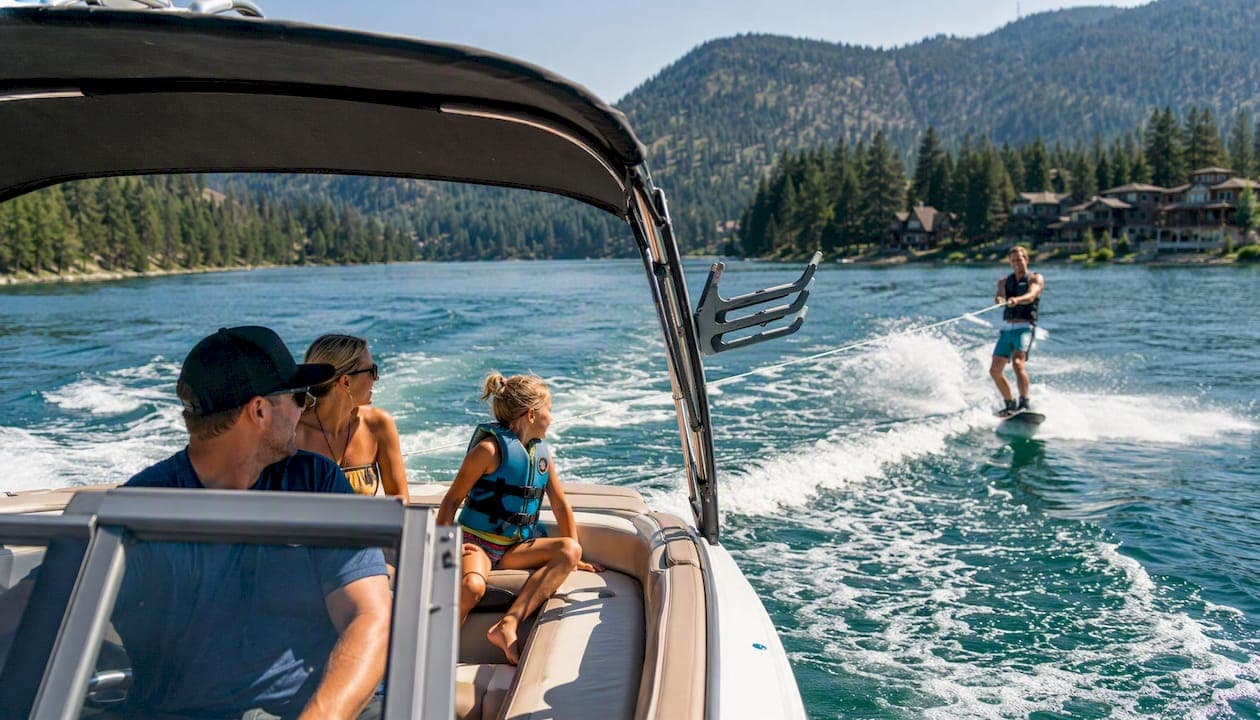
For most recreational skiing and tubing, 90–150 HP covers the practical range. Purpose-built ski and wake boats start at 200+ HP, and advanced tow engines like the MerCruiser 350 Magnum EFI Ski reach 310.1 HP for serious slalom and wakeboarding. Here's where common activities land:
- Child or light tubing (pontoon or small runabout): 40–70 HP
- Adult tubing or beginner skiing: 70 HP minimum, 90+ HP recommended for reliable deep-water starts
- Family mix (skiing, tubing, cruising) on a 17–18' boat: 115–150 HP sweet spot
- Dedicated wakeboarding or slalom: 200+ HP
- Competition or advanced tow sports: 300+ HP purpose-built inboard
Before anything else, check the capacity plate mounted inside your boat. It lists the maximum engine horsepower for outboard-powered boats, and exceeding it is both unsafe and illegal.
Key Takeaways
For most adult water skiing and tubing, 90–150 HP is the practical engine range, with purpose-built tow boats starting at 200+ HP for wakeboarding and slalom.
| Point | Details |
|---|---|
| Minimum HP for adult skiing | 70 HP is the floor; 90+ HP delivers reliable deep-water starts. |
| Family-use sweet spot | A 17–18' boat with 115–150 HP handles skiing, tubing, and cruising. |
| Rule-of-thumb calculation | Divide total loaded boat weight by 25–40 lb per HP to estimate needed power. |
| Altitude adjustment | Inland lakes at elevation lose engine output; favor the upper HP range. |
| Goldenwatersports fleet | Rentals are pre-configured at 115–150 HP for family use and 200+ HP for dedicated tow sports. |
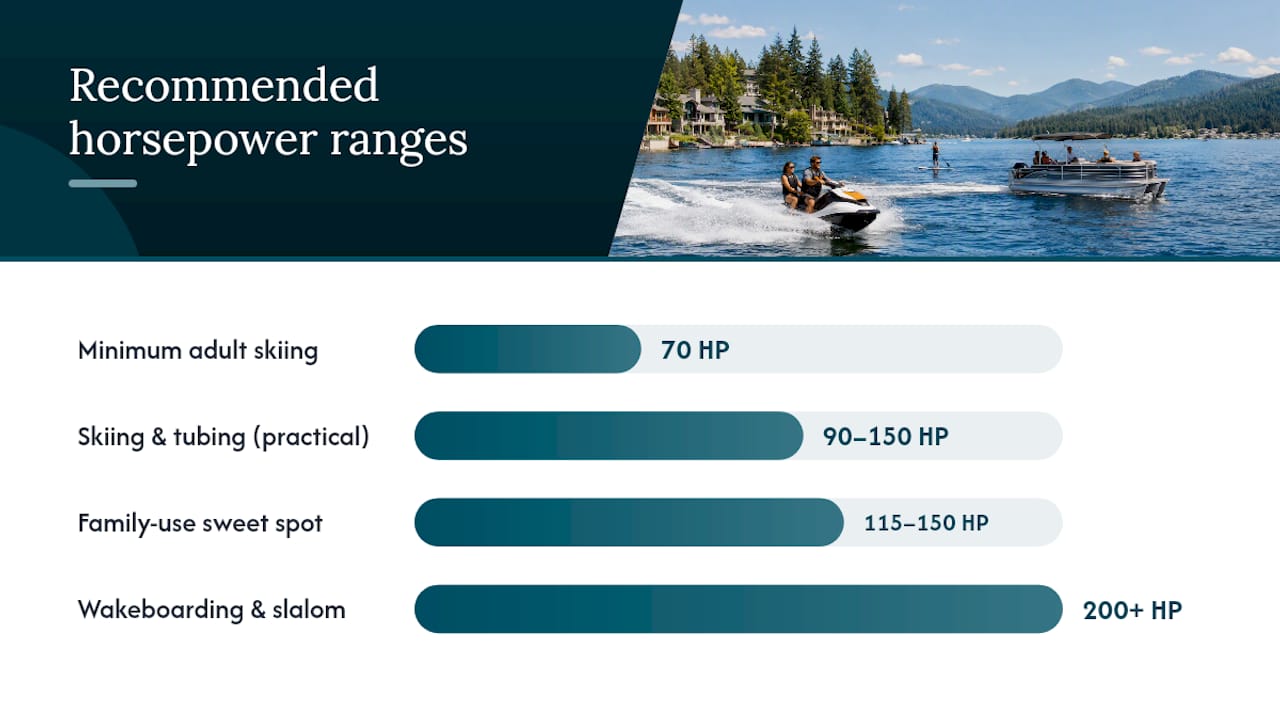
Table of Contents
- How horsepower, torque, and speed work together when pulling a skier
- Recommended horsepower ranges by activity and boat type
- What factors actually change how much horsepower you need?
- Simple math to estimate the horsepower your boat needs
- How propeller choice and drive type affect towing
- Safety, the capacity plate, and limits you should never exceed
- Questions to ask before renting or buying a ski boat
- What local conditions on Lake Coeur d'Alene taught us about horsepower
- Goldenwatersports has the right boat ready for your day on the water
- Sources
How horsepower, torque, and speed work together when pulling a skier
Raw horsepower tells you the engine's peak output, but it doesn't tell you how the boat actually feels at the moment a skier needs to pop out of the water. That's where torque comes in.
Horsepower measures how much work an engine does over time. Torque measures the rotational force the engine produces at any given moment. For tow sports, torque at low RPM is what gets a rider up cleanly. A boat with strong low-end torque accelerates hard from a dead stop, which is exactly what a skier needs during a deep-water start.
Once the skier is up, the engine shifts into a steadier cruise speed typical for recreational skiing. At that point, horsepower sustains the speed. The problem with underpowered boats isn't top speed — it's the pull-out. A 70 HP engine might eventually get an adult skier up, but it'll strain, bog, and feel rough. At 90+ HP, the same start feels controlled.
Tow-optimized inboard engines are built specifically to prioritize torque at the RPM range used during skiing and wakeboarding, not at the peak RPM where horsepower numbers are measured. That's why manufacturers build dedicated tow engines rather than simply dropping a high-HP outboard onto a ski hull.
- Acceleration (pull-out): driven by torque, critical for getting riders up
- Steady tow speed: sustained by horsepower
- Low-end grunt: better in inboards and sterndrives than most outboards at equivalent HP
Pro Tip: When evaluating a boat for tow sports, ask about torque at 2,500–3,500 RPM, not just peak horsepower. A 200 HP tow-sport inboard with strong low-end torque will outperform a 200 HP outboard tuned for top speed.
Recommended horsepower ranges by activity and boat type
Different activities have genuinely different demands. Tubing a couple of kids on a calm morning is not the same job as pulling an adult slalom skier at 34 mph.
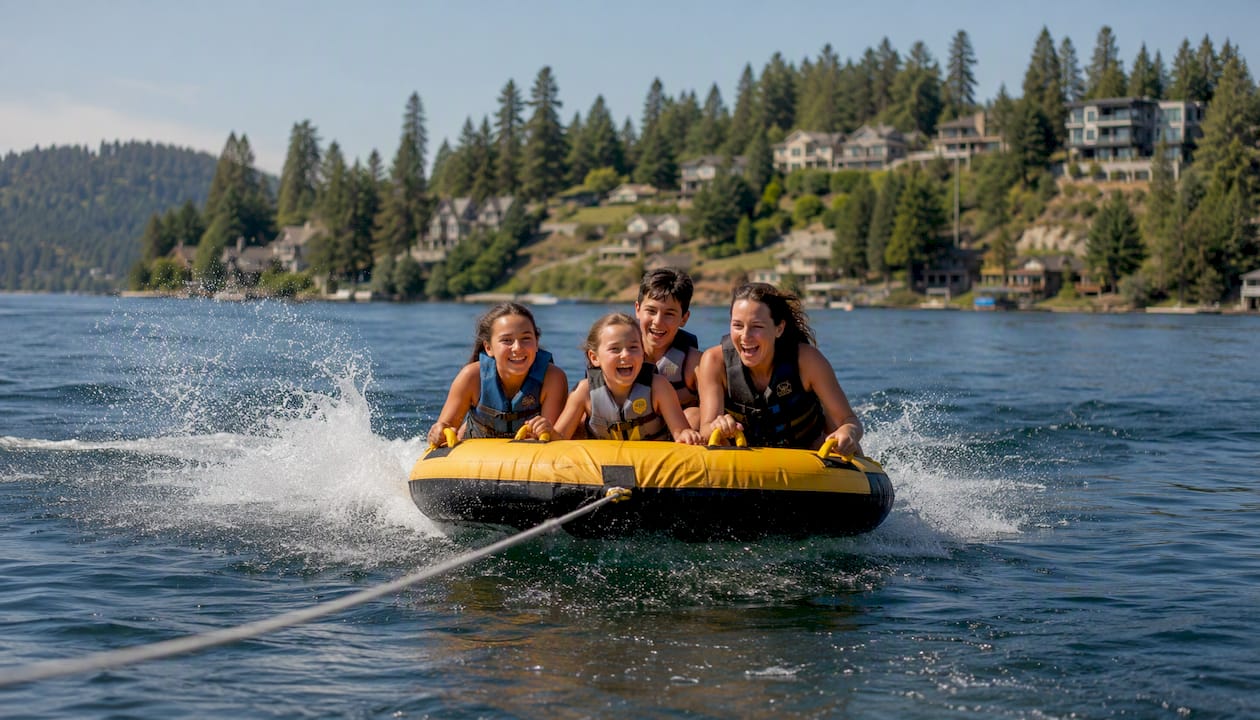
A few things worth calling out from that table. Slalom skiing and wakeboarding need the most acceleration, so they sit at the top of the range. Tubing and child skiing can work at lower HP because the speeds are lower and the pull-out forces are smaller. For family-friendly pontoon outings, 50–115 HP handles gentle tubing without issue, though the upper end of that range gives you much more margin with a full boat.
When you're carrying a full passenger load or planning back-to-back runs, experienced operators recommend stepping up within the range rather than running at the bottom of it. A 17' boat rated for 150 HP will handle four adults and a skier far more comfortably at 150 HP than at 115 HP. If you're comparing boat classes for your intended use, the speedboat vs. ski boat breakdown covers hull differences that also affect this decision.
What factors actually change how much horsepower you need?
The HP ranges above are starting points. Several real-world variables push the number up or down, sometimes significantly.
Boat weight is the biggest lever. A heavier hull needs more power to plane and maintain tow speed. This is where the 25–40 lb per HP rule-of-thumb comes in: divide total loaded boat weight by your target HP to see where you land. More on the math in the next section.
Hull design changes how efficiently a boat gets on plane. A flat-bottom hull planes quickly and needs less power. A deep-V hull cuts through chop better but requires more HP to reach the same speed. Pontoon hulls are the least efficient for planing, which is why pontoon towing stays at lower speeds even with adequate HP.
Rider weight and skill level matter more than most people expect. A 250 lb beginner who falls repeatedly and needs multiple deep-water starts puts far more demand on the engine than a 150 lb experienced skier who gets up on the first pull.
Altitude quietly reduces engine output. Lake Coeur d'Alene sits at about 2,150 feet, and Liberty Lake is similar. That's not catastrophic, but it's real, and it's a reason to favor the upper end of a HP range for inland Pacific Northwest lakes.
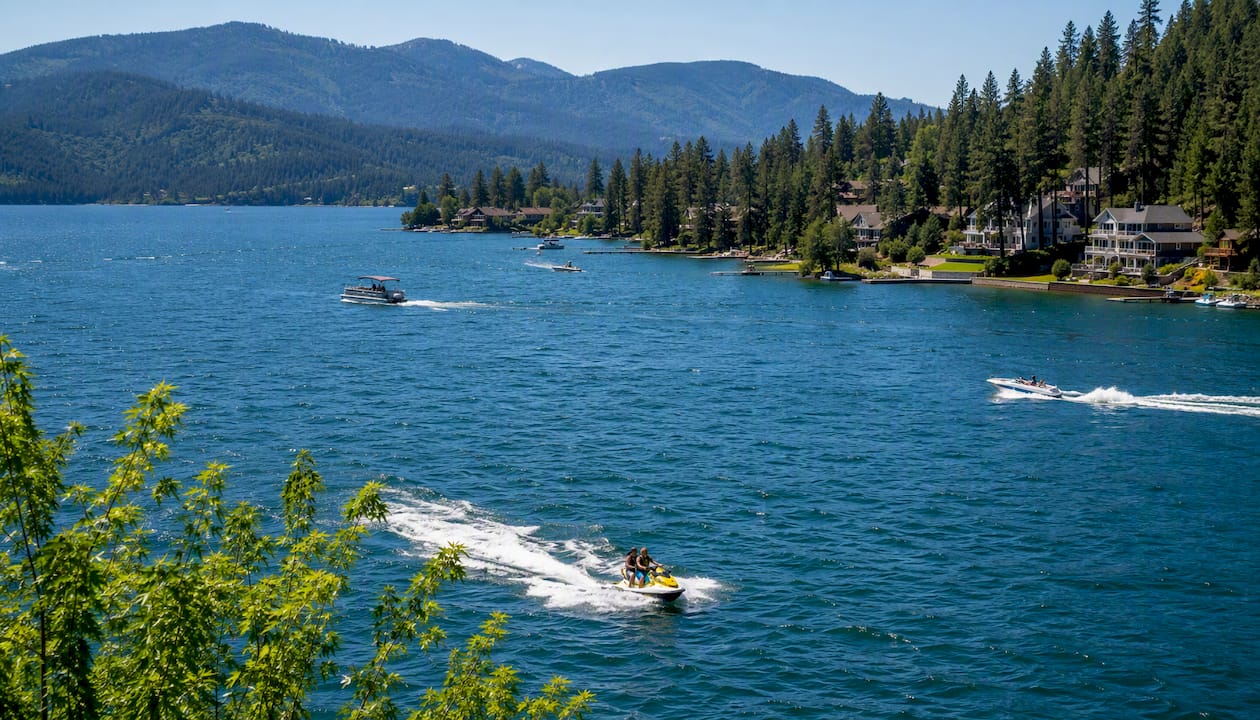
Environmental conditions like water chop, current, and cold water temperature also add resistance and slow acceleration.
Here's a quick checklist to run through before settling on a horsepower target:
- What is the total loaded weight of the boat (hull + fuel + passengers + gear)?
- What activity are you towing for, and at what speed?
- How many passengers will be aboard during tow sessions?
- What is the elevation of the lake you're using?
- What hull type is the boat?
- Are riders beginners (more starts, more strain) or experienced?
Simple math to estimate the horsepower your boat needs
The 25–40 lb per HP rule is the most practical starting point. Use 25 lb/HP when you want sport performance and quick acceleration. Use 40 lb/HP when cruising efficiency matters more than pull-out snap.
How to apply it:
- Estimate total loaded weight: hull weight + fuel (about 6 lb/gallon) + all passengers + gear.
- Divide by your target lb/HP ratio.
- Compare the result to the capacity plate maximum.
- Adjust upward for altitude, heavy passenger loads, or beginner riders.
Worked example 1: Light 16' runabout, one adult skier
- Hull: 1,400 lb. Fuel (15 gal): 90 lb. One operator + one skier: 380 lb. Gear: 50 lb.
- Total loaded weight: ~1,920 lb.
- At 25 lb/HP: 1,920 ÷ 25 = 77 HP minimum for sport pull.
- At 40 lb/HP: 1,920 ÷ 40 = 48 HP (adequate for cruising, marginal for skiing).
- Verdict: 90 HP gives you a comfortable margin for reliable deep-water starts, consistent with the 70–90 HP floor for adult skiing.
Worked example 2: 20–22' family bowrider, 4 passengers + 1 skier
- Hull: 3,200 lb. Fuel (40 gal): 240 lb. Five adults at 175 lb avg: 875 lb. Gear: 100 lb.
- Total loaded weight: ~4,415 lb.
- At 25 lb/HP: 4,415 ÷ 25 = 177 HP for sport performance.
- At 40 lb/HP: 4,415 ÷ 40 = 110 HP (barely adequate, no margin).
- Verdict: 200 HP is the right target for this setup, especially at elevation. Cross-check against the capacity plate before finalizing.
Typical recreational skiing runs at 20–26 mph. Wakeboarding sits around 18–24 mph. Slalom can reach 30–36 mph. Make sure your HP estimate supports those speeds under load, not just on an empty hull.
How propeller choice and drive type affect towing
The engine's horsepower rating is only part of the equation. How that power reaches the water depends on the drive type and propeller setup.
Outboard vs. inboard/sterndrive for towing:
- Outboards are versatile and easy to service, but most are tuned for top-speed efficiency rather than low-RPM torque. They work well for recreational skiing and tubing.
- Inboards and sterndrives place the engine weight low and centered, which improves hull balance and wake shape. Tow-sport inboards are specifically tuned for torque at skiing RPM, making them the preferred choice for dedicated ski and wake boats. Engine type and torque characteristics vary significantly across drive configurations.
Propeller pitch and diameter:
- Lower pitch = stronger acceleration, better for pulling skiers out of the water.
- Higher pitch = higher top speed, less low-end grunt.
- A prop that's too aggressive in pitch will cause the engine to lug at pull-out, even with adequate HP on paper.
Common prop problems that hurt tow performance:
- Wrong pitch for the intended activity (too high for tow sports)
- Cavitation from a damaged or incorrectly sized prop, causing the engine to rev without producing thrust
- Bent or nicked blades that create vibration and reduce efficiency
Pro Tip: When booking a rental, ask the operator what prop pitch is installed and whether it's set up for towing. A boat with 150 HP and the right prop will outperform a 150 HP boat with a mismatched one.
Safety, the capacity plate, and limits you should never exceed
The capacity plate is a small but critical piece of information mounted inside every outboard-powered boat. Under 33 CFR 183.53, it must display the maximum engine horsepower rating, maximum persons capacity, and maximum weight capacity. Exceeding any of those numbers is both a safety risk and a federal violation.
Where to find it: typically on the transom or inside the helm area, on a metal or plastic plate. If it's missing or unreadable, don't operate the boat until it's replaced.
Practical safety checks before every tow session:
- Confirm the engine HP does not exceed the plate's maximum rating.
- Verify all passengers have properly fitted life jackets (required by U.S. Coast Guard for all riders under 13, and strongly recommended for everyone).
- Check that the tow rope is in good condition and rated for the activity.
- Confirm the observer (spotter) is seated with a clear view of the skier at all times.
- Review lake depth requirements for water skiing before choosing your tow area.
Passenger positioning matters too. Weight distributed unevenly toward the stern reduces bow lift and hurts pull-out performance. Keep passengers centered and low during tow starts.
Questions to ask before renting or buying a ski boat
Whether you're booking a rental for a weekend on Lake Coeur d'Alene or evaluating a used boat purchase, the right questions save you from an underpowered day on the water.
Checklist for renters:
- What is the engine horsepower, and is it appropriate for adult skiing?
- What is the boat's length and hull type?
- What is the maximum passenger capacity per the capacity plate?
- Is safety equipment (life jackets, tow rope, spotter flag) included?
- Is the prop set up for towing, or is it a general-purpose configuration?
- Are there local speed limits or tow-sport restrictions on the lake?
- What is the fuel policy, and how does a full load affect performance?
For buyers, add these:
- What is the engine's service history, and has the prop been replaced or repitched?
- Has the boat been used primarily for towing, or for cruising?
- Does the engine HP match the capacity plate, and is the plate legible?
On the cost-versus-performance question: a higher-HP rental typically costs more per hour, but the difference between a 90 HP and a 150 HP boat on a full-family day is the difference between struggling pull-outs and clean, consistent runs. For families planning a full day of skiing and tubing, the upper end of the range is almost always worth it.
What local conditions on Lake Coeur d'Alene taught us about horsepower
Coeur d'Alene and Liberty Lake sit at roughly 2,150 feet of elevation, which quietly trims engine output compared to sea-level performance specs. Add a full family load on a warm August afternoon, and a boat that looked adequate on paper can feel sluggish at pull-out. That's why Goldenwatersports configures its rental fleet with a power margin built in: family bowriders in the 115–150 HP band for mixed recreational use, and purpose-built tow boats at 200+ HP for guests who want serious skiing or wakeboarding sessions. The goal isn't to impress anyone with big numbers. It's to make sure every guest gets a clean start on the first pull, regardless of rider weight or how many people are aboard.
Lake Coeur d'Alene is large enough that you'll encounter afternoon chop on open water, which adds resistance and makes that power margin even more useful. Smaller lakes like Liberty Lake are calmer, but the elevation factor remains. For guests who've never thought about torque curves or prop pitch, the short answer is: the boats are already set up correctly. You just need to tell us what you're planning to do.
Goldenwatersports has the right boat ready for your day on the water
Spending a day on Lake Coeur d'Alene or Liberty Lake with an underpowered boat is a frustrating experience nobody needs. Goldenwatersports offers ski boats and family bowriders pre-configured for tow sports, with safety gear included and staff who can match you to the right boat for your group size and activity.
Every rental comes with life jackets, tow ropes, and a quick briefing on the boat's HP and setup so you're not guessing at the dock. If you're planning a skiing or wakeboarding session, ask about the tow-sport boats when you book. For family tubing days, the family bowriders in the 115–150 HP range handle mixed use without the premium cost of a dedicated tow boat. Check current availability and view rental options and pricing to find the right fit for your group.
Sources
- Gpo