
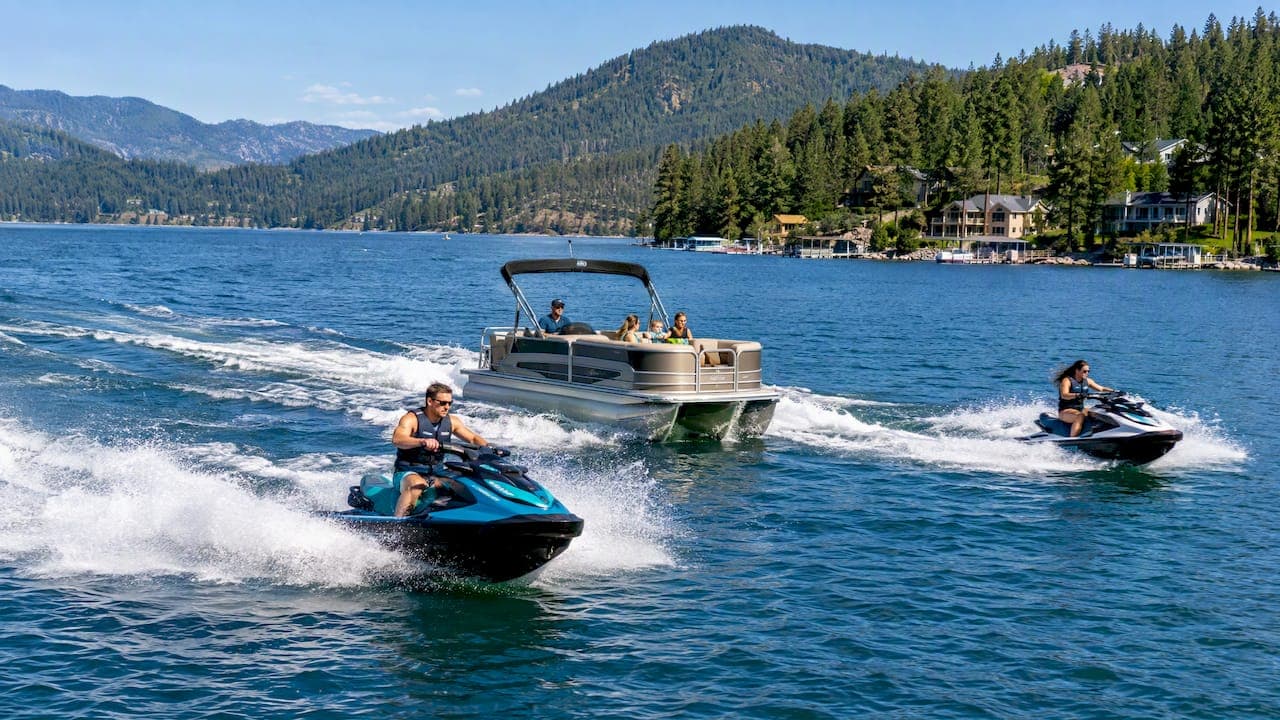
The Spokane-area boating season generally runs from late spring through Labor Day, though exact access depends on which waterbody you're visiting. Spokane County's free 2026 boater education classes are scheduled for April 25, May 16, June 13, June 27, July 11, and August 8, according to the county's published class list. Before you book a rental or head to a launch, confirm the current status with the agency that manages that specific lake or river section.
TL;DR:
- Boating access in the Spokane area depends heavily on water levels controlled by dams and utilities, with major drawdowns on Lake Spokane and variable river flows near Post Falls dam.
- Peak season runs from late spring through Labor Day, but actual launch and dock conditions vary weekly, requiring checking current lake levels and flow data beforehand.
- Most lakes are busiest during holiday weekends, so early booking and early morning launches improve chances of avoiding crowds and rougher water.
- Washington law mandates a boater education card for motorized vessels over 15 horsepower, which requires taking an approved course, paying a fee, and waiting 2-4 weeks for processing.
- Critical safety and environmental rules include carrying approved PFDs for everyone, not discharging sewage, and inspecting for invasive species between waterbodies.
Table of Contents
- Official season windows for Lake Spokane, Liberty Lake, Newman Lake, Coeur d'Alene, and the Spokane River
- Local boater education classes: Spokane County dates and the Washington Boater Education Card
- Safety, rules, and legal essentials every boater must know
- Planning checklist: drawdowns, launches, and booking around busy dates
- How Spokane's seasonal weather shapes boating conditions
- The best times for fishing, water skiing, and sailing
- Hazards and wildlife awareness during boating season
- Marina and boat launch availability during the season
- Boat storage and off-season care in the Spokane area
- A local perspective on boating season and lake stewardship
- Quick booking options for your next Spokane-area boating day
- FAQ
- Sources
- Official notices and authoritative pages to check before you go
Official season windows for Lake Spokane, Liberty Lake, Newman Lake, Coeur d'Alene, and the Spokane River
Most Spokane-area lakes follow a similar rhythm: ice-out and spring runoff in April and May, a full-pool summer window from roughly Memorial Day through Labor Day, and a gradual wind-down through September. But the dates that matter to you as a boater aren't set by the calendar alone. They're set by the agencies and utilities that manage water levels, dam operations, and public launches.
Lake Spokane (also called Long Lake) is the clearest example of why you need to check official notices rather than assume a fixed date. Avista, which manages the reservoir, conducts a winter drawdown that lowers the lake well below its summer elevation. The utility's own notice on the 2026 drawdown states the drawdown began the week of February 16, 2026, and could lower the reservoir significantly below its summer pool for several weeks depending on conditions. That means docks, launches, and shoreline access on Lake Spokane are not usable at winter levels, and the lake typically doesn't return to full summer pool until late spring.
The Spokane River, particularly the stretch near the Post Falls dam, follows a similar pattern tied to dam operations rather than a fixed date on paper. Local reporting on the 2026 river opening near Post Falls dam noted that recreation access opens once flows and dam releases allow it, and that summer operations tend to continue through Labor Day when conditions hold. If you're planning a river trip, flow matters more than the date on your calendar.
Liberty Lake and Newman Lake are more straightforward. Both are shallower, naturally fed lakes without the same dam-controlled drawdown cycle, so their boating windows track the regional pattern closely: open by late spring, busiest from June through August, and winding down after Labor Day weekend as water temperatures drop and daylight shortens.
Coeur d'Alene, just across the Idaho border, runs on a similar seasonal arc but tends to stay busy a little later into September thanks to its size and tourism draw. It's also deep enough that temperature and conditions remain boat-friendly longer than the smaller lakes nearby.
A few things worth checking before you commit to a date:
- Lake Spokane's return to full pool after the winter drawdown, since launches and docks may sit well above the waterline until levels rise.
- Spokane River flow data, since dam releases can change week to week during spring runoff.
- Liberty Lake and Newman Lake algae advisories, which sometimes appear in late summer and affect swimming more than boating.
- Coeur d'Alene marina and launch schedules, which can extend slightly later into fall than other regional lakes.
The short version: plan around Memorial Day to Labor Day as your reliable window, but verify lake-specific conditions in the weeks before you go.
Local boater education classes: Spokane County dates and the Washington Boater Education Card
If you plan to operate a motorized boat or jet ski with 15 horsepower or more, Washington requires anyone age 12 or older to carry a Boater Education Card, according to Washington State Parks. Spokane County runs free classes throughout the season, and the confirmed 2026 dates are April 25, May 16, June 13, June 27, July 11, and August 8, per the county's newsflash announcement.
Here's how to get your card if you don't already have one:
- Take an approved course. Classroom sessions through Spokane County, online courses, or an equivalency exam all satisfy the state requirement.
- Get your completion certificate. Each approved course issues a certificate once you pass, whether in person or online.
- Mail your certificate with the $10 fee. Washington State Parks processes the application and mails the permanent card, typically arriving in two to four weeks, according to state guidance.
- Carry a temporary certificate while you wait. Visitors and recent boat buyers can operate under a 60-day temporary certificate while the permanent card is processed.
Not everyone needs the card. Washington exempts visitors boating for 60 days or less, some commercial operators, and people renting a boat under certain conditions, though rental companies often still require proof of experience or a brief safety orientation. If you're unsure whether your situation qualifies for an exemption, the state parks page lays out the specifics clearly.
Course schedules shift from year to year, so checking both the county's announcement and the state's course listing before you commit to a date helps you avoid missing a class or a registration deadline.
Safety, rules, and legal essentials every boater must know
Washington law doesn't leave boat safety equipment to guesswork. Every person on board needs a U.S. Coast Guard-approved personal flotation device, and any boat 16 feet or longer must also carry a Type IV throwable device, under WAC 352-60-030.
Boating under the influence is illegal on every Washington waterway. Law enforcement treats BUI the same way it treats drunk driving, with the same potential for fines, arrest, and loss of boating privileges. There's no gray area here: if you're operating a vessel, you're subject to the same standard as if you were behind the wheel of a car.
Environmental rules carry real penalties, too. Discharging sewage from a vessel is prohibited under Washington regulations, and violations can result in fines. If your boat has a holding tank, use designated pump-out stations rather than discharging into the lake or river.
Statistic to keep in mind: a USCG-approved personal flotation device is mandatory for every person aboard, and boats 16 feet or longer must carry a Type IV throwable device as well, per state regulation. That's not a suggestion. It's the legal baseline for every trip you take.
The City of Spokane's Rules of the River add another layer of local restriction. Motorboats and personal watercraft are prohibited on many city-managed sections of the Spokane River, and specific downtown segments carry additional swim and boating exclusions. If you're planning a river trip through city limits, check this page before you launch, since the rules differ from what applies on the open lake.
Before you leave the dock, run through a short checklist:
- Confirm you have a PFD for every passenger, plus a throwable device if your boat is 16 feet or longer.
- Check that your Boater Education Card or temporary certificate is on board if required.
- Review the specific waterbody's rules, especially if you're heading onto the Spokane River within city limits.
- Verify your holding tank is empty or you know where the nearest pump-out station is.
Planning checklist: drawdowns, launches, and booking around busy dates
Season timing on the water isn't just about weather. It's about what the utilities and cities managing these waterways decide to do with water levels, and when everyone else decides to show up.
Avista's winter drawdown on Lake Spokane is the biggest scheduling variable on the calendar. The utility's 2026 notice describes a planned lowering of up to 13 to 14 feet below summer pool, lasting three to six weeks depending on conditions, done for weed control and shoreline maintenance. If you keep a boat or dock on Lake Spokane, that drawdown period is when you want gear removed or secured, since exposed shoreline and low water can damage equipment left in place.
The Spokane River works similarly but on a faster cycle, as explained in this seasonal windows for water recreation guide. Because access near Post Falls dam depends on current releases rather than a fixed calendar date, checking Avista's water flow information before a river trip beats guessing based on last year's dates. Flows can shift within days during spring runoff, which changes what's safe to launch into.
Once the season is open, the next scheduling problem is crowding. Holiday weekends, Memorial Day, the Fourth of July, and Labor Day draw the heaviest traffic on every lake in the region, and midday on a sunny summer Saturday isn't far behind. If you're planning around one of those dates, booking four to six weeks ahead for holidays and one to two weeks out for shoulder-season weekends gives you a much better shot at getting the watercraft and time slot you want.
A few habits make the season easier to navigate:
- Check Lake Spokane's pool level before planning a dock-dependent trip in spring.
- Monitor Avista's flow data if your plans involve the Spokane River.
- Reserve rentals early for Memorial Day, July Fourth, and Labor Day weekends.
- Ask your rental provider directly about current launch and lake-level conditions before you arrive.
Pro Tip: Launching early, by 9 or 10 in the morning, almost always means calmer water, fewer boats competing for ramp space, and a longer stretch of good conditions before afternoon wind picks up on open lakes like Coeur d'Alene.
If you're new to operating a rental boat, a quick refresher on handling a ski boat on Spokane-area lakes before your trip can save you from a rougher first hour on the water.

How Spokane's seasonal weather shapes boating conditions
Spokane's boating season tracks the region's dry, sunny summers closely. Late May through June tends to bring the most variable weather, with cooler mornings, occasional wind, and runoff still working its way through rivers and smaller lakes. By July, conditions settle into the warm, stable stretch most boaters picture when they think of a Spokane summer: light morning air, building afternoon breeze, and consistently warm water temperatures on shallower lakes like Liberty Lake and Newman Lake.
August typically delivers the calmest, most predictable boating days of the year, though it also brings the highest wildfire smoke risk in the region, which can reduce visibility and air quality on the water. September cools quickly, and afternoon winds become more noticeable on open water like Coeur d'Alene, which rewards boaters who head out earlier in the day.
Because weather swings fast in eastern Washington, checking a short-range forecast the morning of your trip matters more than planning around the season's general pattern. Wind on a lake can build in an hour, especially on exposed water with little shoreline protection.
The best times for fishing, water skiing, and sailing
Each activity has its own sweet spot within the season. Early morning, particularly at first light through mid-morning, offers the calmest water for water skiing and wakeboarding, before wind picks up and other boats start crowding the lake. That same calm window tends to be prime time for fishing, since fish are typically more active before the water warms and boat traffic increases.

Sailing works best in the opposite conditions: you want wind, not calm water, which usually means afternoon on most regional lakes once thermal breezes build. Coeur d'Alene's size makes it a more reliable sailing destination than smaller lakes like Liberty or Newman, which don't generate the same consistent afternoon wind.
Midsummer, from late June through early August, gives you the most reliable combination of warm water and stable weather for all three activities. If you're set on one activity over another, plan your launch time around it rather than assuming any time of day works equally well.
Hazards and wildlife awareness during boating season
Water temperature catches more boaters off guard than almost anything else. Even in July, deeper lakes like Coeur d'Alene can stay cold enough below the surface to cause rapid muscle fatigue or shock if you end up in the water unexpectedly, which is part of why the PFD requirement under state law isn't optional.
Invasive species are the other major concern regional agencies ask boaters to watch for. Quagga and zebra mussels haven't established in most Washington lakes, but boats moving between waterbodies, especially trailered boats coming from out of state, are the primary way invasive mussels and weeds spread. Cleaning, draining, and drying your boat and gear between lakes reduces that risk significantly.
Wildlife encounters are generally low-key here. Watch for diving birds and waterfowl near shorelines, especially in spring when nesting is active, and give wide berth to swimmers near public beaches, particularly on crowded holiday weekends when visibility from a boat's operator seat is limited.
Marina and boat launch availability during the season
Public launches around Spokane generally open as soon as water levels and road access allow, which for most lakes means late April or May, and stay open through late September or early October depending on weather. Hours vary by site: some county and state-managed launches operate from dawn to dusk with no formal gate, while others post specific hours during peak season.
Coeur d'Alene offers the most marina infrastructure in the region, with full-service docking and fueling available through the peak season. Smaller lakes like Liberty Lake and Newman Lake have more limited public launch facilities, often a single ramp with modest parking, which fills up fast on summer weekends.
Lake Spokane's launches are the exception worth double-checking. Because the winter drawdown lowers water levels well below summer pool, some launches aren't usable until the reservoir refills in spring, so a call ahead or a check of current lake elevation saves a wasted trip.
Boat storage and off-season care in the Spokane area
Once the season winds down after Labor Day, how you store a boat matters as much as how you used it all summer. Eastern Washington winters bring freezing temperatures, so any boat kept outdoors needs winterized engines, drained water systems, and a cover rated for snow load if it's staying outside through the colder months.
Indoor and covered storage facilities around Spokane Valley fill up quickly in September and October, so reserving a spot early beats scrambling in November. If you're storing a boat at a dock on Lake Spokane specifically, remember the winter drawdown: a boat left on a dock during drawdown season can end up resting on exposed shoreline rather than floating, which causes real damage.
For trailered boats, a simple fall checklist helps: flush the engine, add fuel stabilizer, remove the battery if the boat sits unused all winter, and check trailer tires before the first spring trip. None of this requires a shop visit if you're comfortable with basic maintenance, but skipping it is the most common reason boats need expensive repairs come May.
A local perspective on boating season and lake stewardship
Years of renting watercraft across Spokane Valley, Liberty Lake, and Coeur d'Alene teach you a few patterns fast. The most common mistake we see isn't about safety gear or weather. It's timing: renters show up expecting a lake to be at full summer pool in early May, only to find launches still affected by winter drawdown or spring runoff. Checking current conditions a day or two ahead, not just the calendar, avoids a wasted trip.
Stewardship matters just as much as timing. A short checklist keeps the lakes in shape for everyone:
- Clean and dry gear between lakes to avoid spreading invasive species.
- Never discharge sewage into the water; use a pump-out station instead.
- Watch your wake near docks, swimmers, and shoreline wildlife.
Treating these lakes carefully is what keeps them worth coming back to.
— Life is better on water.
Quick booking options for your next Spokane-area boating day
Once you know the season's open and the conditions check out, getting on the water shouldn't take more than a phone call. We offer rentals of jet skis, pontoon boats, paddleboards, and water toys with PFDs included and pickup or delivery available to several regional lakes.
A few practical notes before you book:
- Reserve Liberty Lake jet skis or Newman Lake jet skis ahead of holiday weekends, since those dates fill first.
- Check our full rental and pricing lineup for boats, pontoons, paddleboards, and water toys across all three locations.
- Confirm current lake level and launch conditions with us before you arrive, especially on Lake Spokane during spring.
Ready to lock in a date? Check availability and book your rental before the season's busiest weekends fill up.
FAQ
Can I drink beer while on a boat?
Open alcohol isn't illegal on a Washington boat the way it is in a car, but operating a boat while impaired is illegal statewide under boating under the influence laws. The safer and simpler rule is to treat the boat's operator the same way you'd treat a designated driver, since BUI enforcement carries the same penalties as drunk driving.
What is the 1/3 rule in boating?
The 1/3 rule is a general fuel-planning guideline many boaters use: a third of your fuel to get out, a third to get back, and a third held in reserve for unexpected conditions. It's not a Washington-specific legal requirement, just a practical habit that keeps you from running dry far from the dock.
What is the busiest boating day of the year?
Regionally, the Fourth of July and Labor Day weekend consistently bring the heaviest boat traffic to Spokane-area and Coeur d'Alene lakes. If you're planning a trip around either date, booking your rental well in advance and launching early in the day both help you avoid the worst of the crowding.
What are the best lakes for boating in Washington state?
Lake Spokane, Liberty Lake, Newman Lake, and Coeur d'Alene (just across the Idaho border) are the most popular options near Spokane, each suited to different activities. Our guide to boating lakes near Spokane breaks down which lake fits a family outing versus a water skiing or fishing trip.
How much does a jet ski rental cost in the Spokane area?
Jet ski rentals at Liberty Lake and Newman Lake through us run $250 to $425, with additional hours available at $75 each. A damage deposit of $500 per jet ski applies to every rental.
Sources
- FREE 2026 Washington State Boater Education Classes
- Boater Education Card | Washington State Parks
- Avista to begin Lake Spokane drawdown Feb 2026
- WAC 352-60-030 (Boating safety/equipment rules)
- Rules of the River - City of Spokane, Washington
Official notices and authoritative pages to check before you go
Before you lock in any plans, these official sources confirm the details that change year to year:
- Spokane County's 2026 class schedule lists exact dates and locations for free boater education classes.
- Washington State Parks' Boater Education Card page covers requirements, exemptions, and the application process.
- Avista's Lake Spokane drawdown notice explains the winter drawdown timing and its effects on docks and launches.
- City of Spokane's Rules of the River details local restrictions on motorboats and personal watercraft.
- WAC 352-60-030 lays out the legal equipment and safety requirements for every vessel.