
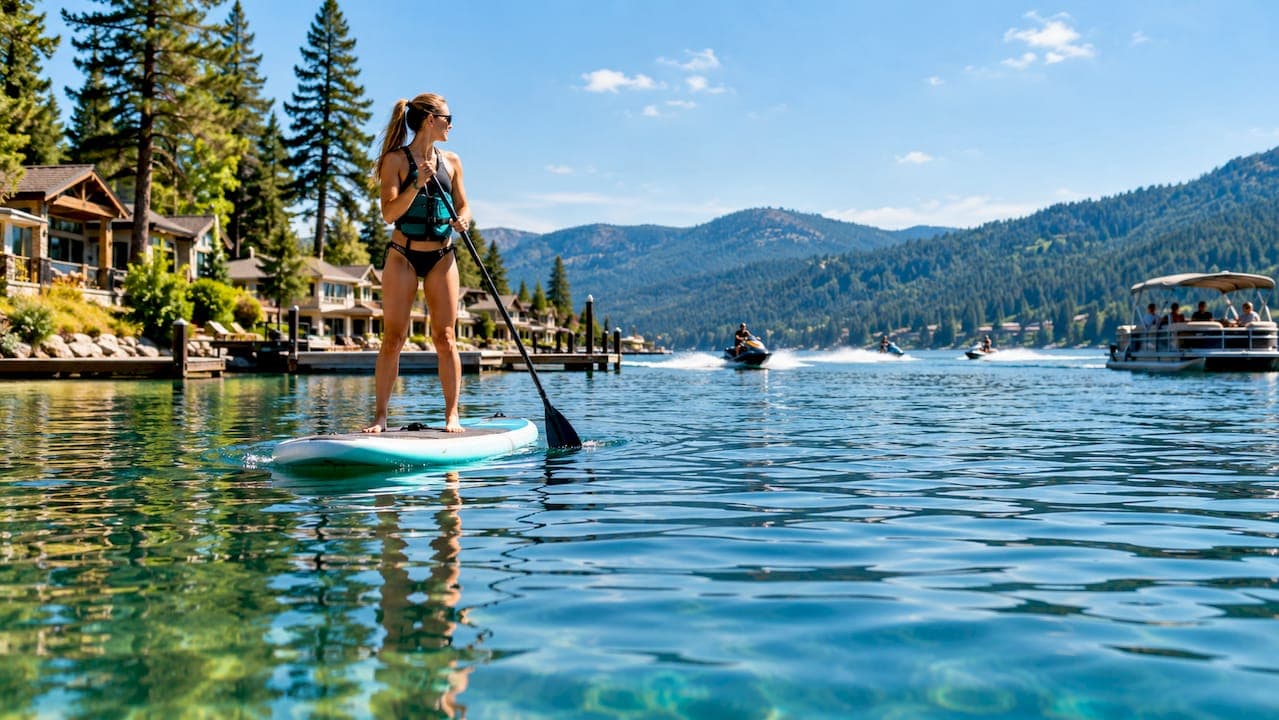
There is no single numeric statewide speed limit for lakes in Washington. Operators must follow the negligent-operation standard under RCW 79A.60, obey posted signs, and drop to no-wake speed near docks, swimmers, and marinas, typically within 100 to 200 feet. Some nearby Idaho waterways post specific daytime numeric limits instead. Renters are advised on these distinctions before departure.
TL;DR:
- Washington law relies on reasonableness and local signage rather than fixed speed limits, making judgment essential near docks and swimmers.
- Idaho waterways often post specific numeric speed limits, typically around 50 MPH during the day, with lower limits at night and in restricted areas.
- Personal watercraft operators should avoid wake jumping within 60 feet of other vessels and use steady throttling to prevent safety violations and citations.
- Operators must drop to no-wake speeds within 100 to 200 feet of crowded areas, based on local guidance, with Pike's Peak being the safest buffer if uncertain.
- Before renting, check with local agencies for current restrictions, follow a safety briefing, and maintain constant awareness of swimmers and smaller crafts in the water.
Table of Contents
- What Are the Actual Spokane Lake Speed Limits?
- How Do PWC Rules Differ From Boat Rules?
- Why Does Washington's Negligent-Operation Law Matter Here?
- Renter Checklist for Staying Legal on the Water
- How Do You Confirm the Rules for Your Specific Lake?
- Golden Water Sports Perspective: Briefing Renters Before They Launch
- Ready to Get on the Water With the Right Gear and Guidance
- Where to Verify These Rules Yourself
- Sources
- FAQ
What Are the Actual Spokane Lake Speed Limits?
Washington skips a single lake speed number in favor of judgment. That surprises a lot of first-time renters who expect a posted "35 MPH" sign the way they'd see on a highway.
Instead, Washington law leans on the negligent operation standard, which asks whether your speed was reasonable given traffic, visibility, wake, and the size of the lake. Cross the state line into the Idaho Panhandle, and the picture changes. Kootenai County publishes actual numbers for many public waterways.
Here's what shows up most often in local guidance:
- General daytime limit (Idaho Panhandle waters): specific numeric speed limits are posted on many public waterways, with various limits for different areas, per the Kootenai County safe boating brochure.
- Restricted waterways: specific numeric speed limits are posted for stretches like the Coeur d'Alene River, Spokane River, Fernan Lake, and Lower Twin Lake.
- Night limit: specific night speed limits are posted for many of these waterways.
- Washington lakes: no blanket number, just the negligent-operation standard plus whatever a specific county or lake authority has posted.
- No-wake zones: commonly enforced within close distances of docks, swimmers, and anchored non-motorized vessels, per Washington's boating rules, with some agencies using a wider buffer for personal watercraft near shorelines.
That 100 versus 200 foot gap matters. If you're renting a jet ski for a Coeur d'Alene weekend versus a pontoon on a smaller Spokane-area lake, the safe distance to hold from swimmers can differ depending on which agency's guidance applies to that specific body of water. When in doubt, treat 200 feet as your buffer around people in the water.
How Do PWC Rules Differ From Boat Rules?
Personal watercraft get extra scrutiny in both state guidebooks, mostly because their speed and maneuverability make them easy to misjudge from shore.
"No wake" has a specific legal meaning: the slowest speed at which a vessel can still hold steerage, not just "going slow." Washington's boating guidance requires operators to hit that speed near piers, docks, swimmers, surfboard riders, anchored boats, marinas, and launch ramps, even when there's no sign posted. Idaho's handbook adds a concrete number to that idea, capping many no-wake zones at 5 MPH near docks or swimmers.
A common trap for renters is wake jumping, cutting close behind another boat's wake at speed. Most local guidance treats anything inside roughly 60 feet of another vessel's wake as too close for that kind of maneuver, since it puts both craft and any skiers or tubers at risk.
A few habits keep your wake, and your record, clean:
- Trim the engine slightly down when approaching no-wake zones to cut bow rise.
- Spread passenger weight forward rather than clustering everyone at the stern.
- Use steady, moderate throttle instead of sudden bursts near shorelines or docks.
Pro Tip: A rooster tail behind your jet ski looks fun in photos, but it's also the easiest thing for a marine patrol officer to spot from a quarter mile away. If you're throwing spray, you're probably going faster than the situation allows.
Why Does Washington's Negligent-Operation Law Matter Here?
RCW 79A.60 doesn't hand you a number, it hands you a standard. Officers evaluate whether your speed was "reasonable and proper" given the conditions in front of you, not some fixed threshold you can double check against a sign.
That means the same 20 MPH pass that's fine on open water at noon could count as negligent operation at dusk near a crowded swim area. Officers weigh several things at once:
- Boat traffic density and how close other vessels are.
- Visibility conditions, including glare, fog, or low light.
- The size of the wake you're throwing and who it affects.
- The overall size and layout of the lake you're on.
Local ordinances can layer numeric limits on top of this state standard, and marine patrol enforces both. A citation for negligent or reckless operation can carry misdemeanor consequences in Washington, particularly when unsafe wake or speed causes an incident. If you're unsure whether a specific lake has posted numeric limits beyond the state standard, a quick call to the county sheriff's marine unit before you launch clears that up fast.
Renter Checklist for Staying Legal on the Water
Most speed-related citations come down to skipped prep, not bad intentions. Running through this list before you leave the dock takes maybe five minutes.
- Check for posted signs and county guidance at the launch point, and glance at the relevant county page if you're heading to Idaho waters like the Coeur d'Alene River.
- Confirm life jackets and safety gear are on board and fit every passenger, including kids.
- Brief passengers on where they'll sit, how wake affects balance, and what "slow down" looks like from the helm.
- Check fuel and the capacity plate so you're not overloaded before you've even left the dock.
- Accelerate away from docks gradually, not in a hard throttle burst that throws wake into moored boats.
- Scan constantly for swimmers, paddleboards, and smaller craft that are easy to miss at speed.
- Drop to no-wake within 100 to 200 feet of docks, swimmers, or marinas depending on the water you're on.
- Manage your throttle for smaller wakes, especially in narrower channels or near the shoreline.
- If you're stopped by marine patrol, cooperate, hand over your rental paperwork and ID, and note the officer's name along with any citation details.
Pro Tip: If you disagree with a citation, don't argue it on the water. Note everything, get your rental agreement handy, and follow up with the issuing agency afterward. Marine patrol officers are far more receptive to calm follow up than to dockside debate.
Our guide on driving a ski boat on lakes near Spokane Valley walks through wake management in more detail if you're towing skiers or tubers.
How Do You Confirm the Rules for Your Specific Lake?
Every lake in the region has its own quirks, and the fastest way to avoid a surprise is a two-minute check before you book.
Call or check the website for the county sheriff's marine patrol unit or the lake's park authority. Most post current speed zones, seasonal restrictions, and any temporary closures directly on their pages. At the launch itself, look for posted buoys or signage, since some restrictions only show up at the ramp and not in printed brochures.
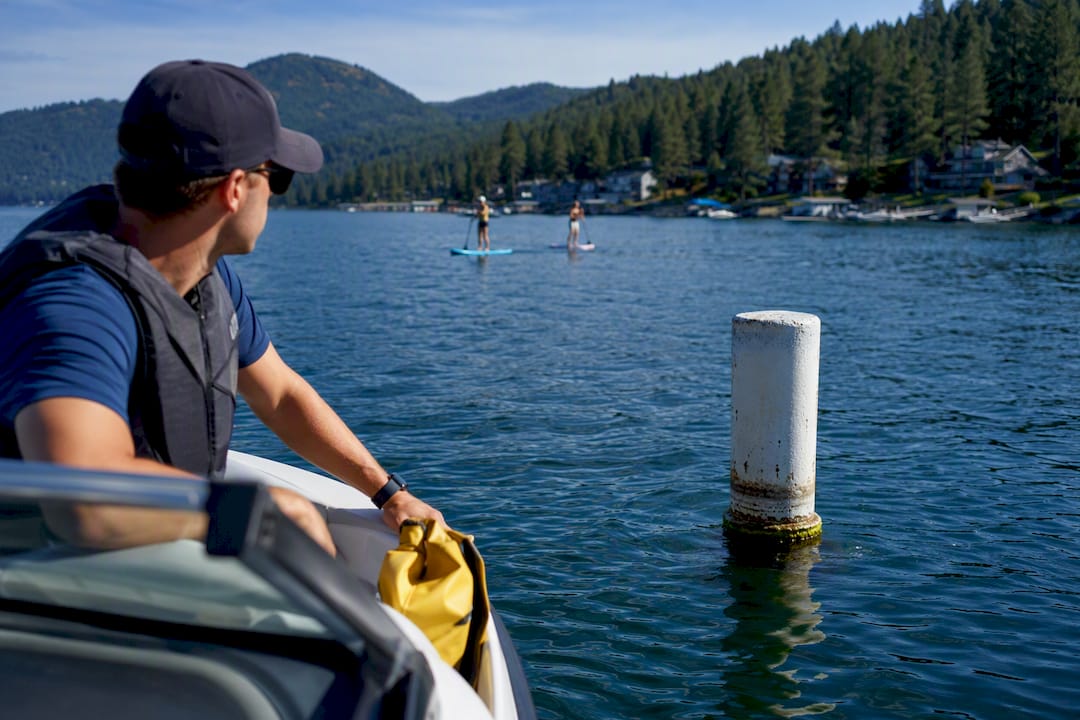
County safe-boating brochures, like the one Kootenai County publishes, are worth a quick read if you're heading somewhere new. Golden Water Sports also keeps local guides on specific launch points and known restrictions, including Lake Coeur d'Alene and Liberty Lake. When you can't confirm a specific number, default to no-wake near docks, swimmers, and marinas, and ask your rental operator before you leave the dock.
Golden Water Sports Perspective: Briefing Renters Before They Launch
Renters receive a safety briefing that covers local speed expectations along with boat controls. Life jackets are provided as standard, and no-wake zones specific to the launch point are reviewed, along with any restricted stretches. Guidance may be offered toward calmer waters when appropriate, and relevant blog posts cover launch spots and seasonal permit changes. If you have a lake-specific question before booking, reach out and ask before you're on the water, not after.
— Life is better on water.
Ready to Get on the Water With the Right Gear and Guidance
Jet skis, pontoons, and ski boats are available for rent across Spokane Valley, Liberty Lake, and Coeur d'Alene, with safety gear and a local-rules briefing included with each rental to help renters understand applicable rules and distances.
If Liberty Lake fits your plans, check our Liberty Lake jet ski rental page for availability, or browse Newman Lake rentals if you're headed that direction instead. For full details on hourly and multi-day options, visit our current pricing page and book your slot before the weekend fills up.
Where to Verify These Rules Yourself
For the legal text behind Washington's speed standard, read RCW 79A.60 directly. The Washington boating rules PDF covers no-wake definitions and required distances in plain language. Idaho-bound renters should check the Idaho boating handbook and the county's own safe boating brochure for numeric limits on specific waterways. Rules shift occasionally, so a quick call to your local sheriff's marine patrol before a trip is the surest way to catch last-minute changes.
Sources
- Chapter 79a.60 RCW: Operation of vessels — Negligent operation
- Washington state boating rules and regulations (Kalkomey boater exam extract)
- Kootenai County safe boating brochure (Panhandle safety brochure)
- Idaho Boating Laws and handbook
- Lawyer
FAQ
Is there a set speed limit on Spokane-area lakes?
No single numeric limit applies statewide in Washington. Operators must follow the negligent-operation standard under RCW 79A.60 and any posted local signage.
What counts as a no-wake zone?
A no-wake zone requires the slowest speed that still lets you steer, generally enforced within 100 to 200 feet of docks, swimmers, marinas, and anchored vessels.
Do Idaho lakes near Spokane have numeric speed limits?
Yes. Kootenai County guidance lists around 50 MPH daytime on general public waters, 35 MPH on restricted stretches like the Coeur d'Alene River, and 25 MPH at night.
Can I get cited for going too fast even without a posted sign?
Yes. Washington's negligent-operation law lets officers cite unsafe speed based on conditions like traffic, visibility, and wake, regardless of whether a numeric sign is posted.
Does Golden Water Sports explain local speed rules before I rent?
Yes. Golden Water Sports includes a safety briefing covering no-wake zones and known local restrictions with every rental, along with required life jackets and safety gear.