
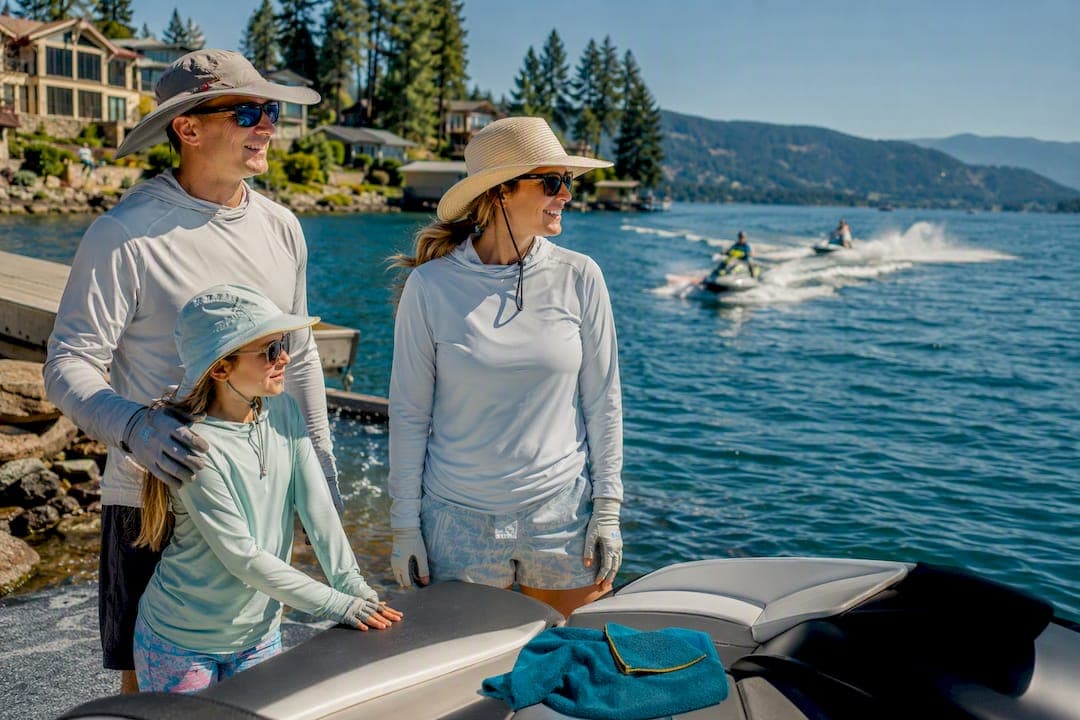
The most reliable sun protection for boating combines three layers: broad-spectrum high-SPF water-resistant sunscreen, clothing certified to block most UV rays (e.g. UPF 50+), and portable shade working together rather than anyone on its own. Before you leave the dock, pack a face stick for reapplication, a UPF-rated shirt, a wide-brim hat, polarized sunglasses, and a clamp-on umbrella. Miss any one layer and the water finds a way to burn you anyway.
TL;DR:
- Water reflects UV rays from above and below, significantly increasing burn risk for boaters, especially on commonly missed areas like the face, ears, and hands.
- Reapplication of water-resistant sunscreen every 80 minutes and proper coverage on the face, ears, neck, and feet remain crucial for effective protection.
- UPF 50+ clothing, wide-brim hats, polarized UV400 sunglasses, and portable shade options provide essential layers of defense that should complement sunscreen use.
- Spray sunscreens tend to be less effective on water due to wind drift and water shedding, making lotions or sticks the better choice during boating activities.
- Kids and individuals with sensitive skin benefit from mineral, non-nano zinc oxide products, while those on photosensitive medication should favor shade and UPF clothing over sunscreen alone.
Table of Contents
- Why Boating Increases UV Risk More Than a Day at the Beach
- Choosing and Using Sunscreen on the Water
- UPF Clothing, Hats, Sunglasses, and Gloves That Actually Help
- Shade Options That Fit Different Boats
- Your Pre-Departure Checklist and Reapplication Routine
- Kids, Sensitive Skin, Reef Zones, and Medication Risks
- What Golden Water Sports Sees Renters Forget Most
- Why Sunscreen Alone Isn't Enough on a Boat
- Sources
- FAQ
Why Boating Increases UV Risk More Than a Day at the Beach
Water reflects a meaningful share of ultraviolet radiation back up at you instead of absorbing it, which means you take a UV hit from above and below at the same time. Add constant wind and spray, and you get what dermatologists and safety agencies call a "false cooling" effect: the breeze feels refreshing, so your skin never signals that it's burning until hours later. The EPA's sun protection guidance flags this combination as one of the biggest reasons boaters get burned worse than they expect.
The spots people forget are almost always the same ones:
- Underside of the nose and chin
- Back of the neck
- Tops of the ears
- Backs of the hands
- Tops of the feet
These are the areas facing the sky and the water's glare directly, and they're also the spots most people rush past when applying sunscreen. Research on sailors backs this up. A PubMed study on UV exposure in this group found elevated rates of sun-related skin damage tied directly to reflected UV and long stretches without shade.
Choosing and Using Sunscreen on the Water
Grab broad-spectrum SPF 50+ every time, and check the water-resistance rating before you buy. The FDA requires sunscreen labels to state whether protection holds for 40 or 80 minutes of water exposure or sweating, and that number is your reapplication clock, not a guarantee of all-day coverage. Towel drying and friction strip sunscreen off faster than swimming alone does.
Quick reference for choosing a formula:
- High SPF broad-spectrum sunscreen is recommended for full-day outdoor exposure, not the ceiling, for a full day on open water
- Mineral formulas with non-nano zinc oxide are the safer pick near reefs or in areas with sunscreen restrictions
- Reapply every 80 minutes at most, and immediately after any swim or towel-dry
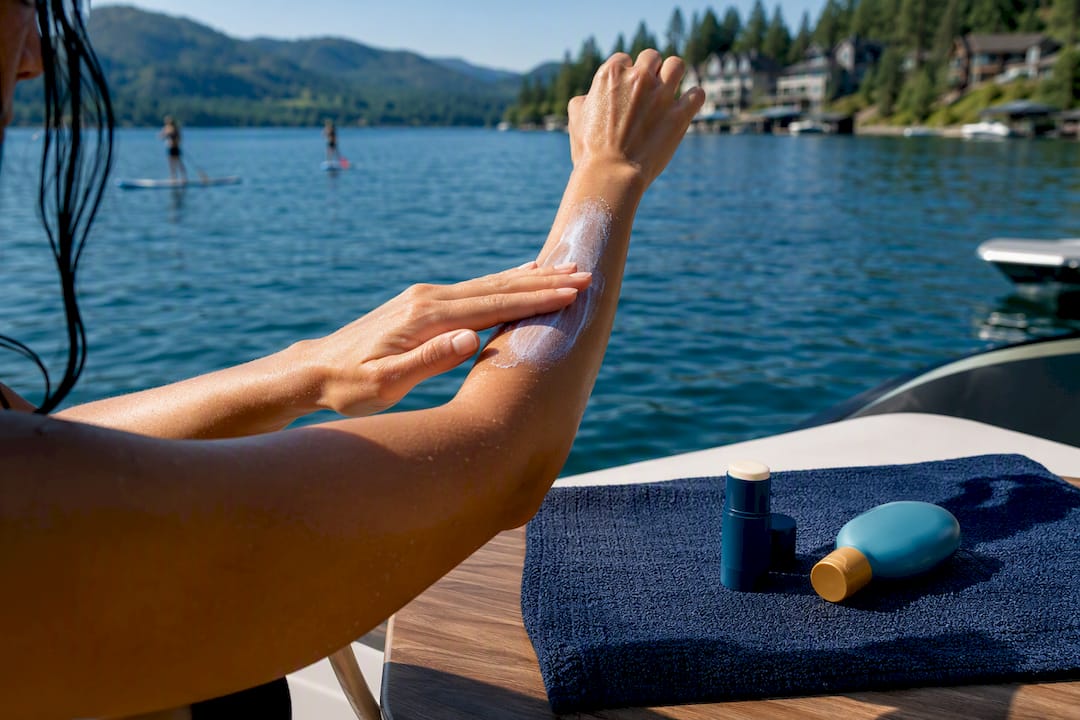
- Keep a face stick in the boat's console for quick touch-ups on the nose, ears, and neck without getting lotion in your eyes
Here's a detail most people miss: water-resistance ratings degrade with friction, so a towel-dry after a swim can cut your remaining protection time in half even if the clock hasn't hit 80 minutes yet.
Lotions and sticks beat spray sunscreen on a boat. Wind carries spray mist away before it lands evenly, leaving thin, patchy coverage exactly where you need it most, according to BoatUS testing of sunscreen formats. Sprays also drift onto vinyl seats and decking, where they can stain upholstery and leave surfaces slick underfoot.
UPF Clothing, Hats, Sunglasses, and Gloves That Actually Help
UPF 50+ means a fabric blocks roughly 98% of UV rays, and that number comes from lab testing, not a marketing claim printed on a tag. A shirt labeled "sun shirt" without a certified UPF rating might offer barely more protection than a regular cotton tee once it's wet. Look for actual UPF 50+ certification on the label, not just the word "sun" in the product name.
Build the rest of your kit around fit and function:
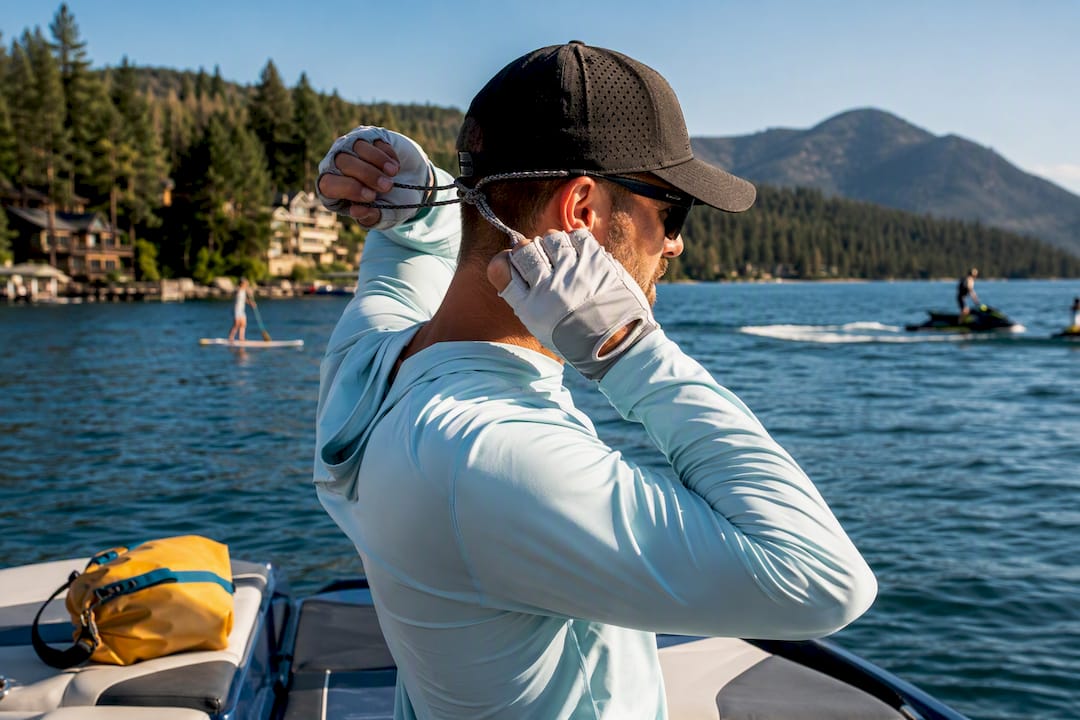
- A hat with at least a 3-inch brim, or a legionnaire-style cap with neck flap, covers ears and neck that sunscreen alone tends to miss
- Polarized, UV400-rated sunglasses cut glare off the water and block both UVA and UVB
- Quick-dry, vented UPF fabric keeps you cooler than heavy cotton while still blocking UV
- Add fishing gloves or a neck buff for long days trolling or anchored in one spot
Pro Tip: Clip a small cord or hat retainer to your wide-brim hat before you leave the dock. Wind off the water is the single most common reason boaters lose a hat overboard, and a $3 clip beats buying a new one every season.
Shade Options That Fit Different Boats
A built-in bimini top gives you the most consistent coverage and holds up well in steady wind, but it's fixed in place and can't follow the sun as your boat's heading changes through the day. A clamp-mount umbrella costs far less, sets up in minutes, and repositions easily, though it won't survive a stiff crosswind as well as a bimini will.
- Biminis: best for pontoons and larger boats with steady cruising speeds, higher upfront cost
- Clamp-mount umbrellas: best for smaller boats, jet ski trailers, or anywhere flexible shade beats fixed coverage
- Position shade to block the sun's direct angle first, then adjust for reflected glare bouncing off the water surface
- Move portable shade every hour or two as the sun's angle shifts, especially midday
A clamp mount paired with a UPF-rated golf umbrella runs under $130 total and covers two or three people comfortably. That's a fraction of the cost of a built-in bimini installation, and it comes off the boat when you're done for the day.
Your Pre-Departure Checklist and Reapplication Routine
Pack light, but pack the right things. Here's the routine that keeps a boat day from turning into a bad sunburn story:
- Pack SPF 50+ lotion, a face stick, a UPF shirt, a wide-brim hat, polarized sunglasses, a clamp umbrella, drinking water, and a basic first-aid kit
- Apply sunscreen at least 20 minutes before you launch so it has time to bind to skin before spray or sweat hits it
- Set a phone alarm for every 80 minutes as your reapply reminder
- Towel dry after every swim, then reapply immediately, focusing on the nose, ears, neck, and feet
- Store sunscreen in a cool, shaded spot in the boat. Heat breaks down active ingredients and shortens shelf life fast
If you're heading out for a full day, this checklist pairs well with a broader jet ski rental day packing list covering gear beyond sun protection.
Kids, Sensitive Skin, Reef Zones, and Medication Risks
Kids need mineral sunscreen with non-nano zinc oxide, since it's gentler on developing skin and less likely to cause irritation than chemical filters. Some coastal destinations also restrict chemical UV filters like oxybenzone and octinoxate to protect coral, so checking local rules before you pack saves you from a compliance headache on arrival.
For sensitive skin, tinted mineral formulas tend to cause less stinging around the eyes than chemical sunscreens, and a quick patch test on your inner arm a day before a trip catches reactions before they ruin your outing. If anyone in your group takes medication that increases photosensitivity, such as certain antibiotics or acne treatments, talk to a doctor beforehand and lean harder on shade and UPF clothing rather than sunscreen alone for that person.
- Mineral, non-nano zinc oxide for kids and reef-sensitive locations
- Tinted mineral formulas for sensitive skin or eye irritation issues
- Patch-test any new product 24 hours before a trip
- Extra shade and clothing coverage for anyone on photosensitizing medication
What Golden Water Sports Sees Renters Forget Most
After years of loading coolers and gear onto boats, our team notices the same gaps trip after trip. Guests remember sunscreen but forget the face stick, so noses and ears get missed. A hat without a retainer clip ends up in the lake within the first hour on windy days. Staff now pre-stage a clamp umbrella on request and brief every group on reapplying before the halfway point of a rental, not just at the start.
Secure umbrellas tightly on windy days near open water. Lake gusts can snap a loosely clamped umbrella in half faster than you'd think, and storing sunscreen in a shaded dry box instead of a sunny cup holder keeps it from breaking down mid-trip.
Why Sunscreen Alone Isn't Enough on a Boat
Most sun-safety advice still treats sunscreen as the whole plan, and that's the biggest gap in conventional boating wisdom. Sunscreen degrades with water contact, friction, and time, no matter how high the SPF number on the bottle. A shirt doesn't wear off. A hat doesn't need reapplying every 80 minutes. Shade doesn't care if you forgot to check the clock.
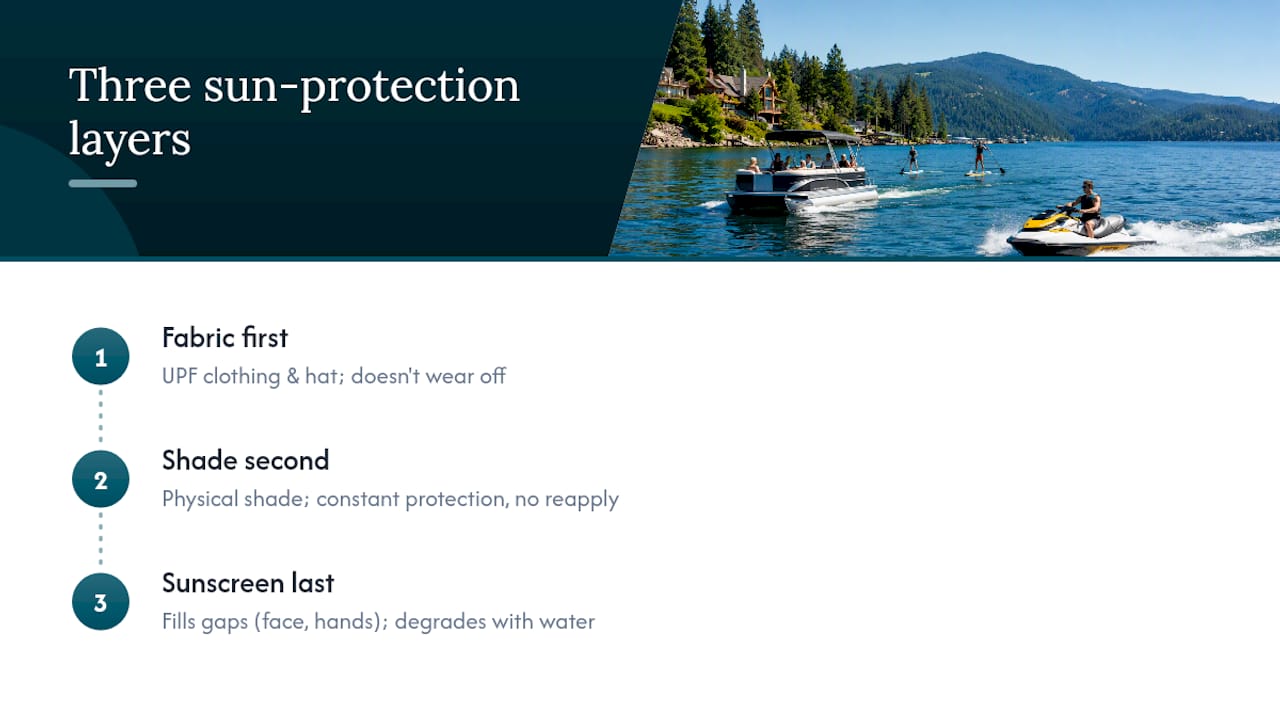
The evidence points to a clear priority order: cover skin with fabric first, shade the boat second, and treat sunscreen as the layer that fills in what clothing and shade can't reach, like the face and hands. Boaters who lean entirely on lotion tend to underestimate how much reflected glare and wind exposure they're actually getting until the burn shows up that evening.
If you're planning a rental day on on Lake Coeur d'Alene or a nearby lake, pack the three-layer kit before you book, not after. It costs less than one bad sunburn and a ruined weekend. Browse Coeur d'Alene boat and jet ski rental pricing to plan your next trip around a full day on the water instead of a day spent hiding from it.
— Life is better on water.
This article is general information, not a substitute for advice from a qualified doctor. Consult a qualified healthcare professional about your own circumstances before acting on anything here.
Sources
For deeper reading, the FDA's sunscreen labeling guide, EPA sun safety action steps, WHO's UV radiation Q&A, and Skincancer all back the specifics covered here.
FAQ
What Is the 1/3 Rule in Boating?
The 1/3 rule refers to fuel planning, not sun exposure: use one third of your fuel to get out, one third to get back, and keep one third in reserve for emergencies. It's a boating safety fundamental worth pairing with your sun-protection routine before any longer trip.
What Sunscreen Do Sailors Use?
Many experienced sailors favor mineral, water-resistant sunscreens with non-nano zinc oxide because they hold up better under constant spray and wind than chemical formulas, and lotion or stick formats apply more evenly in windy conditions than sprays.
What Are the Best Sun Shirts for Boating?
The best sun shirts carry a certified UPF 50+ rating, fit loosely enough to vent heat, and dry quickly after getting wet. Avoid shirts marketed only as "sun shirts" without an actual UPF number on the label.
What Is the Best UV Protectant for Boat Seats?
UV-protectant vinyl treatments and covers reduce sun damage to boat seats and decking, and choosing lotion or stick sunscreen over spray also helps, since sprays are more likely to drift and stain upholstery over time.