
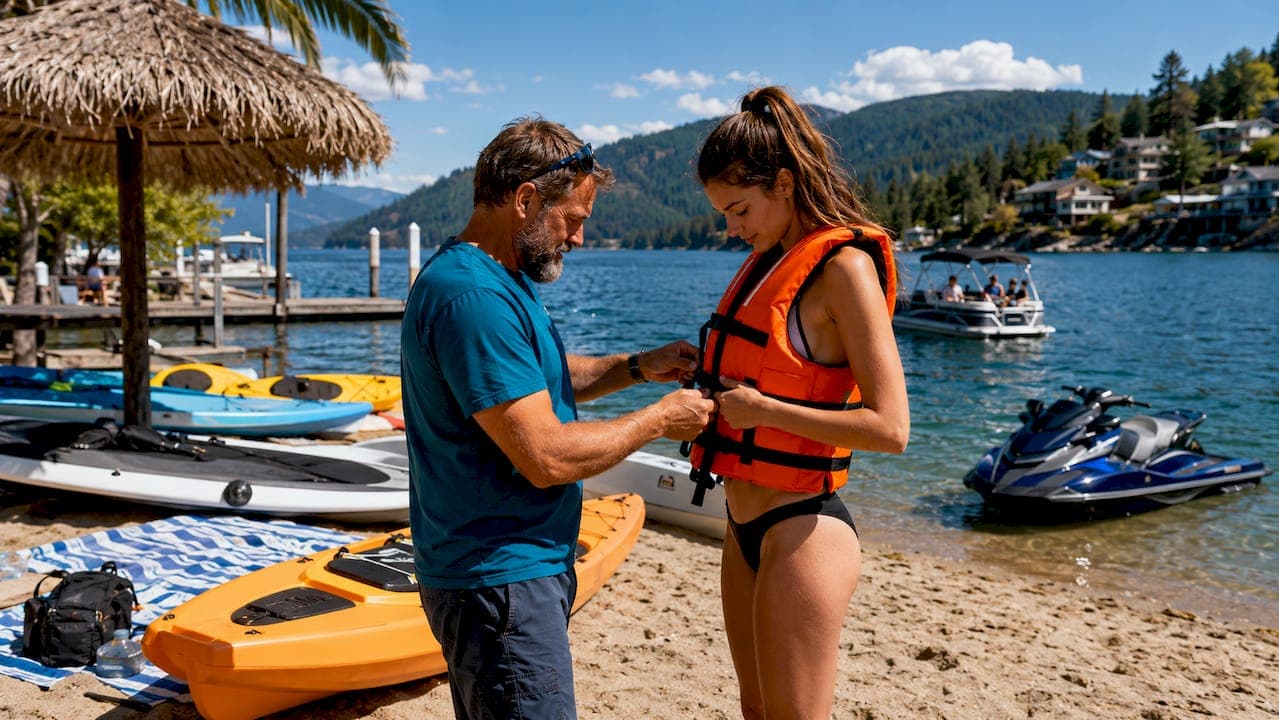
Personal flotation devices, commonly called life jackets or PFDs, are defined by the U.S. Coast Guard as wearable safety devices rated by buoyancy level and intended use. The types of life jackets for water sports differ primarily by buoyancy, design, and activity fit, making it critical to match your jacket to your specific sport and environment. Whether you paddle Liberty Lake on a kayak, pull a wakeboarder behind a ski boat, or cruise Coeur d'Alene on a pontoon, the wrong PFD can limit your movement or, worse, fail you in an emergency. This guide breaks down every major category so you can choose with confidence.
1. What are the main types of life jackets for water sports?
The U.S. Coast Guard classifies life jackets into five types, each rated for different conditions and activities. Understanding these categories is the foundation of choosing the right water sports safety gear.
| Type | Buoyancy | Best Use |
|---|---|---|
| Type I | 22 lbs minimum | Offshore, rough water |
| Type II | 15.5 lbs minimum | Near-shore, calm water |
| Type III | 15.5 lbs minimum | Recreational water sports |
| Type IV | N/A (throwable) | Supplemental rescue device |
| Type V | Varies | Special use, sport-specific |
- Type I (Offshore Life Jacket): Type I jackets offer 22 lbs of buoyancy and turn unconscious wearers face-up. They are bulky and restrict movement, making them a poor fit for active water sports.
- Type II (Near-Shore Vest): Designed for calm, inland water. Less bulky than Type I but still not ideal for high-mobility activities.
- Type III (Flotation Aid): The most popular choice for water sports. Type III jackets provide at least 15.5 lbs of buoyancy with a comfortable, athletic fit. They do not automatically turn an unconscious wearer face-up, so they require a conscious user.
- Type IV (Throwable Device): Ring buoys and seat cushions fall here. These are not wearable and serve as supplemental rescue tools only.
- Type V (Special Use): Type V devices are activity-specific and must be worn to satisfy USCG carriage requirements. Belt-pack inflatables and kayak-specific vests fall into this category.
2. How modern standards are changing water sports life vests
The USCG introduced a performance-based classification system that moves beyond the traditional Type I through V labels. The most relevant new category for active water sports is the Level 50 buoyancy aid.
Level 50 devices provide approximately 16 lbs of flotation and are built with athletic-style designs that prioritize mobility. They suit wakeboarding, stand-up paddleboarding (SUP), and personal watercraft riding. The shift to Level 50 reflects the water sports industry's recognition that people wear gear they find comfortable. A jacket that fits like a vest rather than a life preserver gets worn more consistently.
Hybrid foam and inflatable designs also sit in this modern category. They combine the instant buoyancy of foam with the low-profile feel of an inflatable. The trade-off is maintenance: inflatable PFDs require regular inspection of CO2 cartridges and leak tests to stay reliable.
Pro Tip: Check your inflatable PFD's CO2 cartridge before every season and after any water activation. A spent cartridge looks identical to a full one from the outside.
3. Choosing the right life jacket for your specific activity
Prioritizing activity and environment over universal features is the single most effective approach to life jacket selection. Here is how that plays out across the most common lake and river sports.
- Kayaking and SUP: Choose a Type III or Level 50 vest with a high-back design that clears the kayak seat. Standard PFDs push up against seat backs and cause discomfort on long paddles.
- Waterskiing and wakeboarding: Use a foam Type III vest. Inflatable PFDs are not suitable for high-speed tow sports because impact with water can trigger premature or failed inflation.
- Jet skiing: A snug Type III or Type V vest works well. Look for models with minimal bulk across the shoulders so you can turn and check behind you easily.
- Tubing and casual boating: Type II or Type III vests both work. Foam designs are the best choice here because foam PFDs provide immediate buoyancy without any activation mechanism.
- Fishing from a kayak or canoe: A Type III vest with pockets and a high-back cut gives you storage and comfort for hours on the water.
Pro Tip: Always check that your PFD is USCG approved before heading out. Look for the approval label sewn inside the vest. Rental operators like Goldenwatersports include approved gear, but personal vests vary widely in quality.
4. Foam vs. inflatable vs. hybrid: a practical comparison
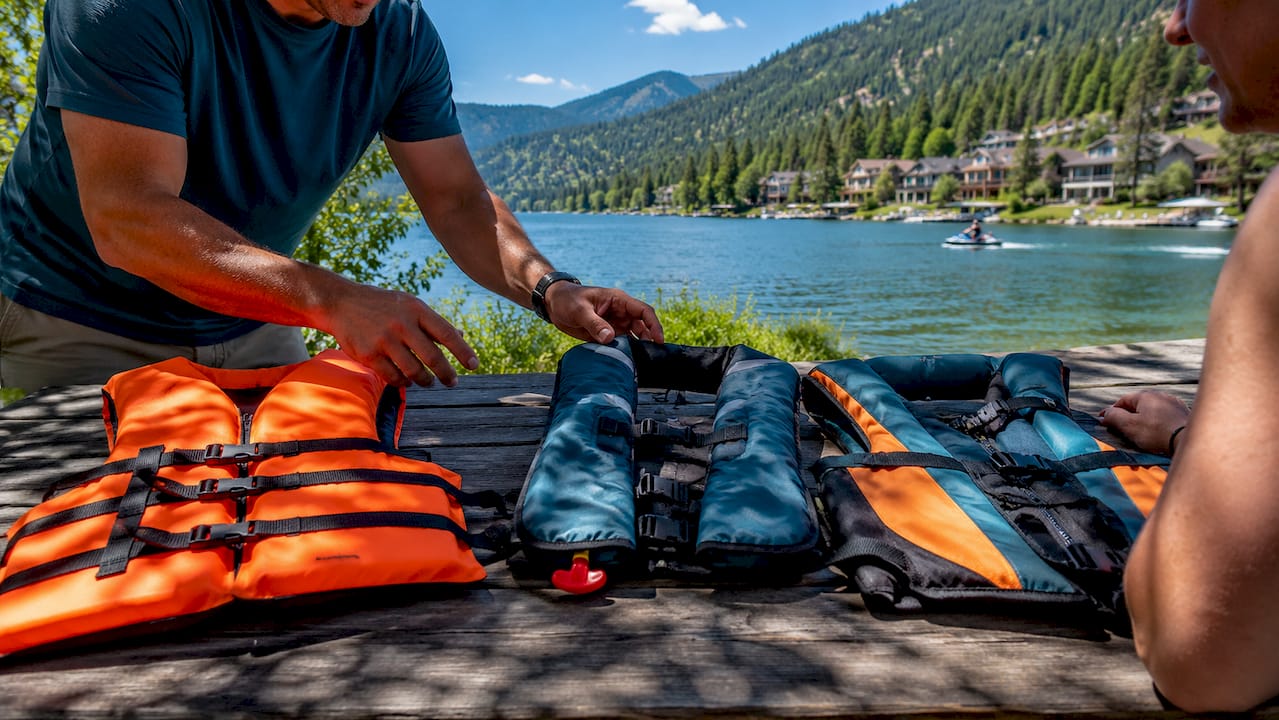
Choosing between foam, inflatable, and hybrid life jackets comes down to your activity, comfort preference, and willingness to maintain gear.
| Feature | Foam | Inflatable | Hybrid |
|---|---|---|---|
| Buoyancy activation | Instant | Manual or auto trigger | Instant (foam) + inflatable boost |
| Maintenance | Minimal | High (CO2 checks, leak tests) | Moderate |
| Comfort for active sports | Good | Excellent | Very good |
| Suitable for tow sports | Yes | No | Depends on design |
| Cost range | Low to moderate | Moderate to high | Moderate to high |
Foam vests win on reliability. They float the moment you hit the water, with no moving parts to fail. Inflatable vests win on comfort and low profile, making them popular for cruising, fishing, and casual paddling. Hybrid designs split the difference but require more attention than foam and more care than a standard inflatable.
For family outings on lakes near Coeur d'Alene, foam Type III vests are the practical default. They work for every age group, need no maintenance between uses, and satisfy USCG requirements without any extra steps. You can find guidance on pairing the right gear with your rental at boat safety tips for families.
5. Fit, maintenance, and common mistakes to avoid
A life jacket that fits poorly is nearly as dangerous as no jacket at all. The most common mistake is wearing a vest that is too large, which allows it to ride up over the face during a fall.
- Test the fit on land: Lift both arms overhead. If the vest rises above your chin, tighten the straps or size down.
- Check for USCG approval: Every vest worn on U.S. waters must carry a USCG approval label. Coast guard approved vests display this label inside the collar or on the chest panel.
- Inspect inflatables before every trip: Failure to maintain inflatable PFDs can cause non-deployment in an emergency. Check the CO2 cartridge, the oral inflation tube, and the bladder for leaks.
- Avoid bulky offshore jackets for active sports: Life jackets designed for offshore use prioritize survival over mobility and are suboptimal for sports requiring agility.
- Replace damaged vests immediately: Faded foam, torn straps, or a compromised bladder all reduce performance. A worn-out vest is not a backup plan.
Pro Tip: Store foam vests flat or hanging in a dry, ventilated space. Compressing foam over time reduces buoyancy. Never use a PFD as a boat seat cushion.
For families with young children, partner resources like kid-friendly water activity guides offer additional safety context for choosing children's life jackets in supervised settings.
Key takeaways
Matching your life jacket to your specific water sport is the most effective way to stay safe and stay compliant on lakes and rivers.
| Point | Details |
|---|---|
| Type III is the water sports standard | It offers 15.5 lbs of buoyancy with the mobility active sports require. |
| Foam beats inflatable for tow sports | High-speed water entry can cause inflatable PFDs to fail or deploy prematurely. |
| High-back design matters for kayaking | It prevents the vest from riding up against the seat back during long paddles. |
| Inflatables need regular maintenance | Inspect CO2 cartridges and bladders before every season and after any activation. |
| Activity-specific fit increases compliance | Comfortable, well-fitted jackets get worn consistently, which is the whole point. |
What I have learned from years on the water
The most overlooked factor in life jacket selection is not buoyancy. It is wearability. I have watched experienced paddlers leave their vests clipped to the bow because the jacket was too stiff to paddle in comfortably. That is a dangerous habit born from a poor gear choice, not laziness.
The Level 50 buoyancy aid category is a genuine step forward. When a vest feels like athletic gear rather than emergency equipment, people wear it without thinking twice. That shift in behavior matters more than any marginal buoyancy difference between a Type II and a Type III.
My honest recommendation: buy the most comfortable USCG-approved vest that suits your primary activity, and wear it every time. A Type III foam vest for kayaking, a snug Type V for jet skiing, and a foam vest for the kids on the pontoon. Keep inflatables for low-impact cruising only, and inspect them every spring without exception. The gear that saves your life is the gear you are actually wearing.
— Life is better on water.
Get on the water safely with Goldenwatersports
Goldenwatersports provides USCG-approved life jackets with every rental at Liberty Lake, Coeur d'Alene, and Spokane Valley. You do not need to guess which vest fits your activity. The Goldenwatersports team matches safety gear to your rental, whether you are on a Yamaha WaveRunner, a ski boat, or a pontoon.
Every guest gets properly fitted, approved gear before leaving the dock. Book your next day on the water at Goldenwatersports rentals and arrive knowing your safety equipment is already handled. Check the jet ski rental check-in process to see exactly what safety steps are covered before you ride.
FAQ
What type of life jacket is best for kayaking?
A Type III PFD with a high-back design is the best choice for kayaking. The high-back cut clears the seat back and prevents the vest from riding up during long paddles.
Can I use an inflatable life jacket for waterskiing?
Inflatable PFDs are not recommended for waterskiing or wakeboarding. High-speed water impact can cause premature or failed inflation, making foam Type III vests the safer option for tow sports.
What does USCG-approved mean on a life jacket?
A USCG-approved label means the vest meets U.S. Coast Guard standards for buoyancy, materials, and construction. Only USCG-approved vests satisfy legal carriage requirements on U.S. waters.
What is a Level 50 buoyancy aid?
A Level 50 buoyancy aid is a performance-based PFD providing approximately 16 lbs of flotation. It is designed for active water sports like SUP, wakeboarding, and personal watercraft riding, prioritizing mobility alongside safety.
How often should I inspect my life jacket?
Inspect foam vests at the start of each season for torn straps, faded foam, or damaged buckles. Inspect inflatable PFDs before every trip, checking the CO2 cartridge, bladder, and oral inflation tube for any signs of wear or leakage.