
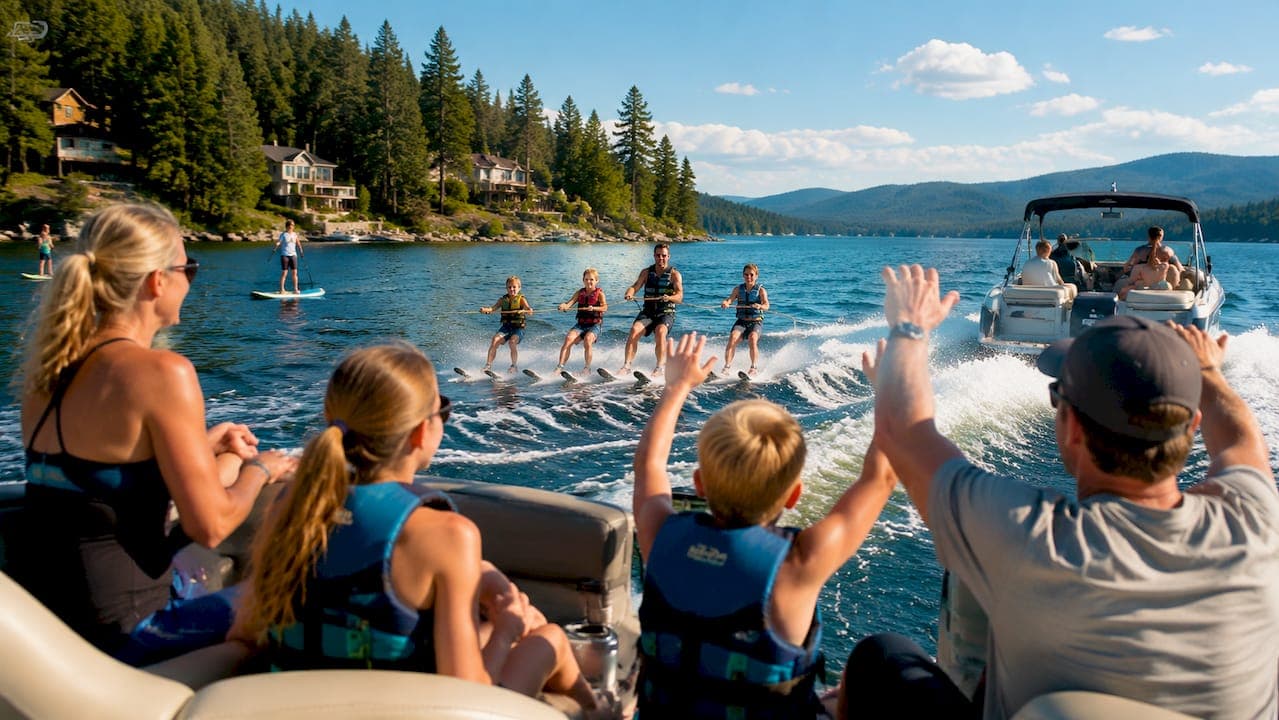
Water skiing is defined as a surface water sport where a rider is pulled across water on one or two skis by a motorboat. The primary types of water skiing techniques include Slalom, Trick, and Jump skiing for competitive riders, plus Combo, Wakeboarding, and Barefoot skiing for those exploring different water skiing styles. Each technique demands a different skill set, equipment setup, and level of physical preparation. Whether you are a first-timer at Lake Coeur d'Alene or an experienced rider looking to progress, knowing which discipline fits your goals makes every session more productive.
1. What are the main types of water skiing techniques?
The three primary competitive techniques in water skiing are Slalom, Tricks, and Jumps. Each one tests a different combination of balance, timing, and courage. Beyond competition, Combo skiing, Wakeboarding, and Barefoot skiing round out the full picture for recreational riders. Understanding all six gives you a clear map for skill progression.
2. Slalom skiing: the most popular advanced technique
Slalom is the most widely practiced form of competitive water skiing. The skier rides on a single ski and zigzags around 6 buoys while the boat follows a straight path down the center of the course. Success depends on precise acceleration, strong body alignment, and sharp timing at each gate. Progression in slalom focuses on control first, then speed.
Key skills for slalom:
- Edge control: Lean hard into each turn without losing your hip position.
- Rope management: Shorten the rope as you improve to increase difficulty.
- Body alignment: Keep knees bent, hips up, and shoulders relaxed through every buoy.
- Timing: Initiate your turn before the buoy, not after you pass it.
Pro Tip: Video analysis catches errors like bent arms and dropped hips that you cannot feel during a run. Record your passes from the boat and review them after each session.
For a detailed breakdown of course layout and rules, the slalom course guide on the Goldenwatersports blog covers everything from buoy spacing to rope length progressions.
3. Trick skiing: acrobatics on the water
Trick skiing is the most creative of the competitive water skiing disciplines. Skiers perform acrobatic maneuvers during two 20-second passes at slower boat speeds, with judges scoring each trick's difficulty and execution. The slower speed makes it accessible for intermediate riders, but the coordination required is high. Scoring rewards variety, so riders build a catalog of moves over time.
Popular tricks to learn in order of difficulty:
- Side slide: Rotate the ski 180 degrees while gliding forward.
- Wake jump: Launch off the boat's wake and land clean.
- Toe hold: Grip the rope with your foot instead of your hands.
- Back wrap: Pass the rope behind your back mid-maneuver.
- Flip: Full aerial rotation, reserved for advanced riders.
Pro Tip: Practice each trick on flat water before attempting it off the wake. Muscle memory built on calm water transfers directly to competition conditions.
4. Jump skiing: the highest-thrill discipline
Jump skiing sends riders off a ramp roughly 6 meters long and nearly 2 meters high at full speed. The goal is maximum distance and clean form in the air. World-record jumps exceed 70 meters, which shows just how far elite technique can take a rider. Physical strength, mental focus, and precise timing at the ramp base all determine the outcome.
What jump skiing demands:
- Speed management: Approach the ramp at controlled speed, not maximum speed.
- Ramp position: Stay low and centered until the moment of launch.
- Air form: Keep skis parallel and body upright to maximize distance.
- Landing: Absorb impact with bent knees and forward lean.
Jump skiing carries the highest injury risk of any water skiing discipline. Riders should progress through structured instruction before attempting ramp work. A qualified coach and a proper ski boat rental with adequate horsepower are non-negotiable starting points.
5. What beginner water skiing techniques should novices focus on?
Beginners should start with combo skis, which are wider and paired for stability during deep-water starts. Boat power between 150 and 300hp delivers smooth, consistent acceleration that makes standing up far easier. Rushing into a single ski before mastering the basics is the most common mistake new riders make. Stability first, speed later.
The correct deep-water start sequence:
- Float in the water with skis pointing forward and knees tucked to your chest.
- Keep arms straight and the rope between your skis.
- Signal the driver and hold your position as the boat accelerates.
- Let the boat's momentum pull you upright. Do not pull yourself up.
- Once standing, straighten your legs gradually and find your balance.
Most beginners stand within their first session when they follow this sequence correctly. The single biggest error is trying to muscle up instead of letting the boat do the work.
Pro Tip: Fear of deep-water starts is normal and addressable. A land briefing before you get in the water, combined with a side-mount bar on the boat for real-time communication, removes most of the anxiety before your first attempt.
6. Wakeboarding and barefoot skiing: complementary water skiing styles
Wakeboarding and barefoot skiing are closely related to traditional water skiing but require different equipment and skills. Wakeboarding uses a single board with foot bindings and a trapeze-style handle, making it popular with riders who want to focus on aerial tricks off the wake. Barefoot skiing means riding directly on the water's surface without any skis at all, which demands exceptional balance and higher boat speeds.
Key differences at a glance:
- Wakeboarding: Board with bindings, slower speeds, trick-focused, beginner-friendly entry point for those coming from skateboarding or snowboarding.
- Barefoot skiing: No equipment on feet, very high speeds, advanced balance required, not recommended for beginners.
- Traditional skiing: Skis required, wide speed range, multiple disciplines available, the most structured path for skill progression.
Riders who master traditional water skiing techniques often find wakeboarding a natural next step. The body awareness built on skis transfers directly to board sports. For those curious about boat-based water sports on Lake Tahoe, wake surfing options show how these disciplines connect across different venues and water conditions.
Key takeaways
Mastering water skiing starts with technique fundamentals and progresses through discipline-specific skills, with each style building on the last.
| Point | Details |
|---|---|
| Start with combo skis | Wider, paired skis give beginners the stability needed for a successful deep-water start. |
| Let the boat pull you up | Pulling yourself upright causes falls. Keeping arms straight and letting momentum do the work is the correct method. |
| Slalom demands body alignment | Knees bent, hips up, and shoulders relaxed through every buoy determines your score more than speed. |
| Jump skiing requires coaching | Ramp work carries the highest injury risk and should only follow structured instruction. |
| Video review accelerates progress | Recording your runs identifies errors in body position that you cannot detect by feel alone. |
What I've learned watching beginners and experts on the same water
Most beginners think water skiing is about strength. It is not. The riders who progress fastest are the ones who stop fighting the rope and start reading the water. I have watched people with athletic backgrounds struggle for an entire session because they kept trying to muscle their way upright. Meanwhile, a relaxed first-timer who trusted the boat's pull stood up on their third attempt.
The same principle applies at every level. Slalom skiers who obsess over speed before they own their body position plateau fast. Trick skiers who skip the basics and jump straight to flips spend more time falling than learning. The body position fundamentals — knees bent, hips up, arms straight — are not beginner advice. They are the foundation every professional still checks before a run.
Off-water training matters more than most recreational riders realize. Planks, squats, and balance board work build the core and leg strength that makes wake crossings and sharp turns feel controlled rather than chaotic. The water rewards preparation. Show up fit and focused, and the technique clicks faster than you expect.
— Life is better on water.
Get on the water with Goldenwatersports
Knowing the techniques is one thing. Feeling them under your feet on a real lake is another.
Goldenwatersports offers ski boat rentals on Lake Coeur d'Alene with the horsepower and equipment needed to practice every style covered here. From combo ski setups for first-timers to slalom-ready boats for experienced riders, the fleet is built for real progression. The team provides safety gear, flexible rental periods, and local knowledge of the best water conditions on the lake. Book a session and put these techniques to work.
FAQ
What are the three main competitive water skiing techniques?
The three main competitive techniques are Slalom, Tricks, and Jumps. Slalom involves navigating 6 buoys on one ski, Tricks uses two 20-second passes for acrobatic maneuvers, and Jumps send riders off a ramp for maximum distance.
What is the best technique for beginner water skiers?
Beginners should start with combo skis and the deep-water start method, keeping knees tucked, arms straight, and letting the boat's momentum pull them upright. Most beginners stand successfully within their first session using this approach.
How is wakeboarding different from traditional water skiing?
Wakeboarding uses a single board with foot bindings and focuses on wake-based tricks, while traditional water skiing uses one or two skis across multiple disciplines. Wakeboarding is a natural progression for skiers who want to add aerial tricks to their riding.
What boat horsepower do you need for water skiing?
A boat with 150 to 300hp delivers the smooth, consistent acceleration that makes water skiing safe and effective for both beginners and advanced riders.
How do you improve water skiing technique faster?
Video analysis of your runs identifies errors in body position and timing that you cannot feel during a session. Combining on-water video review with off-water strength training, including planks and balance board work, produces the fastest skill gains.