
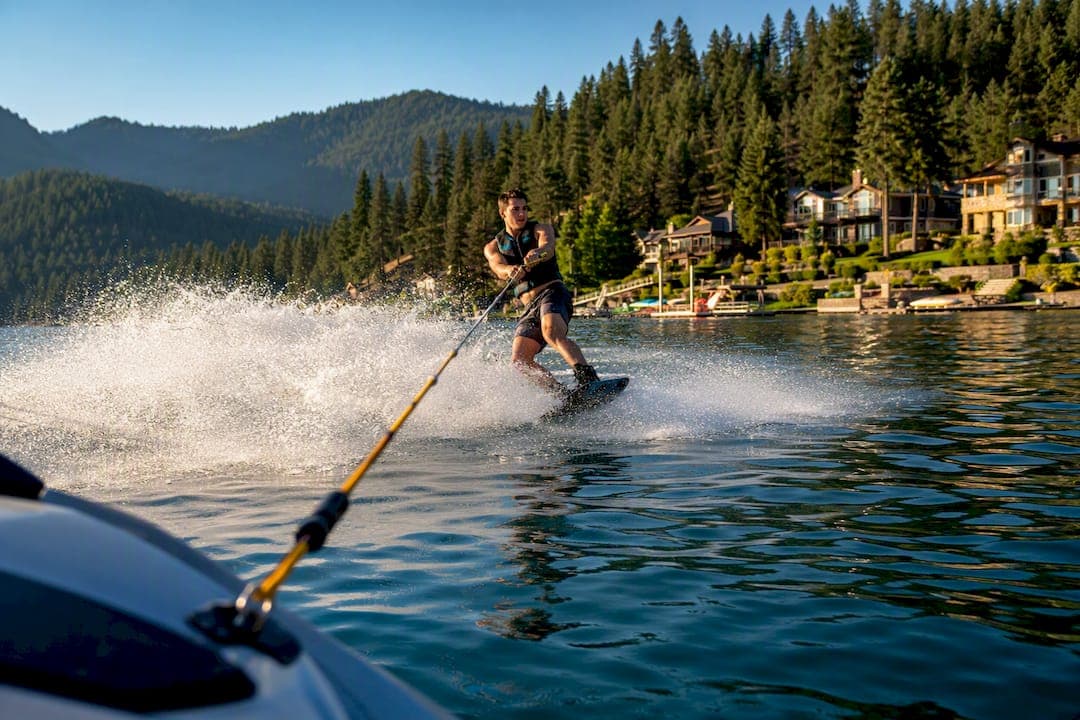
Yes, you can wakeboard with a jet ski, and for learning or casual sessions it works well. The catch is that wake size and setup determine everything: tow point, rope length, speed consistency, ballast, and trim all need attention, plus your state's spotter and life jacket rules. For serious big-air progression, a wake boat still builds a bigger wake, but a PWC gets more riders up and riding sooner.
TL;DR:
- A jet ski can be effective for wakeboarding beginners and casual sessions, but it produces a smaller wake than a dedicated wake boat.
- Proper wake setup involves adjusting tow point, rope length, speed, ballast, and trim, with 50 to 75 feet ropes and speeds of 25 to 35 mph being optimal.
- Safety requires a Coast Guard–approved life jacket, a spotter, and attaching the rope to a designated pylon, with regulations varying by state.
- Correct technique for getting up involves a slow, steady acceleration, proper positioning, and balancing on the board as the wakeboarder refines skills.
- Regular maintenance of the PWC’s hardware, and respectful lake etiquette, including avoiding shallow areas and wildlife zones, are essential when towing behind a jet ski.
Table of Contents
- When Is a Jet Ski a Good Choice for Wakeboarding?
- Jet-Ski Wake Setup: Tow Point, Rope Length, Speed, Ballast, and Trim
- Safety and Legal Considerations When Towing Behind a PWC
- How Do You Get Up on a Wakeboard Behind a Jet Ski?
- Common Problems and How to Fix Them
- Jet Ski vs. Wake Boat: What Each Does Better
- Equipment Checklist: Rope, Handle, Board, and PFD
- Techniques for Advanced Tricks and Maneuvers
- Maintenance Tips for Jet Skis Used for Frequent Wakeboarding
- Environmental Impact and Lake Etiquette for Jet Ski Wakeboarding
- A Practical View From Golden Water Sports
- Rent the Right Setup With Golden Water Sports
- Sources
When Is a Jet Ski a Good Choice for Wakeboarding?
Before you rig up a rope, check whether your personal watercraft (PWC) is even built for this. Not every ski handles towing well, and mismatched gear leads to a frustrating session instead of a fun one.
Look for enough engine power to pull a rider out of the water smoothly, a hull wide enough for stability at towing speed, and a dedicated tow point rather than just a rear cleat. Passenger weight matters too. A second rider seated toward the back adds stern squat, which actually helps build a small wake.
Compare that against a wake boat, and the tradeoffs are clear: a jet ski resets faster after a fall but produces a smaller, less defined wake. Before you pull away from the dock, run through this:
- Confirm a Coast Guard–approved life jacket for the rider and everyone aboard the ski
- Bring a spotter in addition to the driver
- Pick open water away from docks, swimmers, and other boat traffic
- Check that the tow rope attaches to a proper pylon or reinforced cleat, not a random handle
Jet-Ski Wake Setup: Tow Point, Rope Length, Speed, Ballast, and Trim
Five variables control your wake, and getting them right is the difference between a flat, useless pull and a wake you can actually ride. Manufacturer and specialist guidance on jet ski wake setup breaks these down as tow point, rope length, speed, ballast, and trim, and each one needs a deliberate choice rather than a guess.
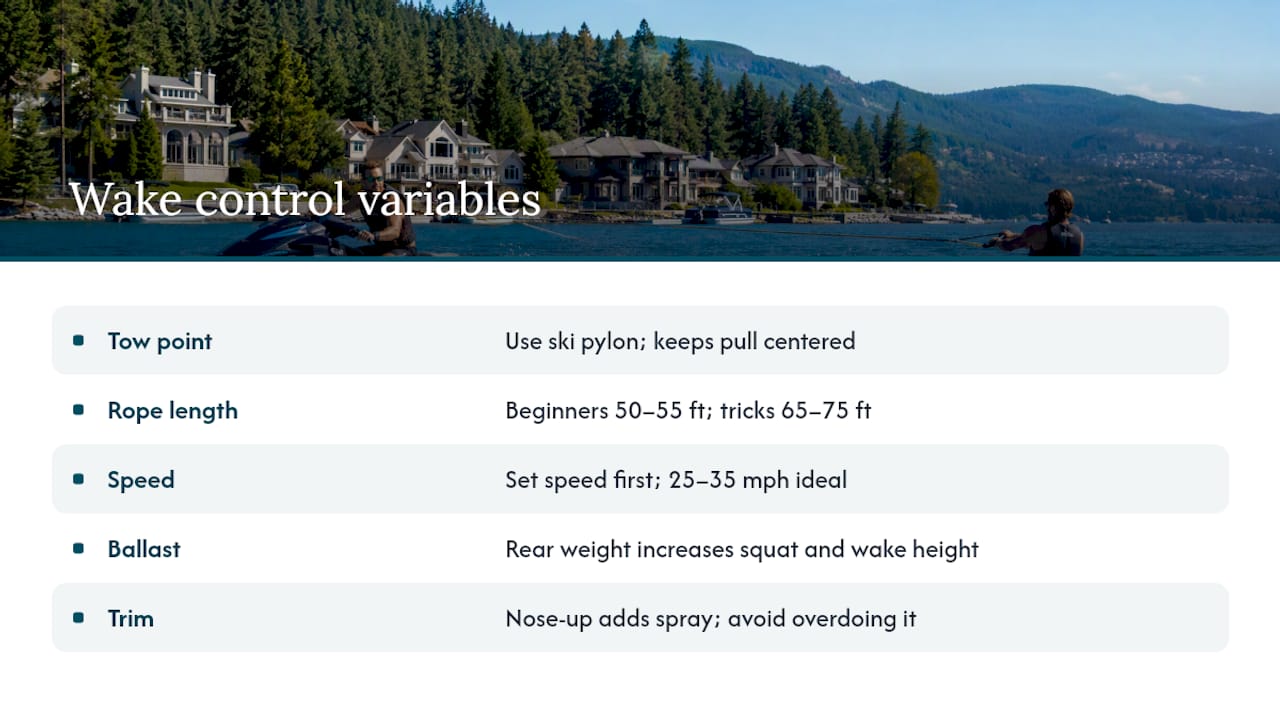
Tow point should be a dedicated ski pylon rather than a center cleat. Pylons sit higher and centered over the hull, which keeps the rope from pulling the rider side to side or yanking the ski off balance.
Rope length depends on skill level. Beginners do better on shorter ropes, approximately between fifty and fifty-five feet, which keeps them closer to the wake where the pull feels more direct. Riders ready for tricks and jumps move out to longer ropes generally ranging from about sixty-five to seventy-five feet, where the wake flattens out into a cleaner ramp.
Speed is the single biggest lever for wake quality; fixing your speed before touching rope or ballast solves more problems than any other adjustment. Start at moderate speeds for a workable wake, with recreational pulls at moderate speed ranges and a firmer, more defined wake appearing at higher speeds typically used for wakeboarding.
Setup snapshot: Wakeboard-specific rope runs 50 to 75 feet depending on skill, and speeds of 25 to 35 mph produce the most usable wake shape, according to IPD Racing's setup guide.
Ballast placed toward the stern creates more squat than the same weight spread evenly through the ski, and even small rear-weighted adjustments produce an outsized effect on wake height. Trim nose-up throws more spray and builds a bigger rooster tail, but push it too far and you'll fight the ballast and speed settings you just dialed in. Adjust one variable at a time.
Safety and Legal Considerations When Towing Behind a PWC
Rules for towing a wakeboarder vary by state, and many require both an observer separate from the driver and a rearview mirror mounted on the ski. Before you head out, confirm what your local water authority requires, since a violation here can mean a fine or worse if something goes wrong. Wakeup Sports' safety guidance points out that these spotter and mirror requirements exist specifically because a driver watching the rider and the water ahead at the same time is asking for trouble.
Every rider and observer needs a Coast Guard–approved personal flotation device rated for tow sports. Attach the rope only to the manufacturer-designated tow point, and know how to release it fast if the rider falls awkwardly or drifts toward another boat.
- Confirm your state's spotter and mirror requirements before launching
- Use a Coast Guard–approved PFD built for towing, every time
- Attach the rope to the ski's designated pylon, never a random grab handle
- Agree on hand signals before you start: speed up, slow down, stop, turn around
- Stick to posted tow-sport zones where your lake designates them
For a deeper breakdown of open-water protocols, some companies cover additional safety practices for jet skiing in open water that apply directly to towing situations.
Pro Tip: Agree on your stop signal before the rope goes tight. A rider crossing their arms over their head means "cut the engine now," and every driver on your trip should know it cold.
How Do You Get Up on a Wakeboard Behind a Jet Ski?
Getting up is the hardest part for most beginners, but the sequence is simple once you know it.
- Get into position. Sit back in the water with knees bent toward your chest, board perpendicular to the direction of pull, and arms straight out in front holding the handle.
- Signal ready. Give your driver and spotter the agreed thumbs-up before the rope tightens.
- Let the ski take up slack slowly. The driver should ease into the throttle rather than gunning it, letting the rope tighten gradually so you're not yanked forward.
- Accelerate to a steady speed. Once you're rising, the driver holds a consistent throttle, usually building toward that 25 mph range, rather than jumping speed up and down.
- Stand up as the board levels out. Push through your legs, not your arms, and let the board naturally rotate toward your dominant foot as you find balance.
- Ride it out. Once standing, keep knees slightly bent and let the ski's wake do the work.
This water-start technique matches what ShunAuto's guide to wakeboarding behind a jet ski recommends: squat, straight arms, and a gradual driver launch. Once you're comfortable standing, progress from a steady straight-line ride into light carving across the wake, then small hops before attempting anything bigger.
Common Problems and How to Fix Them
Most beginner frustration traces back to one of a handful of fixable issues.
- Flat wake: Hold your speed steady rather than drifting up and down, and shift a little extra weight toward the stern.
- Weaving or drifting off course: Pick a fixed point on the shoreline ahead and steer toward it, keeping throttle constant instead of pulsing it.
- Rope getting sucked into the jet pump: This is a real risk. Use a shock tube on the rope, route it away from the intake, and never back the ski up toward a rider or floating rope, since ingestion can damage the drive train.
- Falling awkwardly: Let go of the handle immediately, swim clear of the ski's path, and signal the driver that you're okay before they circle back.
As your skill improves, revisit your rope length and trim rather than sticking with your original beginner setup indefinitely.
Jet Ski vs. Wake Boat: What Each Does Better
A jet ski wins on resets. Falling off is a minor delay instead of a full loop back around, and PWCs generally reset faster than boats, which means more attempts per hour for a beginner still learning to stand up. Skis also need less operating room, so they suit smaller coves and quieter stretches of water, and renting one usually costs less than a comparable wake boat session.
The tradeoff is wake volume. A jet ski's wake tops out smaller than a dedicated wake boat's, which limits how big a jump you can realistically build.
- Choose a jet ski for: learning to stand up, casual sessions, tight or crowded water
- Choose a wake boat for: progressing toward bigger air and more defined ramps
Equipment Checklist: Rope, Handle, Board, and PFD
Get these details right before you ever leave the dock.
- Rope: A wakeboard-specific rope, not a tubing rope. Wakeboard ropes carry a rated breaking strength and a low-stretch design that tubing ropes don't offer.
- Handle: Padded grip with a quick-release connector at the ski end, so you can detach fast in an emergency.
- Board length: Shorter, wider boards are more forgiving for beginners learning to balance; bindings should fit snugly without pinching.
- PFD: A Coast Guard–approved vest rated specifically for tow sports, since standard flotation vests aren't built for the impact of a fall at speed.
- Rental add-ons worth asking for: a dedicated tow pylon, fillable ballast bags, and any cruise-speed assist feature that helps the driver hold a steady throttle.
Golden Water Sports' guide to how jet ski towing service works covers more detail on tow attachments if you're setting up your own gear.
Techniques for Advanced Tricks and Maneuvers
Once you can hold a steady line and carve confidently across the wake, the next step is using the wake's edge deliberately instead of just riding through it. Approach the wake at a moderate angle rather than straight on, and load your board by leaning back into your bindings as you cross the crest. That loaded edge is what launches you into the air rather than just bouncing over the top.
For a basic ollie or small jump, cut hard away from the wake first to build speed and tension in the rope, then cut back sharply and let the wake's lip do the lifting as you extend your legs. Keep your eyes on the horizon, not the water beneath you. Riders who look down tend to land off balance because their weight shifts forward too early.
Surface tricks come next, since a jet ski's smaller wake often suits them better than the bigger air a wake boat encourages. A simple 180 starts with a flat approach, a quick rotation initiated by the shoulders and head rather than the hips, and a spotting technique where you pick a new visual point to land toward.
Because a PWC's wake tops out smaller than a boat's, treat it as a training ground for edge control, rotation timing, and pop rather than a venue for maximum air. Riders who master basic carving and small jumps behind a jet ski often find the transition to a wake boat's bigger wake much smoother, since the fundamentals of edge pressure and body rotation transfer directly. Refining your carving technique behind a PWC builds the same edging skills covered in broader water skiing technique guides, which apply across most tow sports.
Maintenance Tips for Jet Skis Used for Frequent Wakeboarding
Towing puts more strain on a PWC than casual cruising, and the hardware that keeps your wake consistent needs regular attention. Check your tow pylon or reinforced cleat for cracks or loosening after every few sessions, since repeated jerking from a fallen rider stresses that mounting point more than normal riding ever does.
Inspect your rope and handle before each outing. A fraying rope is more than a wake-quality issue. It's a failure point that can snap under load. Rinse salt or debris off the pylon hardware and rope cleats after each session, since corrosion at the tow point compromises the one attachment your rider's safety depends on.
The jet pump intake deserves particular attention if you tow often. Rope that gets sucked into the pump, even briefly, can nick the impeller or damage the drive train, so check the intake grate for debris and confirm nothing is caught before every launch. If you've had a close call with rope near the intake, a quick inspection by a qualified technician beats guessing that everything's fine.
Ballast bags, if you use them, should be checked for leaks and secured tightly. A shifting or leaking bag mid-run throws off the exact stern squat you dialed in during setup, undoing the work you put into tuning your wake. Battery health and fuel system checks matter more for tow use too, since holding a steady throttle for repeated pulls draws more consistently than short recreational rides. A PWC that's mechanically solid holds speed steadier, and steady speed is what actually produces a rideable wake.
Environmental Impact and Lake Etiquette for Jet Ski Wakeboarding
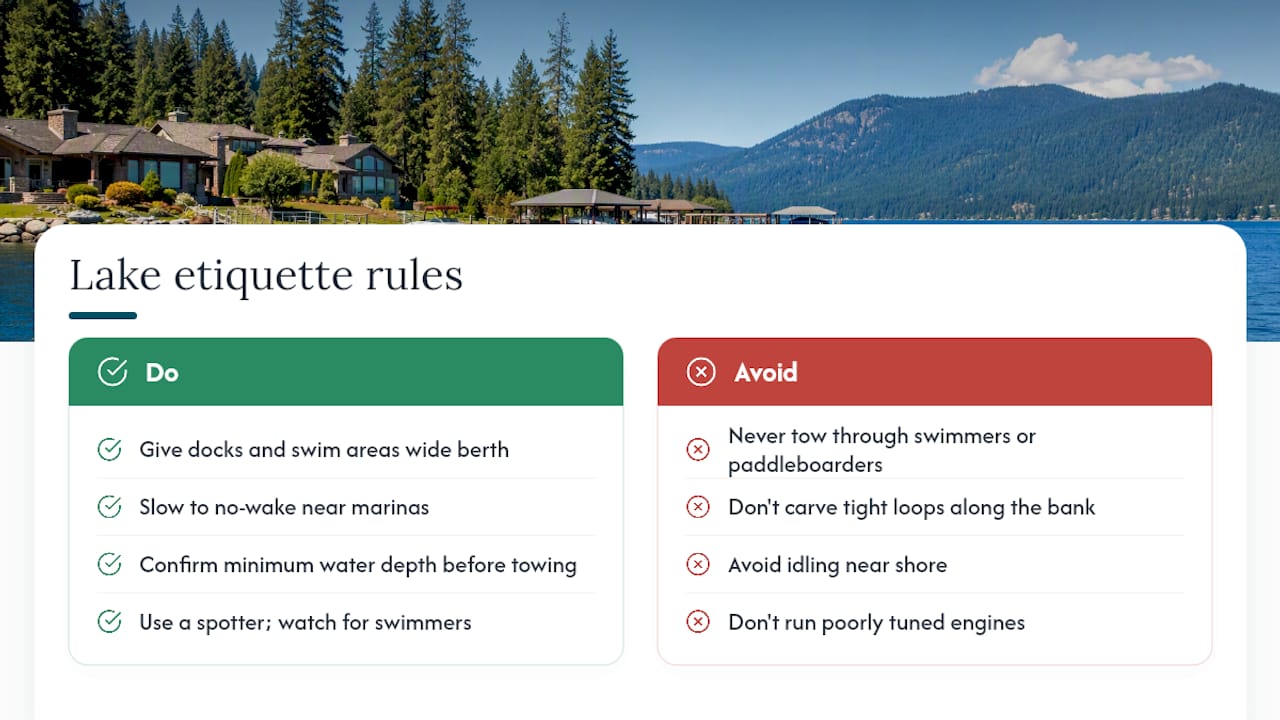
Towing a wakeboarder means running closer to shorelines and shallower water than open cruising usually requires, which raises the stakes for where you choose to ride. Shoreline erosion from repeated wake action is a real concern on smaller lakes and reservoirs, so give docks, swim areas, and sensitive shoreline sections a wide berth rather than carving tight loops right along the bank.
Wildlife and other water users share the same space you're riding in. Slow to a no-wake speed near marinas, launch ramps, and posted wildlife zones, and never tow through an area where swimmers or paddleboarders are present. A wakeboard rope stretched out behind a moving ski is nearly invisible to someone in the water ahead, which makes situational awareness a shared responsibility between driver and spotter.
Fuel and noise matter too. A well-maintained four-stroke engine burns cleaner than a poorly tuned one, and idling near shore longer than necessary adds unnecessary exhaust to a confined stretch of water. Local rules on designated tow-sport zones exist partly for this reason: concentrating towing activity in open, less sensitive water reduces the cumulative impact on shoreline habitat and other recreational users. Before choosing your run, confirm the minimum water depth appropriate for towing, since running a wakeboarder through shallow water damages both the lakebed and your equipment.
Good etiquette ultimately comes down to sharing a resource that everyone on the lake wants to enjoy. Keep your wake and your noise contained to open water, respect posted speed zones, and treat the shoreline the way you'd want the next rider to treat it.
A Practical View From Golden Water Sports
Most first-time renters ask if wakeboarding is doable on a jet ski or if a boat is needed. A ski can get nearly everyone up and riding within a session, especially with a properly rigged tow point and a patient driver. Beginners often have less confidence about board size and rope length than about the actual water start, which is why beginners may be pointed toward a beginner wakeboarding guide before they leave the dock. Rentals typically include required safety gear.
— Life is better on water.
Rent the Right Setup With Golden Water Sports
Jet ski rental services can offer a faster, cheaper way into this sport than booking a full wake boat charter: Yamaha WaveRunners can be configured with tow pylons and ballast bags on request, so riders can be ready to go instead of troubleshooting gear.
We rent jet skis, ski boats, pontoon boats, and paddleboards across Spokane Valley, Liberty Lake, and Coeur d'Alene, and our team can set up your PWC for towing before you ever hit the water. Ask about a tow pylon and ballast bags when you book, and we'll have the rope and safety gear ready to match. If Liberty Lake is your spot, check availability directly on our Liberty Lake jet ski rental page, or browse current rates and rental packages to plan your day on the water.
Sources
- Jet Ski Wake Setup: What Riders Need to Know - IPD Racing
- Master wakeboarding behind a jet ski: essential tips and techniques | ShunAuto
- Can a Jet Ski Pull a Wakeboard? - StevenInSales
- Wakeupsports