
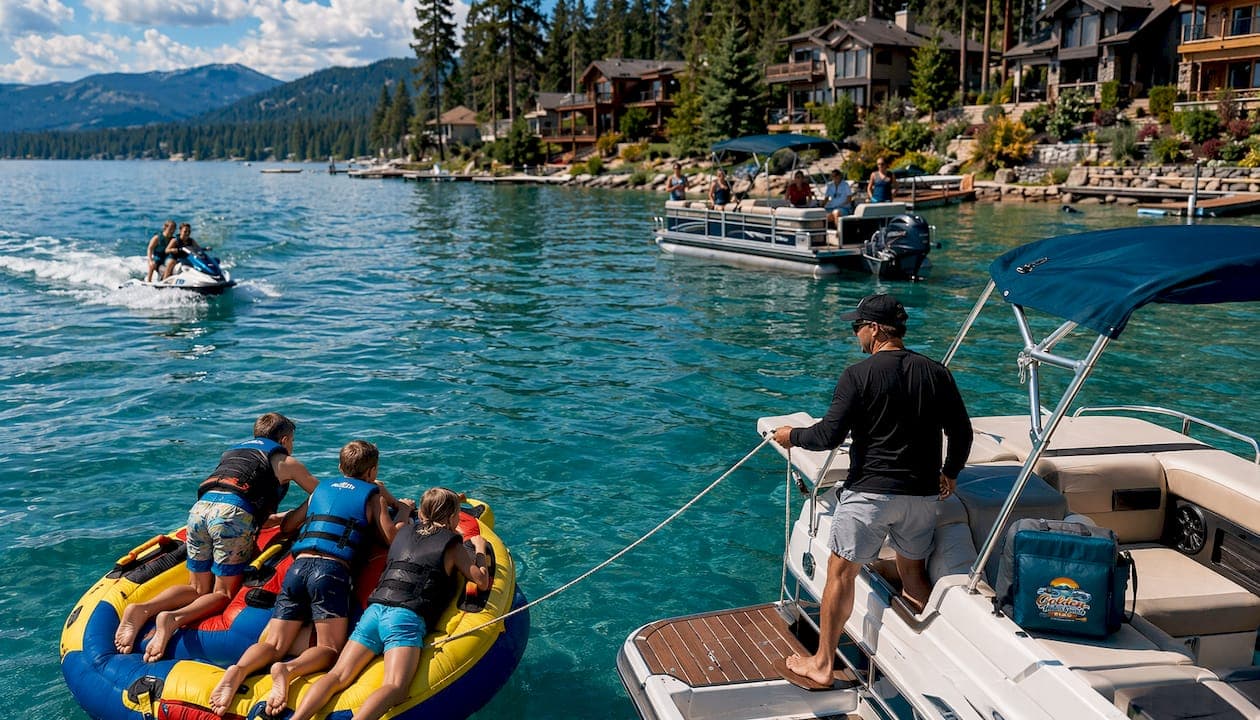
Beginner water sports are low-impact, easy-to-learn activities that let anyone enjoy the water with minimal prior skill or equipment. The best examples of water sports beginners can try include towable inflatable rides, kayaking, stand-up paddleboarding (SUP), and snorkeling. Each activity suits different comfort levels, ages, and fitness levels. Water sports do not require elite athleticism; you can start slow, build confidence, and progress at your own pace. Lakes like Lake Coeur d'Alene offer the perfect calm, sheltered water to get started safely.
1. What are the best examples of water sports beginners can try?
The clearest examples of beginner water sports share three traits: low skill requirements, minimal gear, and calm water conditions. Towable inflatables, kayaking, SUP, and snorkeling all meet that standard. Each one gives you a real taste of the water without demanding technical training or expensive equipment. Calm, flat water environments like sheltered lakes provide the best stability for anyone learning balance on the water. That is exactly why lake destinations are the ideal starting point for water sport newbies.
2. Towable inflatable rides: the easiest entry point
Towable inflatable rides are rated the easiest water sport for beginners, requiring zero skill and suiting riders ages 8 and up. You simply hold on while a boat tows you across the water. Common options include banana boats, sofa tubes, and chariot-style inflatables. Each one seats multiple riders, which makes them a natural fit for families and groups.
Safety is straightforward. Riders wear a personal flotation device (PFD) and stay in calm, open water away from boat traffic. Calm resort lakes and sheltered bays are the best environments. Check out the family lake vacation guide from Goldenwatersports for a full breakdown of towable options worth trying.
- No prior experience needed
- Suitable for ages 8 and up
- Works best on calm, flat water
- Always wear a properly fitted PFD
Pro Tip: Choose a resort or rental company that briefs riders on hand signals before the ride starts. A clear "stop" signal between the rider and boat driver prevents most accidents.
3. How kayaking builds water confidence for beginners
Kayaking is one of the most accessible introductory water sports because the boat itself provides natural stability. Sit-inside and sit-on-top kayaks both work well for beginners, with sit-on-top models being the most forgiving in warm water. Beginner lessons typically last 1–2 hours and cover basic paddling strokes, turning, and how to re-enter after a capsize.
Kayaking experts advise practicing fundamental techniques before rushing into advanced maneuvers. That means mastering the forward stroke and sweep stroke before attempting open-water crossings. Skill builds one stroke at a time, and that patience pays off quickly.
- Start on a calm lake or slow-moving river
- Use a sit-on-top kayak for maximum stability
- Learn the forward stroke and sweep stroke first
- Practice wet exits in shallow water before venturing further
Pro Tip: A properly fitted PFD should not ride up past your chin when you lift your arms. If it does, size down. A loose PFD restricts paddling and becomes a safety hazard.
4. Why stand-up paddleboarding is popular with water sport newbies
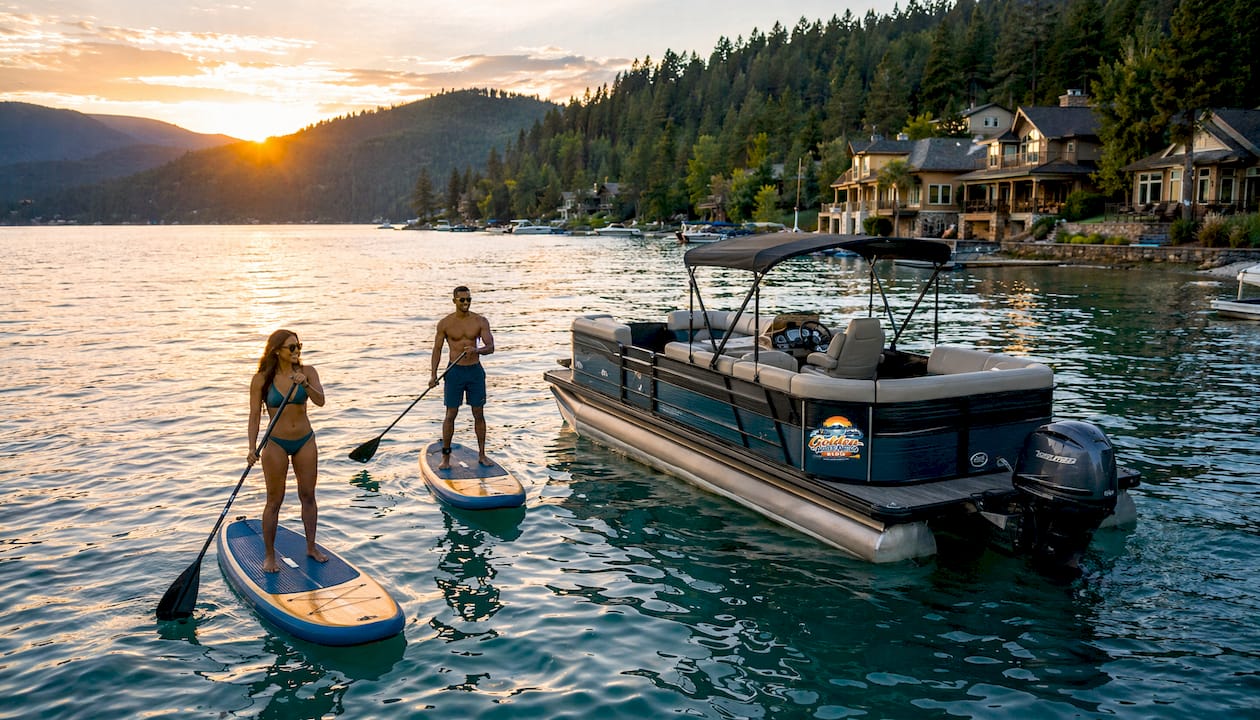
Stand-up paddleboarding is one of the fastest-growing easy water activities because wide, stable boards make balance achievable for almost anyone. The sport works your core, improves balance, and delivers a full-body workout without feeling like exercise. Sheltered lakes and calm estuaries are the ideal learning environments.
Starting on your knees lowers your center of gravity and builds confidence before you attempt standing. Most beginners can transition from kneeling to standing within a single session on flat water. Lessons typically run 1–2 hours and cover paddling technique, turning, and falling safely.
- Use a wide, thick board (at least 10 feet long for most adults)
- Begin kneeling in calm, shallow water
- Progress to standing only when kneeling feels stable
- Keep your gaze on the horizon, not your feet
Pro Tip: Read the paddleboard rental guide from Goldenwatersports before booking. Knowing board width and volume before you arrive saves time and gets you on the water faster.
5. What makes snorkeling an accessible water sport for beginners
Snorkeling is the most relaxed of all easy water activities. It requires no motor skills beyond basic swimming and lets you explore underwater environments at your own pace. The gear list is short: a mask, a snorkel, and fins. That low barrier to entry makes it a strong first choice for water sport newbies who want to build comfort in the water.
Beginners not confident in swimming should complete a basic swim lesson before attempting open-water snorkeling. Clear, shallow water with minimal current is the safest environment. Lakes with good visibility and calm coastal bays both work well.
- Mask: choose one with a snug seal and no gaps
- Snorkel: a dry-top snorkel prevents water entry when submerged
- Fins: short, open-heel fins are easiest for beginners
- Stay in water no deeper than you can stand in until comfortable
6. How other beginner water sports compare
Waterskiing, wakeboarding, and canoeing each offer a different experience for water sport newbies. Waterskiing and wakeboarding involve being towed behind a boat at speed, which adds excitement but also requires more coordination. Starting on a metal bar attached to the boat aids beginner balance and posture far more than using a long rope. Canoeing sits closer to kayaking in difficulty and is a great option for pairs or small groups.
| Activity | Difficulty | Key Equipment | Best Water Condition |
|---|---|---|---|
| Towable inflatables | Very easy | Tube, PFD | Calm lake |
| Kayaking | Easy | Kayak, paddle, PFD | Calm lake or slow river |
| Stand-up paddleboarding | Easy | Board, paddle, PFD | Sheltered lake |
| Snorkeling | Easy | Mask, snorkel, fins | Clear, shallow water |
| Canoeing | Easy to moderate | Canoe, paddle, PFD | Calm lake or slow river |
| Waterskiing | Moderate | Skis, tow rope, PFD | Open lake |
| Wakeboarding | Moderate | Board, tow rope, PFD | Open lake |
For a broader look at beginner-friendly water tours in calm water environments, the Destin Florida guide covers what to expect from guided sessions and how to choose the right activity for your comfort level.
Key takeaways
The best beginner water sports combine low skill requirements, calm water conditions, and proper safety gear to make learning enjoyable and safe from the first session.
| Point | Details |
|---|---|
| Start with zero-skill activities | Towable inflatables need no experience and suit ages 8 and up. |
| Calm water builds confidence | Sheltered lakes are the safest environment for all beginner water sports. |
| Lessons accelerate progress | A 1–2 hour lesson covers safety and technique faster than self-teaching. |
| PFD fit matters | A loose personal flotation device restricts movement and reduces safety. |
| Progress at your own pace | Low-impact sports allow skill development without pressure or injury risk. |
What I've learned from watching beginners hit the water
The most common mistake beginners make is choosing an activity that is too advanced too soon. Wakeboarding looks exciting on video, but most people spend their first session swallowing lake water. Kayaking or a towable tube gives you a real win on day one, and that win matters more than you think. Confidence on the water is cumulative. One good session leads to another.
Low-impact water sports suit all fitness levels, and that is the part most people overlook. You do not need to be athletic to enjoy a lake day. You need the right activity, the right gear, and a calm stretch of water. The lake rental tips for first timers from Goldenwatersports cover exactly that ground for anyone planning their first outing on Lake Coeur d'Alene.
My honest advice: start with something that guarantees a smile, not a struggle. Paddleboarding on a glassy morning lake, or floating on a tube behind a slow boat, gives you the water experience without the frustration. Build from there. The water will still be there when you are ready for the next level.
— Life is better on water.
Goldenwatersports has the right gear for your first lake day
Goldenwatersports serves Liberty Lake, Spokane Valley, and Lake Coeur d'Alene with rentals built for beginners and families. Paddleboards, pontoon boats, and Yamaha WaveRunners are all available with safety equipment included. Every rental comes with friendly guidance so you know what to do before you leave the dock.
Whether you want a relaxed paddleboard session or your first ride on a jet ski, Goldenwatersports makes it easy to get on the water without guessing. Check the rental prices and options to find the right fit for your group and budget. Flexible rental periods mean you can go for an hour or a full day.
FAQ
What are the easiest water sports for complete beginners?
Towable inflatable rides are the easiest beginner water sport, requiring zero skill and suiting ages 8 and up. Kayaking and stand-up paddleboarding are close behind, both learnable within a 1–2 hour lesson.
Do I need to know how to swim to try beginner water sports?
Basic swimming ability is a safety prerequisite for most open-water activities. Beginners not confident in the water should complete a swim lesson before trying any water sport beyond a supervised towable ride.
What water conditions are best for learning water sports?
Calm, flat water on sheltered lakes is the best environment for beginners. It provides the stability needed to build balance and confidence without the challenge of currents or waves.
How long does it take to learn kayaking or paddleboarding?
Most beginners pick up the basics of kayaking or paddleboarding in a single 1–2 hour lesson. Consistent practice on calm water builds skill quickly from that foundation.
Is a life jacket required for beginner water sports?
A properly fitted PFD is required for all towed water sports and strongly recommended for kayaking, SUP, and canoeing. A loose PFD can restrict movement and reduce its effectiveness in an emergency.