
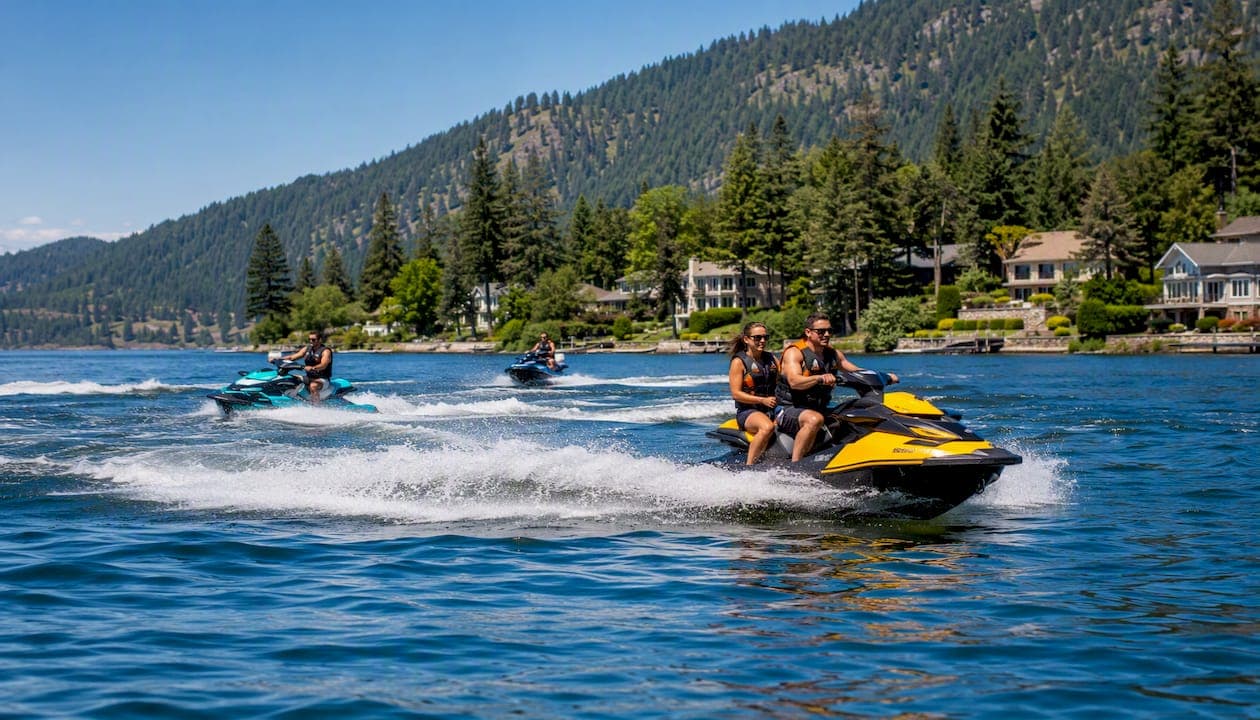
Yes, Yamaha WaveRunners are reliably among the most dependable personal watercraft (PWC) you can buy or rent. Independent comparisons, rental-fleet operators, and owner reports consistently place Yamaha at or near the top for long-term durability. Three things back that up quickly:
- Manufacturer maintenance guidance is thorough and specific. Yamaha's official maintenance program covers flushing after every use, 50-hour oil changes, battery care, and anti-corrosion treatment — steps that measurably extend engine life when followed.
- Rental fleets vote with their wallets. Operators who put machines through daily, multi-rider use consistently choose Yamaha's naturally aspirated VX and EX lines because downtime is expensive and these models hold up.
- Independent reviewers agree. Third-party comparisons and owner communities note that Yamaha WaveRunners are generally easier to maintain than some competitors, though no PWC is maintenance-free.
What determines whether your unit stays reliable? Three variables dominate: how closely you follow the maintenance schedule, whether you ride in saltwater or freshwater, and which model you choose (naturally aspirated vs. supercharged).
Key Takeaways
Yamaha WaveRunners are reliably durable personal watercraft when owners follow manufacturer maintenance schedules, choose naturally aspirated models for simplicity, and inspect used units carefully before purchase.
| Point | Details |
|---|---|
| Yamaha leads on simplicity | Naturally aspirated VX and EX models have the fewest failure modes and widest U.S. dealer support. |
| Maintenance is the main variable | Flushing after every use and changing oil every 50 hours or annually drives the biggest reliability gains. |
| Lifespan depends on care | Well-maintained naturally aspirated models regularly reach 300–500+ hours; neglected units fail far sooner. |
| Inspect before buying used | Check oil color, impeller condition, hull integrity, and service records before any purchase. |
| Dealer proximity matters | A nearby authorized service center reduces downtime and keeps warranty coverage intact. |
Table of Contents
- How Yamaha, Sea-Doo, and Kawasaki compare on reliability
- The real factors that determine how long a WaveRunner lasts
- How many hours and years you can realistically expect from a WaveRunner
- Known reliability problems and red flags to watch by brand
- A practical maintenance routine that adds real life to your WaveRunner
- Used WaveRunner inspection checklist focused on reliability
- Which brand or model to pick based on your priorities
- What fleet use actually teaches you about WaveRunner reliability
- Sources
How Yamaha, Sea-Doo, and Kawasaki compare on reliability
Choosing a PWC brand is really a choice about how much complexity you want to manage over time. Here is how the three major brands stack up across the dimensions that actually drive long-term reliability.
Yamaha WaveRunner
Yamaha's 4-stroke naturally aspirated engines (the TR-1 and 1.8L HO found in the VX and EX lines) are the simplest powerplants in the segment. No supercharger means fewer components to fail, lower service costs, and a maintenance rhythm most owners can handle without a specialist. Yamaha's dealer network and the NMMA Customer Satisfaction Index recognition it has earned over the years reinforce the ownership experience beyond just the machine itself.
Pros: Simple engine architecture, wide dealer network, genuine Yamalube parts readily available, strong resale value, dominant in rental fleets. Cons: Performance ceiling is lower than supercharged rivals, and the top-tier FX SVHO models add supercharger complexity.
Sea-Doo (BRP)
Sea-Doo builds the most technically advanced machines in the segment. The Rotax engines are powerful and refined, and features like the iBR braking system and LinQ accessory platform are genuinely useful. The trade-off is complexity. Supercharged models (RXP-X, RXT-X) require more frequent service intervals, and some owners report higher repair costs when things go wrong. Regional comparisons note that Sea-Doo service can be more expensive in certain scenarios than Yamaha or Kawasaki.
Pros: Best performance per dollar at the top end, innovative features, strong brand support. Cons: Supercharged models need more frequent service, parts can cost more, carbon-ring seal issues have appeared in some models, higher maintenance burden for casual owners.
Kawasaki Jet Ski
Kawasaki's Ultra series runs a 1,498cc 4-cylinder supercharged engine that produces serious power. The STX 160 line offers a naturally aspirated alternative that competes directly with Yamaha's VX on simplicity. Kawasaki's dealer network is thinner than Yamaha's in many U.S. markets, which can make parts and service harder to find outside major metro areas.
Pros: Excellent build quality, the STX 160 is a strong naturally aspirated option, longer warranty coverage in some markets. Cons: Smaller U.S. dealer footprint, supercharged Ultra models carry similar complexity risks to Sea-Doo's top tier, resale values trail Yamaha in most markets.
Side-by-side reliability comparison
| Reliability dimension | Yamaha WaveRunner | Sea-Doo (BRP) | Kawasaki Jet Ski |
|---|---|---|---|
| Engine type (rec models) | 4-stroke naturally aspirated | 4-stroke naturally aspirated / supercharged | 4-stroke naturally aspirated / supercharged |
| Maintenance frequency | Every 50 hours or annually | Every 50 hours (more often on supercharged) | Every 50 hours or annually |
| Ease of service | High — straightforward intervals | Moderate to complex on supercharged models | Moderate |
| Parts and dealer availability | Excellent across U.S. | Good in most markets | Limited in some U.S. regions |
| Known failure modes | Minimal on rec models; supercharged FX needs more attention | Carbon-ring seals, supercharger wear on performance models | Supercharger wear on Ultra series |
| Typical lifespan (rec models) | 300–500+ hours well-maintained | 200–400 hours (supercharged); 300–500+ (rec) | 300–500+ hours (naturally aspirated) |
| Relative maintenance cost | Lower | Moderate to higher | Moderate |
| Resale value | Strong | Strong (performance models) | Moderate |
The real factors that determine how long a WaveRunner lasts
Engine design, maintenance habits, water environment, rider behavior, and storage conditions are the five variables that separate a WaveRunner at 100 hours from one still running strong past 500. Here is how each one plays out.
1. Engine type and complexity A naturally aspirated 4-stroke engine has fewer moving parts under stress than a supercharged one. Superchargers run hot, add mechanical load, and need their own service intervals on top of the base engine schedule. For most recreational riders, the VX or EX platform is the right call precisely because the engine is not working near its limits on a typical lake day.
2. Maintenance adherence This is the single biggest variable an owner controls. Yamaha's maintenance guidance is explicit: flush after every use, change oil every 50 hours or once a year, inspect the battery, and apply anti-corrosion treatment. Skipping even one season of oil changes accelerates wear in ways that compound quickly.
3. Saltwater vs. freshwater exposure Salt accelerates corrosion on every metal surface it touches — the exhaust system, cooling passages, impeller housing, and electrical connectors. A WaveRunner used exclusively on freshwater lakes like Lake Coeur d'Alene faces far less corrosion stress than one used in coastal saltwater. Owners who do ride in salt need to flush more aggressively and apply protectants after every session.
4. Rider style and load Sustained wide-open-throttle riding, frequent hard landings off waves, and carrying maximum passenger weight all add mechanical stress. Casual cruising at moderate throttle is genuinely easier on the engine, pump, and hull than aggressive riding. This is not a reason to avoid performance — it is a reason to understand the trade-off.
5. Cooling system care PWC engines are water-cooled using the body of water they ride in. Debris, sand, and mineral deposits can restrict cooling passages over time. Flushing the cooling system after use clears this debris before it crystallizes. Neglected cooling passages are a common cause of overheating failures that could have been prevented for the cost of a garden hose.
6. Storage practices Winterizing properly — fogging the engine, stabilizing the fuel, disconnecting the battery, and storing the hull off the ground — prevents the corrosion and fuel-system degradation that cause most off-season failures. A WaveRunner stored wet or with old fuel sitting in the system for months will show it at the next spring launch.
How many hours and years you can realistically expect from a WaveRunner
Well-maintained, naturally aspirated Yamaha WaveRunners often reach high hours of use, with some owners reporting exceptionally long service lifespans under careful stewardship. Owner FAQ data confirms that longevity is strongly tied to maintenance quality rather than model year alone.
Supercharged models — Yamaha's FX SVHO, Sea-Doo's RXP-X, Kawasaki's Ultra 310 — tend to see more wear per hour because the engine operates under higher stress. Expect a shorter service life before major components need attention, typically in the 200–350 hour range before significant work is required, though well-maintained examples exceed that.
| Model type | Typical lifespan (hours) | Average years at 50 hrs/season | Resale signal |
|---|---|---|---|
| Naturally aspirated rec (Yamaha VX/EX, Kawasaki STX 160) | 300–500+ hours | 6–10+ years | Strong; high demand for low-hour examples |
| Supercharged performance (FX SVHO, RXP-X, Ultra 310) | 200–350 hours before major service | 4–7 years | Moderate; buyers discount high-hour supercharged units heavily |
| Well-maintained outliers (any brand) | high hours reported | many years | Exceptional; commands premium if records are clean |
"Hours" here means engine hours logged on the hour meter, not calendar time. A 10-year-old WaveRunner with 80 hours on it is mechanically younger than a 3-year-old unit with 300 hours. Always ask for the hour meter reading, not just the model year.
Known reliability problems and red flags to watch by brand
No PWC is immune to problems. Knowing which issues are common by brand helps you inspect smarter and negotiate better.
Yamaha WaveRunner common issues Yamaha's naturally aspirated models have a short list of known problems. The most common are wear on the wear ring (the plastic ring surrounding the impeller), which causes a loss of thrust and a grinding noise, and corrosion in the electrical connectors on older units. The FX SVHO supercharger requires its own service interval and can be expensive to rebuild if neglected. Overall, the VX and EX lines have very few systemic failures reported in owner communities.
Sea-Doo (BRP) common issues The carbon-ring seal on the driveshaft is a known wear item on several Sea-Doo models. When it fails, water enters the hull. It is a manageable repair but not a cheap one. Supercharged Rotax engines also require supercharger rebuilds at specified intervals, and skipping that service can lead to catastrophic failure. Some owners also report more frequent wear on the iBR (Intelligent Brake and Reverse) system components.
Kawasaki Jet Ski common issues The Ultra series supercharger shares the same general risk profile as Sea-Doo's performance models. The STX 160 naturally aspirated line is much simpler and has fewer reported systemic issues. Kawasaki's thinner dealer network in parts of the U.S. means that even routine parts can take longer to source.
Red flags on any used PWC
- Milky or discolored oil (water intrusion in the engine)
- Excessive smoke on startup or under load
- Strong fuel or oil smell in the hull bilge
- Visible corrosion on the engine block, exhaust manifold, or electrical connectors
- Obvious hull repairs, stress cracks near the pump tunnel, or mismatched gelcoat
- Service records that stop abruptly or show large gaps
- Hour meter that has been tampered with or replaced without documentation
- Impeller damage (chips, bends) that indicate debris ingestion or hard grounding
Repairable vs. deal-breakers Wear rings, spark plugs, impeller nicks, and minor corrosion on connectors are inexpensive fixes. Cracked hull repairs done by a reputable shop are manageable. Water intrusion into the engine, a seized pump, a blown supercharger on a high-hour unit, or a bent crankshaft are deal-breakers unless the price reflects a parts-only purchase.
A practical maintenance routine that adds real life to your WaveRunner
Following Yamaha's core maintenance steps materially improves reliability and resale value. Here is the schedule that matters most.
After every ride
- Flush the engine and cooling system with fresh water for at least 90 seconds using the flush port (not just the garden hose in the intake)
- Inspect the hull for new cracks, dings, or debris lodged in the pump intake
- Wipe down all exposed metal and apply a light coat of corrosion inhibitor (Yamashield or a marine-grade silicone spray) to connectors and the engine bay
- Check the battery terminals for corrosion and verify the bilge is dry
At regular maintenance intervals (time or usage based as recommended)
- Change the engine oil and filter using Yamalube 4-M marine oil — Yamaha's own guidance specifies this product for its marine environment performance
- Replace the spark plugs (NGK plugs to Yamaha spec)
- Inspect and replace the fuel filter if restricted
- Check the wear ring for scoring or cracking
- Inspect the impeller for chips or bends
- Test the battery under load and replace if it fails
Annual winterization (critical for off-season storage)
- Add a marine fuel stabilizer (Yamaha Fuel Conditioner or equivalent) and run the engine briefly to circulate it
- Fog the cylinders with engine fogging oil through the air intake
- Disconnect and store the battery on a trickle charger
- Flush one final time, then store the hull on a stand or trailer with the bow slightly elevated so any residual water drains
Pro Tip: Most owners flush the engine — but skip the impeller tunnel. After every ride, reach into the pump intake and clear any weeds, fishing line, or debris by hand. Fishing line wrapped around the driveshaft is one of the most common causes of seal damage, and it takes about 10 seconds to check.
Routine maintenance typically costs $150–$300 per year for a naturally aspirated model when you do the oil change yourself. A single overheating failure from a neglected cooling system can cost $1,500–$3,000 or more to repair.
Used WaveRunner inspection checklist focused on reliability
Use this checklist before you hand over any money. It will surface the issues that predict future reliability problems better than any seller's description.
1. Start with the paperwork Ask for the title, registration history, service records, and hour meter documentation. A clean title with a gap-free service log is worth a premium. If the seller cannot produce any service records, price the unit as if it needs a full service immediately.
2. Check the hull exterior Walk the entire hull looking for stress cracks (especially near the pump tunnel and bow), mismatched gelcoat patches, and soft spots that indicate water-saturated foam. Minor cosmetic scratches are irrelevant; structural repairs are not.
3. Open the engine compartment Look for oil residue on the engine block (valve cover gasket leaks), corrosion on the electrical harness connectors, and any sign of water intrusion. Smell the bilge — a strong fuel odor suggests a leaking fuel line or injector.
4. Check the oil Pull the dipstick. Milky or gray oil means water has entered the engine. Walk away unless the price is deeply discounted and you understand the repair scope.
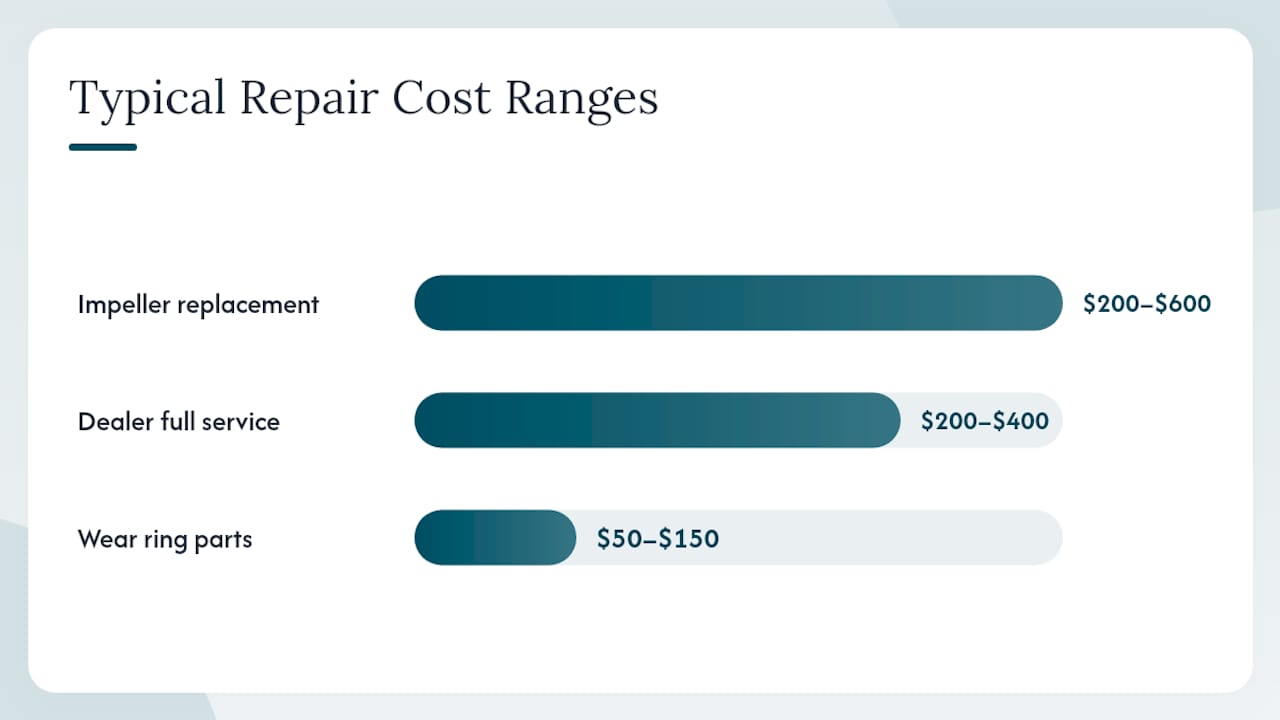
5. Inspect the pump and impeller Reach into the pump intake and feel the impeller blades. Chips, bends, or rough edges indicate debris ingestion. Spin the impeller by hand — it should turn smoothly with no grinding. A damaged impeller costs $200–$600 to replace; a damaged pump housing costs more.
6. Start the engine cold A healthy engine starts within two or three cranks. Excessive cranking, rough idle, or smoke on startup are warning signs. Let it warm up and listen for knocking, rattling, or irregular idle.
7. Run it on the water Acceleration should be smooth and linear. Any hesitation, surging, or loss of thrust at speed points to fuel system, impeller, or wear ring issues. Check that the reverse and neutral functions engage cleanly.
8. Test the electrical systems Verify the gauge cluster, bilge pump, navigation lights, and any accessories all function. Electrical gremlins on a used PWC are time-consuming to diagnose and fix.
9. Ask the right questions
- How many hours are on the meter?
- Has it ever been in saltwater?
- What is the storage history (indoor, outdoor, winterized)?
- Has it had any engine work, hull repairs, or modifications?
- Why are you selling it?
10. Negotiate based on what you find A wear ring replacement is $50–$150 in parts. A full service (oil, plugs, filter, impeller inspection) runs $200–$400 at a dealer. Use any deferred maintenance as a negotiating point — dollar for dollar, not as a reason to walk unless the issues are structural or engine-deep.
Which brand or model to pick based on your priorities
For low-maintenance reliability, Yamaha's naturally aspirated models are the clearest choice. The VX and EX lines have the simplest service requirements, the widest U.S. dealer network, and the strongest track record in rental fleets — exactly the conditions that prove durability under real-world use.
Here is how that breaks down by buyer type:
- Rental operators and fleet managers: Yamaha VX Cruiser or EX Sport. Low service complexity, parts available at most Yamaha marine dealers, and proven uptime in commercial use. Rental-fleet prevalence is the most honest reliability signal in the industry.
- Family weekend riders on freshwater lakes (Lake Coeur d'Alene, Liberty Lake, Newman Lake): Yamaha VX Cruiser HO or Sea-Doo GTX 170. Both are naturally aspirated, comfortable for two riders, and manageable for owners who will service once a year. The Yamaha edges ahead on parts availability and resale. If you want to try before you buy, weekend WaveRunner rentals are a practical way to test models before committing.
- Performance enthusiasts who accept more maintenance: Sea-Doo RXP-X or Yamaha FX SVHO. Both deliver serious power, but both require more frequent service and higher repair budgets. Go in with eyes open on the supercharger service intervals.
Before purchasing any used unit, get a pre-purchase inspection from a Yamaha or BRP-authorized dealer. A $100–$150 inspection fee can save you from a $2,000 surprise. Factor dealer proximity into your decision — a brand with no dealer within 60 miles of your home lake is a reliability liability regardless of how good the machine is.
For a deeper look at how Yamaha fits into the broader PWC market, this overview of the WaveRunner brand covers its history and positioning in context.
What fleet use actually teaches you about WaveRunner reliability
Running WaveRunners in a rental fleet is a stress test no individual owner replicates. At Goldenwatersports, our machines go out multiple times a day with riders of varying experience levels on Lake Coeur d'Alene, Liberty Lake, and the surrounding area. The pattern is consistent: the units that stay on the water are the ones that get flushed after every session, get their oil changed on schedule, and have their impeller tunnels cleared of debris before the next rental.
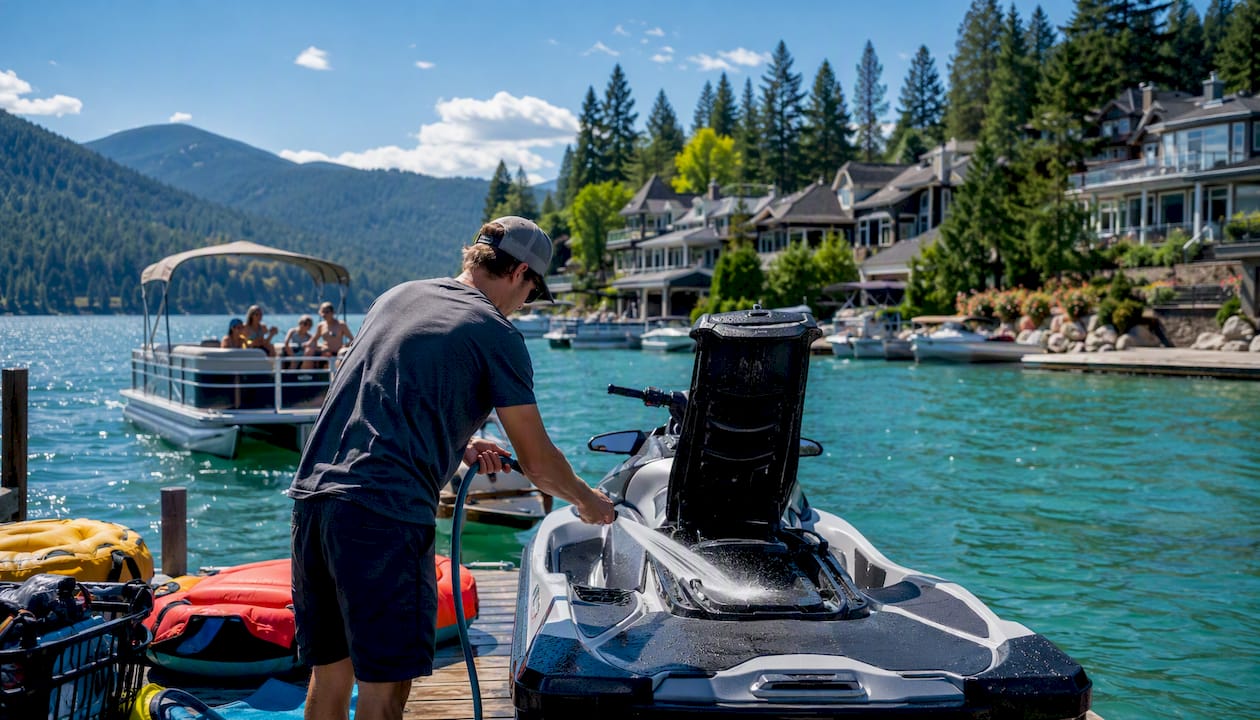
The failures we see most often are not engine failures. They are preventable: fishing line wrapped around the driveshaft, wear rings worn past spec because nobody checked them at the 50-hour mark, and corroded battery terminals that kill a start on a busy Saturday morning. None of those are expensive to fix when caught early. All of them become expensive when ignored.
Dealer access matters more than most buyers realize. Having an authorized Yamaha service center within a reasonable distance means warranty work gets done right, genuine parts arrive quickly, and a knowledgeable technician can catch developing issues before they become downtime. For guests who want to experience a well-maintained WaveRunner without the ownership commitment, Goldenwatersports' rental fleet is serviced to manufacturer spec before every season.
For context on what show-up-ready fleet operations look like from a guest-experience standpoint, this overview of boat tour readiness covers the operational discipline that keeps watercraft reliable and guests happy.
Sources
- Maintenance Matters — Yamaha WaveRunners
- Jetdrift
- Boatsales
- Sea-Doo vs. Yamaha Reliability – Which One Should You Buy? – PowerSportsGuide