
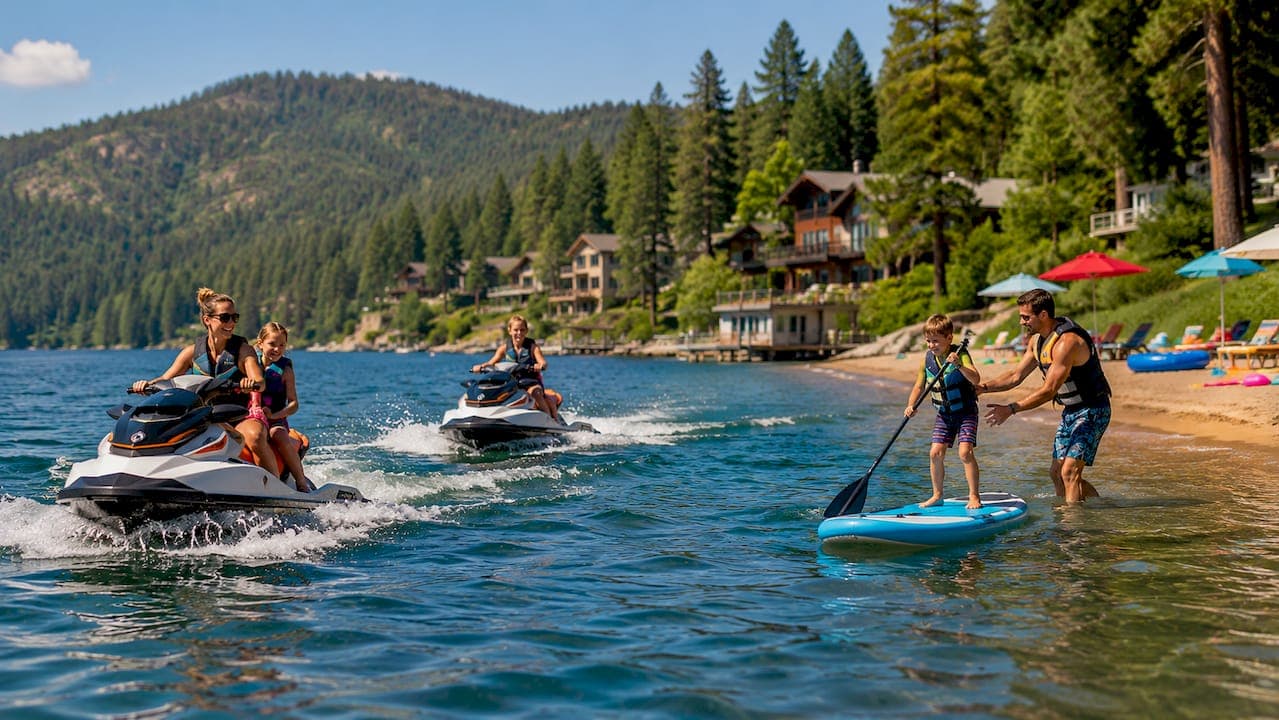
A jet ski rental is defined as a short-term agreement that gives you access to a personal watercraft, mandatory safety equipment, and a pre-ride safety briefing for a set period of time. Understanding what does jet ski rental include before you book saves you from surprise charges and helps you plan a safer, more enjoyable day on the water. Standard inclusions cover the watercraft itself, USCG-approved life jackets, a kill switch lanyard, and a safety and operational briefing lasting 15–30 minutes. Extras like fuel, insurance, and guided tours vary by operator and are not always part of the base price.
What does jet ski rental include as standard?
Every legitimate jet ski rental package covers four core items: the personal watercraft, life jackets, basic safety devices, and a pre-ride briefing. These are not optional add-ons. They are required by federal and state boating regulations, and any reputable operator provides them without exception.
Safety equipment you will always receive
- USCG-approved life jackets for every rider on board. The U.S. Coast Guard mandates one properly fitted personal flotation device per person, and operators must comply.
- Kill switch lanyard. This attaches to your wrist or life jacket. If you fall off, the engine stops automatically. It is one of the most underrated safety features on any watercraft.
- Fire extinguisher and signaling whistle. These are standard safety devices required on most rental watercraft under federal boating law.
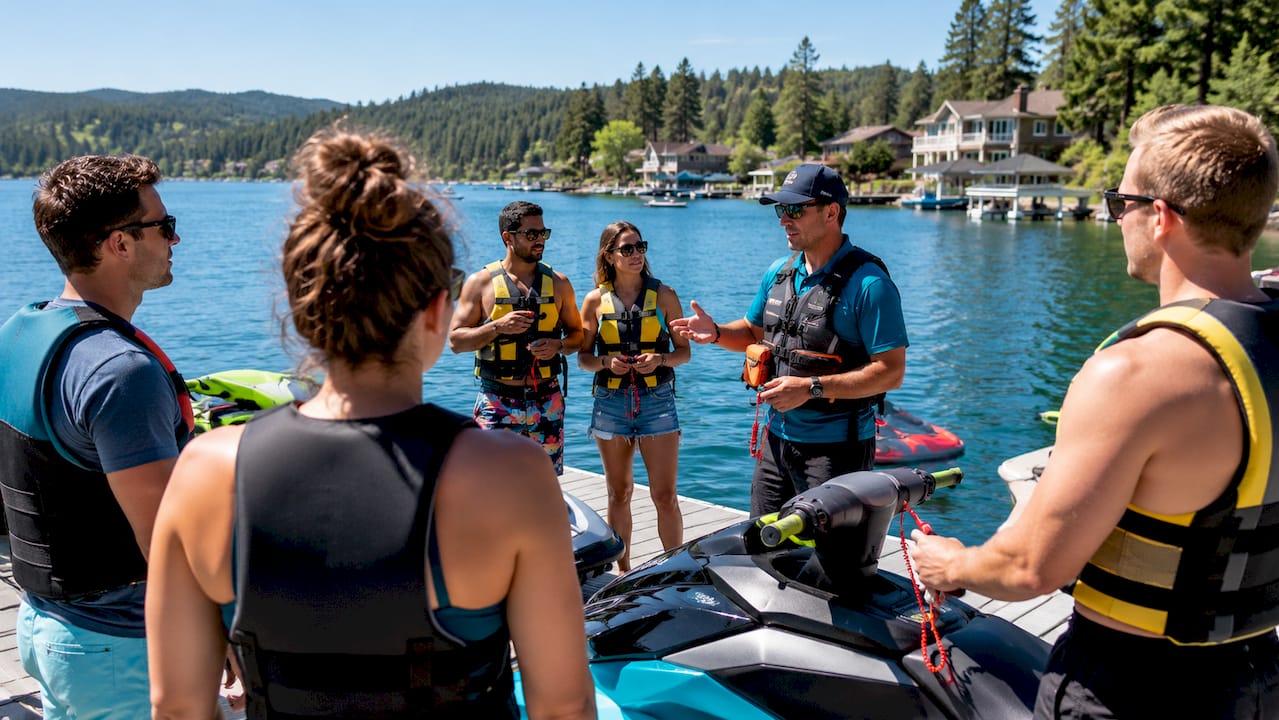
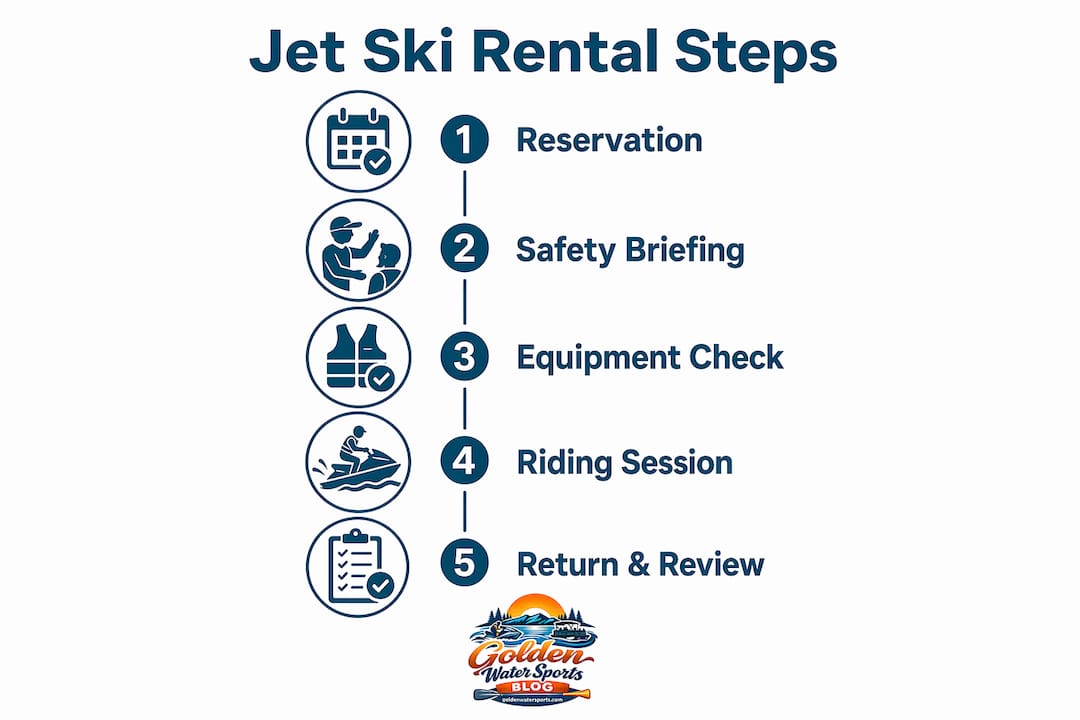
The safety briefing covers equipment operation, designated riding zones, speed restrictions, and emergency procedures. Most briefings run 15–30 minutes. First-time riders should treat this time seriously. The briefing also protects the operator's equipment by reducing damage caused by rider error.
Pro Tip: Ask the staff to walk you through the kill switch and throttle controls hands-on before you leave the dock. Reading about controls and actually feeling them are two different things.
What are the typical terms and conditions for renting a jet ski?
Knowing the rental terms upfront prevents the most common frustrations renters face. These conditions are standard across the industry, but the specific numbers vary by location and operator.
- Valid government-issued photo ID. Every operator requires this at check-in. A driver's license or passport works. No ID means no rental.
- Age requirements. Most operators set the minimum operating age at 16. Some states require riders under 18 to complete a boater safety course. Check jet ski age restrictions before you book if you are bringing younger riders.
- Security deposit. Deposits typically range from $250 to $500 and are held on a credit card at check-in. The deposit is refundable if the watercraft is returned undamaged. This amount covers the operator against minor damage liability.
- Booking confirmation and credit card. Most operators require both at check-in. Debit cards are not always accepted for the deposit hold.
- Fuel policy. This is where renters get caught off guard most often. Fuel policies vary significantly between operators. Some include fuel in the flat rate. Others require you to return the jet ski with a full tank. Failing to comply triggers extra service charges that are rarely advertised upfront.
Pro Tip: Ask one direct question before you sign anything: "Is fuel included, or do I return it full?" That single question eliminates the most common unexpected charge in jet ski rentals.
Refundable deposits are standard practice, but confirm whether your personal insurance covers rental watercraft damage before you decline any damage waiver the operator offers. Homeowner and auto policies frequently exclude personal watercraft rentals.
How do jet ski rental packages and pricing work?
Rental durations and pricing follow a predictable structure across the industry. Longer bookings deliver better per-hour value, which is why half-day and full-day packages are popular with families and groups.
| Duration | Typical Price Range | Best For |
|---|---|---|
| 1 hour | $99–$150 | First-time riders, quick outings |
| Half-day | $200–$300 | Couples, small groups |
| Full-day | $350–$400 | Families, extended lake exploration |
Most jet skis seat 1–3 riders with a combined weight limit around 400 lbs. Exceeding that limit affects both safety and performance, so factor in your group's total weight when booking.
Optional extras that may be available but are not standard inclusions:
- Waterproof storage bags and dry bags
- Action cameras or GoPro mounts
- Guided tours with a lead watercraft
- Wetsuits or water shoes for cooler conditions
Optional accessories like action cameras are add-ons, not standard inclusions. Marketing terms like "all-inclusive" can be misleading. Guided tours and meals, for example, are almost always separate line items. Read the package details carefully before assuming everything is covered.
How to prepare for your jet ski rental day
Preparation makes the difference between a smooth morning on the water and a stressful check-in. Wear lightweight, quick-drying clothing and bring sun protection. A hat, sunglasses with a strap, and reef-safe sunscreen are practical choices for a full day on the lake.
Bring these items to your rental:
- Valid government-issued photo ID
- Booking confirmation (printed or on your phone)
- Credit card for the security deposit hold
- Swimwear or quick-dry athletic wear
- Sun protection and a water bottle
Review the full day checklist before you leave home so nothing gets left behind. Arriving prepared also speeds up the check-in process, which means more time on the water.
Pro Tip: Arrive 15 minutes early. The safety briefing starts on schedule, and late arrivals often lose riding time because the clock starts at your booked slot, not when you finish the briefing.
Key Takeaways
A complete jet ski rental always includes the watercraft, USCG-approved life jackets, a kill switch, and a mandatory safety briefing, while fuel, insurance, and extras vary by operator and must be confirmed before booking.
| Point | Details |
|---|---|
| Standard inclusions | Every rental includes the jet ski, life jackets, kill switch lanyard, and a 15–30 minute safety briefing. |
| Fuel policy varies | Ask upfront whether fuel is included or if you must return the tank full to avoid extra charges. |
| Security deposit | Expect a $250–$500 refundable hold on your credit card at check-in for damage liability. |
| Insurance gap | Personal homeowner and auto policies often exclude jet ski rentals; verify coverage or consider a damage waiver. |
| Preparation matters | Bring your photo ID, booking confirmation, and a credit card; arrive early to protect your riding time. |
What first-time renters consistently get wrong about inclusions
Most renters focus on the fun and skim the fine print. That habit costs them money and occasionally ruins the day entirely.
The insurance question is the one I see trip people up most often. Renters assume that because the operator holds a deposit, they are covered. They are not. The deposit protects the operator. Your liability for significant damage can exceed that deposit amount. Verifying your personal insurance coverage before you arrive, or accepting the operator's damage waiver, is the one step most first-time renters skip and later regret.
Fuel policy confusion is the second most common issue. "Full to full" sounds simple until you realize the nearest gas station is not on the water. Knowing how to refuel between lakes before you head out removes that stress entirely.
The safety briefing deserves more respect than it gets. Operators run briefings primarily to protect their equipment from rider error, not just to satisfy regulations. Paying attention during those 15–30 minutes directly reduces your chance of a collision, a stall, or an accidental damage charge. Treat it like the most useful part of the rental, because it is.
— Life is better on water.
Ready to get on the water with Goldenwatersports?
Goldenwatersports serves Liberty Lake, Newman Lake, and Lake Coeur d'Alene with Yamaha WaveRunner rentals that meet every standard covered in this article. Safety equipment, briefings, and flexible rental periods are all part of the experience.
Check current rental pricing and availability to find the package that fits your group size and schedule. Whether you want an hour on the water or a full day exploring the lake, Goldenwatersports makes the booking process straightforward. Visit the jet ski rental options page to see what is available at your preferred lake this season.
FAQ
What safety equipment is included in a jet ski rental?
Standard jet ski rentals include USCG-approved life jackets for all riders, a kill switch lanyard, a fire extinguisher, and a signaling whistle. These items are required by federal boating regulations and provided at no extra cost.
Do jet ski rentals include fuel?
Fuel policies vary by operator. Some rentals include fuel in the flat rate, while others require you to return the jet ski with a full tank. Always confirm the fuel policy before you sign the rental agreement.
Is insurance included in a jet ski rental package?
Standard rental packages do not include personal liability insurance. Operators may offer a damage waiver option, but your homeowner or auto policy likely excludes rental watercraft. Verify your coverage before you book.
What ID and age requirements apply to jet ski rentals?
Renters must present a valid government-issued photo ID at check-in. The minimum operating age is typically 16, and some states require riders under 18 to hold a boater safety certification.
How much does a security deposit cost for a jet ski rental?
Security deposits typically range from $250 to $500 and are held on a credit card at check-in. The deposit is fully refundable when the watercraft is returned undamaged.