
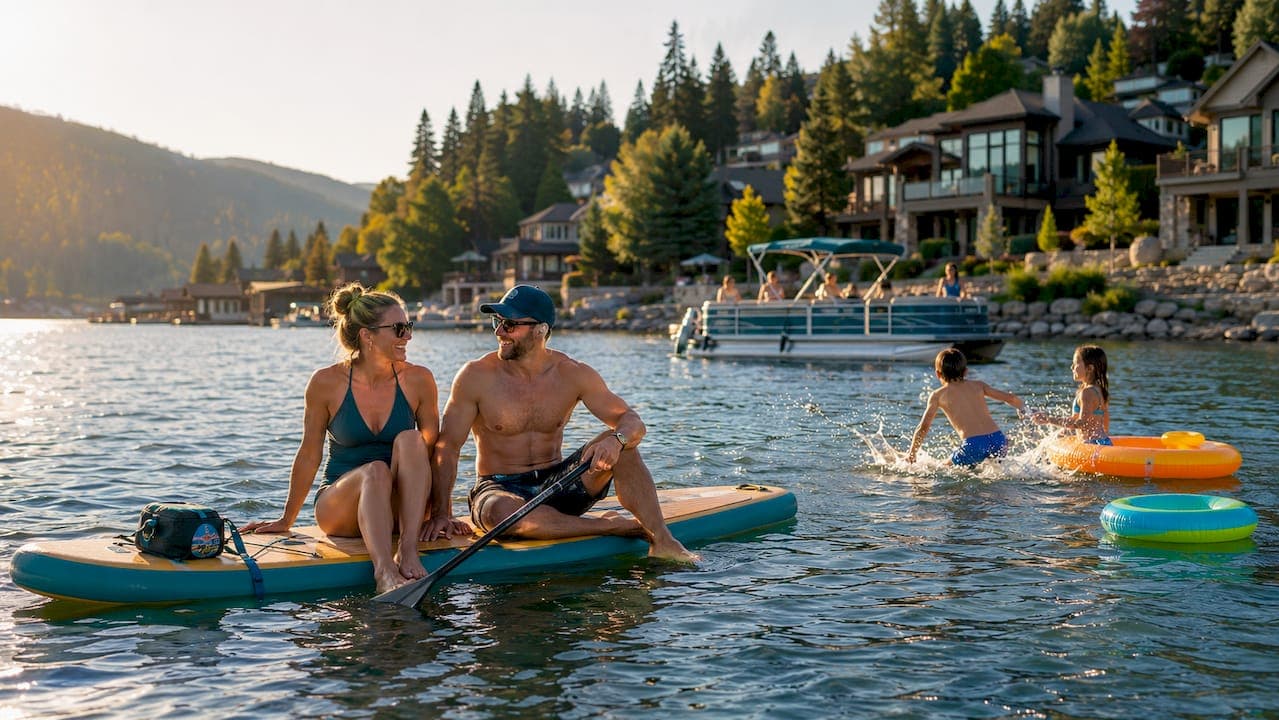
A personal watercraft (PWC) is defined as a motorized vessel, typically under 16 feet, where the rider sits, stands, or kneels on top of the hull rather than inside an enclosed cabin. The U.S. Coast Guard classifies jet-drive boats under 12 feet as PWCs, though the industry commonly applies a 16-foot threshold. What makes a PWC distinct is its inboard jet-drive system, which replaces the exposed propeller found on traditional boats. You get a compact, agile craft built for open-water fun, not cargo or cabin comfort.
PWCs go by many names: jet skis, WaveRunners, Sea-Doos. Those are all brand names for the same category of vessel. The correct industry term is personal watercraft, and understanding that distinction helps you shop, register, and insure your craft correctly.
What is a personal watercraft and what types are available?
The market categorizes PWCs into six types: Rec-lite, Recreational, Performance, Touring, Tow-sports, and Fishing. Each type targets a different rider and use case. Engine output ranges from 60 HP on entry-level Rec-lite models to 325 HP on high-performance craft. That spread matters because the wrong type for your riding style means overpaying or underperforming on the water.
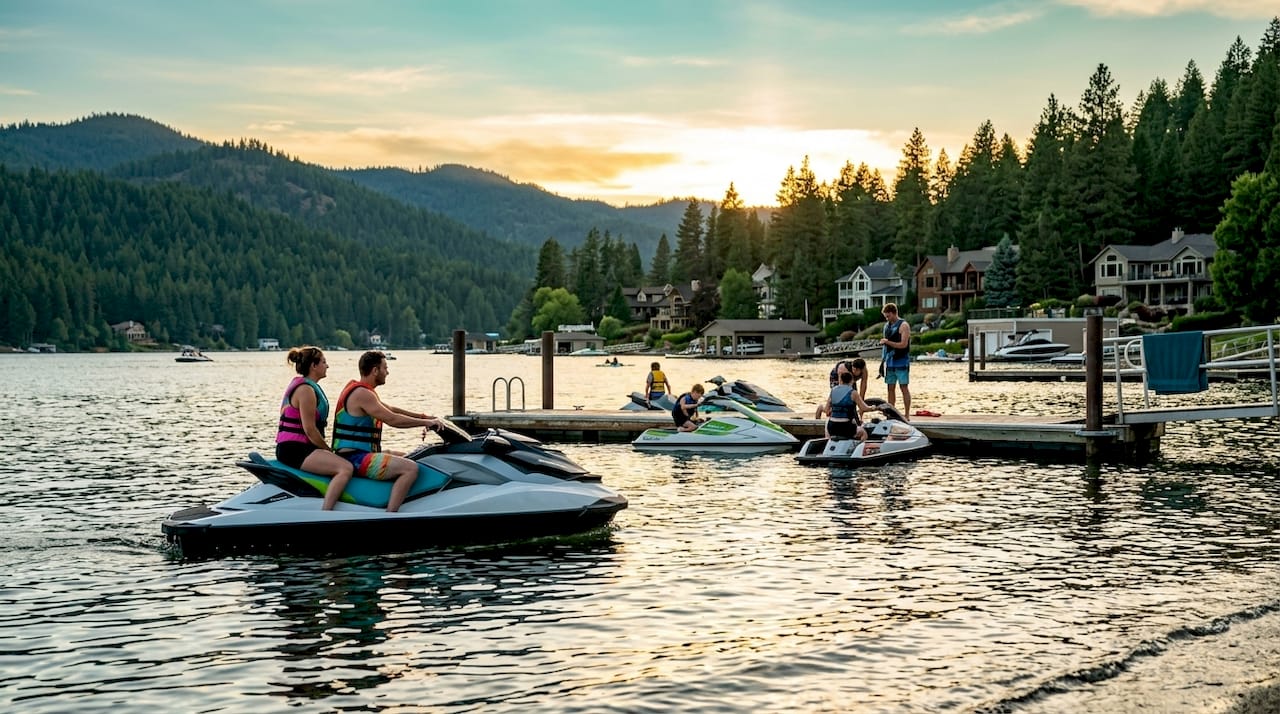
Here is a quick breakdown of each category:
| Type | Horsepower Range | Best For |
|---|---|---|
| Rec-lite | 60–100 HP | Beginners, calm lakes, budget buyers |
| Recreational | 100–160 HP | Families, casual weekend riding |
| Performance | 230–325 HP | Speed enthusiasts, racing |
| Touring | 160–230 HP | Long-distance riding, two-up comfort |
| Tow-sports | 160–230 HP | Wakeboarding, tubing, towing |
| Fishing | 100–160 HP | Anglers needing storage and stability |
Stand-up models are a separate style entirely. They require more balance and physical effort, making them better suited to experienced riders who want a workout. Sit-down models dominate the market and are the right choice for most buyers, including families and first-timers.
Pro Tip: If you are buying your first PWC, start with a Recreational or Rec-lite model. You can always upgrade once you know your riding style.
Goldenwatersports runs Yamaha WaveRunners, which fall into the Recreational and Touring categories. That makes them a strong fit for families and riders exploring freshwater lakes like Liberty Lake and Lake Coeur d'Alene.
How does propulsion and steering work on a PWC?
A PWC uses a jet pump instead of a propeller. The engine draws water through an intake grate on the hull bottom, pressurizes it through an impeller, and shoots it out a steerable nozzle at the stern. Turning the handlebars redirects that nozzle, which steers the craft.
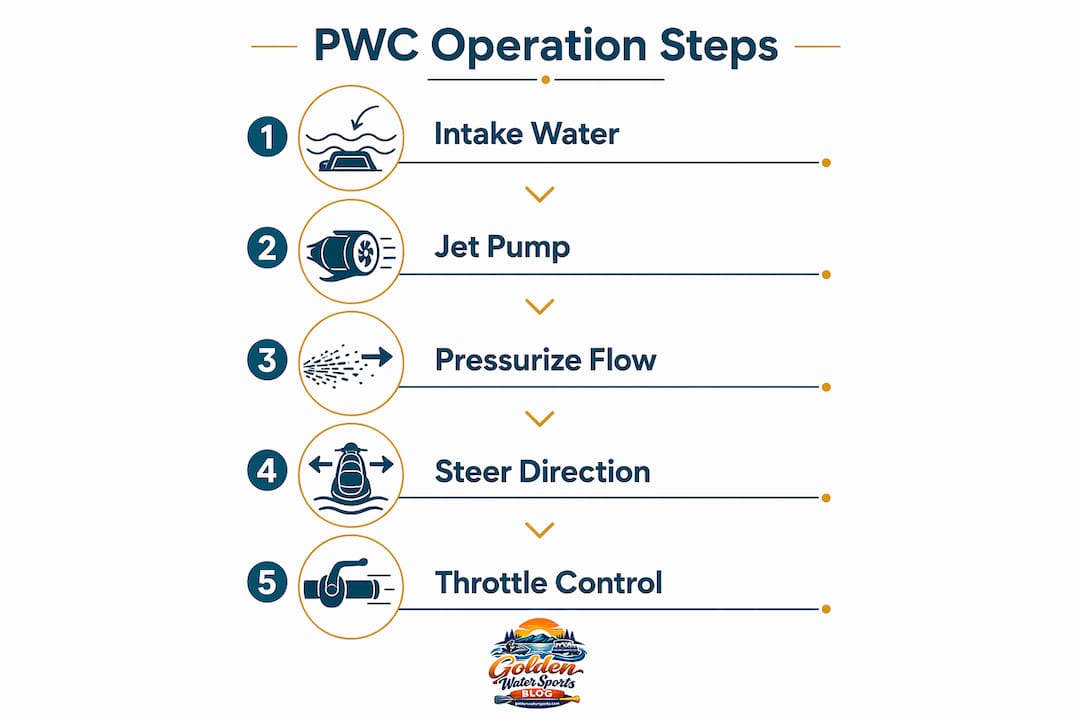
The critical fact every new rider must know: steering requires throttle. When you release the throttle, the jet pump stops producing thrust, and the steering nozzle loses its ability to redirect the craft. You will coast straight ahead regardless of how hard you turn the handlebars. This surprises most beginners and causes many avoidable collisions.
Common beginner mistakes with throttle control include:
- Cutting power when approaching an obstacle, which removes steering control
- Applying full throttle before the craft is fully in the water
- Releasing the throttle mid-turn and wondering why the craft won't respond
Water depth also affects the jet pump directly. Maintain at least 2–3 feet of depth when operating to prevent sand, rocks, or debris from entering the intake and damaging the impeller. Impeller repairs are expensive and entirely avoidable with this one habit.
Pro Tip: Never idle through shallow water. If you can see the bottom clearly, you are probably too shallow. Lift the bow and move to deeper water before accelerating.
What safety features and precautions are essential?
PWC safety starts with two non-negotiable items. Operators must wear a Coast Guard-approved life jacket and keep the engine kill-switch lanyard attached to their wrist or life jacket at all times. If you fall off, the lanyard pulls free and shuts the engine down immediately. Without it, the craft keeps running and becomes a hazard to everyone nearby.
Modern PWCs include safety systems that go well beyond the basics. Intelligent Brake and Reverse (iBR) allows riders to decelerate 30% faster than simply coasting to a stop. That extra stopping power is the difference between a close call and an actual collision. Many Yamaha WaveRunner models include iBR as a standard feature.
Standard safety equipment for every PWC outing:
- Coast Guard-approved life jacket (fitted, not just on board)
- Engine kill-switch lanyard attached to your body
- Fire extinguisher (required by law on many vessels)
- Sound-producing device (whistle or horn)
- Visual distress signals for open water
Age and certification requirements vary by state. Many states require riders under 16 to complete a boater safety course before operating a PWC. Check your state's boating authority for the exact rules before you ride.
Pro Tip: Practice mounting from the stern with one knee on the boarding platform before you sit. This keeps the craft stable and prevents capsizing before you even start the engine.
For a deeper look at staying safe on the water, the jet ski safety guide from Goldenwatersports covers open-water protocols in detail. You can also review life jacket requirements for jet ski riders to make sure your gear meets current standards.
How to properly maintain your personal watercraft
Regular maintenance is the single biggest factor in how long your PWC lasts. Neglecting basic upkeep leads to costly repairs that far exceed the time and money spent on prevention. Follow the manufacturer's service schedule without exception.
Core maintenance tasks every PWC owner should perform:
- Flush the system after every ride in saltwater or silty water to clear debris from the cooling passages
- Inspect the intake grate before and after each ride for weeds, fishing line, or debris
- Check fluid levels including engine oil and coolant before each outing
- Inspect the hull for cracks, chips, or stress marks after any impact
- Test the battery at the start of each season and replace it if it holds less than a full charge
Seasonal storage requires draining all water from the cooling system, fogging the engine with storage oil, and keeping the craft on a proper stand or trailer. A PWC left sitting in water over winter will develop hull damage and corroded components. Store it dry, covered, and off the ground.
Key Takeaways
A personal watercraft is a jet-drive vessel under 16 feet where throttle control, safety gear, and regular maintenance determine both your safety and the craft's lifespan.
| Point | Details |
|---|---|
| PWC definition | A motorized vessel under 16 feet using jet-drive propulsion, ridden on top of the hull. |
| Six PWC types | Rec-lite through Fishing models range from 60 to 325 HP to match different riding styles. |
| Throttle controls steering | Releasing throttle removes steering ability, the most common cause of beginner accidents. |
| Safety gear is mandatory | A Coast Guard-approved life jacket and kill-switch lanyard are required on every ride. |
| Maintenance prevents repairs | Flushing, intake inspection, and following service intervals protect the engine and hull. |
What I have learned after years on the water
Most buyers make the same mistake: they choose a PWC based on how it looks or what brand their neighbor owns. The right question is always "what will I actually do with this craft?" A touring model is miserable for someone who wants to race. A performance model is dangerous and exhausting for a family looking for a relaxed afternoon on the lake.
The second mistake is skipping hands-on time before buying. Renting before you commit is not just smart financially. It tells you whether you prefer the feel of a sit-down model, how you handle throttle control under real conditions, and whether a two-seater or three-seater fits your group. No spec sheet replaces 30 minutes on the water.
New riders consistently underestimate how different PWC steering is from driving a car or even a traditional boat. The throttle-dependent steering system catches everyone off guard the first time. Practicing in a calm, open area before heading into busy water is not optional. It is the difference between a confident rider and a liability on the lake.
— Life is better on water.
Rent a PWC on Lake Coeur d'Alene with Goldenwatersports
Goldenwatersports makes it easy to get on the water at Lake Coeur d'Alene, Liberty Lake, and Newman Lake without the commitment of ownership. Whether you are a first-time rider or a returning enthusiast, the fleet of Yamaha WaveRunners gives you a reliable, well-maintained craft for any skill level.
Goldenwatersports provides safety equipment, flexible rental periods, and friendly guidance so your first ride is confident, not stressful. Families, solo riders, and groups all find options that fit their day. Check current rental pricing to plan your outing, or browse Liberty Lake jet ski rentals and Newman Lake options for the location closest to you.
FAQ
What is a personal watercraft exactly?
A personal watercraft is a motorized vessel under 16 feet where the rider sits, stands, or kneels on the hull rather than inside it, powered by an inboard jet-drive system instead of an exposed propeller.
What are jet skis and how do they differ from PWCs?
Jet Ski is a brand name owned by Kawasaki. PWC is the correct industry and legal term covering all brands, including Yamaha WaveRunners and other sit-down or stand-up jet-drive vessels.
What is the best personal watercraft for beginners?
Rec-lite and Recreational category PWCs are the best starting point for beginners. They offer manageable power, stable hulls, and lower price points while you build throttle control and confidence.
Do you need a license to ride a personal watercraft?
Licensing requirements vary by state. Many states require riders under 16 to complete a boater safety course, and some require certification for all operators. Check your state's boating authority before riding.
How do you steer a personal watercraft?
Steering on a PWC works only when the throttle is engaged. The jet pump directs water through a steerable nozzle, and releasing the throttle removes thrust, which eliminates steering control entirely.