
What is a ski boat tower and how does it work?
A wakeboard tower, commonly called a ski boat tower, is a tall, arching metal frame bolted to a boat's deck that lifts the tow rope well above the waterline. That single change in rope height is what separates casual lake pulls from real aerial wakeboarding. Towers raise the tow point to roughly 6–8 feet above the water, compared to the 24–36 inches you get from a traditional ski pylon. The difference sounds modest until you feel the pull angle change under your feet.
Here is what that elevated attachment point actually does:
- Pulls the rider upward rather than straight back, so hitting the wake launches you into the air instead of dragging you through it
- Keeps the rope clear of the water surface, reducing rope drag and the spray that can throw off a rider's balance
- Creates longer hang time in the air, giving riders the fraction of a second needed to complete a grab or spin
- Provides a stable, fixed attachment point that does not flex the way a pylon can under hard lateral loads
Most towers are built from aluminum tubing or stainless steel. Aluminum is lighter and resists corrosion well on freshwater lakes, while stainless steel adds weight but handles heavy towing stress without flex. Both materials are welded into an arch that spans the cockpit, anchored at two or four points on the gunwales or deck.
What features do ski boat towers typically include?
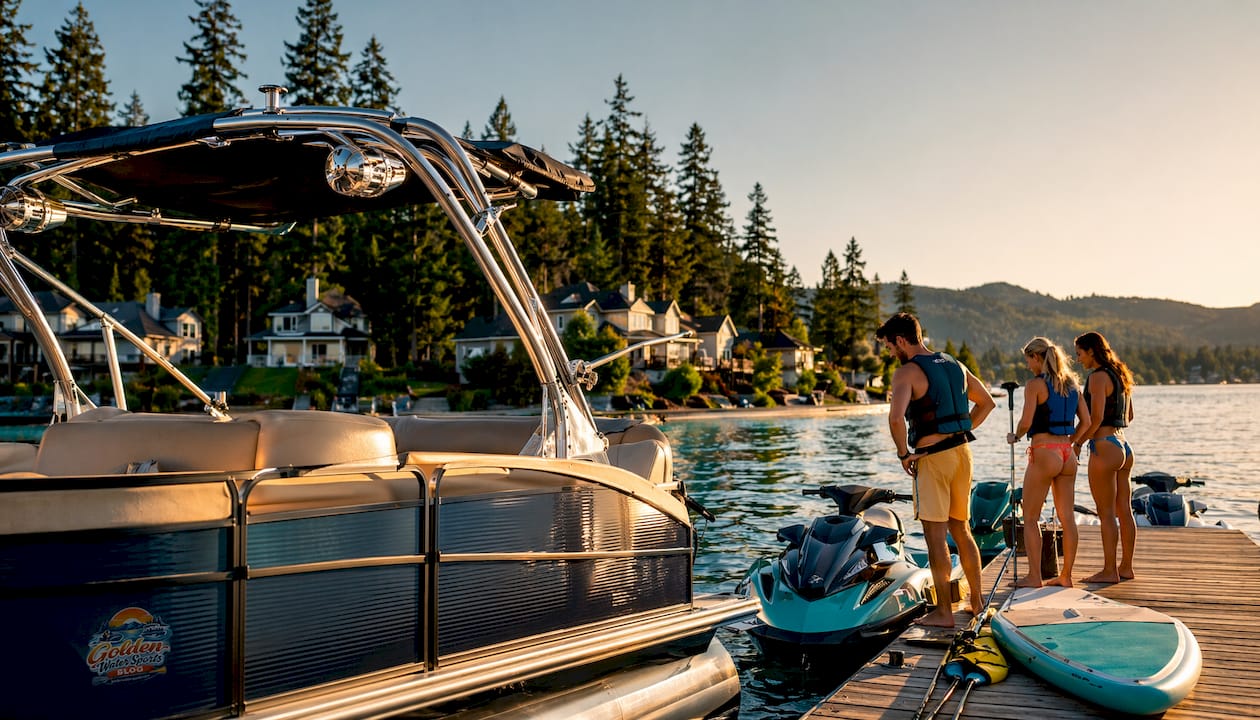
Beyond the tow point, a tower functions as a utility hub for the whole boat. Manufacturers design them with accessory mounts built in, and that changes how the deck feels for everyone on board.
Common features you will find integrated into or attached to a ski boat tower:
- Wakeboard and wake surf racks: Clamp-on board racks hold boards vertically against the tower frame, getting them off the floor and out of the way of passengers
- Tower speakers: Rearward-facing speakers mounted at the top of the arch project sound toward the rider in the water, where engine noise and wind would otherwise drown out music
- Bimini tops: A folding canvas shade structure that attaches to the tower frame, reducing deck clutter while giving passengers real sun protection
- LED lighting: Underwater or tower-mounted lights for evening sessions on the lake
- Camera mounts: Action camera brackets for filming tricks from an elevated angle
Fixed vs. foldable towers is the practical decision most buyers face at installation. Fixed towers are stiffer and generally stronger, but they add permanent height that can make garage storage or passing under low bridges a problem. Foldable or collapsible designs hinge at the base and fold flat toward the bow, solving the clearance issue without sacrificing structural integrity during use. For anyone storing a boat in a standard residential garage, a foldable tower is often the only workable option.
Material choice also shapes the maintenance picture. Aluminum towers need occasional cleaning but will not rust. Stainless steel towers are heavier and more expensive but hold up well under repeated hard pulls from aggressive riders.
How do ski boat towers actually benefit watersports riders?
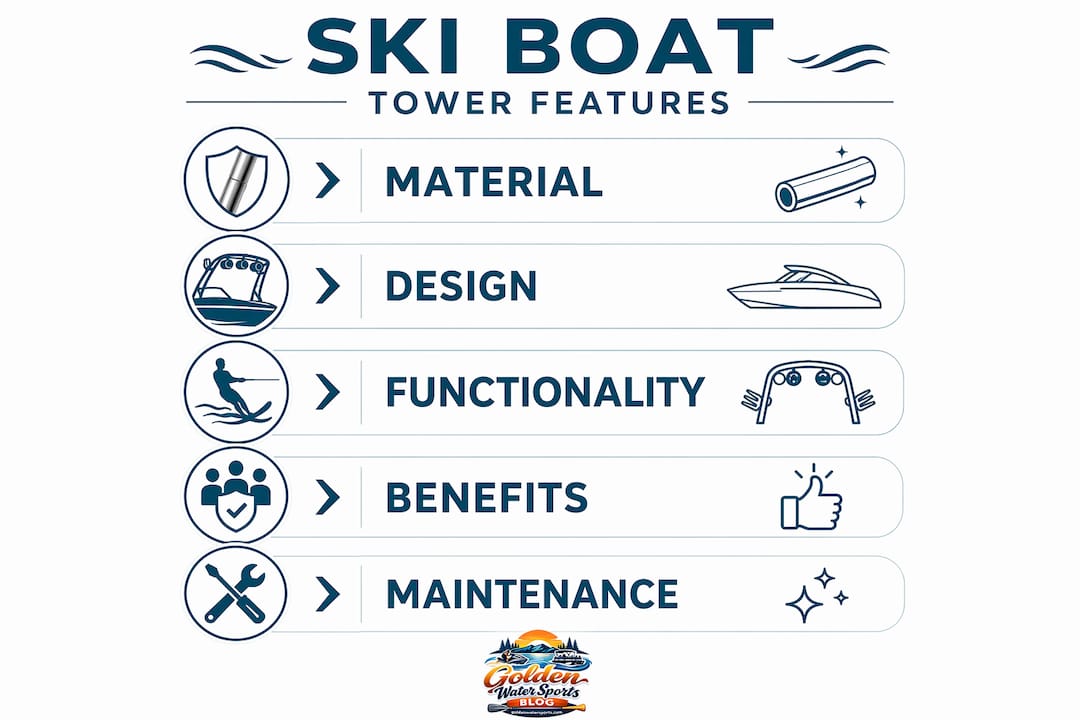
The performance gains from a tower are real and felt immediately, especially for riders moving past beginner level.
Elevated tow points translate directly into more vertical lift off the wake, which is the foundation of every aerial trick in wakeboarding. A rider pulling from a 6-foot tower height gets an upward component to the rope tension that a pylon simply cannot replicate. That upward pull lets the wake act as a ramp rather than just a bump, and riders report noticeably higher jumps within the first few sessions on a tower-equipped boat.
The benefits extend beyond just getting air:
- Beginner confidence: Reduced rope drag smooths out takeoffs, so new riders spend less time fighting spray and more time finding their balance
- Deck space: Board racks and speaker mounts on the tower free up floor space that would otherwise be covered in gear, making the boat more comfortable for a full group
- Versatility: The same tower works for wakeboarding, wake surfing, and kneeboarding, with rope attachment height adjusted by the rider's preference
- Aesthetics and resale: Boat owners value towers for style as much as function; a tower-equipped ski boat tends to hold its value better on the used market
Wake surfing, specifically, benefits from the tower in a different way than wakeboarding. The rider eventually drops the rope and surfs the boat's wake unassisted, but the initial pull from a higher point helps establish the correct body position before the rope is released.
How does a ski boat tower differ from a tuna tower?
The two structures look vaguely similar in photos, but they serve completely different purposes. Mixing them up is an easy mistake for anyone new to boating.
A tuna tower is built for offshore sportfishing. It rises 15–30 feet above the deck, giving anglers and the captain a high vantage point to spot fish, birds, and bait schools from a distance. The height is the point. There is no tow rope, no rider, and no wake involved.
Key distinctions at a glance:
- Height: Tuna towers reach 15–30 feet; ski boat towers sit at 6–8 feet
- Purpose: Tuna towers provide visibility for fishing; ski boat towers elevate a tow rope for watersports
- Boat type: Tuna towers appear on offshore sportfishing boats; ski boat towers are fitted to inboard ski boats and wakeboard boats
- Accessories: Ski boat towers carry speakers, racks, and Bimini tops; tuna towers carry radar, antennas, and fishing electronics
- Structural load: Ski boat towers absorb dynamic towing stress from a moving rider; tuna towers handle static weight and wind load
The confusion usually comes from photos where both structures look like tall metal frames arching over a boat. In practice, if you see a tower on a lake, it is almost certainly a wakeboard tower. Tuna towers belong on the open ocean.
Expert insights on getting the most from a ski boat tower
A wakeboard tower is not just a tow point. It is the organizing structure of the whole boat. Once you mount the racks, the speakers, and the shade top, the deck opens up in a way that changes how everyone experiences the day on the water.
That perspective reflects what Goldenwatersports sees across a season of lake outings on Liberty Lake and Lake Coeur d'Alene. Families who rent tower-equipped ski boats consistently use more of the boat's space and spend more time in the water.
Pro Tip: Before booking a ski boat rental, confirm whether the tower is fixed or foldable. On Lake Coeur d'Alene, where some launch ramps have overhead clearance restrictions, a foldable tower saves time and avoids damage.
A few practical points worth knowing before you get on the water:
- Proper tower installation requires checking that the hull mounting points can handle towing stress; an improperly mounted tower can stress the hull over time
- Foldable tower designs solve the garage and bridge clearance problem without weakening the structure during use
- Riders switching from a pylon to a tower often notice a change in how their legs and core engage, because the upward pull angle shifts which muscles absorb the load
- The tower's arch height means standing passengers should stay seated when the boat is moving under low structures
For anyone planning a day of wake sports on a lake like Coeur d'Alene, the ski boat features that matter most are the tower height, the rope attachment options, and whether the boat carries proper safety gear. Goldenwatersports equips its rental fleet with safety equipment and provides orientation before every outing, so first-time tower riders are not figuring it out alone on the water.
If you are curious how a tower-equipped ski boat compares to other boat types, the wakeboat guide covers the full picture. And for vacation planning that puts a tower boat at the center of the trip, lakeside vacation rentals near major water sports destinations often pair well with a day on the water.
Ready to try a tower-equipped ski boat on one of the most scenic lakes in the Pacific Northwest? Goldenwatersports offers ski boat rentals on Lake Coeur d'Alene, Liberty Lake, and surrounding waters, with flexible rental periods and all the safety gear included.
Key Takeaways
A wakeboard tower raises the tow rope to 6–8 feet above water, transforming a standard ski boat into a platform for aerial tricks, organized gear storage, and full-day lake comfort.
| Point | Details |
|---|---|
| Tower height advantage | Towers lift the tow point to 6–8 feet vs. 24–36 inches for a traditional ski pylon. |
| Upward pull mechanics | The elevated rope angle helps riders pop off the wake and stay airborne longer for tricks. |
| Built-in utility | Towers mount board racks, speakers, and Bimini tops, freeing up deck space for passengers. |
| Fixed vs. foldable | Foldable towers solve garage storage and bridge clearance problems without losing structural strength. |
| Tuna tower distinction | Tuna towers reach 15–30 feet for fishing visibility; ski boat towers top out at 6–8 feet for towing. |