
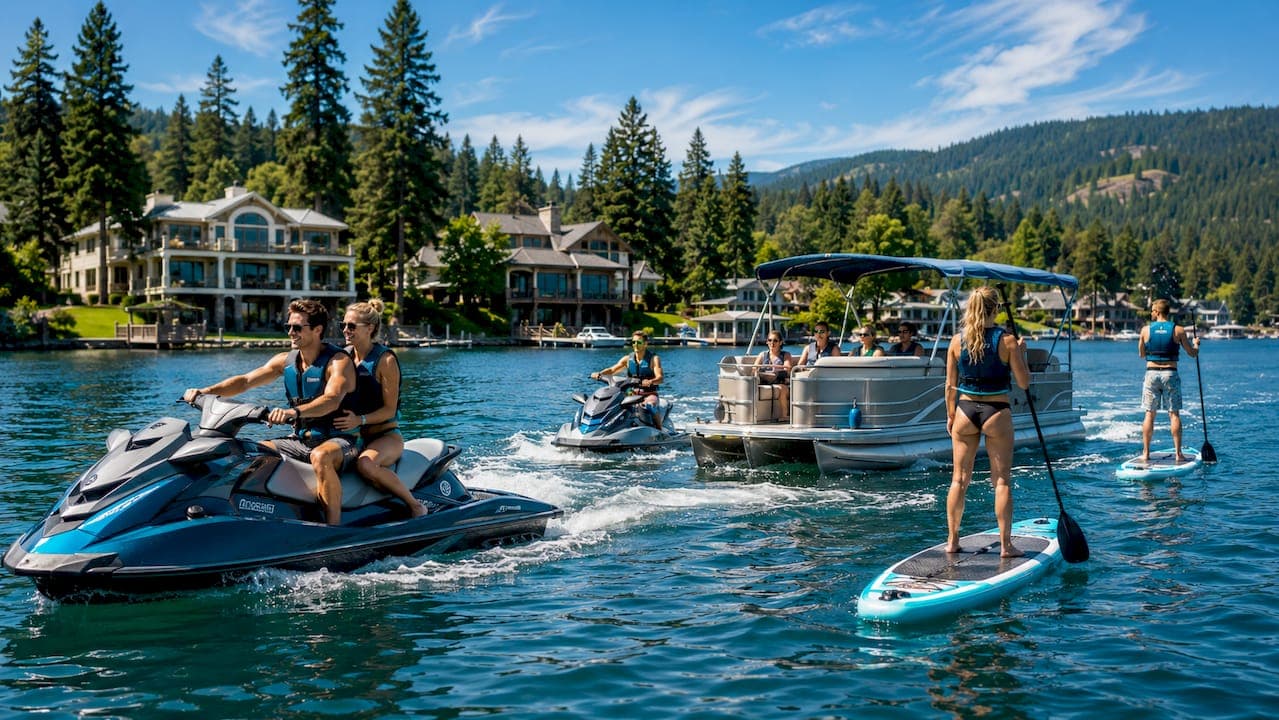
A wakeboat is a specialized inboard-powered towboat engineered to produce large, precisely shaped wakes for watersports like wakeboarding and wakesurfing. Unlike a standard runabout or pontoon, a wakeboat uses a purpose-built hull, integrated ballast tanks, and a fixed inboard propeller to generate consistent, controllable waves on demand. Understanding what is a wakeboat explained correctly means recognizing it as a wake-making machine first and a boat second. Goldenwatersports offers riders on Lake Coeur d'Alene direct access to this category of watercraft, making it easy to experience wake sports without the cost of ownership.
What is a wakeboat and how does it differ from other boats?
A wakeboat is defined by three core design elements: an inboard engine, a displacement hull, and a ballast system. These three features work together to create wakes that no standard outboard or sterndrive boat can replicate reliably. A specialized inboard vessel operates at 9–13 mph for wakesurfing and 18–24 mph for wakeboarding. Those narrow speed windows demand precise hull behavior that generic boats simply cannot deliver.
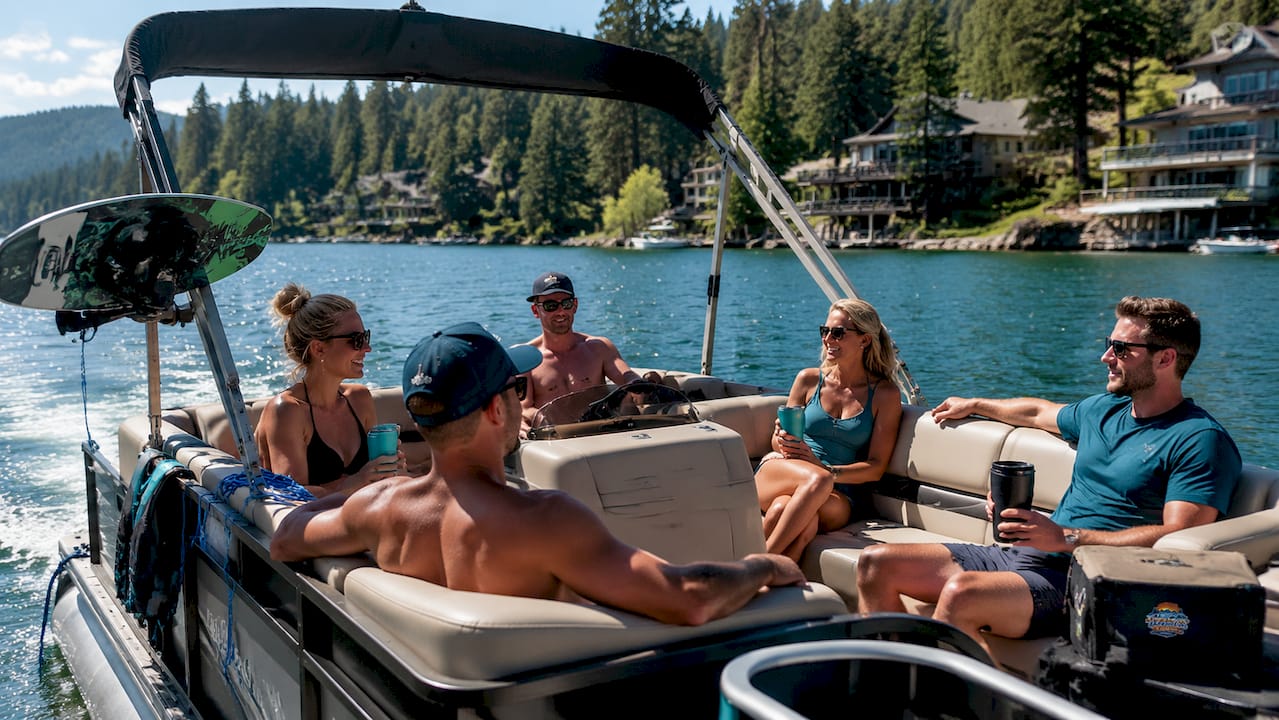
Standard outboard boats place the propeller at the transom, which creates a serious safety hazard when riders fall near the back of the boat. A wakeboat's fixed propeller under the hull moves the spinning blade away from the swim platform entirely. That placement also improves directional tracking at the slow speeds required for surf wakes. The result is a boat that is both safer and more capable for wake sports than any general-purpose vessel.
The hull shape is the third differentiator. Wakeboats use displacement hulls designed to push water outward and downward in a specific pattern. That pattern creates the wave shape riders actually surf or jump. A precisely engineered hull and ballast system manipulates water displacement to control wake size, shape, and surfability in ways a fishing boat or ski boat cannot match.
How do wakeboats produce wakes differently from other boats?
The ballast system is the defining technology inside every true wakeboat. Ballast tanks, typically built into the hull floor and bow, fill with water to add hundreds of pounds of weight in specific locations. Shifting that weight changes how the hull sits in the water, which directly changes the shape of the wave behind the boat.
Makeshift water bags on regular boats are ineffective and unsafe as substitutes for engineered ballast systems. Improvised weight throws off boat handling, creates unpredictable trim, and produces waves that are inconsistent and unsurfable. A factory ballast system is not a luxury feature. It is the core mechanism that makes wake sports possible.
Key technical features that separate wakeboats from other vessels:
- Inboard engine placement keeps the propeller under the hull, away from swimmers and riders
- Integrated ballast tanks fill and drain automatically to shift the boat's center of gravity
- Displacement hull geometry channels water into a defined wave shape behind the stern
- Wake-shaping tabs and plates fine-tune wave height and length at the push of a button
- Precision speed control holds exact mph to maintain consistent wake characteristics
Pro Tip: Always fill ballast tanks before you leave the dock. Filling them on the water wastes ride time and can cause uneven trim during the fill cycle.
What are the main features of a modern wakeboat?
Modern wakeboats pack a significant amount of engineering into a 20–25 foot hull. The engine configuration is the starting point. V-drive inboards place the engine toward the stern, which shifts weight rearward and naturally deepens the wake. Direct-drive inboards center the engine amidships for a flatter, cleaner wake profile preferred by some wakeboarders.
The tower is the most visible feature on any wakeboat. Wakeboard towers mount above the windshield and provide a high tow point, typically 6–8 feet above the waterline. A higher tow point gives riders more air time and reduces rope drag. Towers also carry speakers, board racks, and bimini tops.
Here are the core components found on a full-featured wakeboat:
- Inboard engine (V-drive or direct-drive) for propulsion and weight distribution
- Integrated ballast system with multiple tanks and automated fill/drain controls
- Wake-shaping technology including adjustable tabs, wedges, and surf gates
- Wakeboard tower for elevated rope attachment and rider lift
- Speed control system that holds precise mph within a fraction of a point
- Swim platform with ladder for safe rider retrieval after falls
| Feature | Purpose |
|---|---|
| Ballast tanks | Add weight to deepen and widen the wake |
| Surf gate or tab | Directs wake to one side for surfing |
| Tower | Raises tow point for better rider lift |
| Speed control | Maintains exact speed for consistent waves |
| Inboard propeller | Keeps blade away from swimmers |
What differences exist between wakeboarding and wakesurfing boats?
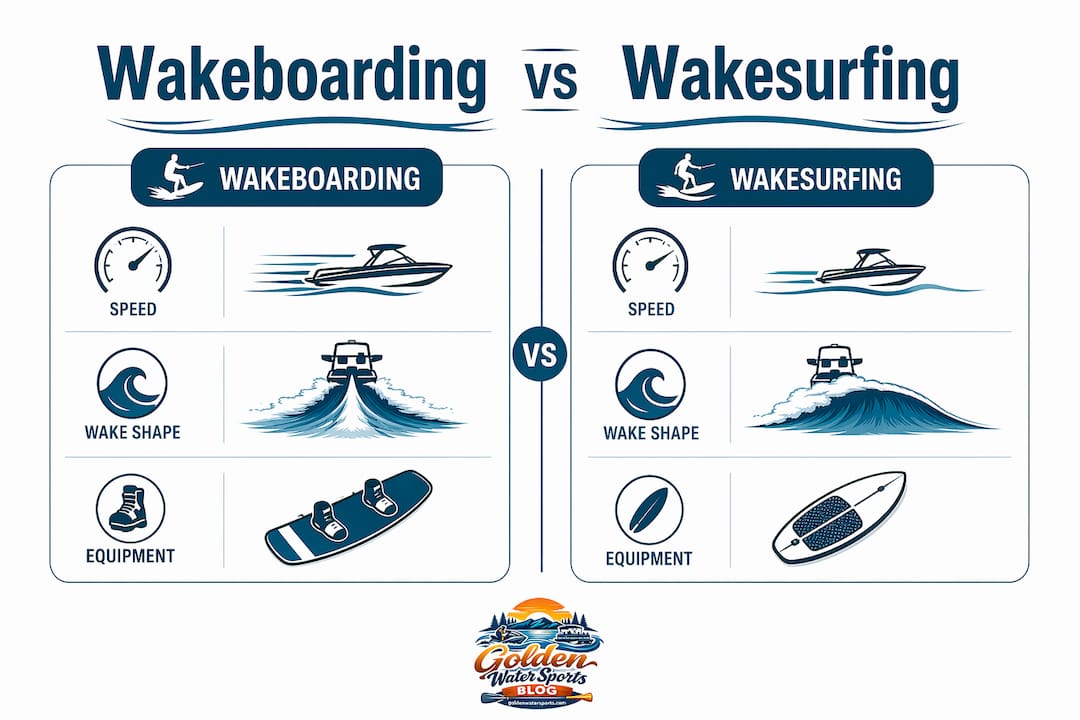
Wakeboarding and wakesurfing require different wave shapes, and modern wakeboats can switch between both modes. Wakeboarding uses speeds of 18–24 mph and produces a firm, ramp-like wake with a defined lip. Riders use that lip to launch into the air. Wakesurfing runs at 9–13 mph and requires a long, rolling wave with a clean pocket that riders can stand in without a rope.
Wakesurfing is the fastest-growing watersport due to its lower speeds, absence of foot bindings, and a gentler learning curve. That accessibility has pushed boat manufacturers to prioritize surf-wave quality in their designs. Most current wakeboats ship with surf gates or asymmetric ballast controls that push the wave to the left or right side of the boat.
| Factor | Wakeboarding | Wakesurfing |
|---|---|---|
| Speed | 18–24 mph | 9–13 mph |
| Wake shape | Firm ramp with sharp lip | Long, rolling surf wave |
| Rope use | Always | Only during start |
| Bindings | Yes | No |
| Learning curve | Steeper | Gentler |
Dual-purpose wakeboats handle both disciplines by adjusting ballast configuration and activating surf-side controls. A rider who wants a wakeboard session in the morning and a surf session in the afternoon can switch modes in under two minutes. That flexibility makes modern wakeboats the most versatile wake sports platform available. For a deeper look at how wakesurfing works as a beginner activity, Lake Tahoe wake surfing tips offer practical guidance that applies to any lake environment.
How can you choose and use a wakeboat effectively?
Choosing the right wakeboat starts with identifying your primary sport. A rider focused on wakeboarding needs a boat with strong wake lip and good speed stability. A rider focused on wakesurfing needs a boat with a powerful surf gate and deep ballast capacity. Most recreational buyers benefit from a dual-purpose model that handles both.
Most beginners can stand on a wakesurf board within 3–5 attempts and ride rope-free within 30–60 minutes of instruction. That short learning window makes wakesurfing an excellent entry point for new riders. Wakeboarding takes longer to master but rewards progression with a wider range of tricks and air time.
Practical considerations for new wakeboat riders and buyers:
- Check local regulations before riding. Stricter wake boat rules are expanding across many lakes in 2026 due to wave displacement concerns for shorelines and ecosystems.
- Learn ballast management before your first session. Uneven ballast creates a lopsided wake and affects boat handling.
- Use progressive acceleration when starting a rider. A smooth, gradual throttle increase produces a cleaner wave than a hard launch.
- Rent before you buy. A rental session on a wakeboat tells you more about fit and preference than any spec sheet.
Pro Tip: Operators recommend the "three-speed start" technique for wakesurfing: idle out of the hole, then build speed in two deliberate steps before reaching your target surf speed. This technique for wave success produces a cleaner wave than a single throttle push.
Comparing a wakeboat to a speedboat vs ski boat clarifies why the wakeboat's specialized design wins for wake sports every time.
Key Takeaways
A wakeboat is the only vessel type that combines inboard propulsion, engineered hull geometry, and integrated ballast systems to produce safe, consistent, and customizable wakes for wakeboarding and wakesurfing.
| Point | Details |
|---|---|
| Wakeboat definition | An inboard-powered boat built to create large, shapeable wakes for wake sports. |
| Ballast is non-negotiable | Integrated ballast tanks are the core technology. Improvised alternatives are unsafe and ineffective. |
| Speed determines sport | Wakesurfing runs at 9–13 mph; wakeboarding runs at 18–24 mph. |
| Wakesurfing is the entry point | Most beginners ride rope-free within 30–60 minutes, making it the easiest wake sport to start. |
| Regulations are tightening | Check local lake rules before riding, as wave displacement restrictions are expanding in 2026. |
Why wakeboats are more than just boats
Wakeboats are the most over-engineered recreational vessels on the water, and that engineering is entirely justified. Every design decision, from hull angle to ballast placement to propeller location, exists to serve one goal: producing the best possible wave for the rider behind the boat.
The biggest mistake I see new riders and buyers make is treating a wakeboat like a regular boat with extra features. It is not. The ballast system alone requires a learning curve. Ballast symmetry, fill order, and progressive throttle technique all affect wave quality in ways that take time to master. Riders who skip that learning phase get mediocre waves from a boat capable of producing excellent ones.
The regulatory environment is also shifting fast. Several states introduced new wake boat distance and speed restrictions in 2026, targeting wave displacement near shorelines. Riders who stay informed and follow those rules protect both the sport and their access to the water.
My strongest advice for anyone new to wake sports: rent first, ride often, and learn the ballast controls before you worry about tricks. The wave is everything. Get the wave right, and the rest follows naturally.
— Life is better on water.
Goldenwatersports and wake sports on Lake Coeur d'Alene
Goldenwatersports serves riders across Spokane Valley, Liberty Lake, and Coeur d'Alene with a fleet built for exactly this kind of water experience. Lake Coeur d'Alene is one of the best wake sports venues in the Pacific Northwest, with clean water, open stretches, and reliable summer conditions.
Renting through Goldenwatersports gives you access to premium watercraft without the ownership costs, maintenance schedules, or storage headaches. For riders who want to compare options before committing to a full wake session, Goldenwatersports also offers pontoon boat rentals and jet skis alongside its wake-focused fleet. The team handles safety equipment, briefings, and towing logistics so you can focus entirely on the water.
FAQ
What is a wakeboat in simple terms?
A wakeboat is an inboard-powered boat built specifically to create large, consistent wakes for wakeboarding and wakesurfing. Its hull, ballast system, and propeller placement all serve that single purpose.
How fast does a wakeboat go for wakesurfing vs wakeboarding?
Wakesurfing runs at 9–13 mph, while wakeboarding requires 18–24 mph. The wakeboat's speed control system holds those speeds precisely to maintain a consistent wave.
Can a regular boat replace a wakeboat for wake sports?
No. Improvised ballast on a standard boat produces unsafe, inconsistent waves and affects boat handling. A true wakeboat's integrated ballast and hull design are required for reliable wake sports performance.
Is wakesurfing easier to learn than wakeboarding?
Yes. Most beginners stand on a wakesurf board within 3–5 attempts and ride without a rope within 30–60 minutes of instruction, making it the more accessible entry point into wake sports.
Are there regulations on wakeboat use in 2026?
Yes. Stricter wake boat regulations are expanding across multiple states in 2026, targeting wave displacement near shorelines and sensitive lake ecosystems. Always check local rules before riding.