
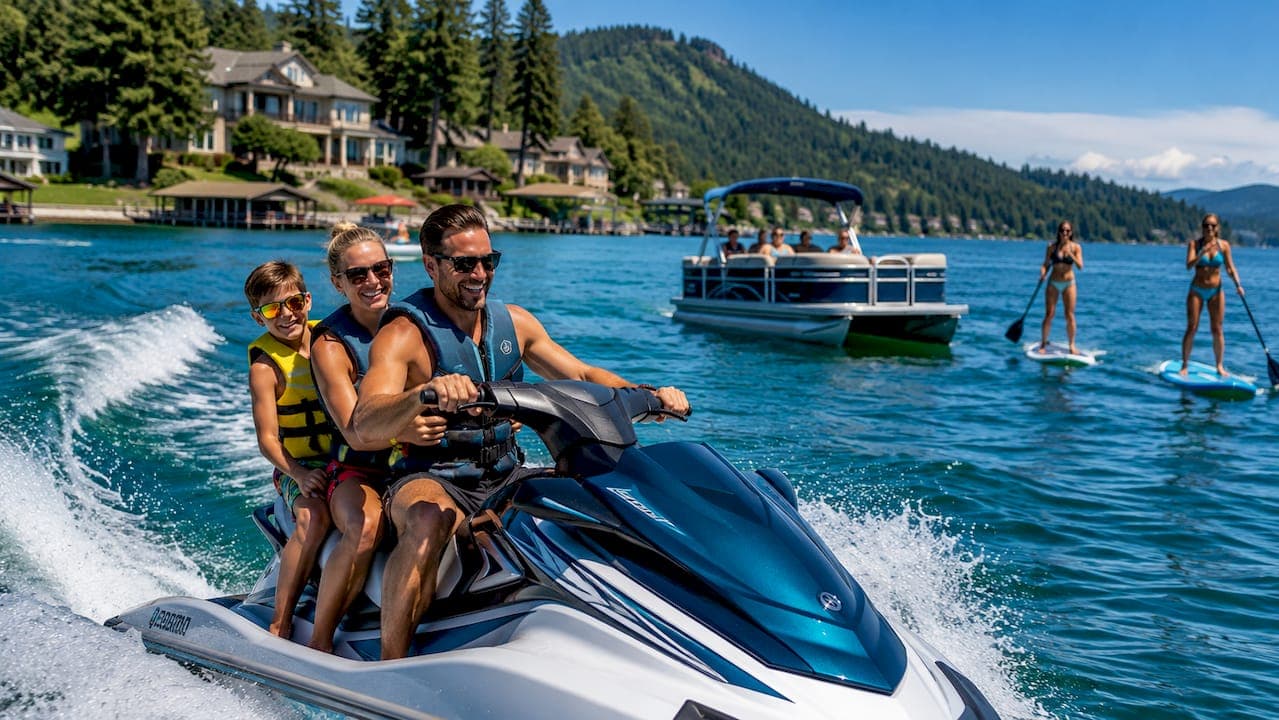
A WaveRunner is a trademarked personal watercraft (PWC) manufactured by Yamaha, defined by its sit-down, open-stern design that made recreational riding accessible to a far wider audience than earlier stand-up models ever could. The industry term "personal watercraft" covers all motorized, rider-operated craft in this category, but WaveRunner refers specifically to Yamaha's line. Riders often use "WaveRunner," "Jet Ski," and "PWC" interchangeably, yet each is a distinct trademark or classification. Understanding the difference matters for insurance, licensing, and getting the most out of your time on the water.
What is a WaveRunner, and how does it differ from other PWCs?
A WaveRunner is Yamaha's trademarked sit-down PWC, first introduced in 1986 with the WR500 model. That launch changed recreational boating permanently. Before the WR500, personal watercraft were stand-up models, requiring balance and physical strength that limited their appeal to a small group of riders.
The sit-down design gave WaveRunners a clear advantage: stability. Riders sit rather than stand, which lowers the center of gravity and makes the craft far easier to control. That shift opened PWC riding to families, beginners, and older riders who would never have attempted a stand-up model.
"Jet Ski," "WaveRunner," and "Sea-Doo" are all brand-specific trademarks, not generic terms. "Personal watercraft" is the correct term for legal, insurance, and regulatory contexts. Using the right term matters when you are filing a claim or checking local boating laws.
Key WaveRunner features that set the design apart:
- Sit-down, open-stern hull for stability and easy water re-entry
- Jet pump propulsion instead of an exposed propeller, which improves rider safety
- Signature water spout at the rear, a visual trademark of the WaveRunner line
- Seating for one to three riders, depending on the model
Pro Tip: If you are renting a PWC for the first time, ask specifically for a sit-down model. The learning curve is significantly shorter than on a stand-up craft, and you will spend more time riding and less time remounting.
What safety rules apply to WaveRunner riders?
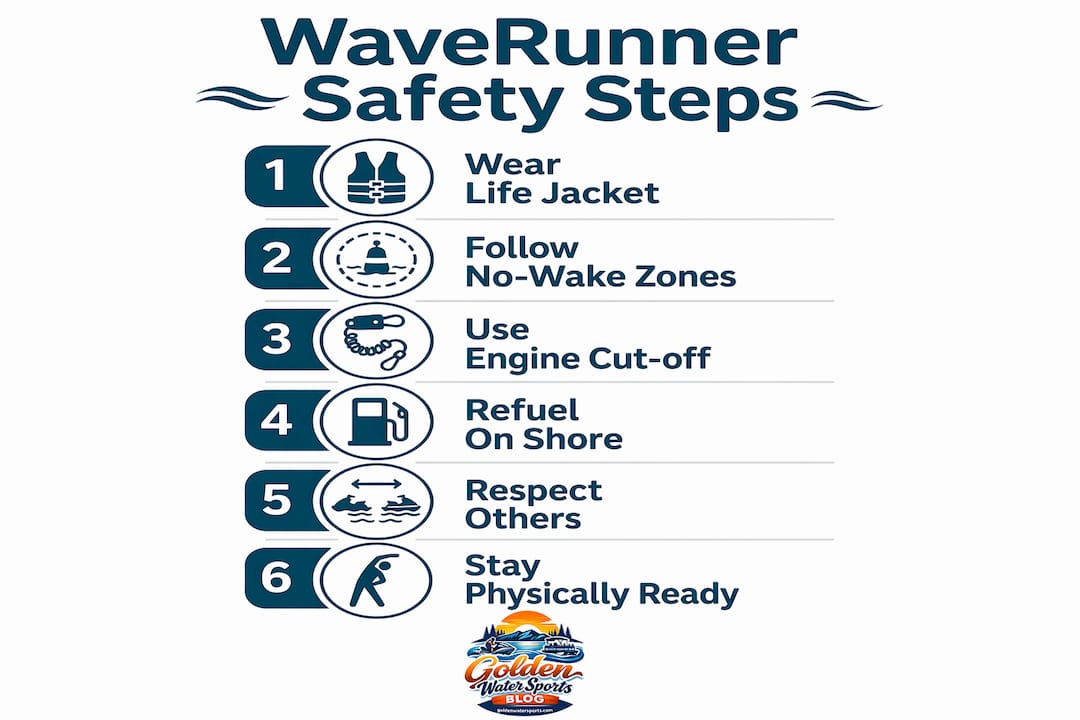
PWCs are legally classified as motorized boats in the United States and Canada, which means they carry the same legal obligations as any powered vessel. Riders must carry a valid Pleasure Craft Operator Card or the state-equivalent boating license. Failing to carry documentation can result in fines and removal from the water.
The non-negotiable safety requirements for every ride include:
- US Coast Guard-approved life jacket worn at all times, not just stored on board
- Engine cut-off lanyard attached to your wrist or PFD so the craft stops if you fall off
- Sound-signaling device such as a whistle or horn for emergency communication
- Compliance with no-wake zones, which protect shorelines, swimmers, and wildlife
No-wake zones reduce shoreline erosion and protect aquatic habitats. Ignoring them is not just a legal risk. It causes real environmental damage to the lakes you are riding on.
Physical readiness is a factor most new riders underestimate. Beginners often overestimate their endurance, and fatigue during remounting or wave response is a leading cause of on-water incidents. Start with shorter sessions and build up gradually.
Pro Tip: Avoid refueling over the water. Even a small fuel spill can harm aquatic ecosystems. Refuel on shore and wipe down the nozzle before returning to the lake.
For a full breakdown of current regulations, the 2026 open-water safety guide from Goldenwatersports covers everything from licensing to emergency procedures.
How to ride a WaveRunner on lakes and inland waterways
WaveRunner steering works through jet pump propulsion. Water is drawn in and expelled through a nozzle, and turning the handlebars redirects that flow. The critical detail: throttle input controls steering. Release the throttle completely and you lose the ability to steer, even though the craft keeps moving forward. Newer models include off-throttle steering assist, but mastering throttle control remains the foundation of safe riding.
Follow these steps to build confidence on the water:
- Start in open, calm water away from docks, swimmers, and other craft.
- Practice slow-speed turns with light throttle before increasing speed.
- Learn to remount from the water before you need to do it under pressure.
- Identify no-wake zones on your lake map before launching.
- Wear protective gear beyond a life jacket, including gloves, water shoes, and on cooler days, a wetsuit to protect against jet pump exhaust and cold exposure.
Experienced riders wear non-inflatable thermal gear and gloves to guard against both the environment and the jet pump outlet, which can cause injury on contact. This is especially relevant on lakes like Lake Coeur d'Alene, where water temperatures stay cool well into summer.
Respecting other water users is part of riding well. Maintain safe distances from kayakers, paddleboarders, and swimmers. On busy summer weekends, popular lakes fill quickly, and situational awareness protects everyone. For families planning a full day on the water, pairing a WaveRunner session with kid-friendly boat tours gives younger children a safe, guided option while adults ride.
What to know about renting WaveRunners on Lake Coeur d'Alene
Renting is the fastest way to experience a WaveRunner without the $4,900–$22,199 purchase price of a new Yamaha model. Rental pricing varies by duration and model, and most reputable operators include safety equipment and a pre-ride briefing in the cost.
| Rental detail | What to expect |
|---|---|
| Pricing structure | Hourly or half-day rates, varying by model |
| Safety briefing | Included at reputable operators before every rental |
| Equipment provided | Life jackets, lanyards, and basic safety gear |
| Rider requirements | Valid ID and boating license or operator card |
| Family suitability | Sit-down models accommodate one to three riders |
WaveRunner rentals around Coeur d'Alene typically include safety briefings, equipment provision, and guided orientation for families and first-time riders. That structure removes the guesswork for newcomers and makes the experience genuinely accessible. Goldenwatersports operates at multiple lake locations, including Newman Lake and Liberty Lake, giving riders flexibility on where to launch.
Key Takeaways
A WaveRunner is Yamaha's trademarked sit-down PWC, and understanding its design, safety rules, and riding mechanics is the foundation for a safe and enjoyable day on the water.
| Point | Details |
|---|---|
| WaveRunner definition | Yamaha's trademarked sit-down PWC, first launched in 1986 with the WR500. |
| Legal classification | PWCs are motorized boats requiring a valid operator card and safety equipment. |
| Throttle controls steering | Releasing the throttle removes steering ability; mastering this is critical for beginners. |
| Safety gear required | Wear a Coast Guard-approved life jacket and attach the engine cut-off lanyard every ride. |
| Renting is accessible | Local operators like Goldenwatersports include briefings and equipment in rental packages. |
Why WaveRunners are the right starting point for lake recreation
The first time I watched a complete beginner climb onto a sit-down WaveRunner and ride confidently within 20 minutes, I understood why Yamaha's 1986 design decision was so significant. Stand-up models demand athletic ability and practice. Sit-down WaveRunners demand attention and respect for the water. That is a much shorter list.
What I tell every new rider is this: the craft is forgiving, but the water is not. A WaveRunner will not punish a small mistake the way a stand-up model will. But a no-wake zone ignored, a lanyard left unattached, or a session pushed past physical limits can turn a great day into a dangerous one fast.
The riders who enjoy WaveRunners most are the ones who treat safety as part of the fun, not an obstacle to it. Knowing how the throttle-steering relationship works, wearing the right gear, and respecting the lake environment are not restrictions. They are what make the experience repeatable and worth doing again.
— Life is better on water.
WaveRunner rentals at Goldenwatersports
Goldenwatersports offers Yamaha WaveRunner rentals at some of the most scenic lakes in the Pacific Northwest, including Newman Lake and Liberty Lake near Spokane Valley and Coeur d'Alene.
Every rental includes safety equipment, a pre-ride briefing, and flexible time options so you can plan a quick solo session or a full family day on the water. The team handles the logistics so you focus on the ride. Check current rental pricing and availability to plan your next lake day. You can also book directly for Newman Lake rentals or Liberty Lake rentals based on your location.
FAQ
What is a WaveRunner vs. a Jet Ski?
A WaveRunner is Yamaha's trademarked sit-down PWC, while Jet Ski is a separate trademark from a different manufacturer. Both fall under the generic category of personal watercraft (PWC), which is the correct term for legal and insurance purposes.
Do you need a license to ride a WaveRunner?
Yes. PWCs are classified as motorized boats, so riders must carry a valid Pleasure Craft Operator Card or state-equivalent boating license in most U.S. and Canadian jurisdictions.
What safety gear is required on a WaveRunner?
Riders must wear a US Coast Guard-approved life jacket and attach the engine cut-off lanyard to their wrist or PFD at all times. A sound-signaling device is also required.
How does steering work on a WaveRunner?
WaveRunner steering relies on throttle-driven water flow from the jet pump. Releasing the throttle removes steering control, so maintaining light throttle through turns is critical, especially for new riders.
Can families rent WaveRunners together?
Yes. Sit-down WaveRunner models seat one to three riders, making them well-suited for families. Rental operators like Goldenwatersports include safety briefings and equipment to support first-time and family riders.