
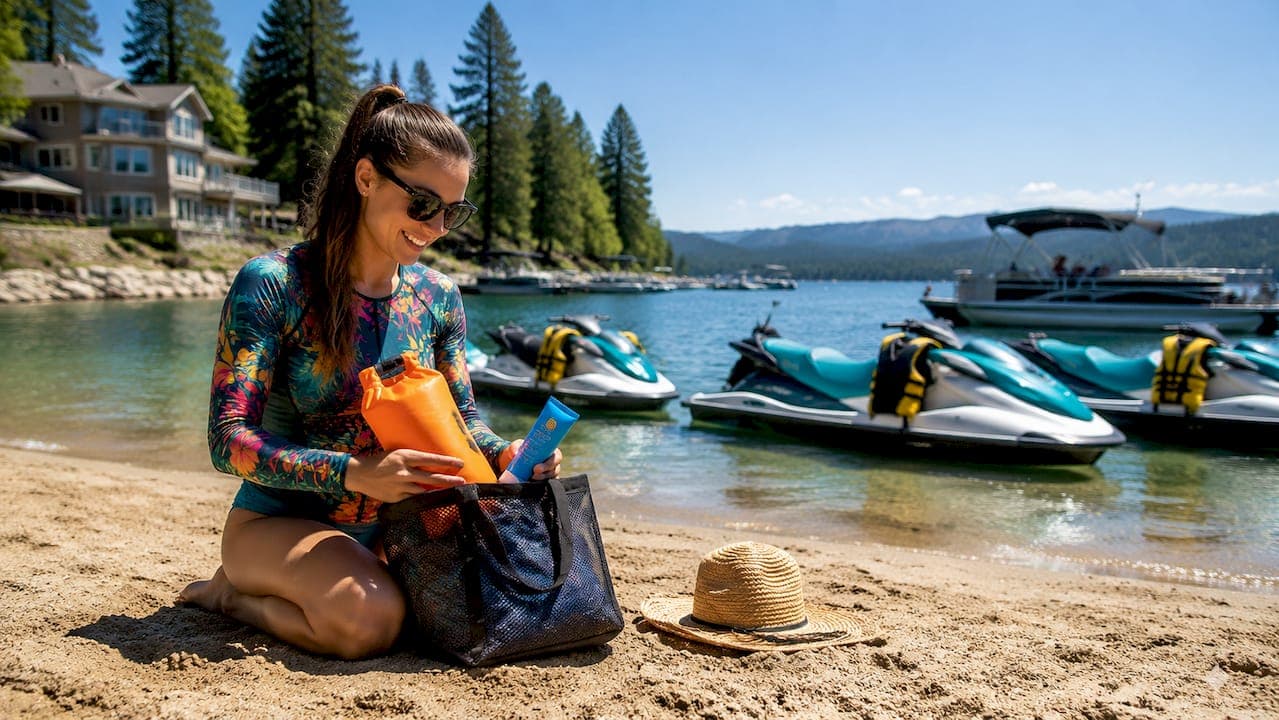
A successful jet ski rental day requires bringing key essentials: a valid driver's license, reef-safe sunscreen, plenty of water, and quick-dry clothing. These items cover safety, comfort, and rental compliance from the moment you arrive at the dock. Knowing what to pack for jet ski outings on Lake Coeur d'Alene or Liberty Lake also means understanding what the rental company already supplies. Goldenwatersports provides life jackets and safety gear, so your packing focus stays on personal items that protect you and your belongings.
What to bring for your jet ski rental day: documents and booking essentials
The rental counter is not the place to discover you forgot your ID. Rental prerequisites are non-negotiable, and missing one item can delay or cancel your booking entirely.
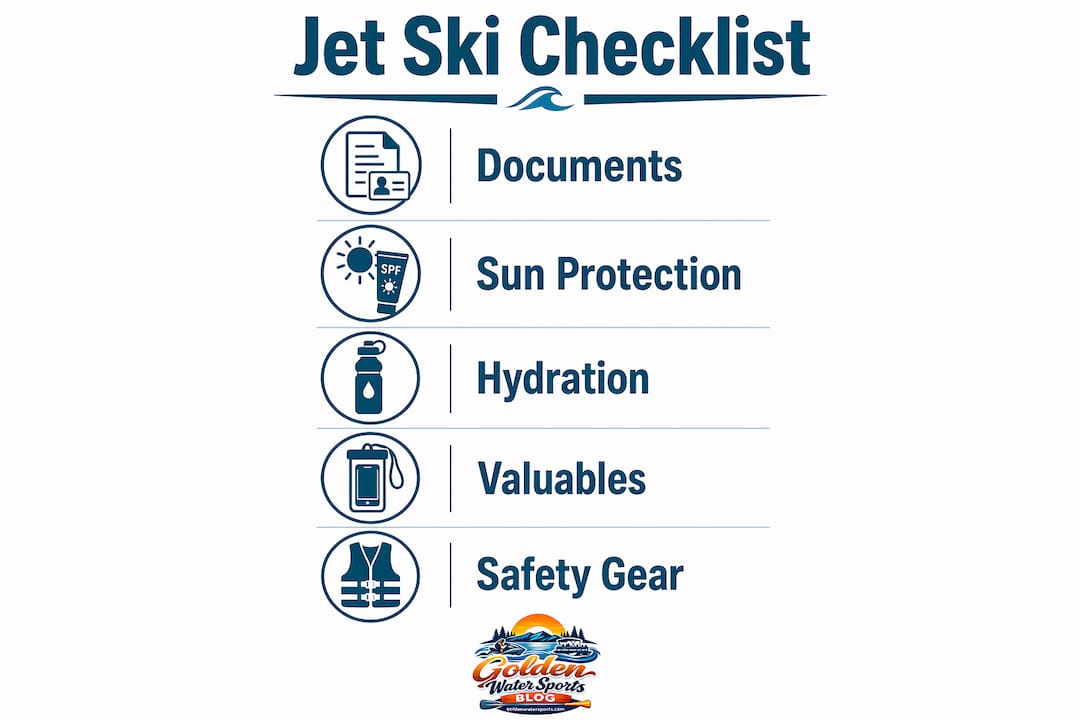
Bring every item on this list before you leave home:
- Valid driver's license or state ID. Most rental providers require renters to be 21 or older. Check age requirements for your specific location before booking.
- Booking confirmation. A printed copy or a screenshot on your phone works. Having it ready speeds up check-in.
- Credit card for the security deposit. Bring your ID and credit card for the refundable security deposit, which can run around $500. Debit cards are often not accepted for deposits.
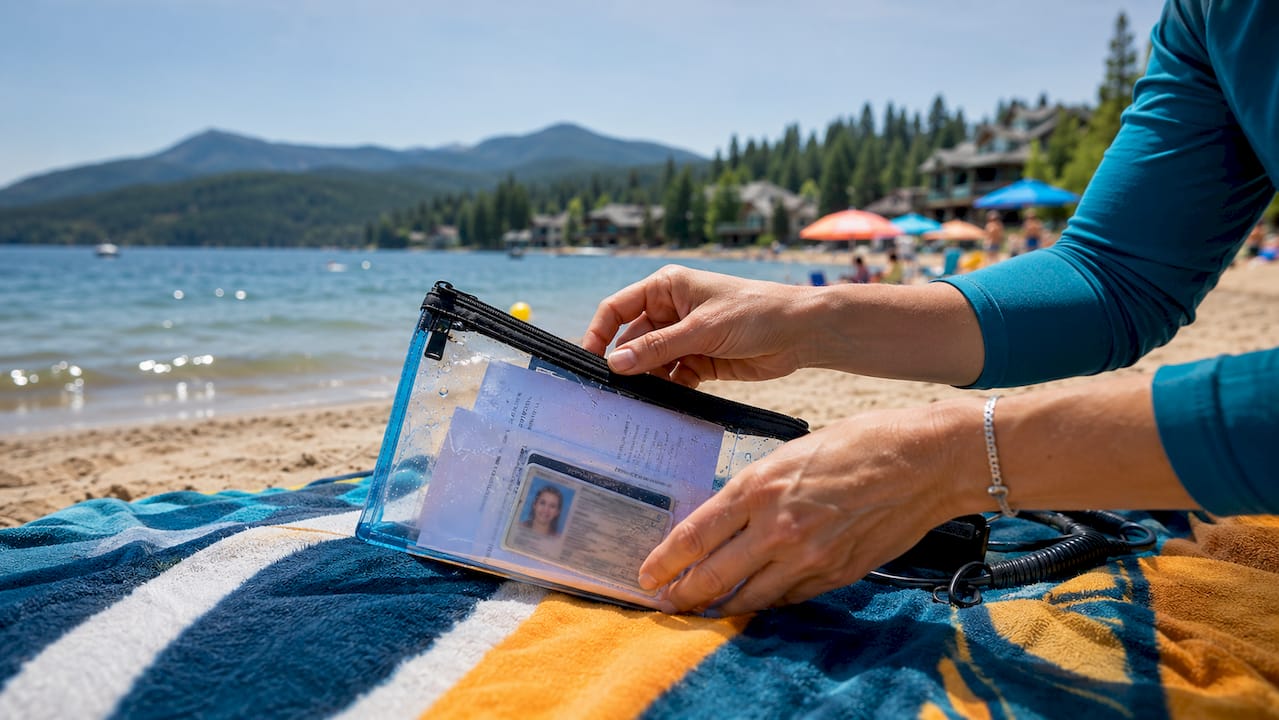
- Digital backups. Screenshot your confirmation and save your ID photo to your phone before you leave. Store these in a waterproof phone pouch so they stay accessible and dry.
Keep all documents in a zippered waterproof bag or a dry pouch clipped to your gear bag. Losing your ID at the dock is a frustrating and avoidable problem.
Sun protection and clothing: what to wear on the water
Sun exposure on the water is more intense than on land. Water reflects UV rays back at you, which means your skin takes a double hit. Apply sunscreen 30 minutes before launch and reapply every two hours to maintain protection throughout the day.
Here is what to pack for jet ski sun protection and clothing:
- Reef-safe or marine-grade broad-spectrum sunscreen, SPF 30 or higher. Bring more than you think you need. A small bottle runs out fast when you are covering arms, legs, neck, and face.
- Lip balm with SPF. Lips burn quickly on the water and most riders forget them entirely.
- Rash guard or quick-dry shirt. Wear quick-dry clothing like board shorts or a rash guard instead of cotton. Cotton holds water, gets heavy, and chafes badly after an hour on a WaveRunner.
- Polarized sunglasses with a retaining strap. Water-resistant eye protection reduces glare and prevents eye fatigue. Without a strap, your sunglasses will end up at the bottom of the lake.
- Water shoes or strapped sandals. Flip-flops slide off on wet docks and become a hazard. Strapped water shoes stay on your feet and protect you from sharp rocks near the shore.
- Hat or visor with a chin strap, plus a change of clothes and a towel for after the ride.
Pro Tip: Apply sunscreen at home, not at the dock. By the time you reach the water, it will have absorbed fully and you will be protected from the first minute on the jet ski.
How to protect your valuables and stay hydrated
One splash can destroy a phone that is not protected. A waterproof phone pouch or dry bag is the single most important non-clothing item on your packing list. Zip-lock bags are not a substitute. They fail under pressure and repeated water contact.
Follow these steps to protect your gear and stay fueled:
- Waterproof phone pouch or dry bag. Use a dedicated waterproof case rated for submersion, not just splash resistance. Store your phone, keys, and any cash inside.
- Secure storage at the dock. Some rental locations offer lockers or secure storage. Ask Goldenwatersports about options when you book so you are not standing at the dock holding a bag with nowhere to put it.
- Water, minimum 1 gallon per person. Bring at least 1 gallon of water per person for a full rental day. Dehydration sets in faster on the water because sun, wind, and physical activity all drain your fluids simultaneously.
- Sports drinks for electrolytes. A bottle of Gatorade or a similar electrolyte drink helps replace what you lose through sweat, especially on hot summer days.
- Snacks or a light lunch. Pack energy bars, fruit, or a sandwich for longer outings. Hunger and fatigue hit harder when you are out on open water with no food nearby.
Pro Tip: Freeze one of your water bottles the night before. It stays cold for hours on the water and doubles as an ice pack for your snack bag.
What safety gear does a jet ski rental include?
Most rental shops provide life jackets and safety gear, so renters do not need to bring their own. Goldenwatersports supplies U.S. Coast Guard-approved life jackets and an engine kill-switch lanyard with every rental. That said, knowing how to use this gear correctly is your responsibility.
| Safety item | Provided by rental | Rider responsibility |
|---|---|---|
| U.S. Coast Guard-approved life jacket | Yes | Wear it correctly at all times |
| Engine kill-switch lanyard | Yes | Clip it to your wrist or vest before launch |
| Waterproof camera or GoPro | No | Bring your own with a mount |
| Basic first aid kit | Varies | Bring a small kit for cuts and scrapes |
| Weather forecast check | No | Check the National Weather Service the morning of your ride |
The engine kill cord is a critically important safety device. If you fall off, it cuts the engine automatically. Attach it before you start the jet ski, every single time. Read more about life jacket safety before your rental day if you are new to water sports.
Practical tips for packing and managing your gear at the dock
Minimizing loose items reduces the risk of losing gear and makes your dock experience much smoother. Every item that is not secured is an item that can end up in the water.
Keep these habits in mind:
- Use lanyards and straps for hats, sunglasses, and cameras. If it can fly off at speed, it needs to be attached to something.
- Arrive early. Morning conditions on Lake Coeur d'Alene are typically calmer, parking is easier, and you get first pick of equipment and departure times.
- Plan your transport. Bring a single gear bag that holds everything. Juggling multiple bags on a wet dock is a recipe for dropping something important.
- Rinse off and change promptly after your ride. Staying in wet clothes raises your risk of skin irritation and chills, especially on cooler evenings near the lake.
Pro Tip: Pack a small mesh bag inside your main bag. After the ride, wet gear goes in the mesh bag and dry clothes stay dry for the drive home.
Key Takeaways
A well-packed jet ski rental day bag covers documents, sun protection, hydration, secured valuables, and appropriate clothing, since the rental company supplies the core safety gear.
| Point | Details |
|---|---|
| Documents come first | Bring your valid ID, booking confirmation, and a credit card for the security deposit. |
| Sun protection is non-negotiable | Apply SPF 30+ sunscreen 30 minutes before launch and reapply every two hours on the water. |
| Protect your valuables | Use a waterproof dry bag for your phone, keys, and cash before you leave the dock. |
| Stay hydrated | Bring at least 1 gallon of water per person plus snacks for energy on longer outings. |
| Safety gear is provided | Rental companies supply life jackets and kill-switch lanyards; wear and attach them correctly every time. |
What I have learned after years on the water
Most riders underestimate sun exposure and overestimate how much they can carry. The riders who have the best days are the ones who pack light, pack smart, and show up prepared for the conditions rather than the ideal scenario.
Sun safety and on-water safety are two separate problems that feed each other. Sunburn and dehydration cause fatigue. Fatigue causes poor judgment on a machine that can reach high speeds on open water. Protecting your skin is not just about comfort. It directly affects how safely you ride.
The kill-switch lanyard is the item most first-timers forget to attach correctly. Clip it to your wrist or life jacket vest before you touch the throttle. No exceptions. The dock staff will remind you, but make it your own habit before they have to.
Pack one bag. Secure everything. Arrive early. Drink water before you feel thirsty. These are not complicated rules. They are the difference between a great day and a miserable one.
— Life is better on water.
Goldenwatersports makes your rental day easy on Lake Coeur d'Alene
Planning a day on the water is much easier when the rental company handles the hard part. Goldenwatersports offers well-maintained Yamaha WaveRunners, U.S. Coast Guard-approved safety gear, and friendly staff who walk you through everything before you launch.
Whether you are a first-time rider or a returning guest, Goldenwatersports serves Lake Coeur d'Alene, Liberty Lake, and Spokane Valley with flexible rental periods and straightforward booking. Visit Goldenwatersports to check availability and reserve your jet ski. You show up with your checklist ready. They handle the rest.
FAQ
What documents do I need for a jet ski rental?
Bring a valid driver's license or state ID, your booking confirmation, and a credit card for the security deposit. Most rental providers require renters to be 21 or older.
Does the rental company provide life jackets?
Yes. Rental shops provide life jackets and safety gear including the engine kill-switch lanyard. You are responsible for wearing the life jacket and attaching the lanyard correctly before launch.
How much water should I bring on a jet ski rental day?
Bring a minimum of 1 gallon of water per person. Sun, wind, and physical activity increase dehydration risk significantly on the water.
What should I wear jet skiing?
Wear a rash guard or quick-dry shirt, board shorts or swimwear, and water shoes or strapped sandals. Avoid cotton clothing and flip-flops, which become uncomfortable and unsafe on wet surfaces.
How do I protect my phone on a jet ski?
Use a waterproof phone pouch or dry bag rated for submersion, not just splash resistance. One wave can ruin an unprotected phone, so secure it before you leave the dock.