
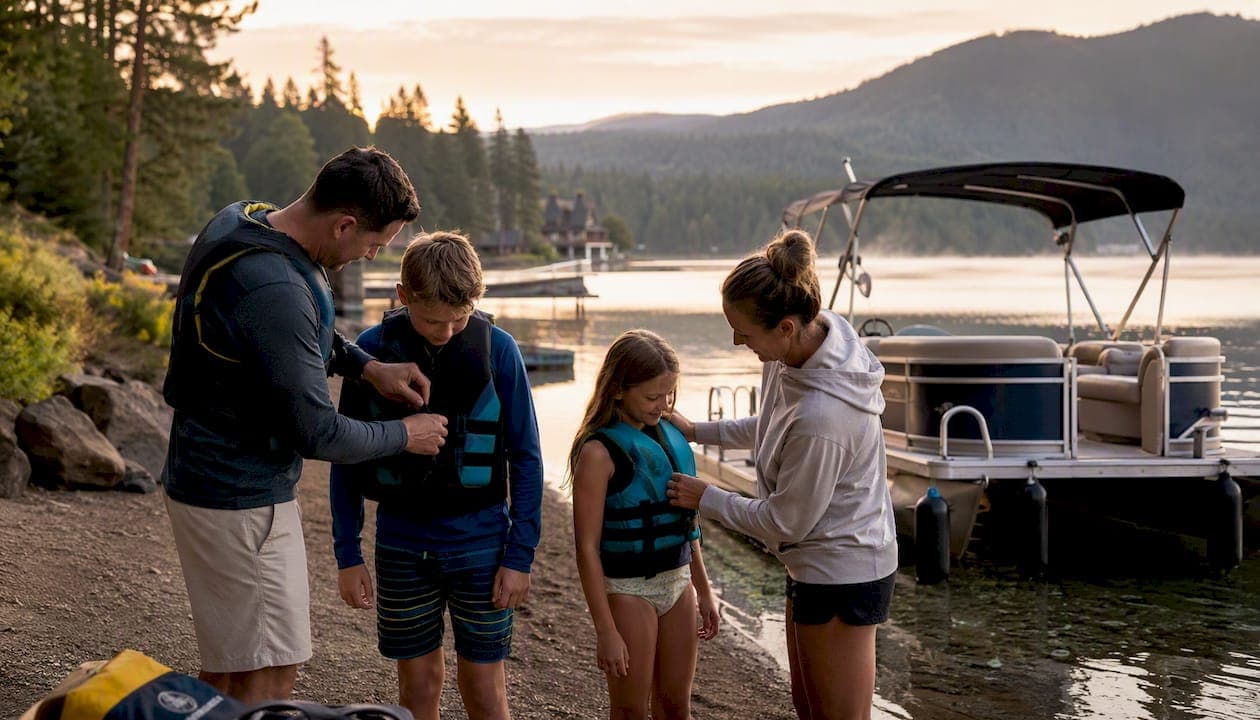
Correct life vest sizing is the single factor that determines whether a personal flotation device actually keeps your head above water or fails when you need it most. A vest that's the wrong size can't do its job, no matter how much foam or how many buoyancy panels it packs. The buoyancy has to sit in the right place on your body; it can only do that when the vest fits.
Here's what to do before anyone in your group gets on the water. Measure chest circumference for adults, and use weight, not height or age, to size children. Then run the shoulder-lift test: have someone grab the vest at the shoulders and pull straight up. If it slides past your chin or ears, it's too big or too loose.
The stakes are real. In 2024, the U.S. Coast Guard reported that 87% of drowning victims in recreational boating and paddling accidents weren't wearing a life jacket at all. Fit failure and non-use often trace back to the same root problem: a vest that felt wrong, so it got left on the dock or never zipped up tight.
- Measure chest (adults) or weight (kids) before you shop or rent.
- Fasten every strap and buckle, then do the shoulder-lift test.
- Check the label for U.S. Coast Guard approval and size range.
- Never size up "for room to grow" on a child's vest.
Pro Tip: Don't buy a life vest for the kid your child will be in two summers. A jacket sized for growth room rides up in the water right now, and "right now" is the only moment that matters if they go overboard.
Key Takeaways
Correct life vest sizing determines whether buoyancy keeps the airway clear, and it works only when chest or weight measurements, fit tests, and USCG-approved labels all line up.
| Point | Details |
|---|---|
| Measure the right way | Use chest circumference for adults and body weight for children, never age or height. |
| Run the lift test | Pull the vest up by the shoulders; more than 3 inches of movement means it's too big. |
| Don't size up for growth | A child's vest must fit now, not in two summers, since a loose fit rides up in water. |
| Inspect before every trip | Check straps, buckles, foam, and inflator status, and replace at the first failure sign. |
| Request a fit check when renting | Golden Water Sports verifies chest or weight measurements and runs the lift test at pickup. |
Table of Contents
- Why Life Vest Sizing Matters for Buoyancy and Airway Safety
- Sizing Rules: How Adults and Children Are Sized Differently
- How to Measure Yourself and Run a Proper Fit Test
- Common Fit Problems and the Risks They Create
- Choosing the Right Fit for Your Activity
- Inspection, Care, and When to Replace a Life Jacket
- What Safety Experts Say About Comfort and Compliance
- Renting Gear? Here's How Golden Water Sports Checks Your Fit
- Sources
Why Life Vest Sizing Matters for Buoyancy and Airway Safety
Buoyancy only works if it's positioned correctly. A life vest doesn't just need enough foam to float you. It needs that foam distributed so your chest and shoulders stay up while your head tips back, keeping your mouth and nose clear of the surface.
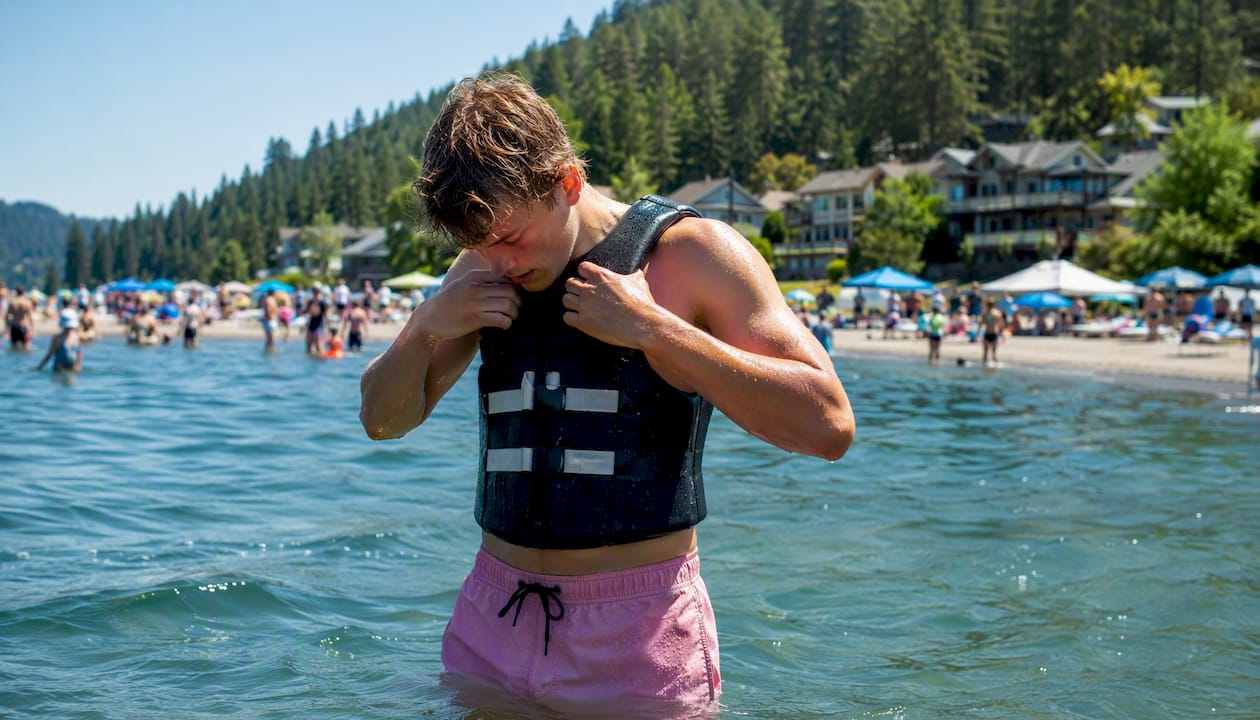
Most adult vests are built around 7 to 12 pounds of buoyancy, roughly 31 to 53 Newtons, which is generally enough to float an average adult. But that number is close to meaningless if the vest is loose enough to twist around your torso or ride up over your shoulders when you hit the water. A vest that "supports" you passively is not the same as one that "positions" you face up. The second job depends entirely on fit, not on the buoyancy rating printed on the label.
The gap between a supportive vest and a life-saving one is fit. A too-loose jacket can flip sideways or slide up around your neck the moment you're in the water, especially if you're unconscious and can't correct your own position. That's the scenario where sizing stops being a comfort issue and becomes the difference between staying face-up and going face-down.
But safety instructors and the Coast Guard both stress a second, quieter problem: people who wear a vest that doesn't fit and get a false sense of security from it. Rough water, cold-water shock, and sudden unconsciousness are exactly the conditions where correct positioning matters most, and exactly the conditions where a badly fitted vest fails first.
Sizing Rules: How Adults and Children Are Sized Differently
Adult and child PFDs are sized using two completely different measurements, and mixing them up is one of the most common shopping mistakes. According to the PFD sizing guide from Drive A Boat USA, adult sizing runs on chest circumference, while children's sizing runs on body weight.
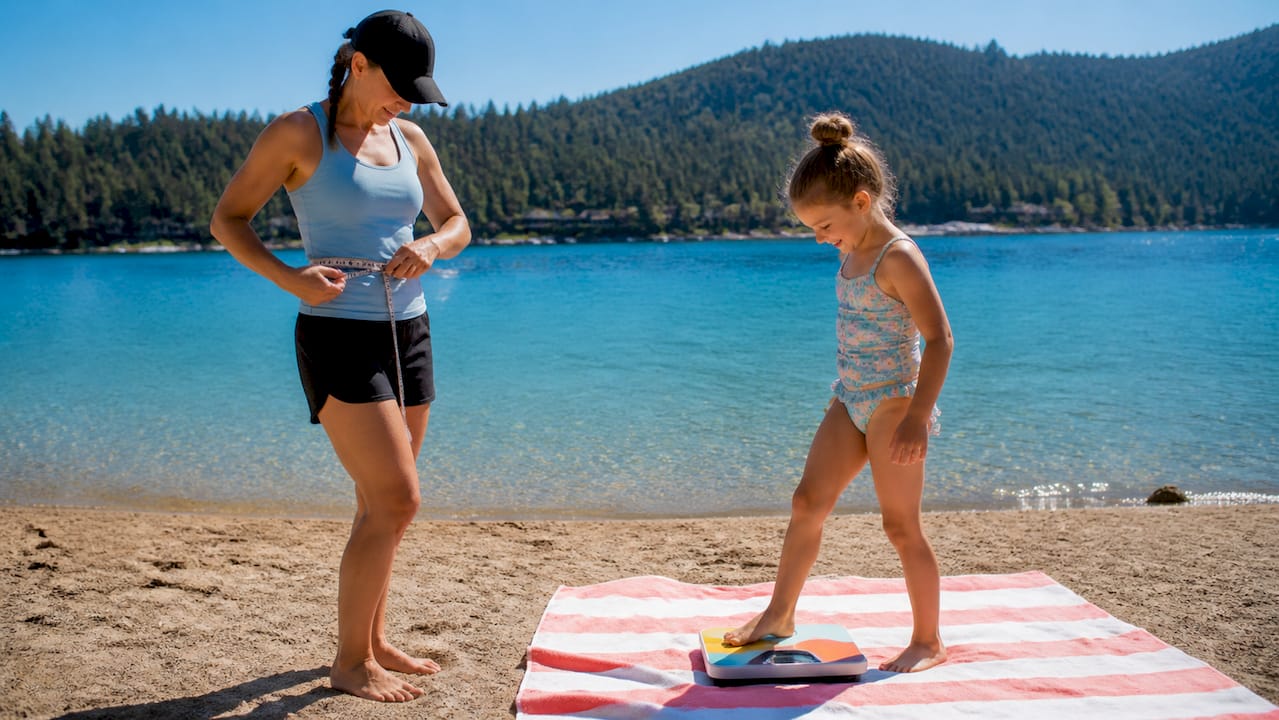
To measure your chest, wrap a sewing tape around the fullest part of your chest, under your arms, and check that number against the manufacturer's chart, not a generic S/M/L guess. Manufacturers vary slightly, so a size that fits in one brand's vest can run tight or loose in another.
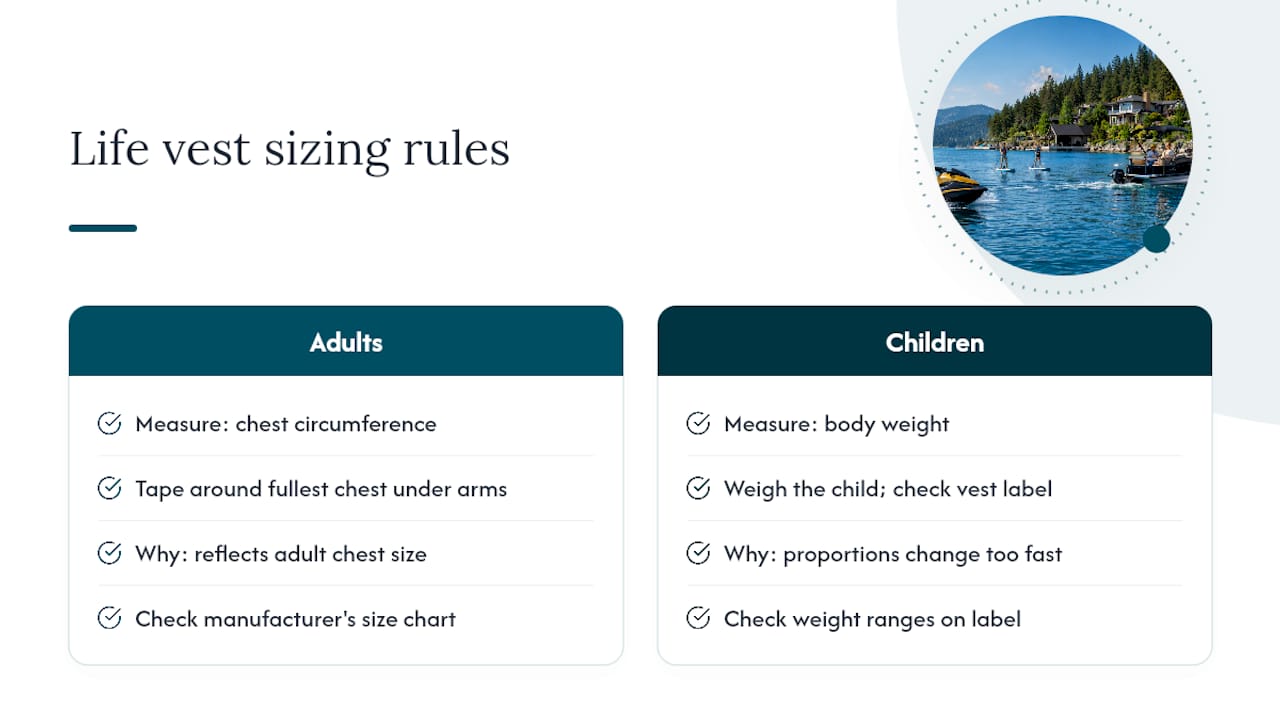
Kids are sized by weight because their chest and torso proportions change too fast for chest circumference to stay reliable season to season. Infant and toddler PFDs come with their own thresholds, and it's worth knowing standard vests can be genuinely ineffective below certain weight limits. Always check the label, and don't assume a "small" adult vest works as a substitute for a properly rated child vest.
Weight ranges vary by manufacturer, so treat this table as a starting point and confirm against the label sewn into the vest itself. USCG approval markings sit on that same label, and official guidance is clear that a jacket only counts as safe when it's approved, correctly sized, in good condition, and actually accessible on board.
How to Measure Yourself and Run a Proper Fit Test
Getting the size right starts before you ever put the vest on. Here's the sequence worth following every time, whether you're buying, borrowing, or renting.
- Measure your chest with a sewing tape at the fullest point, keeping the tape snug but not compressed.
- Weigh children rather than guessing from age or height. Weight is the number that matters for kid sizing.
- Check the label inside the vest for the size range and Coast Guard approval marking.
- Put the vest on and fasten every strap, zipper, and buckle exactly as you would on the water.
- Run the arms-up "touchdown" test. Raise both arms straight overhead and check whether the vest rides up around your ears or chin.
- Do the shoulder-pull test. Have a friend grab the vest at the shoulders and pull upward firmly.
- Test in shallow water if possible. Water pressure changes how a vest sits on your body compared to a dry-land check, so this step catches problems a land test can miss.
A properly fitted vest should feel comfortably snug, not restrictive, and shouldn't move more than about 3 inches during the shoulder-pull test. Anything more, and the vest is too big or the straps aren't tight enough.
Pro Tip: Run the shoulder-pull test with all the layers you'll actually wear on the water. A vest that fits perfectly over a swimsuit can fail the same test once you add a wetsuit or a jacket underneath.
If a vest fails either test, don't try to fix it by cranking every strap as tight as it goes. Move to a different size or a different cut instead.
Common Fit Problems and the Risks They Create
Most fit failures fall into a handful of repeatable patterns, and each one creates a specific danger once you're in open water.
- Too large: rides up over the chin or ears during a lift, leaving the airway exposed exactly when the wearer needs support most.
- Too small: restricts breathing, won't fasten fully, or leaves gaps that reduce effective buoyancy.
- Wrong type for the activity: an offshore-rated vest with bulky flotation panels can restrict paddling motion on a kayak.
- Gaps at the sides after tightening: a sign the vest is fundamentally the wrong size, not just loosely adjusted.
In rough water, a too-large vest can flip or twist as waves hit, turning what should be a stable float into a wrestling match with your own gear. If a wearer is knocked unconscious, either from a fall, a collision, or cold-water shock, a vest that isn't positioned correctly can't turn them face up on its own. That's the scenario safety data consistently points to: it's not just whether someone was wearing a vest, but whether that vest could actually do its job once they stopped being able to help themselves.
Tightening every strap to the max doesn't fix a vest that's the wrong size to begin with. If the chest measurement or weight range is off, no amount of cinching turns a poor fit into a safe one.
The fix in every one of these cases is the same: measure again, try a different cut or brand, and never borrow a jacket that doesn't fit just because it's the one that's available.
Choosing the Right Fit for Your Activity
What counts as a good fit changes depending on what you're doing on the water. A vest built for calm-lake paddleboarding prioritizes shoulder mobility, while one built for offshore boating prioritizes maximum buoyancy and the ability to turn an unconscious wearer face up.
- PWC and waterskiing call for a snug, streamlined vest that won't shift during high-speed impacts with the water.
- Paddleboarding and kayaking favor vests with more range of motion through the shoulders and arms.
- Offshore boating benefits from higher-buoyancy designs since rescue can take longer.
- Infants and children need vests with crotch straps and grab loops, which keep the jacket from sliding up and give a rescuer something solid to grab.
- Inflatable vests require regular checks of the cylinder and inflation mechanism, since a fit that seems fine on dry land depends entirely on the device inflating correctly when it counts.
Our types of life jackets guide breaks down which PFD categories match which water sports in more detail. Whatever the activity, try the vest on over the clothing layers you'll actually wear, since cold-water gear can change the fit significantly compared to trying it on over a t-shirt.
Pro Tip: If you're renting, ask the operator to verify fit in shallow water and demonstrate the shoulder-lift test before you head out. A good rental counter will do this without being asked.
Inspection, Care, and When to Replace a Life Jacket
A vest that fit perfectly last summer can become unsafe through wear alone, so a quick check before every outing matters as much as the initial sizing.
Before each use, check for torn fabric, cracked or brittle straps, buckles that don't click securely, and any sign of waterlogged foam, which loses buoyancy even when it looks intact. For inflatable vests, confirm the CO2 cylinder is charged and the indicator shows green, not red.
Store vests somewhere dry and out of direct sun, since UV exposure breaks down foam and fabric faster than water exposure does. Avoid folding vests tightly for long stretches, which can compress foam panels and reduce their effectiveness over time.
- Check the label for a legible Coast Guard approval mark.
- Squeeze foam panels gently to feel for waterlogging or soft spots.
- Inspect every strap and buckle under light tension.
- Confirm inflator cylinders and indicators on inflatable models.
- Replace immediately if any of the above fail.
- Faded or missing labels mean you can't confirm approval or size, which is reason enough to retire the vest.
- Damaged straps or buckles that don't lock fully are a replacement trigger, not a repair project.
If you're borrowing or renting, run through this same list yourself rather than assuming the gear has already been checked.
What Safety Experts Say About Comfort and Compliance
Fit and comfort aren't separate from safety; they're part of it. Marine safety observers consistently note that an uncomfortable life jacket is one people take off, and a jacket that's off does nothing. The most useful life jacket isn't the one with the highest buoyancy rating. It's the one someone actually keeps wearing.
Rental operators who stock a range of sizes and styles tend to see higher compliance among guests, simply because people are more willing to keep on a jacket that doesn't chafe or restrict movement. That observation lines up directly with the 87% statistic from the Coast Guard: non-use is the leading factor in drowning deaths, and comfort is one of the strongest levers for getting people to actually wear their gear.
A life jacket that's uncomfortable gets left on the seat, not on the body. Comfort isn't a bonus feature. It's what makes correct sizing pay off in the real world.
Rental businesses carry a specific responsibility here, too. Labels are the final authority on whether a jacket is legally serviceable and correctly sized, and operators shouldn't hand out gear that a guest can't properly fit into within its stated limits. Testing in shallow water before heading out remains the most reliable way to catch a fit problem a dry-land check would miss.
What we notice when renters get sizing right
Every summer, we watch families and first-time riders try on a dozen vests before finding one that actually sits right, and it's rarely the first jacket they grab off the rack. The pattern we see most often is people assuming their usual size works across every brand, when in reality one manufacturer's medium fits like another's small. Golden Water Sports builds fit checks into every rental pickup specifically because of that pattern. We'd rather spend an extra two minutes adjusting straps at the dock than send someone out in gear that only looks right.
Renting Gear? Here's How Golden Water Sports Checks Your Fit
Skip the guesswork on vest sizing entirely by letting us handle it at pickup. Every rental at Golden Water Sports includes a fit check: we measure, run the shoulder-lift test, and confirm the fit in shallow water whenever conditions allow, before you ever push off the dock.
This matters most for families renting pontoon boats with kids aboard and for first-time jet ski riders who've never had a PFD properly fitted before. If you're bringing children, ask us specifically about crotch-strap and grab-loop vests, and check our jet ski safety guide for PWC-specific fit notes. For a broader look at safety briefings the way marine operators run them, our partners at Mazza Marine's guest safety guide cover the same fit-first philosophy from a captain's perspective.
Ready to get on the water with gear that actually fits? Check pricing and book your rental, or head straight to our jet ski rental page and request a fit check when you arrive.