
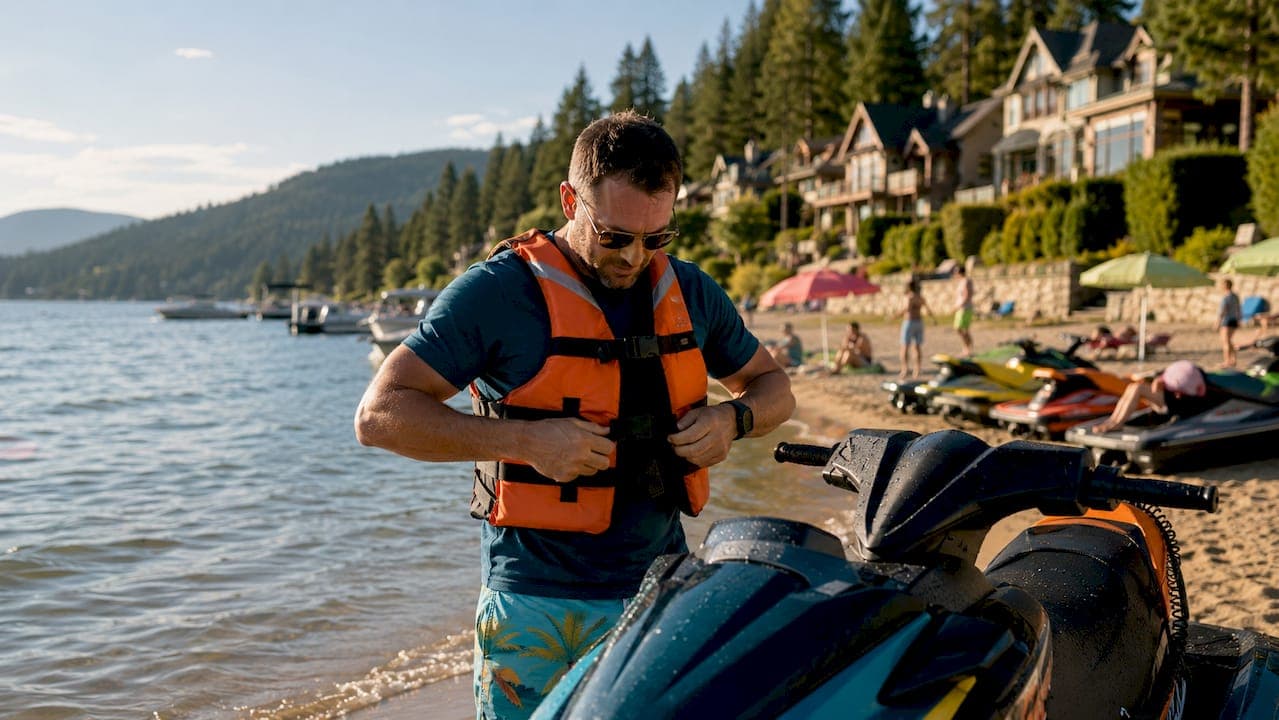
A life jacket is the single piece of jet ski safety gear that determines whether a rider survives an accident. Personal watercraft, known in the industry as PWCs, reach speeds over 60 mph with no protective hull, making ejection a real and sudden risk on every ride. The U.S. Coast Guard classifies life jackets as Personal Flotation Devices (PFDs) and mandates their use on PWCs across the United States. Understanding why wear a life jacket jet skiing matters goes beyond legal compliance. It is the difference between a close call and a fatality.
Why wear a life jacket jet skiing: the numbers that matter
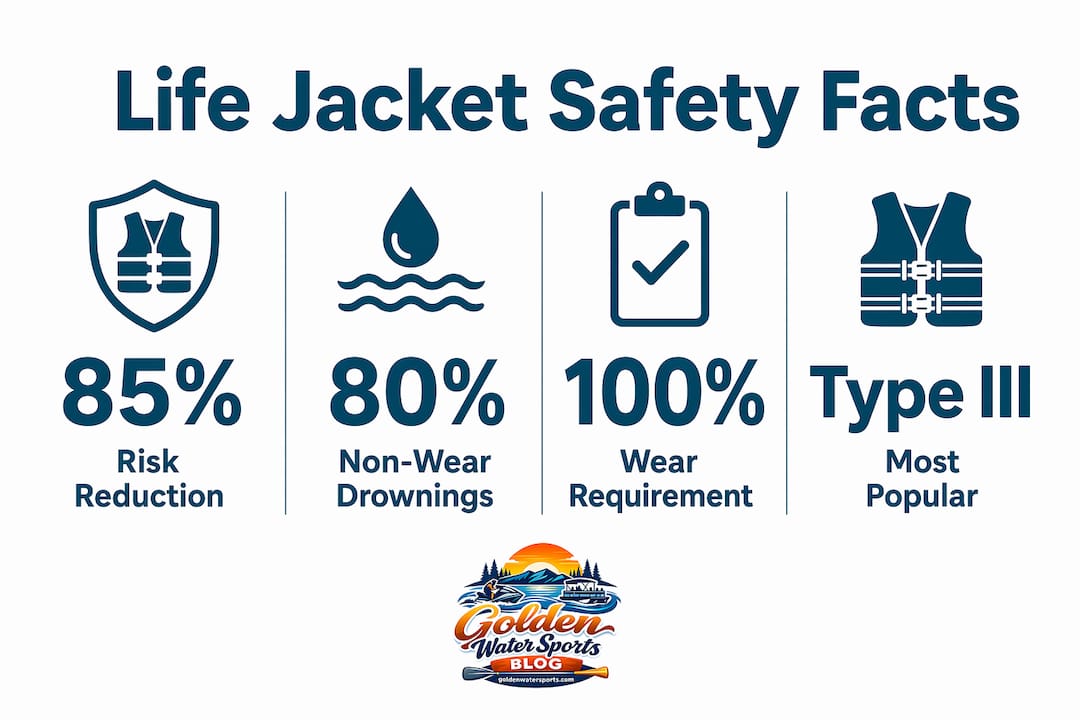
The statistics on PFD use are direct and sobering. Over 80% of drowning victims in watercraft accidents were not wearing life jackets, according to U.S. Coast Guard data. That single figure tells you more about jet ski safety gear than any other statistic.
Wearing a properly fitted life jacket reduces drowning risk by approximately 85% in watercraft incidents. That reduction is not marginal. It is the difference between a recoverable situation and a fatal one.
Legal requirements for PWC riders
U.S. Coast Guard regulations require every person on a PWC to wear a USCG-approved PFD at all times while underway. Life jacket regulations vary slightly by state, but federal law sets the floor. In Idaho and Washington, where Goldenwatersports operates near Liberty Lake and Lake Coeur d'Alene, riders of all ages must wear an approved PFD while operating or riding a jet ski.
Here is a quick overview of the core legal and safety standards:
| Requirement | Standard |
|---|---|
| PFD type for PWC | USCG-approved Type I, II, III, or V |
| Who must wear it | All riders and passengers on a PWC |
| Minimum buoyancy (adult) | 15.5 lbs |
| Federal authority | U.S. Coast Guard |
| Idaho/Washington enforcement | State boating law officers |
Non-compliance carries fines and, more critically, leaves riders unprotected in the water.
What types of life jackets work best for jet skiing?
Not all PFDs perform equally on a jet ski. Many riders assume all life jackets offer identical protection, but the type you choose directly affects your mobility, comfort, and survival odds.
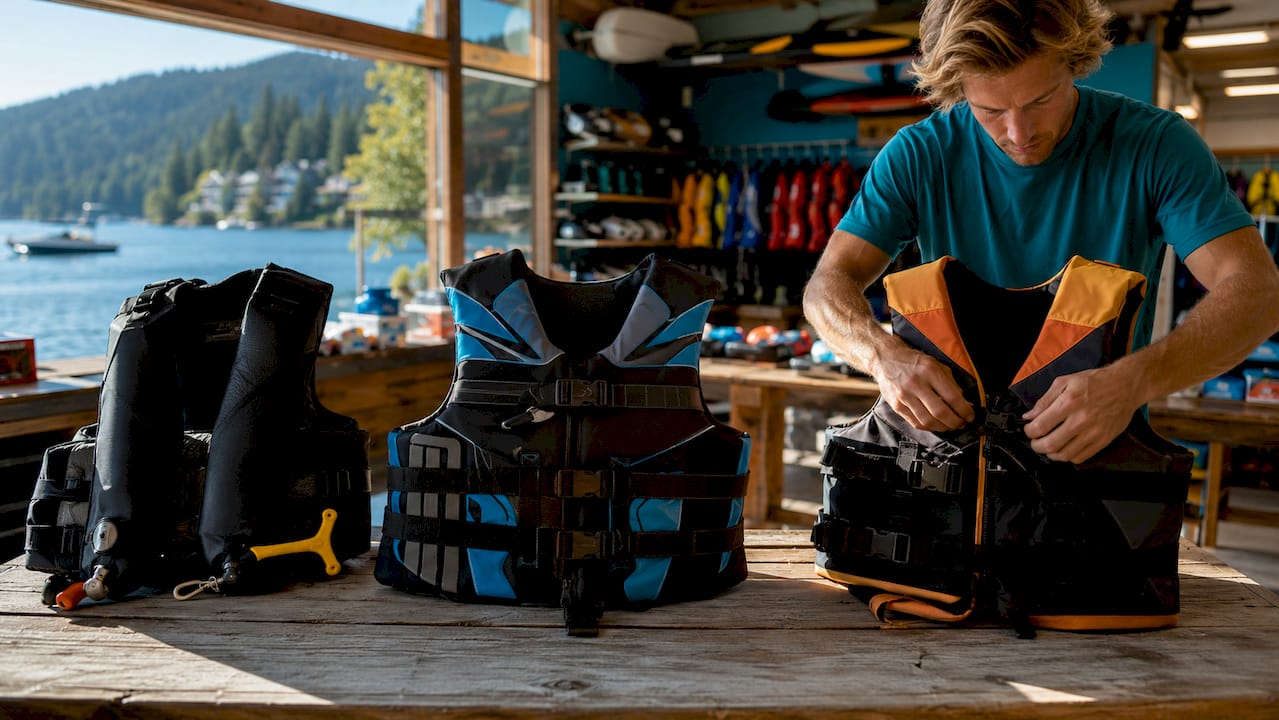
Type III is the most popular choice for jet skiing. It provides 15.5 to 22 pounds of buoyancy, balancing flotation with the freedom of movement you need to steer and react at speed. Type I and Type II offer more buoyancy but restrict arm movement significantly, which is a real problem on a fast-moving PWC.
Here is how the three main designs compare:
| Design | Buoyancy | Best for | Trade-off |
|---|---|---|---|
| Foam (Type III) | 15.5–22 lbs | PWC, water sports | Bulkier than inflatable |
| Inflatable (Type V) | 22.5+ lbs | Calm water, adults only | Must be manually activated |
| Hybrid | 7.5 lbs + inflation | Versatile use | Less reliable in sudden falls |
For jet skiing specifically, foam Type III jackets win on reliability. They work instantly on impact without any manual activation. Inflatable designs require the rider to pull a cord or enter the water to trigger inflation, which is a serious disadvantage during a high-speed ejection.
Pro Tip: Look for a Type III jacket labeled "impact rated" or designed for water sports. These feature reinforced panels that absorb shock during hard water entries, which is common when riding at speed.
How to fit a life jacket correctly for jet ski use
A life jacket that fits poorly offers almost no protection. The lift test is the definitive check for proper fit: have someone pull up on the shoulder straps. If the jacket rises to your chin or ears, it is too loose and will not keep your airway above water.
Follow these steps every time you put on a PFD:
- Fasten all buckles and zippers completely before entering the water.
- Adjust all straps so the jacket sits snug against your torso without restricting breathing.
- Perform the lift test with a partner before launching.
- Check that the jacket does not rotate freely around your body when you twist.
- Inspect the foam panels before each season. Foam that becomes brittle or waterlogged loses buoyancy and must be replaced, regardless of how the outer shell looks.
The most common mistake riders make is removing the vest after launching because it feels uncomfortable. A jacket that fits correctly should not feel restrictive. If yours does, the size or style is wrong. Invest in a proper fit before your next ride.
Pro Tip: Try on your life jacket while sitting in a jet ski riding position, not just standing upright. Some jackets that feel fine on land bunch up uncomfortably at the waist when seated, which causes riders to loosen straps and reduce effectiveness.
How does a life jacket protect you in a real emergency?
When a jet ski ejection happens, it happens fast. There is no time to grab a vest or think through a plan. The jacket you are already wearing does the work immediately.
Here is what a properly worn PFD does in an emergency:
- Keeps your airway above water even if you are disoriented or partially unconscious after impact.
- Reduces panic and energy loss. 80% of drowning incidents are caused by panic and exhaustion, not lack of swimming ability. Buoyancy from a life jacket lets you float without effort, conserving the energy you need to signal for help.
- Protects your torso during water impact. At 60 mph, hitting the water surface is comparable to hitting pavement. Foam panels absorb a portion of that impact force.
- Makes you visible to rescuers. Brightly colored PFDs help rescue teams and other boaters locate you quickly in open water.
- Buys time. Even in cold water, a life jacket keeps you afloat long enough for help to arrive.
One important limitation: Type III jackets do not guarantee that an unconscious wearer will float face-up. This is why proper operation and staying conscious matters. Pair your PFD with a jet ski safety lanyard so the engine cuts off if you fall, reducing the risk of the craft circling back and striking you.
For families riding together, the importance of life vests extends to every passenger. Check out kid-friendly water safety practices to understand how PFD requirements differ for children on PWCs.
Wearing a life jacket also creates a safety culture that influences the behavior of everyone in your group. When experienced riders wear their PFDs consistently, newer riders and children follow that example. That group effect matters on a busy lake.
Key takeaways
Wearing a USCG-approved Type III life jacket while jet skiing is the most effective action a rider can take to survive an accident on the water.
| Point | Details |
|---|---|
| PFD use saves lives | Over 80% of watercraft drowning victims were not wearing a life jacket. |
| Type III is the best choice | It provides 15.5–22 lbs of buoyancy with enough mobility for PWC riding. |
| Fit determines effectiveness | Use the lift test to confirm your jacket will hold your airway above water. |
| Inspect foam regularly | Brittle or waterlogged foam loses buoyancy and requires immediate replacement. |
| Life jackets reduce panic | Buoyancy conserves energy during emergencies, cutting the risk of exhaustion-driven drowning. |
The habit that actually keeps you safe on the water
I have watched a lot of riders clip their life jacket to the handlebars instead of wearing it. The logic is usually "I'm a strong swimmer" or "I'll put it on if things get rough." Neither holds up when you are unconscious in the water after a 50 mph ejection.
The riders I trust on the water are the ones who treat their PFD the same way they treat a seatbelt. It goes on before the engine starts, every single time. No exceptions for short rides, calm days, or familiar lakes. Accidents do not schedule themselves around your comfort level.
The other thing I have seen consistently: riders who invest in a well-fitted, sport-specific Type III jacket actually enjoy wearing it. A quality vest from a brand like Onyx or Mustang Survival fits close to the body, does not restrict paddling or steering, and barely registers after the first few minutes on the water. The discomfort people associate with life jackets usually comes from wearing an oversized, outdated foam block from a rental bin.
Good jet ski etiquette starts with wearing your PFD. It signals to everyone on the water that you take the sport seriously. That matters more than speed or skill.
— Life is better on water.
Ride safe with Goldenwatersports
Every jet ski rental from Goldenwatersports includes a USCG-approved life jacket, fitted by our staff before you launch. You do not need to source your own gear or guess about compliance. Our team at Liberty Lake and Lake Coeur d'Alene walks every rider through the basics, from fit checks to safety lanyards, so you hit the water with confidence.
Whether you are a first-time rider or a returning enthusiast, Goldenwatersports makes it easy to ride responsibly. Book your Coeur d'Alene jet ski rental today and experience what safe, well-equipped water sports actually feel like. Learn more about what to expect when you arrive at our rental check-in process so your day on the water starts without a hitch.
FAQ
Is it legally required to wear a life jacket on a jet ski?
Yes. U.S. Coast Guard regulations require all PWC riders and passengers to wear a USCG-approved PFD at all times while underway. State laws in Idaho and Washington enforce the same standard.
What type of life jacket is best for jet skiing?
Type III foam PFDs are the best choice for jet skiing. They provide 15.5–22 lbs of buoyancy and allow the arm mobility needed to operate a PWC safely at speed.
How do I know if my life jacket fits correctly?
Use the lift test: have someone pull up on the shoulder straps. If the jacket rises to your chin or ears, it is too loose and will not keep your airway above water during an emergency.
Can a life jacket protect you if you are knocked unconscious?
A life jacket will keep you afloat, but Type III jackets do not guarantee face-up flotation for unconscious wearers. Always use a safety lanyard alongside your PFD to cut engine power if you fall.
How often should I replace my life jacket?
Replace a foam PFD immediately if the foam feels brittle, compressed, or waterlogged, regardless of how the outer shell looks. Degraded foam cannot provide the buoyancy rating printed on the label.