
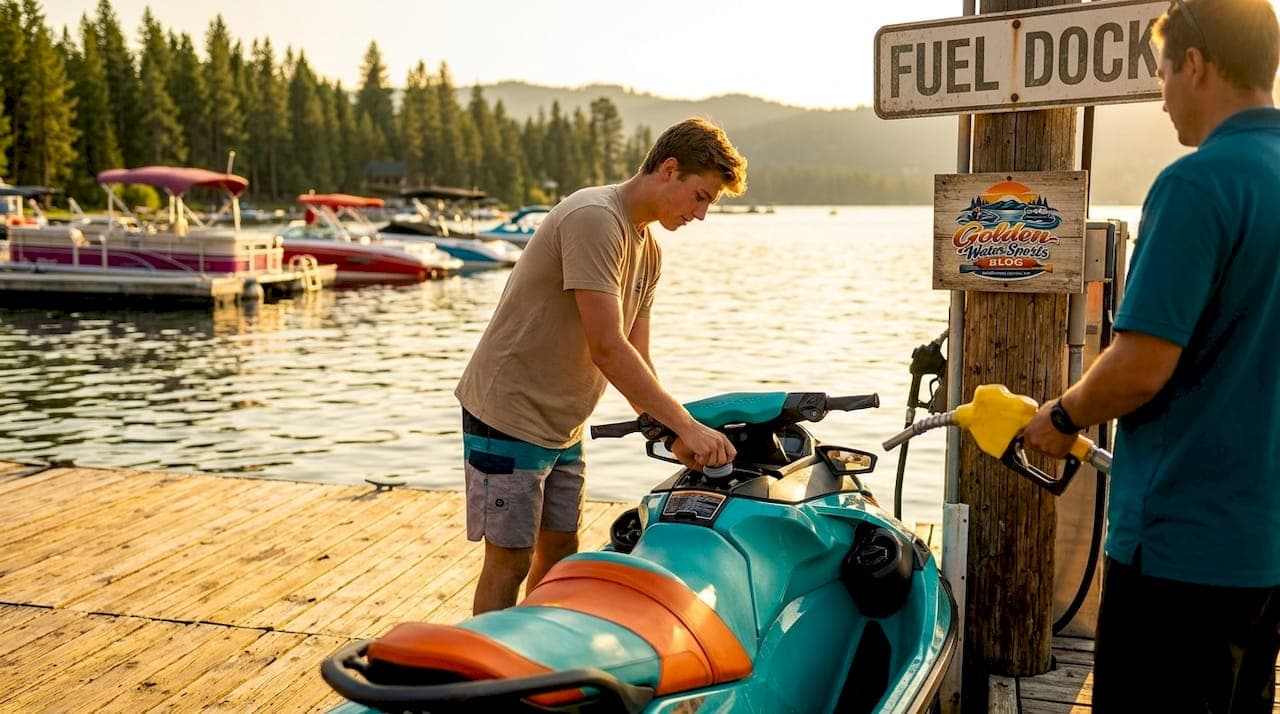
Running low on fuel halfway between Liberty Lake and Coeur d’Alene is not the kind of adventure anyone plans for. If you’re looking to refuel a rented jet ski between lakes, the logistics matter more than most renters realize before they hit the water. Personal watercraft, commonly called PWCs (personal watercraft), burn fuel faster than you might expect, and not every marina you spot from the water has a fuel dock. This guide covers everything you need to know before you launch: tank capacity, finding jet ski fuel stations, how to safely refuel, and how to plan a route that keeps your tank full and your ride stress-free.
Table of Contents
Key Takeaways
| Point | Details |
|---|---|
| Know your fuel range | A typical jet ski holds about 7.9 gallons, giving you roughly 3 to 4 hours of riding before a refuel is needed. |
| Find fuel docks in advance | Marinas with verified 91 octane non-ethanol fuel are your safest refueling options between lakes. |
| Follow the full-to-full policy | Most rental companies require you to return with a full tank, so plan dock stops into your route from the start. |
| Refuel safely and methodically | Turn off the engine, secure the craft, and avoid overfilling to prevent spills and engine damage. |
| Protect the engine post-refuel | Avoid ethanol blends above E10 and rinse the engine after each session to preserve performance. |
How to refuel a rented jet ski between lakes
Getting stranded on open water because you underestimated fuel consumption is a real scenario, and it happens more often than rental companies like to admit. Jet ski fuel consumption typically runs 2 to 2.4 gallons per hour, with a standard tank holding around 7.9 gallons. Do the math: you have roughly 3 to 4 hours of riding on a full tank before you need to stop.
The critical word there is “cruising.” That math assumes a relaxed, moderate pace. Aggressive riding, frequent acceleration bursts, and wide-open throttle can spike fuel consumption dramatically, cutting your actual ride time down to under two hours. Most renters don’t account for this, especially on their first multi-lake trip.
How riding style changes your fuel math
Cruising at about half throttle is the most fuel-efficient way to ride a jet ski. The moment you start racing between coves, launching off wakes, or pulling riders on tubes, your consumption climbs fast. Here’s a practical breakdown of how riding behavior affects your range:
-
Casual cruising at moderate speed: approximately 3.5 to 4 hours per tank
-
Mixed riding with occasional bursts: approximately 2.5 to 3 hours per tank
-
Aggressive riding at full throttle: potentially under 2 hours per tank
If your lake-to-lake route covers two or more bodies of water with connecting channels or portage points, plan for a refuel stop even if you think the math works in your favor. It almost always pays to stop early rather than nurse a low tank through open water.
Pro Tip: Set a mental fuel checkpoint at the halfway mark of your planned ride. If you’re below half a tank by then, find the nearest marina fuel dock before continuing.
Finding refueling stops between lakes
Marinas with fuel docks are the primary refueling option for PWCs on connected waterways. Not every marina has one, and not every fuel dock is PWC-friendly. Some are built for deep-draft boats with high dock heights that make it awkward to tie up a jet ski safely. Always verify before you make it your plan.

When searching for jet ski fuel stations along your route, the single most important thing to check is fuel type. Marinas with 91 octane non-ethanol fuel are the best choice for jet skis, as this grade minimizes the risk of engine damage on extended multi-lake rides. Ethanol-blended fuels above E10 can degrade rubber components and fuel lines in PWC engines, creating problems that show up after your ride rather than during it.
Here’s a comparison of what to look for when evaluating marina fuel stops:
| Feature | What to look for | Why it matters |
|---|---|---|
| Fuel type | 91 octane, non-ethanol or E10 maximum | Prevents engine damage and fuel system corrosion |
| Dock height | Low dock or PWC-specific tie-up area | Safe maneuvering without damaging the hull |
| Operating hours | Open during your planned window | Avoids arriving at a closed fuel dock |
| Queue wait time | Weekday vs. weekend traffic | Busy Saturdays can add 20 to 30 minutes to your stop |
| Payment methods | Card or app accepted | Saves time, especially at unstaffed docks |
Pro Tip: Call the marina directly before your trip, not just the morning of. Fuel docks can be closed for maintenance, low water levels, or seasonal shutdowns with little notice online.
Most rental companies operate on a full-to-full fuel policy, meaning you receive the jet ski with a full tank and must return it full. That single policy has a big operational implication: your last fuel stop needs to be close enough to your return point that you don’t burn through what you just added getting back to the dock. Build your route with that return refuel in mind from the beginning, not as an afterthought.
Step-by-step guide to refueling safely
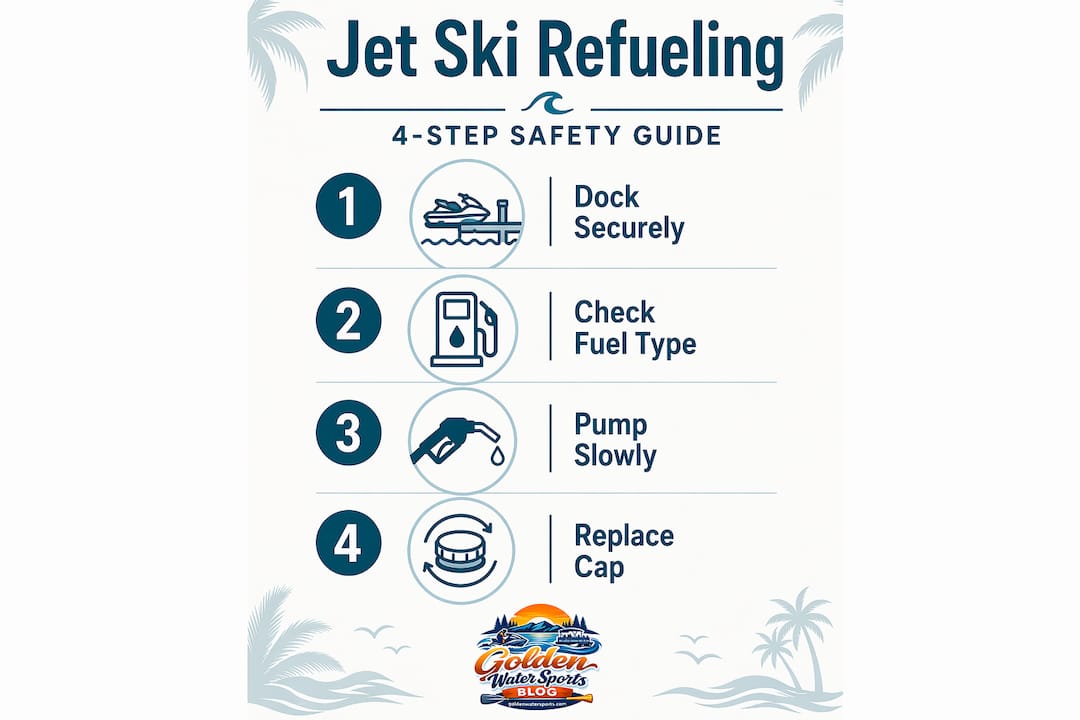
Refueling a PWC at a marina dock is straightforward, but a few details can make the difference between a smooth stop and a preventable accident. Follow these steps every time:
-
Approach the fuel dock slowly. Cut your speed well in advance and approach at idle. Make eye contact with dock staff if present, and follow their direction.
-
Turn off the engine completely. Never fuel a running PWC. This is both a safety rule and a policy enforced at most marina fuel docks.
-
Tie up the craft securely. Use the dock cleats to keep the jet ski from drifting while you fuel. Even gentle wake can cause movement that leads to spills.
-
Open the fuel cap carefully. Pressure can build in the tank, especially on a warm day. Open slowly and let any pressure release before inserting the nozzle.
-
Fill slowly and stop before the tank is completely full. Fuel expands in heat. Overfilling leads to spills on the water, which is both an environmental violation and a safety hazard.
-
Wipe the fill area dry. Any fuel residue around the cap should be wiped before you close it and reboard.
-
Start the engine and idle away from the dock. Do not accelerate hard until you have fully cleared the fuel dock area.
Pro Tip: Keep a small absorbent pad in your rental’s storage compartment for cleanup. Some rental companies provide them, but having your own keeps a potential mess from becoming a bigger issue.
Never refuel with passengers still seated on the jet ski. Ask everyone to step off onto the dock while you fuel up. It reduces the risk of spills, improves stability, and keeps everyone clear of any fuel vapor.
Common mistakes to avoid include using whatever fuel grade is available without checking the ethanol content first, and forgetting to check that the fuel cap is fully secured before riding away. A loose cap at speed can mean losing fuel fast and introducing water into the tank.
Planning your lake-to-lake route with fuel stops in mind
Smart route planning is what separates a smooth multi-lake day from a stressful one. The best places to jet ski across connected lakes are often well-documented by local rental companies and marina networks. Here’s how to build a route that accounts for fuel:
-
Map your fuel docks before you launch. Use Google Maps or a boating app like Navionics to identify marinas with fuel docks along your intended route. Mark them as waypoints.
-
Confirm operating hours. A fuel dock that closes at 5 PM is useless if you plan to be on the water until 7 PM. Call or check the marina website the day before your trip.
-
Account for dock time. Pulling in, waiting, fueling, and departing can take 20 to 30 minutes on a busy weekend. That time comes out of your rental window.
-
Know your rental company’s fuel policy in detail. Understand whether you pay at the pump directly, whether the company has preferred fuel stops, and what happens if you return with less than a full tank.
-
Check for local restrictions. Some lakes have regulations affecting where rentals can operate and how they can refuel, so verify the rules for each body of water on your route.
Reading through the rental check-in process before your trip can also save you confusion on the water. Many rental companies include fuel guidance and preferred dock recommendations as part of their briefing.
For a multi-lake rental covering several connected bodies of water, the most reliable approach is to refuel at the start of the day, at the midpoint of your route, and again before returning. That pattern eliminates the risk of running short regardless of how aggressively you ride.
Protecting your engine after between-lake refuels
Fuel quality matters throughout a ride, but what you do right after refueling also affects how well your jet ski performs for the rest of the day. These habits protect the engine on longer trips:
-
Avoid gasoline blends above E10. Ethanol content above 10% can damage fuel lines, seals, and the carburetor or fuel injectors in PWC engines. Always check the pump label before fueling.
-
Use a marine fuel stabilizer if the rental will sit overnight. If you are renting across multiple days and the craft will be stored with fuel in the tank, fuel stabilizer application prevents fuel degradation and varnish buildup.
-
Rinse the engine compartment after each session. Most PWCs have a flushing port. Running fresh water through the system removes any contaminants introduced during lake-to-lake travel.
-
Listen for any change in engine tone after refueling. A rough idle or hesitation after a fuel stop can signal that the fuel quality or mixture was off. Report it to your rental company immediately rather than riding through it.
Selecting marinas by verified fuel quality is not overthinking it. It is the single most practical thing you can do to protect the engine and your rental deposit on a long day on the water.
My take on what most renters get wrong
I’ve watched a lot of renters approach a multi-lake day the same way: full of enthusiasm and almost no fuel planning. The most common mistake is not underestimating the tank capacity. It’s underestimating how fast the tank drains when you’re having fun.
When you’re pulling someone on a tow toy, racing a friend, or just can’t resist full throttle on a clear stretch of water, you’re burning through fuel at a rate that makes the “4-hour tank” figure completely irrelevant. I’ve seen riders run low less than 90 minutes into a ride because they didn’t adjust their plan for how they were actually riding.
The other thing I’ve noticed is that people almost never check the ethanol content at the pump. They pull into a marina, grab the nozzle, and fill up without reading the label. In my experience, this is where most of the post-trip engine complaints originate. Not dramatic failures, but rough starts, hesitation, and that slightly-off-idle roughness that tells you the fuel system wasn’t happy with what it received.
My honest advice: treat fuel stops like you treat your return time. Build them in early, confirm them the day before, and don’t assume a marina you can see from the water has a working fuel dock. That assumption has ended more than a few rides prematurely. Proactive planning takes ten minutes and buys you a completely worry-free day on the water.
— Lex
Ride more, worry less with Goldenwatersports
Planning a jet ski adventure across Coeur d’Alene, Liberty Lake, or the surrounding waterways? Goldenwatersports has you covered from launch to return. Our team walks every renter through fuel policies, preferred dock locations, and route planning before you ever touch the water, so you leave knowing exactly where your next refuel stop is.
With reliable Yamaha WaveRunner rentals, flexible rental windows, and friendly staff who know these lakes well, Goldenwatersports makes multi-lake days genuinely easy. Whether you are wondering about fuel responsibilities or want to know the best places to jet ski in the region, we give you the answers before questions become problems on the water. Book your rental today and start your adventure with a full tank and a solid plan.
FAQ
How much fuel does a rented jet ski use per hour?
Most jet skis consume 2 to 2.4 gallons per hour at moderate speed, with a standard 7.9-gallon tank providing roughly 3 to 4 hours of riding. Aggressive riding reduces that estimate significantly.
Where can I find fuel docks for jet skis between lakes?
Marinas along connecting waterways are the primary option. Use boating apps like Navionics or call marinas directly to confirm they have PWC-accessible fuel docks and carry non-ethanol or E10-maximum fuel.
What fuel type should I use when refueling a rented jet ski?
Use 91 octane non-ethanol gasoline whenever available. Ethanol blends above E10 can damage rubber components in PWC fuel systems and should be avoided.
Do I have to return a rental jet ski with a full tank?
Most rental companies follow a full-to-full fuel policy, meaning you receive a full tank and must return it full. Plan your last fuel stop close enough to the return dock that you don’t burn through it on the way back.
How long does a fuel stop take at a marina dock?
On a weekday, a straightforward refuel can take 10 to 15 minutes. On busy summer weekends, plan for 20 to 30 minutes to account for dock queues and maneuvering time.
Recommended
-
Coeur d’Alene Boat and Jet Ski Rentals and surrounding lakes
-
Looking for jet ski, pontoon boat, or paddleboard rentals? Visit Golden Water Sports for your next Lake Coeur d'Alene adventure.