
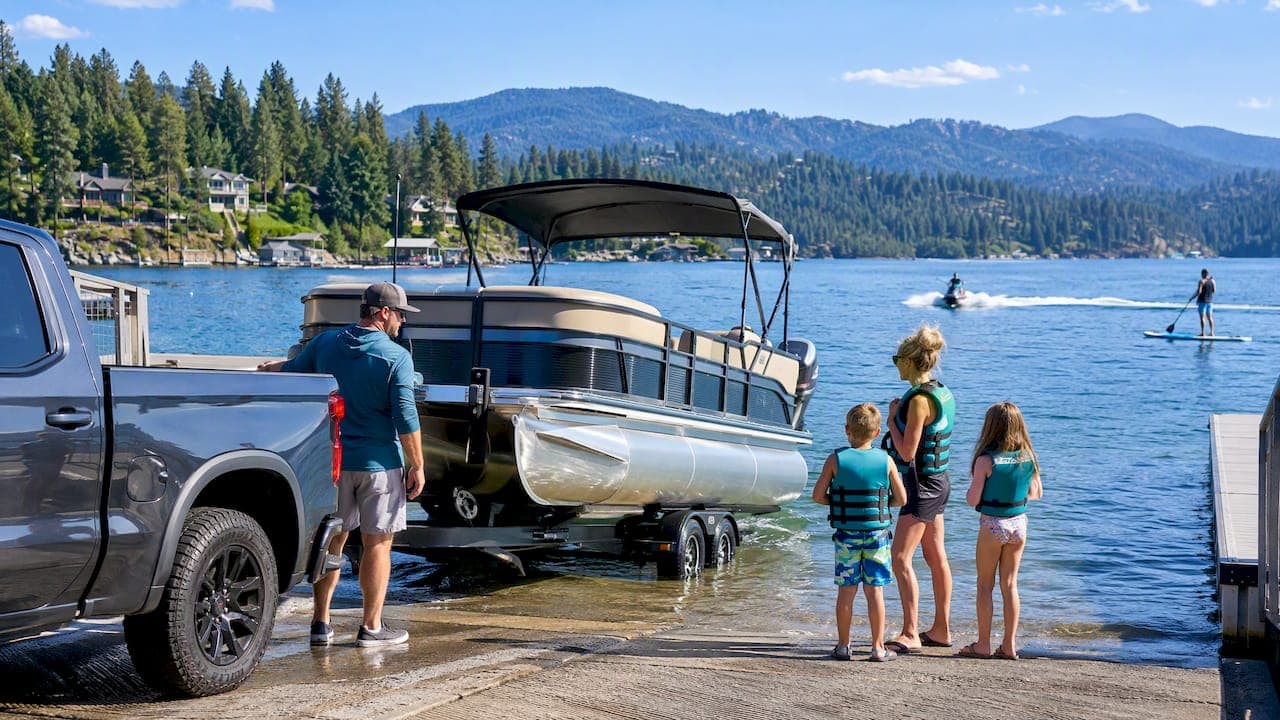
Spokane's best public launches cluster around three areas: the Spokane River corridor, Lake Spokane inside Riverside State Park, and nearby lowland lakes managed by Washington Department of Fish and Wildlife. This guide groups every major launch by waterbody, flags which ones take motors and which stay paddle only, breaks down the pass and fee system, and covers seasonal timing and safety so you can plan a trip that actually works.
TL;DR:
- Most public launches on the Spokane River favor non-motorized boats and often have informal parking, with some sites requiring a pass or permit.
- Lake Spokane and Riverside State Park offer well-developed, paved ramps for motorized boats, but water levels can restrict trailer access during late summer drawdowns.
- Launch fees are generally $7 per day at State Parks, with parking requiring a Discover Pass or a combined Natural Investment Permit for unlimited access.
- Water levels and seasonal closures vary; always verify current conditions and season dates before launching, especially on reservoirs like Lake Spokane and Lake Roosevelt.
- Rental options are available with boat, jet ski, and paddleboard fleets, often at sites with easy trailer access like Nine Mile Recreation Area and Lake Spokane Campground.
Table of Contents
- 1. Public launches grouped by waterbody
- 2. Permits, passes, and fees you'll need
- 3. When launches are open and how water levels change things
- 4. How to launch safely on Spokane waterways
- 5. How rental operators plan around these launches
- 6. Our quick picks for families, anglers, and paddlers
- 7. Renting instead of hauling your own boat
- FAQ
- Sources
1. Public launches grouped by waterbody
Spokane's river and lake access points fall under a few different managers, and that affects what you'll find at each ramp. Here's how the main launch areas break down.
Spokane River. The river runs through several put-ins popular with paddlers and drift boat anglers, including Plese Flats, TJ Meenach, and the Mirabeau and Plante's Ferry access areas. Most of these favor non-motorized craft and smaller boats, with gravel or informal parking rather than large paved lots.
Lake Spokane and Riverside State Park. This reservoir, also called Long Lake, holds the region's most complete motorized launch network. Riverside State Park lists developed sites at Lake Spokane Campground, Nine Mile Recreation Area, and the HWY 291 ramp, each with paved ramps built for trailers.
- Fort Spokane Boat Launch, on Lake Roosevelt and managed by the National Park Service, offers a paved ramp, docks, a vault toilet, and large trailer parking, with minimum lake elevation guidance posted for low-water periods.
- Nine Mile Recreation Area supports motorized boats with a paved ramp, dock, and sizable trailer lot, making it one of the easier spots for groups hauling a boat.
- Lake Spokane Campground launch pairs a motorized ramp with nearby camping and restroom facilities, useful for a weekend trip rather than a quick afternoon out.
- HWY 291 ramp also takes motorized craft but can run on a different schedule than the park's other sites, so it's worth a status check before you load the trailer.
- St. George's and Painted Rocks are non-motorized put-ins within Riverside State Park, better suited to kayaks, canoes, and paddleboards than anything with an engine.
Little Spokane River. This slower, narrower waterway runs through Riverside State Park and stays almost entirely non-motorized, with simple put-ins built for canoes and kayaks rather than trailered boats.
Nearby WDFW lakes. A handful of smaller lowland lakes round out the options for a quieter day.
- Fish Lake (Spokane County) prohibits internal combustion engines, opening the fourth Saturday in April through the end of September, and works well for electric trolling motors, canoes, and paddleboards.
- Clear Lake (Spokane County) is a WDFW-managed access point with its own parking and access rules separate from State Parks.
- Silver Lake offers similar WDFW-managed public access, worth checking directly for current ramp conditions and parking capacity.
Before heading to any lesser-known site, confirm the ramp still has usable trailer turnaround room. Smaller lake access points can be narrow, and a packed lot on a summer weekend will send you looking for a backup.
2. Permits, passes, and fees you'll need

Washington splits its launch fees and parking passes by agency, and mixing them up is the fastest way to end up with a ticket on your windshield. At Washington State Parks sites, you'll pay a $7 daily watercraft launch fee, and parking separately requires a Discover Pass, either a one-day pass for $10 or an annual pass for $45.
One figure worth remembering: the Natural Investment Permit costs $120 per year and covers both boat launch fees and day-use parking across Washington State Parks, which pencils out if you launch more than a handful of times a season.
- State Parks sites take the Discover Pass or Natural Investment Permit; WDFW-managed lakes like Fish Lake and Clear Lake run on their own access rules and don't accept the Natural Investment Permit.
- Fort Spokane, as an NPS site on Lake Roosevelt, follows National Park Service fee rules rather than Washington State Parks passes.
- Pass coverage differs by managing agency, so check the sign at the ramp or the agency's own page before you assume your pass applies.
Passes are sold online, at park offices, and at many retail counters statewide. Several Riverside State Park sites also have on-site pay stations and trailer dump facilities, so bring a card or exact change as backup.
3. When launches are open and how water levels change things
Most Riverside State Park launches run seasonally from April 1 through October 31, though the HWY 291 ramp and a few other sites can follow their own schedule, so don't assume every ramp in the park opens and closes on the same date.
Water levels matter as much as the calendar. Lake Spokane is a reservoir, and late-summer drawdowns can leave some ramps too shallow for trailers by August or September. Fort Spokane on Lake Roosevelt posts its own minimum elevation guidance for the same reason.
- Check the park's own page for the exact season dates and any posted closures before you drive out.
- Watch USGS gauge data for river flows and reservoir levels, especially if you're planning a trip for late summer.
- Keep a backup ramp in mind. If your first choice is too low or too crowded, a second site saves the day rather than ending it early.
4. How to launch safely on Spokane waterways
The Spokane River carries real hazards, particularly through its faster, narrower sections during spring runoff, when flows spike and features that look manageable in July turn dangerous in May. If you're new to moving water, stick to flatwater lakes until you've built up experience, or go with someone who knows the specific stretch.
- Confirm whether you need a Washington State Boater Education Card for your craft before you launch.
- Pack a life jacket for every person on board, matched to the craft type and each rider's size.
- Tell someone your float plan, including where you're launching and when you expect to be back.
- Inspect your boat and trailer for aquatic hitchhikers before and after launching to avoid spreading invasive species.
- Dress for the water temperature, not the air temperature. Spokane's lakes and rivers stay cold well into early summer.
Pro Tip: Back your trailer down slowly and check your tie-downs twice. Rushed launches at busy ramps cause most of the fender-benders you'll see on a summer Saturday.
5. How rental operators plan around these launches
Working with renters every week shows which ramps hold up under real traffic. Nine Mile Recreation Area and Lake Spokane Campground tend to be the most workable for trailered rentals, thanks to paved ramps and lots big enough for multiple vehicles turning around at once. We send pickup and delivery customers toward sites with that kind of room, along with towing pointers and a briefing on safety gear before anyone touches the water. For more on handling specific craft and keeping the water clean for everyone, our eco-friendly boating guide and paddleboard launch guide cover the details.

6. Our quick picks for families, anglers, and paddlers
For a family outing, Nine Mile Recreation Area or the Lake Spokane Campground launch are hard to beat: easy parking, solid ramps, and restrooms nearby. Anglers chasing a slower pace should look at Fish Lake, where the ban on gas engines keeps things quiet. Whatever you choose, check your pass and the current water level before you leave the house. It's the one habit that saves every trip.
— Life is better on water.
7. Renting instead of hauling your own boat
If you'd rather skip trailer logistics altogether, we handle the equipment side so you can focus on the lake. Our fleet covers jet skis, boats, pontoons, paddleboards, and water toys, with safety gear included and pickup or delivery available on select lakes.
- Jet Ski Rental Liberty Lake runs $250 to $425 depending on duration, with additional hours at $75 each.
- Jet Ski Rental Newman Lake is also priced from $250 to $425, booked through our Newman Lake page.
- Wakeboards and tubes may be available for an additional fee.
- Boat, paddleboard, and water toy rentals are available, with pricing available on the website.
Before you reserve, let us know which launch you're planning to use so we can confirm it fits your rental and point you toward the easiest ramp for your group. Start with our full rental lineup or check Coeur d'Alene options if you're staying on that side of the border. Anyone planning a longer trip beyond a single day can also look at charter options through Virgin Charter Yachts for extended time on the water.
FAQ
How deep is the Spokane River?
Depth varies widely by section and season, running shallow over rocky stretches in late summer and much higher and faster during spring runoff. Check USGS gauge data for current conditions before launching, especially on unfamiliar stretches.
What is the boat launch fee at Fort Spokane?
Fort Spokane follows National Park Service fee rules rather than the Washington State Parks system used at Riverside State Park. The NPS page for Fort Spokane lists current amenities and elevation guidance, so check it directly for fee details tied to lake levels.
Are you allowed to launch a kayak anywhere?
No. Kayaks need a designated public put-in, and not every access point allows non-motorized launches, particularly on private or restricted shoreline. Stick to marked sites like St. George's and Painted Rocks in Riverside State Park, or non-motorized lakes like Fish Lake.
Is there a boat launch on Cle Elum Lake?
Cle Elum Lake sits outside the Spokane area covered in this guide, so we don't have launch details for it here. For Spokane-area options, the waterbodies and sites listed above, including Lake Spokane and nearby WDFW lakes, are the best starting point.
Do I need a Discover Pass if I already bought a launch permit?
It depends on which permit you hold. A Natural Investment Permit covers both the launch fee and parking at Washington State Parks, while the $7 daily launch fee alone does not include parking, which still requires a separate Discover Pass.
Sources
- Natural Investment Permit | Washington State Parks
- Riverside State Park | Washington State Parks
- Fort Spokane Boat Launch
- Fish Lake (Spokane County) | Washington Department of Fish & Wildlife
- USGS monitoring location (example Spokane-area gauge)