
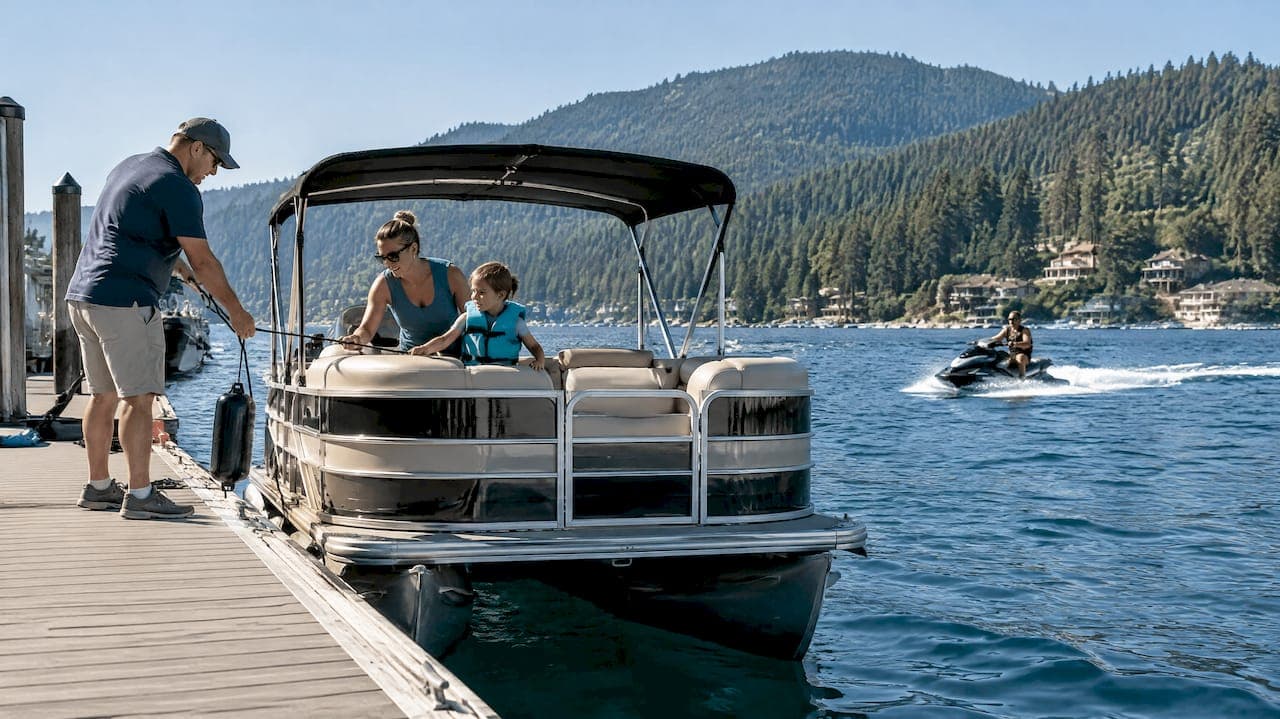
The best Coeur d'Alene anchor spots split into three clear categories: Mica Bay for a family beach day with real facilities, Windy Bay for a quiet boat-only overnight, and the Third Street and First Street mooring docks for easy downtown access. Beauty Bay and Mineral Ridge round out the east-side options for scenery and launching. Pick your spot by matching the day's wind to a sheltered lee shore, and check posted fees before you tie up.
TL;DR:
- Mica Bay charges $20 nightly for 16 tent sites, with drinking water, toilets, and a beach; access is by boat, with no public vehicle access.
- Windy Bay has 14 tent sites and seven mooring docks at $20 nightly, but access is by boat and services are limited, so bring supplies.
- Choose a shoreline that blocks the forecast wind, and leave enough rode and swing room for nearby boats, docks, shallow points, and wind changes.
- Downtown moorings are paid tie ups, not open water anchoring; First Street allows hourly or daily stays, but neither downtown dock permits overnight moorage.
Table of Contents
- 1. Top Anchor Spots on Lake Coeur d'Alene
- 2. How Do You Pick a Sheltered Anchorage for the Day?
- 3. Amenities, Fees and Access Notes to Plan Around
- 4. Safety, Local Rules and a Short Note on Water Quality
- 5. What Renters Should Know Before Anchoring for the Day
- 6. Why the Right Anchor Spot Changes the Whole Day
- How Golden Water Sports Gets You on the Lake Faster
- FAQ
- Sources
1. Top Anchor Spots on Lake Coeur d'Alene
Lake Coeur d'Alene stretches about 25 miles, and the shoreline holds a mix of boat-in parks, picnic coves, and city-managed moorings. Each spot below serves a different kind of day, so match the location to what your group actually wants to do.
- Mica Bay: the easiest family stop on the lake. Mica Bay is a developed boat-in campground roughly seven miles south of downtown Coeur d'Alene by boat, with 16 tent units, two mooring docks, a swimming beach, picnic shelters, vault toilets, drinking water, and playground equipment, all managed by the Bureau of Land Management. Sites run first-come, first-served at $20 per night, and there's no public vehicle access, so boat-only arrival keeps the crowd manageable even on busy weekends.
- Windy Bay: the quiet alternative for an overnight stay. About 16 miles south of downtown, Windy Bay is also boat-only, with 14 tent units, seven mooring docks, and two floating vault restrooms. Fees run $20 per campsite or mooring dock per night, or $20 per boat per night for boat camping. Services are thinner here than at Mica Bay, which is exactly why it draws boaters looking for fewer neighbors.
- Beauty Bay: a scenic rest stop, not a campsite. This small seven-unit picnic area includes an 800-foot paved path to a viewing deck and is accessed from the Highway 97 Wolf Lodge exit. There's no overnight camping and no posted fee, which makes it a good midday pause for lunch or a swim before moving on.
- Mineral Ridge: your launch base for the east side. Mineral Ridge is located east of Coeur d'Alene via Wolf Lodge Bay and offers a concrete ramp, docks, and parking. Treat it as a launch-and-explore point rather than a guaranteed anchorage of its own, since it's primarily infrastructure for reaching nearby coves.
- Rockford Bay: a working cove with a mix of private docks and open water, popular with anglers working the shallows near shore. It sits south of Mica Bay and offers decent shelter from west winds, though boat traffic picks up on summer afternoons.
- Carlin Bay: a wide, sandy-bottomed bay known for swimming and shallow anchoring close to shore. It's less developed than Mica Bay, with no formal camping infrastructure, so it works best as a day stop rather than an overnight.
- Wolf Lodge Bay: the gateway to the lake's east arm, known among anglers for early-season fishing and as the access route to Mineral Ridge. Open water here can get choppy when the wind funnels down the bay, so it's better suited to daytime stops than overnight mooring.
- Harrison: a small town at the south end of the lake with public docks, restaurants, and fuel, making it a practical stop for a longer cruise down the lake rather than a wilderness anchorage. It's the furthest option from downtown Coeur d'Alene on this list, roughly 20-plus miles by water.
- Tubbs Hill: a forested peninsula right next to downtown, with small coves along its shoreline that offer a quick anchor-and-swim break without leaving the city. It sits directly beside the Third Street mooring docks, so it pairs naturally with a downtown stop.
- Third Street and First Street mooring docks: the practical choice for downtown access. Third Street mooring sits at the foot of Tubbs Hill and requires posted payment through a QR code system. First Street mooring, west of the resort, allows hourly or daily moorage but not overnight stays. Both are mooring arrangements, not anchoring, so vessel-size and time limits apply.
A few notes apply across the whole list. BLM boater park docks and moorings are fee-based and limited in capacity, so have a backup bay in mind if Mica Bay or Windy Bay docks are full. Downtown moorings are regulated differently than anchoring in open water: slips have posted size and time limits, and checking the signage when you arrive saves a surprise fine later.
- Family day trip: Mica Bay or Carlin Bay for shallow water and shoreline amenities.
- Quiet overnight: Windy Bay for boat-only access and fewer crowds.
- Quick downtown stop: Tubbs Hill coves or the Third Street mooring dock.
Pro Tip: Arrive at Mica Bay or Windy Bay before early afternoon on weekends; mooring docks fill fast once the lake traffic picks up.
If you're staging an overnight at one of the boat-in parks, our guide to boat-in campsites near Coeur d'Alene covers how to beat weekend crowds at all five sites.
2. How Do You Pick a Sheltered Anchorage for the Day?
The right anchor spot depends less on the map and more on the day's wind. A bay that looks protected on a calm morning can turn choppy and uncomfortable by afternoon if the wind shifts, so choosing a lee shoreline, the side sheltered from the wind rather than just the side that looks enclosed, matters more than picking a famous name off a list.
Before you drop anchor, run through this short checklist:
- Check the forecast wind direction and pick a shore that blocks it, not just a bay that looks sheltered on a map.
- Confirm you have enough rode out for the depth, since lake bathymetry varies significantly between bays.
- Leave room to swing: other boats, docks, and shallow points can all become a problem if your anchor doesn't hold exactly where you expect.
- Note the bottom type if you know it; sand holds an anchor more predictably than rock or weed.
- Factor in proximity to shore amenities like restrooms, a beach, or a pump-out station if you're staying several hours.
- Confirm overnight rules and fees before you settle in, since some docks don't allow overnight moorage at all.
A family planning a few hours at Mica Bay mostly needs shallow, calm water near the beach and working toilets nearby, so the lee side of the bay closest to the swim area is usually the right call. A boater planning an overnight at Windy Bay needs more: enough swing room away from neighboring boats, a secure mooring or anchor set before dark, and supplies packed in since there's no store or vehicle access once you're there.
Pro Tip: Midweek mornings are the easiest time to find open mooring space at Mica Bay and Windy Bay; weekend afternoons fill up fastest.

3. Amenities, Fees and Access Notes to Plan Around
Planning around posted fees avoids most surprises on the lake. Mica Bay's campsites and mooring docks run $20 per night, first-come, first-served, with vault toilets, drinking water, a swimming beach, and playground equipment included. Windy Bay charges the same $20 per night for a campsite, mooring dock, or boat camping, but services are limited to floating vault restrooms since the park is boat-only.
Mineral Ridge functions as the main launch point for the lake's east side, with a concrete ramp, docks, and parking lot.
- Mica Bay and Windy Bay docks: $20 per night, first-come, first-served.
- Beauty Bay: no fee, day-use picnic area only, no overnight camping.
- Third Street and First Street moorings: hourly or daily payment through posted QR codes, no overnight stays permitted.
If you're launching from Mineral Ridge or another ramp, our guide to picking your launch point walks through route planning across the lake's full 25 miles, and our parking and trailer rules guide covers the practical side of leaving a vehicle at the ramp.
4. Safety, Local Rules and a Short Note on Water Quality
Speed and no-wake zones apply across most of the lake, with tighter limits near docks, swimming areas, and other boats, and the Coeur d'Alene River carries its own posted restrictions that differ from the main lake. Pump-out stations are available at several marinas around Coeur d'Alene, and camping directly on county docks isn't allowed, so plan sanitation stops ahead of a longer trip.
- Keep a safe distance from swimmers, docks, and other vessels, with wider buffers in no-wake zones.
- Use a marina pump-out station rather than discharging sewage into the lake.
- Avoid disturbing bottom sediment near shore if you're anchored or swimming in one spot for an extended period, since USGS bathymetric research on the lake notes contamination gradients in certain sediment areas.
- Review local speed and BAC requirements before heading out, since fines are common for both.
Our guide to avoiding fines on Lake Coeur d'Alene covers the sticker, BAC, and PFD rules in more detail if you want the full picture before you launch.
5. What Renters Should Know Before Anchoring for the Day
Renting a boat or jet ski for a day on the water changes how you plan an anchor stop, mostly in small practical ways. We outfit our rentals with the safety gear required on the lake, flexible booking hours, and pickup options, so most of the planning work is choosing where to go and packing the right extras.
- Bring a spare dock line in case a mooring post or cleat setup differs from what you expect.
- Stage coolers, towels, and gear before you leave the dock so you're not digging through bags once you're anchored.
- Check posted signage at downtown moorings before tying up, since size and time limits vary by dock.
- Keep phones and portable chargers topped off, since cell service thins out near Windy Bay and other boat-only areas.
For a deeper look at public docks and boat-in campsites before you book, our guide to Coeur d'Alene's public docks and our pre-departure boat checklist both cover ground this article doesn't have room for.
6. Why the Right Anchor Spot Changes the Whole Day

Most boaters pick an anchor spot by name recognition, Mica Bay because they've heard of it, Beauty Bay because it's on the map, without checking which shoreline actually blocks the day's wind. That's backward. The spot that matters most is the one sheltered from whatever direction the wind is blowing that afternoon, not the one with the prettiest name.
For a family day, prioritize shore amenities first: a beach, working toilets, and shallow water for kids matter more than isolation. For a quiet overnight, prioritize the lee shore and swing room over convenience. If you're renting gear, a quick call to a local outfitter about current conditions is worth more than any map.
— Life is better on water.
How Golden Water Sports Gets You on the Lake Faster
We offer rentals of boats, jet skis, paddleboards, and water toys, with safety gear included and flexible hours so your anchor-spot plans aren't boxed into a rigid schedule.
Whether you're heading to Mica Bay for the afternoon or planning a quieter stop near Carlin Bay, we make the logistics simple with pickup options and pricing details available on our website. Check current availability and rates on our boat and jet ski rental page, or browse the full lineup of boat, paddleboard, and water toy rentals to book your day on Lake Coeur d'Alene.
FAQ
What is the deepest point of Lake Coeur d'Alene?
The commonly cited maximum depth of Lake Coeur d'Alene is 194 feet, based on USGS bathymetric mapping. Depth varies considerably across the lake's bays, so carrying a current chart matters more than relying on a single lake-wide figure.
What is Coeur d'Alene, Idaho, known for?
Coeur d'Alene is known for its namesake lake, a roughly 25-mile stretch of water lined with forested shoreline, boat-in campgrounds, and a resort-style downtown waterfront. Boating, fishing, and lakeside recreation drive much of the area's summer tourism.
Which celebrities have homes on Lake Coeur d'Alene?
Specific ownership details for private lakefront homes aren't publicly listed in a way this guide can verify. The lake is known broadly for high-value lakefront property along its shoreline, but confirming individual owners falls outside what we can state as fact here.
Is Sandpoint or Coeur d'Alene the better choice for a lake trip?
Both sit on different lakes with different character: Coeur d'Alene offers a larger lake with more developed boat-in parks, moorings, and rental options, while Sandpoint sits on Lake Pend Oreille with its own distinct shoreline and town. The better pick depends on whether you want Coeur d'Alene's wider range of anchor spots and amenities or Sandpoint's quieter small-town feel.
Do I need a permit to anchor on Lake Coeur d'Alene?
Open-water anchoring generally doesn't require a permit, but BLM-managed boater parks like Mica Bay and Windy Bay charge nightly fees for mooring docks and campsites. Downtown mooring docks also require posted payment, so check signage before you tie up.
Sources
- Mica Bay Boater Park - Idaho | Bureau of Land Management
- Third Street Mooring Dock | City of Coeur d'Alene
- Bathymetric map of Coeur D'Alene Lake, Idaho | USGS