
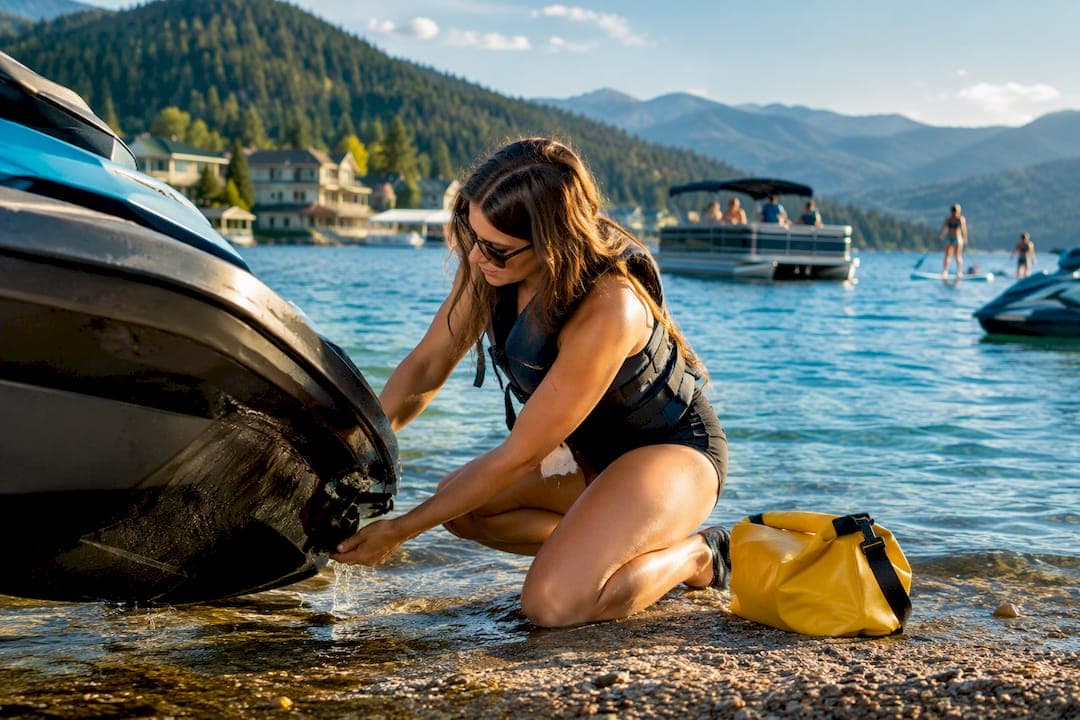
The Coeur d'Alene area is served by four watercraft inspection stations, Cedars, Highway 53, Huetter, and Rose Lake, all operated by the Kootenai-Shoshone Soil & Water Conservation District. Idaho law requires every boat to stop during posted operating hours, and out-of-state vessels need an invasive species sticker and may face inspection or decontamination. For current hours and station status, the Idaho State Department of Agriculture hotline and online map are the fastest references.
TL;DR:
- Most boaters can complete inspections quickly if their vessel is clean, drained, and dry, with drain plugs removed before reaching the station.
- Nonresident boaters must purchase an Idaho Invasive Species Sticker prior to launching, while residents typically include this fee in their registration.
- Inspection stations operate during peak boating months, with hours that can extend or shift, especially during busy summer weeks; checking ahead saves time.
- Decontamination is mandatory if inspectors detect invasive mussels, standing water, or recent launches in infested waters, often requiring a hot-water wash.
- Arriving prepared and informed helps prevent delays and avoids mandatory washes, protecting freshwater ecosystems and ensuring smooth entry.
Table of Contents
- Where the stations are and when they're open
- Who has to stop, and the invasive species sticker rules
- What happens during an inspection
- When decontamination is required and how to arrange it
- Clean, Drain, Dry: preparing your boat before you travel
- Where to check station hours and get help before you arrive
- Why these checks matter for boaters on the lake
- Renting near Coeur d'Alene without the compliance headache
- Sources
- FAQ
Where the stations are and when they're open
Four stations cover the routes boaters use to reach Coeur d'Alene, according to the Kootenai-Shoshone Soil & Water Conservation District, which manages all four sites and posts local contact information and seasonal windows.
- Cedars, located along I-90, sees some of the highest traffic of any station in the region and can back up during holiday weekends.
- Highway 53, roughly nine miles southwest of Rathdrum, catches boaters approaching from the west and north.
- Huetter sits near the interchange traffic feeding into Coeur d'Alene from Spokane.
- Rose Lake covers southern approach routes along the lake's less-traveled side.
The Idaho State Department of Agriculture confirmed stations reopened for the 2026 season starting in mid-April, with operating hours extending through the peak boating months. Some locations run extended hours or pilot near-round-the-clock coverage during the busiest summer weeks, though hours can shift by station and season.
Plan around midday and holiday-weekend congestion at Cedars especially, since it handles a disproportionate share of regional traffic. Before you leave home, check the official interactive map or the KSSWCD's station pages for that day's posted hours. Stations sometimes close early for weather or staffing, and confirming the night before saves a wasted trip.

Who has to stop, and the invasive species sticker rules
Idaho requires all watercraft, trailered or not, to stop at open inspection stations when they pass one during posted hours. This applies whether you're hauling a boat from another state or launching a jet ski you keep locally, according to Invasive Species of Idaho.
- Idaho residents typically pay the invasive species sticker fee as part of their annual boat registration, so no separate purchase is needed at the station.
- Nonresidents must buy an Idaho Invasive Species Sticker (IISF) before launching, available online, by mail, or at Idaho State Park and regional service centers, including locations in Coeur d'Alene, per the sticker FAQ.
- Sticker revenue funds the inspection stations and decontamination equipment themselves, a requirement written into Idaho statute governing the invasive species fund.
Keep your registration and sticker proof within reach before you reach the station. Handing over both immediately, rather than digging through a glove box, is one of the simplest ways to shorten your stop.
What happens during an inspection
Most stations use two inspectors working together: one asks about your boat's recent launch history while the other walks the vessel checking for standing water, plant material, or shells.
- Boats arriving with no standing water, no visible vegetation, and drain plugs already removed qualify as low-risk and typically clear in a few minutes.
- Visible mussels, wet or muddy compartments, or recent launches in known infested waters push a boat into the high-risk category.
- High-risk classification usually means a longer inspection and, in many cases, a required decontamination before you're cleared to continue.
- Inspectors commonly ask where the boat launched last and whether it sat in water outside Idaho within the past several days.
A boat that arrives clean, drained, and dry moves through fastest, since inspectors don't need to open compartments or run additional checks.
Pro Tip: Pull your drain plugs before you leave your driveway, not at the station. It's one less step inspectors need to verify, and it's required for legal transport under Idaho statute.

When decontamination is required and how to arrange it
Decontamination becomes mandatory when inspectors spot visible mussels, standing water that wasn't drained, or a recent launch in waters known to carry invasive species. Certain river segments, including parts of the Snake River, require decontamination on both entry and exit regardless of what inspectors find, according to Invasive Species of Idaho.
- Standard decontamination uses a hot-water wash to kill larvae and loosen debris, followed by manual removal of any remaining material.
- A full wash typically adds time to your stop, though straightforward cases move faster than boats with heavy fouling.
- Decontamination is offered at select stations and, in some cases, through roving units for boats that can't easily travel to a fixed site.
If you already know your boat needs a wash, call the ISDA hotline at 1-877-336-8676 ahead of time to confirm availability rather than arriving unannounced.
Clean, Drain, Dry: preparing your boat before you travel
Handling Clean, Drain, Dry steps before you leave home is the single best way to avoid delays or a mandatory wash at the station.
- Rinse the hull, trailer, and any exposed gear to remove mud, plant fragments, or debris picked up at your last launch.
- Drain livewells, bilges, ballast tanks, and coolers completely, since standing water is one of the fastest ways to trigger extra screening.
- Check hidden spots, anchors, ropes, trailer rollers, and axles, where mussels and vegetation often hide unnoticed.
- Let everything dry for as long as your schedule allows before transport, since dry surfaces are far less likely to carry live organisms.
- Keep drain plugs out and loose gear secured for the drive, both for compliance and for a quicker stop.
Pro Tip: A quick pre-wash at home, with a hose and a stiff brush, resolves most low-risk issues before you ever reach a station. Reviewing detailed hull cleaning steps can help you build a routine that catches spots you'd otherwise miss.
For a fuller walkthrough tailored to this lake, see this boating guide for Lake Coeur d'Alene.
Where to check station hours and get help before you arrive
Before heading out, confirm current hours rather than relying on last year's schedule.
- The ISDA's station announcement and the Invasive Species of Idaho site both post current locations and openings.
- The KSSWCD station page lists specifics for Cedars, Highway 53, Huetter, and Rose Lake, including local contact details.
- For sticker purchase questions or decontamination scheduling, call 1-877-336-8676 directly.
- For sticker purchase steps, see our guide to buying and displaying the IISF sticker.
Checking the day before you travel catches last-minute closures or hour changes before they cost you a trip.
Why these checks matter for boaters on the lake
Inspections protect the fisheries, beaches, and clear water that make Lake Coeur d'Alene worth visiting in the first place. Invasive mussels and aquatic weeds can clog water intakes, damage boat engines, and push out the sport fish that draw anglers to the area. Every boater who stops and complies is helping keep that recreation intact, for their own future trips and for the businesses and families who depend on it. Golden Water Sports builds pre-launch preparation into how it briefs guests, because a lake that stays clean stays fun for everyone using it.
— Life is better on water.
Renting near Coeur d'Alene without the compliance headache
If hauling your own boat through inspection stations sounds like more hassle than your weekend needs, renting sidesteps the paperwork entirely. A local rental company serves the region with jet skis, boats, pontoons, and paddleboards that arrive ready to launch, no drain plugs, no sticker purchase, no station stop.
- Every rental includes safety gear and a pre-departure walkthrough so you know what to expect on the water.
- Staff can walk you through local launch logistics before you arrive, including where public docks and put-ins are located.
- Jet ski rentals run $250 to $425 at Liberty Lake and Newman Lake, with additional hours available at $75 each.
Check current rental pricing and availability for Coeur d'Alene area lakes, or browse the full lineup of boats, paddleboards, and water toys to book your day on the water.
Sources
- Watercraft inspection stations open for 2026 season in Idaho | Idaho State Department of Agriculture
- Watercraft inspections and Requirements — Invasive Species of Idaho
- Water Craft Inspection Stations — Kootenai-Shoshone Soil & Water Conservation District
- S1322 — Idaho legislature (Invasive species fund / statutory language)
FAQ
Where can I get my boat inspected in Idaho?
Coeur d'Alene area boaters can stop at the Cedars, Highway 53, Huetter, or Rose Lake stations, all listed on the KSSWCD's station page. Statewide locations and hours are also posted by the Idaho State Department of Agriculture.
Can I register my boat in Idaho if it is out-of-state?
Idaho does not require you to register an out-of-state boat locally just to visit, but nonresidents must purchase an Idaho Invasive Species Sticker before launching. That sticker is separate from your home state's registration and is required under Idaho law.
How do I get my boat inspected?
Stop at any open inspection station along your route during posted operating hours, where inspectors will ask about your boat's recent launch history and check for standing water or visible organisms. Arriving clean, drained, and dry, as outlined by Invasive Species of Idaho, speeds up the process considerably.
What do I need on my boat to be legal in Idaho?
You need your boat registration, drain plugs removed for transport, and, if you're a nonresident, a valid Idaho Invasive Species Sticker purchased before launch. Keeping proof of the sticker and your registration accessible helps inspectors clear you faster at the station.
What happens if I don't stop at an inspection station?
Idaho law requires all boats to stop at open stations during posted hours, and skipping one can result in fines under the state's invasive species statutes. Beyond the legal risk, unchecked boats can spread mussels or invasive plants into lakes that aren't yet affected.