
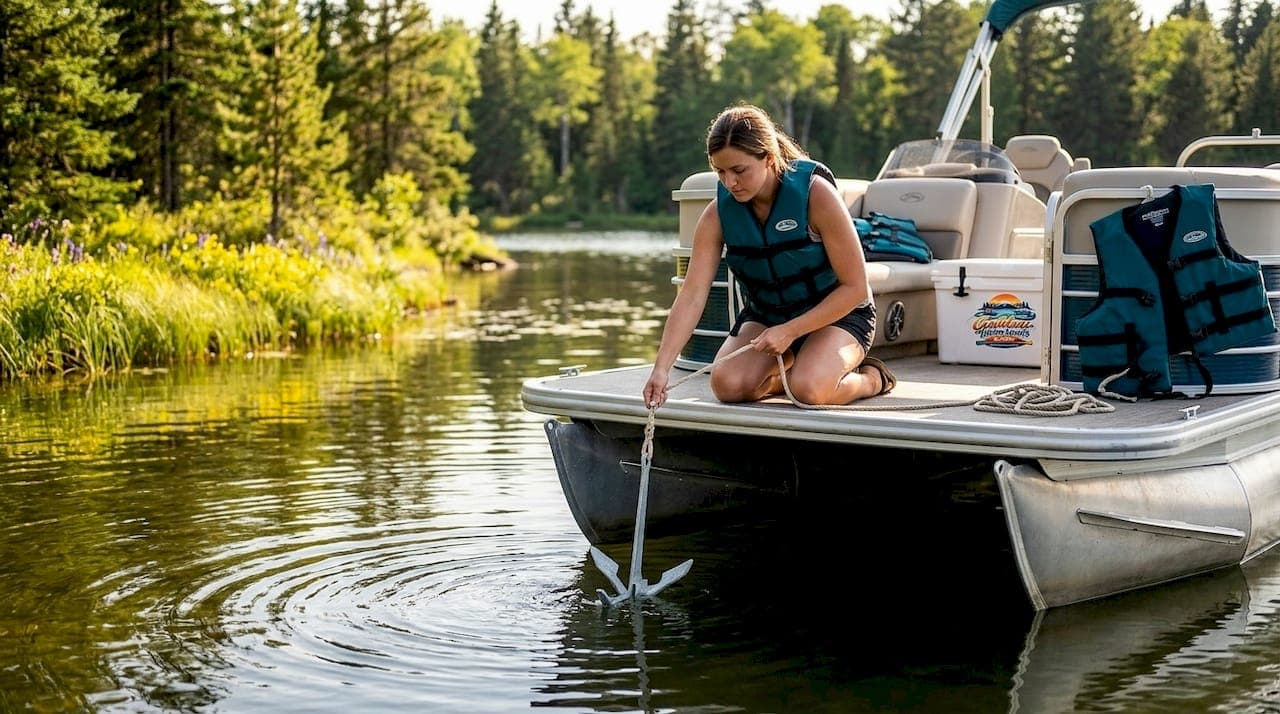
Anchoring a pontoon boat correctly on a lake means lowering the anchor from the bow with the right amount of rode line based on water depth, then setting it firmly so the boat holds position without drifting or swinging. The standard method in recreational boating is called scope control, and it is the single most important variable between a secure stop and a boat that drags into another vessel or a swim zone. Whether you are anchoring at Liberty Lake for a family float or settling in for a sunset on Coeur d'Alene, getting this right protects everyone on board.
How to choose the right anchor for your pontoon boat
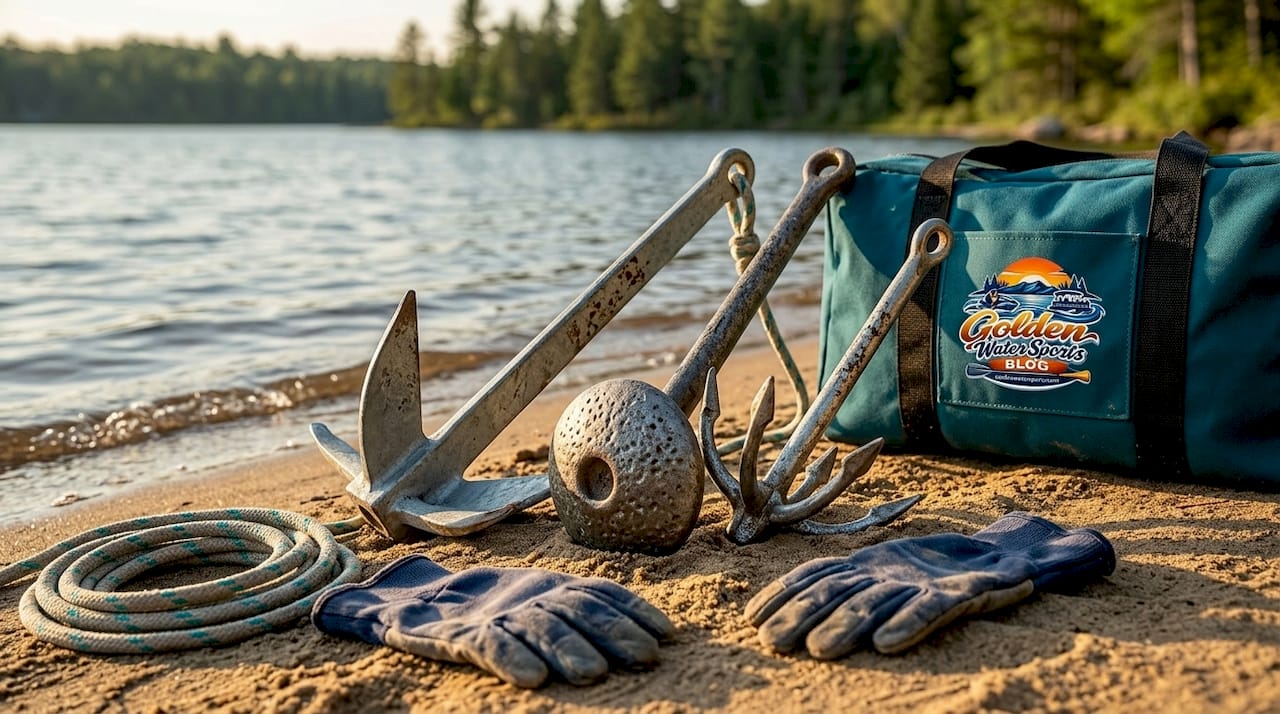
Choosing the right anchor starts with knowing what is on the bottom of the lake you are using. Bottom type affects holding power more than anchor design alone, which means even a heavy anchor performs poorly if it is the wrong style for the ground beneath it.
Here is how the most common lake bottom types match up with anchor designs:
- Sand and mud: A fluke anchor (also called a Danforth) is the go-to choice. Its wide, flat flukes dig in quickly and hold firmly in soft bottoms. This is the most common bottom type on lakes in the Pacific Northwest, including Liberty Lake and Coeur d'Alene.
- Rocky or hard bottoms: A grapnel anchor works best here. Its multiple hooks catch on rock crevices and ledges where a fluke anchor would simply slide.
- Mixed or varied bottoms: A plow anchor handles transitions between sand, gravel, and weed beds without losing its set. It resets automatically if wind shifts the boat.
- Grass or weed beds: A box anchor or a dedicated weed anchor cuts through vegetation to reach the bottom layer beneath.
Anchor size matters just as much as style. A pontoon boat in the 20 to 24 foot range typically needs an anchor rated for that length and weight class. Going undersized is one of the most common errors recreational boaters make, especially when renting or borrowing gear.
Pro Tip: In challenging conditions, such as a rocky cove with afternoon wind, carry two anchors of different types. A fluke for the soft patch and a grapnel for the rocky edge gives you options without improvising.
| Bottom type | Best anchor style | Why it works |
|---|---|---|
| Sand and mud | Fluke (Danforth) | Wide flukes penetrate and hold in soft sediment |
| Rock and hard bottom | Grapnel | Hooks catch on crevices and ledges |
| Mixed or varied | Plow | Resets automatically when boat swings |
| Grass and weeds | Box or weed anchor | Cuts through vegetation to reach firm bottom |
How do you anchor a pontoon boat step by step?
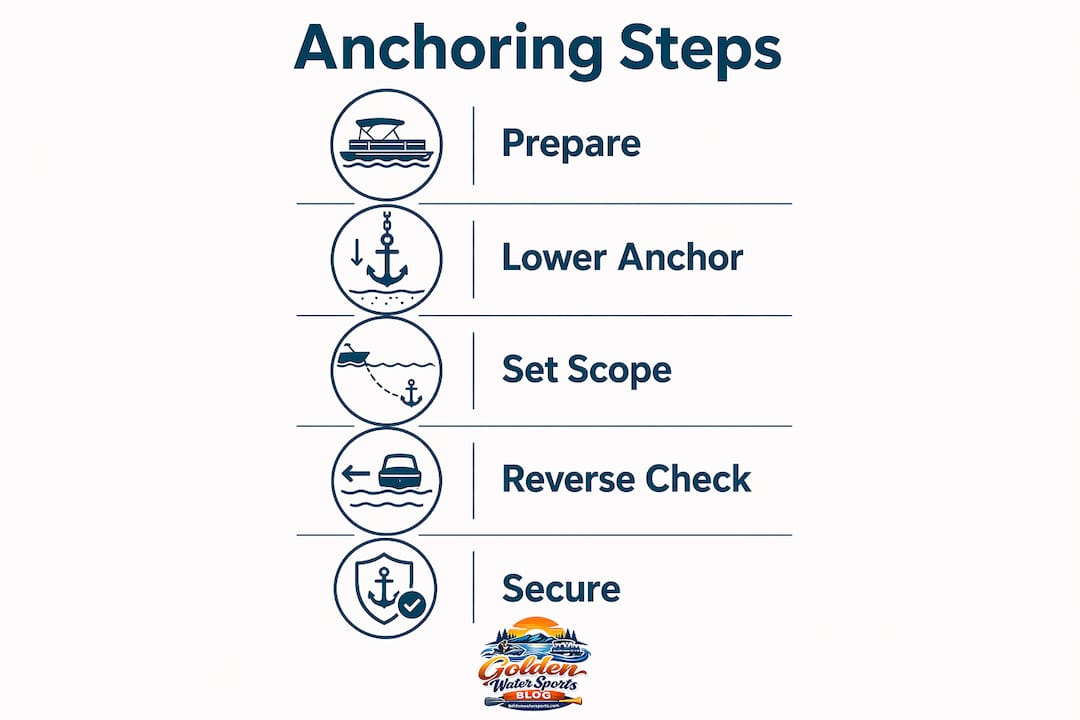
A clean anchoring sequence takes about five minutes when you know the steps. Rushing any part of it, especially the scope calculation, is where most problems start.
-
Scan your surroundings. Before you slow down, look for swimmers, kayakers, other anchored boats, and underwater hazards. Check the lake etiquette rules for your specific body of water, since some areas restrict anchoring near swim buoys or designated zones.
-
Measure water depth. Use a depth finder to get an accurate reading. A depth finder improves accuracy in calculating the correct rode length and helps you avoid anchoring in water that is too shallow for your pontoons to clear the bottom safely.
-
Calculate your rode length. The standard scope ratio for calm lake conditions is 5:1. That means for every foot of depth, you deploy five feet of anchor line. In 20 feet of water, deploy roughly 100 feet of rode. One detail most guides skip: measure from the bow roller down to the lake bottom, not just the reported water depth. The extra height of your bow above the waterline adds to the total vertical distance and affects your scope calculation.
-
Position the bow into the wind or current. Drive slowly upwind of your target spot and cut the engine. The boat will naturally drift back as you deploy the anchor.
-
Lower the anchor steadily from the bow. Do not throw it. Tossing the anchor tangles the rode and prevents the anchor from landing flat. Feed the line hand over hand until the anchor touches bottom.
-
Back the boat slowly to set the anchor. Applying reverse power slowly after lowering the anchor drives the flukes or plow into the bottom and confirms the set. You will feel the line go taut and the boat stop moving backward when it holds.
-
Secure the rode to a bow cleat. Tie off with a cleat hitch. Never wrap the line around a hand or a railing.
-
Test the hold. Apply gentle reverse throttle for five seconds and watch for drift against a fixed reference point on shore. If the boat moves steadily backward, the anchor has not set. Pull up and repeat.
Pro Tip: Mark your anchor line every 25 feet with colored tape or a permanent marker. You will know exactly how much rode is out without guessing, which makes scope adjustments fast and accurate.
How do wind and weather affect anchoring on a lake?
Pontoon boats catch wind like a sail. Their flat, wide profile and high deck rails create significant wind resistance compared to a V-hull boat of the same length. Pontoon boats swing more due to their shape, which means a scope that holds fine on a calm day can become dangerously short when an afternoon storm rolls in.
The practical adjustments for changing conditions are straightforward:
- Increase scope in wind. In gusty or sustained wind, move from a 5:1 ratio to a 7:1 ratio. That same 20 foot depth now requires 140 feet of rode instead of 100.
- Use a second anchor to reduce swing. Setting two anchors at opposing angles limits how far the boat can swing in either direction. One anchor forward and one aft is the most effective configuration for tight anchorages or crowded coves.
- Keep distance from neighboring boats. Every anchored boat swings on its own arc. The boat next to you may have a different scope than you do, which changes the radius of its swing. Maintain at least one full boat length of clearance on each side, and more in wind.
- Monitor your position during extended stops. Set a visual reference on shore and check it every 20 to 30 minutes. A gradual drift is easy to miss until you are already in trouble.
In shallow lake areas, anchoring in less than six feet of water requires extra caution. The short water column limits how much scope you can deploy, which reduces holding power. In those situations, a heavier anchor or a second anchor is the better solution rather than a longer line that drags along the bottom.
Pro Tip: Before anchoring for a long afternoon stop, check a weather app for wind forecasts. A 10 mph breeze that arrives at 3 p.m. changes your scope needs and your swing radius significantly.
Common anchoring mistakes pontoon boaters make on lakes
Most anchoring failures trace back to one of six predictable errors. Knowing them in advance is the fastest way to avoid them.
- Dropping anchor from the stern. Anchoring from the stern can cause swamping or hull damage on a pontoon. The stern is the wrong attachment point for anchor loads. Always use the bow.
- Using too little rode. Insufficient rode length causes anchor dragging and puts the boat at risk of drifting into other vessels or hazards. A 3:1 scope feels like enough until the wind picks up.
- Ignoring bottom type. Dropping a fluke anchor onto a rocky bottom and expecting it to hold is a setup for failure. Match the anchor to the bottom before you leave the dock.
- Skipping the surroundings check. Anchoring without scanning for swimmers, kayakers, or submerged hazards is a safety failure, not just a boating error.
- Assuming other boats have correct scope. The boat anchored 30 feet from you may have far less rode out than you do, which means its swing radius is smaller and a collision is possible when the wind shifts.
- Not testing the set. Lowering the anchor and assuming it held is not anchoring. Testing with reverse throttle takes 10 seconds and confirms what you need to know.
Anchoring is more than casting a rope. It requires safety checks, situational awareness, and smart equipment use for comfort and security on the water.
Key takeaways
Correct pontoon boat anchoring requires the right anchor for the lake bottom, a 5:1 scope ratio as the baseline, and always deploying from the bow to prevent swamping or drift.
| Point | Details |
|---|---|
| Anchor from the bow only | Stern anchoring risks swamping and hull damage on pontoon boats. |
| Use a 5:1 scope ratio | Deploy five feet of rode for every foot of water depth in normal conditions. |
| Match anchor to bottom type | Fluke for sand and mud, grapnel for rock, plow for mixed bottoms. |
| Increase scope in wind | Shift to a 7:1 ratio when wind or current picks up to maintain holding power. |
| Always test the anchor set | Apply gentle reverse throttle after lowering to confirm the anchor has dug in. |
What years of lake days have taught me about anchoring
Most boaters treat anchoring as an afterthought. They focus on the destination, the cooler, and the playlist, and then they drop a hook without checking the bottom, measuring the depth, or thinking about where the wind is going. I have watched boats drag into each other at crowded coves because someone used a 2:1 scope on a breezy afternoon and assumed it would hold.
The thing conventional wisdom gets wrong is that anchoring skill is mostly about preparation, not technique. The technique itself is simple. What separates a secure stop from a stressful one is the 90 seconds you spend before you lower the anchor: checking depth, reading the bottom, scanning for swimmers, and calculating your rode. That preparation is what makes the rest of the process feel automatic.
Investing in quality gear matters more than most recreational boaters realize. A good fluke anchor with a chain leader and a properly marked rode line costs less than a single repair bill from a dragging incident. The chain leader adds weight at the anchor end, which keeps the shank angle low and dramatically improves holding power in soft bottoms.
Practice anchoring in low-stakes conditions before you need it in a crowded cove or a sudden afternoon storm. Pick a quiet corner of the lake, run through the full sequence, and test the set deliberately. After two or three repetitions, the steps become second nature and you stop second-guessing yourself when it counts.
— Life is better on water.
Ready to get out on the water with Goldenwatersports?
Goldenwatersports makes it easy to spend a full day on the lake without worrying about equipment. Our pontoon boat rentals come ready for a day on Coeur d'Alene, Liberty Lake, or the surrounding region, with safety gear included and a team that walks you through everything before you leave the dock.
Whether you are anchoring for a swim stop, a lakeside lunch, or a full afternoon float, Goldenwatersports has the boats and the local knowledge to make it work. Check out our rental options and lake guides to plan your next day on the water. Booking is straightforward, rental periods are flexible, and the lakes around Spokane Valley and Coeur d'Alene are worth every minute you spend on them.
FAQ
What is the correct scope ratio for anchoring a pontoon on a lake?
The standard scope ratio for calm lake conditions is 5:1, meaning five feet of anchor line for every foot of water depth. In windy or current-prone conditions, increase that ratio to 7:1 for better holding power.
Should you anchor a pontoon boat from the bow or stern?
Always anchor from the bow. Dropping anchor from the stern can cause swamping or hull damage on a pontoon boat because the stern is not designed to handle anchor loads.
What type of anchor works best for lake bottoms?
Fluke anchors work best in sand and mud, which are the most common lake bottom types. Grapnel anchors suit rocky bottoms, and plow anchors handle mixed or varied lake floors without losing their set when the boat swings.
How do you know if your anchor is set correctly?
Apply gentle reverse throttle for five seconds after lowering the anchor and watch for movement against a fixed point on shore. If the boat holds steady, the anchor is set. If it drifts backward, pull up and repeat the process.
How do you prevent a pontoon boat from swinging at anchor?
Set a second anchor in the opposite direction from your primary anchor to limit swing radius. Two anchors at opposing angles reduce movement significantly in windy conditions and keep the boat in a precise position.