
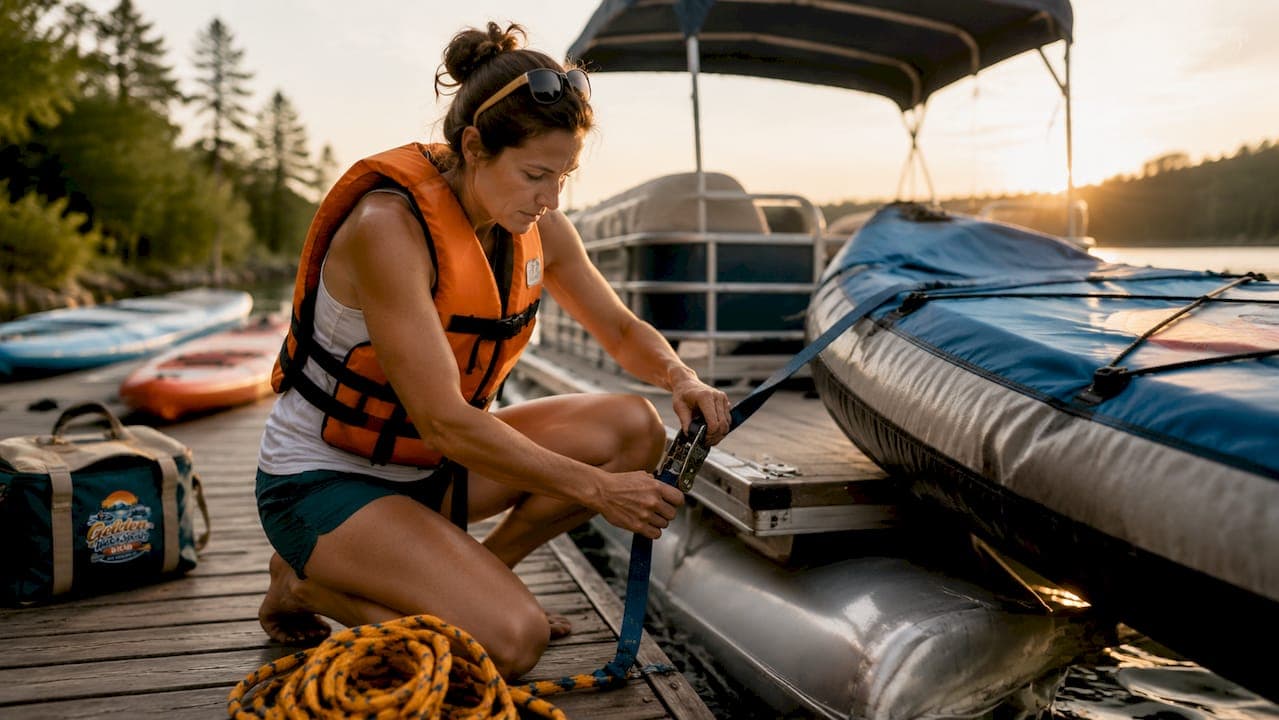
Loading water toys onto a rental boat is the process of safely stowing and securing all your aquatic equipment so the vessel stays balanced, your gear stays intact, and your day on the water stays fun. Whether you're bringing inflatable tubes, paddleboards, kayaks, or wakeboards to Liberty Lake or Coeur d'Alene, the way you load matters as much as what you bring. Rental boats have firm capacity limits, and ignoring proper loading technique puts both your safety and your security deposit at risk. This guide walks you through every step, from pre-launch prep to on-water organization, so you can get out on the lake without the chaos.
What do you need before loading water toys onto a rental boat?
Preparation is the difference between a smooth launch and a stressful one. Before you touch a single piece of gear, read your rental agreement cover to cover. Rental companies set specific weight limits, prohibited items, and rules about how equipment can be stored on deck. Violating those terms can void your coverage if something gets damaged.
Once you know the rules, gather your loading accessories:
- Cam straps or ratchet straps to secure bulky toys to cleats or rails
- Foam padding to protect both the boat's surfaces and your gear from friction
- Dock lines to keep the boat steady while you load at the ramp
- A dry bag or waterproof bin for electronics, keys, and valuables
- A written inventory of every item you plan to bring
That inventory step sounds tedious, but it pays off. Proper preparation and communication with rental staff improve loading efficiency and safety in waterfront rentals. When you hand the staff a list of what you're bringing, they can flag conflicts with the boat's capacity or layout before you waste time at the dock.
Safety gear deserves its own check. Never assume a rental boat comes with all safety equipment pre-attached. Verify that life jackets, a fire extinguisher, and a throwable flotation device are on board and accessible during the walk-through before you load anything else. Weather and launch site conditions also shape your plan. A choppy ramp means you need more hands and more patience. Calm water gives you room to work methodically.
Pro Tip: Ask the rental staff specifically which cleats and tie-down points are rated for securing gear. Not every cleat on a rental boat is built to hold a loaded kayak under wake conditions.
How to load water toys onto the boat safely and efficiently
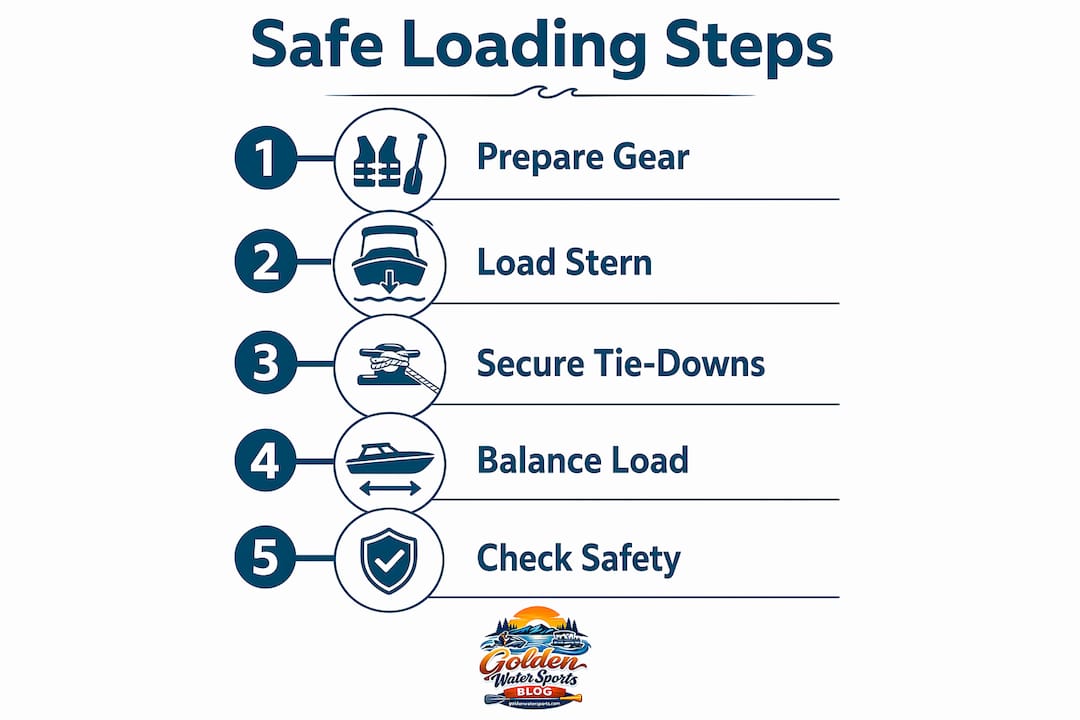
The order in which you load gear directly affects how the boat handles on the water. Loading heavy items low and centered maintains stability, while placing heavy gear high or off to one side creates a tilt that worsens at speed. Follow this sequence every time:
- Start with the heaviest items. Coolers, anchor systems, and dense water toys like hard-shell kayaks go in first. Place them on the floor of the boat, as close to the centerline as possible.
- Add mid-weight gear next. Wakeboards, water skis, and tow ropes belong along the sides or in storage compartments. Keep them flat and out of the walkway.
- Load inflatables last. Tubes and inflatable paddleboards can go fully inflated if space allows, or deflated and rolled if the deck is tight. Inflatables stowed inflated or deflated both work, but each method requires different securing strategies.
- Secure everything with straps and padding. Quality ratchet or cam straps with foam padding prevent shifting and protect surfaces. Do not overtighten straps on inflatables; you risk puncturing the material.
- Check navigation lights and safety gear access. Nothing you load should block the bow light, stern light, or the path to life jackets and the fire extinguisher.
- Do a final walk-around before casting off. Confirm every strap is snug, every hatch is closed, and the drain plug is in. The drain plug check is one of the most commonly skipped steps and one of the most consequential.
Pro Tip: Load the boat from stern to bow when possible. Starting at the back keeps the bow lighter during loading, which makes it easier to control the boat at the ramp.
Knowing which boat type you rented also shapes your loading plan. A pontoon boat offers wide, flat deck space that handles bulky gear well. A ski boat has a narrower cockpit and less storage, so prioritizing what you actually need becomes more important.
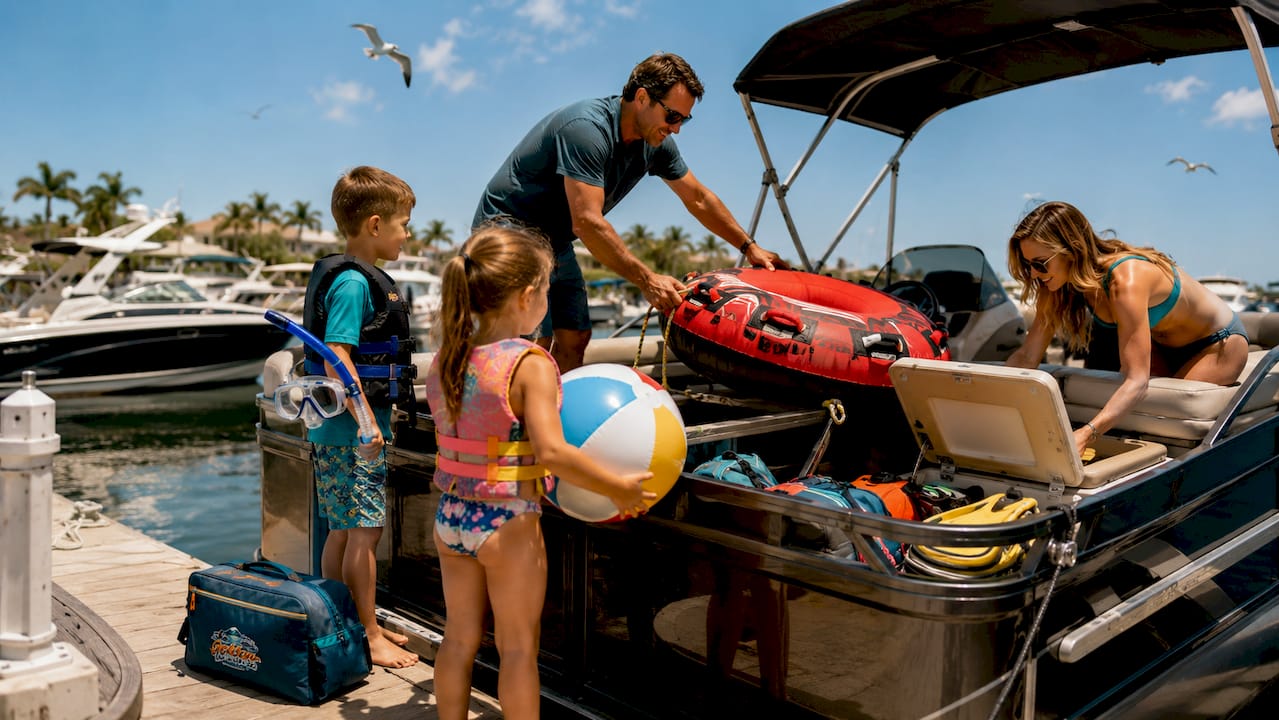
Comparing water toy types and best loading practices for each
Different toys demand different handling. Here is a breakdown of the most common water toys renters bring and how to treat each one:
| Water toy | Typical size/weight | Best stow location | Special considerations |
|---|---|---|---|
| Inflatable tube | Medium / light | Bow deck or stern platform | Deflate if space is tight; protect valve stem |
| Paddleboard | Large / medium | Along gunwale or roof rack | Use foam padding under board edges |
| Kayak | Large / heavy | Centered on deck or towed | Secure bow and stern; never stack unsupported |
| Wakeboard | Medium / light | Side storage or under seat | Keep fins covered to prevent injury |
| Water skis | Long / light | Along the gunwale | Bundle with straps; keep tips pointed aft |
| Tow rope | Small / light | Storage compartment | Coil tightly to prevent tangling |
A few items deserve extra attention. Paddleboards are long and catch wind, so they need two attachment points minimum. Kayaks are the trickiest to load because of their weight and awkward shape. If you're renting a pontoon, the wide rear platform is your best friend for kayak storage. On a ski boat, you may need to tow a kayak behind the vessel on a short line rather than loading it on deck.
Wakeboards and water skis are easy to overlook because they seem light. The fins on a wakeboard are sharp enough to cut through a strap or scratch a fiberglass hull if the board shifts. Always cover fins with a fin guard or wrap them in a towel before securing.
De-rigging and securing small items before you leave the dock prevents shifting damage once you're underway. That means removing loose gear from the top of stacked items and double-checking that nothing is resting on a cleat or rail without a strap.
Common mistakes when loading water toys on rental boats
Most loading problems come down to three errors: overloading, poor securing, and skipping the pre-launch checklist. Each one is avoidable.
- Overloading the boat. With nearly 250,000 registered tow boats in the U.S. market, capacity ratings vary widely by vessel age and design. Never assume a boat can handle everything you want to bring. Check the capacity plate, usually mounted near the helm, and stay under the listed weight limit including passengers, fuel, and all gear.
- Failing to secure toys properly. A tube that looks stable at the dock will slide across the deck the moment you hit a wake. Every item needs at least one strap. Heavier items need two.
- Blocking safety gear or walkways. Rental staff will flag this during your walk-through, but double-check yourself. The path from the helm to the bow must stay clear for safety.
- Skipping the drain plug check. This is the single most preventable cause of a flooded boat. Confirm the plug is in before you leave the ramp.
- Ignoring rental policy on towed toys. Some rental companies prohibit towing tubes or inflatables behind their boats. Confirm this before you pack a tow rope.
Before every launch, run a mandatory check of safety equipment, battery status, and the drain plug. Experts recommend this as a non-negotiable step for every rental boat departure.
If you realize mid-trip that something is loaded wrong, pull into a calm cove before adjusting. Rearranging gear while underway is dangerous and unnecessary.
How to maintain safety and organization onboard throughout your rental
Loading well at the dock is only half the job. Keeping the boat organized while you're on the water takes the same discipline.
- Check strap tension after the first 10 minutes underway. Vibration and wake action loosen straps faster than most people expect.
- Keep walkways clear at all times. Wet gear left in the aisle creates a slip hazard, especially for kids jumping on and off the swim platform.
- Rotate toy usage to manage weight distribution. If you unload a kayak for paddling, redistribute remaining gear toward the center to compensate for the shift.
- Manage wet gear actively. Assign a spot for wet life jackets, towels, and rash guards. Wet items left loose add clutter and weight in unpredictable places.
- Plan your unloading sequence before you return to the dock. Knowing what comes off first saves time and prevents the scramble that leads to dropped gear or scratched surfaces.
Reviewing jet ski etiquette and lake safety rules before your trip also prepares you for shared-water situations where quick maneuvering might shift your load unexpectedly.
Key takeaways
Loading water toys onto a rental boat safely requires loading heavy items low and centered, securing every piece of gear with straps and padding, and completing a full pre-launch checklist before leaving the dock.
| Point | Details |
|---|---|
| Load heavy items first | Place coolers and hard-shell kayaks low and centered to keep the boat balanced. |
| Secure everything with straps | Use cam or ratchet straps with foam padding on every item, no exceptions. |
| Complete the pre-launch checklist | Confirm the drain plug, battery, life jackets, and navigation light access before casting off. |
| Know your toy's loading needs | Paddleboards, kayaks, and wakeboards each require specific placement and protection strategies. |
| Respect rental capacity limits | Check the capacity plate and stay under the weight limit including passengers and all gear. |
What I've learned from a hundred days on the water
The first time I watched a group try to load three paddleboards, two kayaks, and a tube onto a 22-foot pontoon without a plan, it took them 45 minutes and they still left one board behind. The gear wasn't the problem. The lack of a sequence was.
What actually works is treating the boat like a puzzle before you start loading. Walk the deck empty, identify your anchor points, and assign a spot to every item before you pick anything up. That five-minute exercise cuts your loading time in half and eliminates the last-minute reshuffling that scratches hulls and strains friendships.
The other thing most renters underestimate is the value of talking to the rental staff before they start. The team at Goldenwatersports, for example, knows exactly which cleats on each boat handle lateral load and which ones are decorative. That kind of local knowledge is free and takes two minutes to get. Use it.
Safety and fun are not competing priorities on the water. A well-loaded boat is a faster, more responsive, more enjoyable boat. The preparation is the fun, if you let it be.
— Life is better on water.
Plan your perfect day on the water with Goldenwatersports
Goldenwatersports makes it easy to get on the water at Coeur d'Alene, Liberty Lake, and Spokane Valley with a fleet that includes pontoon boats, ski boats, Yamaha WaveRunners, paddleboards, and water toys ready to go. The team walks every renter through a full boat orientation so you know exactly where to secure your gear, where safety equipment lives, and how to get the most out of your rental period. Booking is straightforward, staff are genuinely helpful, and the boats are well-maintained. Reserve your rental and show up ready to load, launch, and enjoy.
FAQ
What is the safest way to load water toys onto a rental boat?
Load heavy items like coolers and kayaks low and centered first, then secure all gear with cam or ratchet straps and foam padding. Complete a pre-launch checklist covering the drain plug, life jackets, and navigation light access before you leave the dock.
Can you bring your own water toys on a rental boat?
Most rental companies allow personal water toys, but restrictions vary by provider and vessel type. Always review your rental agreement for prohibited items, weight limits, and rules about towing inflatables before you pack.
How do you secure inflatable tubes on a boat?
Inflatable tubes can be stowed fully inflated on the bow deck or deflated and rolled for compact storage. Secure them with at least one cam strap and protect the valve stem from pressure or abrasion during transit.
What water toys work best on a pontoon boat rental?
Pontoon boats handle paddleboards, kayaks, and large inflatable tubes well because of their wide, flat deck space and rear swim platform. Their stable platform also makes loading and unloading gear easier than on a narrower ski boat.
How do you avoid overloading a rental boat with water toys?
Check the capacity plate near the helm for the maximum weight limit, then calculate the combined weight of all passengers, fuel, and gear including water toys. Stay at least 10 percent under the listed limit to maintain safe handling and comply with rental terms.