
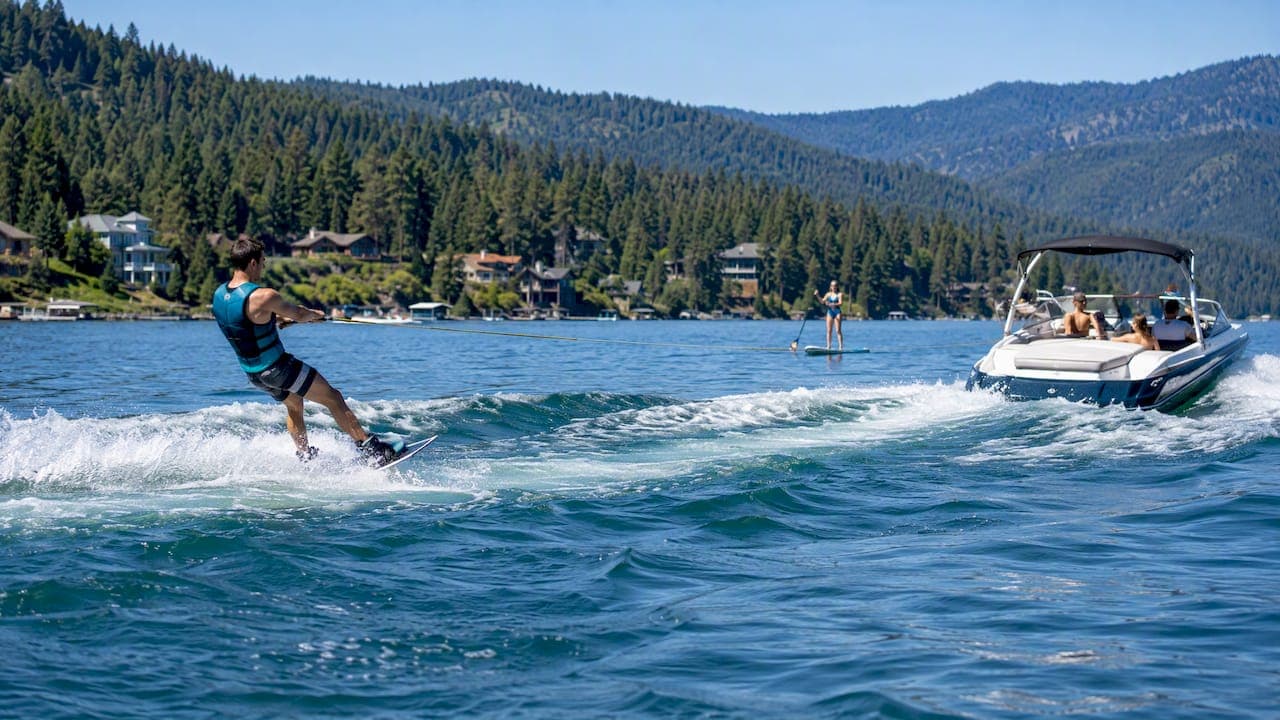
A wakeboard rope and a ski rope are not the same product, and swapping one for the other only works some of the time. The real differences come down to length and sectioning, stretch and material, and handle width, and whichever rope you use, it needs an inspection before it touches the water.
TL;DR:
- Beginner wakeboarders usually start at 50 to 60 feet, while novice skiers begin near the full 75 foot baseline and remove sections later.
- Polypropylene gives slalom skiers slight cushioning, while polyethylene or Spectra provides wakeboarders steadier tension but sends more acceleration and wake movement to their arms.
- Wakeboard handles are typically 13 to 15 inches wide, compared with 11 to 12 inches for ski ropes; ask rental staff which style is supplied.
- Substitution suits casual sessions, but not advanced slalom or competitive tricks; test unfamiliar rope on calm, open water at idle speed before increasing throttle.
- Inspect the full line and its hardware before each outing, and avoid elastic or bungee style towlines because they release stored energy unpredictably.
Table of Contents
- Rope Lengths and Sectioning: How Ski and Wake Ropes Measure Up
- Materials and Stretch: Why Polypropylene and Spectra Behave Differently
- Handle Width and Design: What Fits Your Sport
- When Substitution Is Acceptable, and How to Adjust Safely
- Safety, Inspection, and Recommended Rope Practices
- Rental Setup Tips: What to Ask Before You Launch
- A Practical Rule of Thumb for Choosing Rope
- Rent Gear That's Already Rigged Right
- FAQ
- Sources
Rope Lengths and Sectioning: How Ski and Wake Ropes Measure Up
Slalom ski ropes and wakeboard ropes solve the length problem in different ways, and knowing how each one is measured helps you set up correctly before you leave the dock.
A slalom rope typically starts at a 75 foot baseline, then shortens through removable sections called "offs." Skiers call out "15 off" or "22 off" to describe how much rope has been removed from that baseline, which gives competitive skiers a precise, repeatable reference point as they tighten their turns.
Wakeboard ropes work differently. They use uniform short sections, commonly 2.5 or 5 feet long, that let riders fine-tune their distance behind the boat in small increments rather than jumping to a named "off" length. The handle itself also adds a foot or two to the total measured length, which shifts where you actually sit relative to the wake.
A few practical pointers for choosing a starting length:
- Beginner wakeboarders generally start around 50 to 60 feet to stay inside the boat's wake wash.
- Beginner skiers often start at or near the full 75 foot length before removing any sections.
- Riders learning to jump the wake tend to lengthen the rope gradually as skill improves.
Our guide to how a tow rope works behind a ski boat walks through rigging basics if you want more detail on the setup process.
Materials and Stretch: Why Polypropylene and Spectra Behave Differently
The fiber a rope is made from changes how it feels in your hands, and that difference matters more than most riders expect. Polypropylene, the traditional ski rope fiber, carries a small amount of stretch that gives skiers a bit of cushioning through aggressive slalom turns. Polyethylene lines, often sold under the Spectra brand name, stretch almost not at all, which wakeboarders rely on for a consistent pull they can load up against before popping off a wake.
Skiers benefit from slight stretch in polypropylene rope, while wakeboarders prefer the near-zero stretch of polyethylene or Spectra fiber for a steadier, high-tension pull, according to Boating Magazine's towrope guidance. That stiffness is exactly why a stretch-free line gives wakeboarders predictable tension for tricks.
The tradeoff is shock. A stiffer, low-stretch rope transmits more of the boat's acceleration and wake movement straight to your arms and shoulders, which is manageable for a wakeboarder planning a jump but uncomfortable for a skier carving through a slalom course. A rope with some give smooths that out, at the cost of the crisp, consistent tension wakeboarders want for tricks.

Handle Width and Design: What Fits Your Sport
Handle dimensions are not an afterthought. They affect how you fall, how you pass the rope to another rider, and how safely you can grab it mid-trick.
Boating Magazine notes that wakeboard handles typically run 13 to 15 inches wide, while water ski handles measure closer to 11 to 12 inches. The narrower ski handle reduces the chance of a hand sliding through during a forward fall, a real risk in slalom skiing's sharp direction changes. The wider wakeboard handle makes it easier to pass between riders and to grab during grabs and spins.
Beyond width, check these details before you rig a rope:
- Grip material: foam or rubber coatings affect comfort on longer sessions.
- Floating handles: help with retrieval and visibility after a fall.
- Quick-release compatibility: matters if you are towing a beginner who may need to let go fast.
If you are renting gear, ask your rental operator which handle comes with the rope. Not every outfit stocks both styles.
When Substitution Is Acceptable, and How to Adjust Safely
Borrowing a wakeboard rope for a casual ski session, or the reverse, is not automatically dangerous, but it is not automatically fine either. Casual recreational skiing, beginner wakeboarding, or short practice runs on calm water tolerate substitution reasonably well. Advanced slalom skiing and competitive wakeboard tricking do not. Those disciplines depend on the specific stretch and tension characteristics built into sport-specific rope, and swapping ropes there costs you performance and consistency.
If you do substitute, a few adjustments help:
- Shorten or lengthen the rope to match your comfort zone behind the boat rather than defaulting to the sport's standard length.
- Reposition your starting spot farther from the wake wash if the substituted rope's stretch feels unfamiliar.
- Choose the widest handle available if you are unsure, since it accommodates both grip styles reasonably well.
- Start at idle speed and have the driver increase throttle gradually while you judge how the rope responds.
- Stop and reassess if the pull feels jerky or the handle slips in your hands.
Pro Tip: Test any substituted rope on calm, open water with no other boat traffic before trying tricks or sharp turns.
Know the tradeoffs going in. A low-stretch wake rope used for slalom skiing transmits more shock through turns, and a stretchy ski rope used for wakeboarding can cost you the tension consistency you need to pop off a wake cleanly.
Safety, Inspection, and Recommended Rope Practices
Whichever rope you choose, the rope itself needs to be sound. Towline failure contributes to many towing accidents, and ongoing inspection is the simplest way to avoid becoming part of that count.
Before every outing, check for:
- Fraying, fuzzing, or thinning anywhere along the line.
- Knots, which weaken a rope at the knot point significantly.
- Discoloration from UV exposure, a sign of fiber breakdown.
- Worn or corroded hardware at the handle and boat-end connections.
The WSIA Towed Water Sports Handbook advises against elastic or bungee-style towlines entirely, since they store and release energy unpredictably. On the water, maintain roughly a 200 foot buffer zone around the boat, shut the engine off before retrieving a fallen rider, and keep rope lengths matched when towing more than one person at a time.
Rental Setup Tips: What to Ask Before You Launch
When you book gear, ask specifically about rope type, handle width, and whether rigging is included. A rental outfit should rig the rope to a sensible starting length and confirm the handle matches your sport before you leave the dock. Our beginner wakeboarding setup guide and jet ski wakeboard setup rules cover the renter-side checks worth running before you push off.

A Practical Rule of Thumb for Choosing Rope
Use the rope built for your sport whenever one is available, and only substitute when you understand exactly what you are trading away. A quick checklist before you launch:
- Match the rope to your sport, not just whatever is handy.
- Inspect the full length and all hardware before clipping in.
- Set your starting position based on the rope's actual length, not habit.
- Confirm the handle width suits your grip and fall pattern.
- Stop the session if the rope or handle feels wrong, rather than pushing through it.
Convenience is never worth more than a sound line in your hands.
— Life is better on water.
Rent Gear That's Already Rigged Right
Figuring out rope offs, stretch ratios, and handle widths takes the fun out of a lake day fast. We handle the rigging so you do not have to guess: our wakeboards and tubes come set up with appropriate rope and handle combinations for the boat you're towing behind.
- Rent a ski boat or pontoon with wakeboards and tubes rigged for your group.
- Ask which handle width fits your plan for the day, skiing or wakeboarding.
- Check current pricing and availability before you book.
Browse rental options and book your day on the water whenever you're ready.
FAQ
What kind of rope is best for wakeboarding?
A low-stretch polyethylene or Spectra rope is best for wakeboarding, since it gives a consistent, high-tension pull that supports jumps and tricks off the wake, according to Boating Magazine. Wakeboard ropes also typically use a wider handle, around 13 to 15 inches, to ease passing and grabs.
Is wakeboarding losing popularity?
Participation trends vary by region and are not tracked in a single consistent figure here, so we won't put a number on it. What's clear from industry safety guidance is that wakeboarding remains common enough that groups like WSIA continue publishing sport-specific rope and handling standards.
What kind of rope is used for a ski rope?
Slalom ski ropes commonly use polypropylene fiber, which carries a slight stretch that cushions aggressive turns, according to Boating Magazine's towrope guidance. They are also typically measured from a 75 foot baseline, shortened in sections skiers call "offs."
How long do you want your wakeboard rope to be?
Wakeboard rope length depends on skill level and boat speed, with many beginners starting shorter and lengthening the rope in small increments as they progress. Wake ropes section in 2.5 or 5 foot increments rather than the larger "off" jumps used in slalom skiing, which allows finer adjustment of your position behind the boat.
Can I use a ski rope for wakeboarding or vice versa?
Casual, beginner-level use tolerates substitution reasonably well, but advanced slalom skiing and competitive wakeboard tricking depend on sport-specific stretch and handle characteristics that a swapped rope won't match. If you substitute, test it first on calm water at low speed before attempting tricks or sharp turns.