
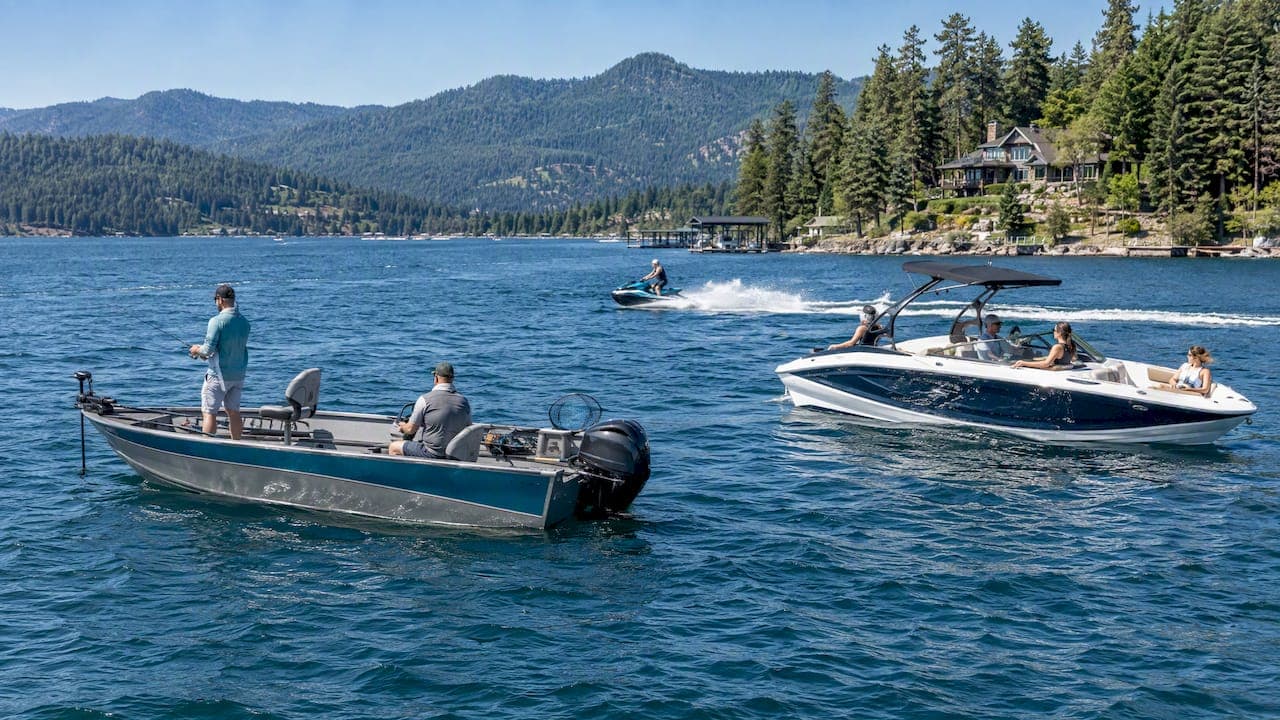
Aluminum boats are generally lighter, cheaper, easier to tow and simpler to maintain. Fiberglass boats are heavier, steadier in wind and chop, and easier to build with complex layouts. Neither is better across the board. The right one depends on how many people you carry, how you launch, and what you want to do on the water. This guide walks through each difference, then covers what it means on lakes around Coeur d'Alene and Spokane.
TL;DR
- Aluminum: lighter, usually less expensive, easier to trailer and launch alone, and forgiving of scrapes and shallow ramps.
- Fiberglass: heavier and more stable, with a quieter, smoother ride and more room for built-in seating, storage and livewells.
- Aluminum needs cleaning and a watch for corrosion. Fiberglass needs waxing and a watch for water getting into the hull or core.
- Material is only part of ride quality. Hull design, size and load matter too.
- Not sure yet? Renting for a day or two lets you feel the difference before you commit to buying.
Table of Contents
- The main differences at a glance
- Weight, towing and fuel
- Ride quality and comfort
- Durability and damage
- Maintenance and upkeep
- Cost of ownership
- The downsides of each
- Which one fits your lake day
- What to consider around Coeur d'Alene and Spokane
- Perspective: why we suggest trying before you buy
- Try it on the water first
- FAQ
- Sources
The main differences at a glance
| Factor | Aluminum | Fiberglass |
|---|---|---|
| Weight | Lighter | Heavier |
| Stability in wind and chop | More drift and bounce | Steadier, quieter |
| Impact damage | Tends to dent | Tends to crack or chip gelcoat |
| Upkeep | Cleaning, corrosion checks | Waxing, moisture checks |
| Layout options | Simpler | Complex molded shapes |
| Typical purchase cost | Lower | Higher |
The summary matches what Discover Boating reports: aluminum is lighter, less expensive, easier to trailer and launch, and needs less maintenance, while fiberglass is heavier, more stable and less affected by wind.
Weight, towing and fuel
Weight drives most of the other differences. Because aluminum has lower mass, it can use a smaller engine for similar performance and cost less to run. That also means a smaller tow vehicle and an easier time at the ramp. Progressive notes that aluminum boats are easier for one person to handle at a ramp, which matters if you launch solo at a busy lake on a July weekend.
The flip side is that a light hull moves more. Fiberglass's extra weight generally improves stability and its resistance to wind-driven buffeting. If you have ever watched a small boat swing around at anchor on a breezy afternoon, that is the trade-off in action.

Ride quality and comfort
Fiberglass generally gives a smoother, quieter ride because its weight reduces bouncing and it dampens sound better than metal. That is why many families and anyone who wants a calm cruise lean toward it.
Don't treat that as a rule, though. The same source points out that hull design, size, loading, passenger weight, fuel and gear also materially affect handling. A well-designed aluminum boat with a sensible load can outperform a badly matched fiberglass one. Compare specific models, not just materials.
Durability and damage
Here aluminum earns its reputation. It is more abrasion-resistant than gelcoat-covered fiberglass and can take impacts. It commonly dents rather than cracks, and Progressive says aluminum collision damage often shows up as dents or bends that are relatively easy to repair, although severe damage to either material can be costly.
That makes aluminum a good match for rocky shorelines, shallow launches and beach landings. A boating publication in Australia describes aluminum as more forgiving of beach launches, trailer rash and shallow water, while fiberglass holds up well in sustained open-water use but is less forgiving of sharp point impacts.
Each material has its own long-term weak spot:
- Aluminum: corrosion or electrolysis can develop if wiring, grounding or bilge conditions are poor.
- Fiberglass: water intrusion, osmosis or delamination. A wet core can lead to deterioration and expensive repairs.
Maintenance and upkeep
Aluminum has no gelcoat to wax, compound or polish. According to Soundings, it is generally maintained by cleaning, while fiberglass needs regular waxing to preserve its finish. Aluminum owners should still rinse after each outing, inspect fittings and keep wiring in good order.
If you plan to customize an aluminum hull, such as adding registration numbers, surface prep matters. Rivets and curves make a difference, and this guide to decals on aluminum boats covers how to keep vinyl stuck down.
Cost of ownership
Aluminum typically costs less to buy and maintain, and its lower weight keeps operating costs down. But the hull is only part of the bill. Storage, insurance, fuel, trailer, registration and repairs add up. Our boat rental pricing guide shows what a day on the water costs without any of that overhead, and why renting beats owning for most boaters explains when buying still makes sense.
The downsides of each
Aluminum's main disadvantages, per Progressive: it is less capable of towing watersports gear or hauling a lot of weight, and corrosion is something owners need to watch. It is also less cushioned in chop.
Fiberglass's disadvantages come from the same weight that makes it comfortable: it costs more, needs a bigger tow vehicle, is harder to launch alone, and requires attention to moisture and waxing.
Which one fits your lake day
Think about use first:
- Small crew, fishing, solo launching, rocky or shallow access: aluminum.
- Family outings, tubing, wakeboarding, heavier loads: fiberglass is generally the better fit for heavier family loads and demanding recreation.
- Built-in seating, storage, livewells and tackle stations: fiberglass, since it can be molded into more complex shapes.
If towing skiers or tubers is your plan, our ski boat rental explainer shows what to look for in a boat, and the jet ski vs. pontoon comparison helps if you are weighing a different type of craft altogether.
What to consider around Coeur d'Alene and Spokane
Inland lakes in this region can turn from glassy to choppy in an afternoon when wind picks up, and busy summer weekends bring wakes from other boats. That favors a heavier hull for comfort if you are carrying kids or guests, while a lighter aluminum boat suits quiet coves and early mornings.
Whatever the hull, plan for cold water. Washington State Parks defines water below 70°F as cold water, recommends treating anything below 60°F with caution, and warns that cold-water shock and swim failure can strike before hypothermia sets in. Lake water can stay cold well into early summer even when the air feels warm, so wear a life jacket and don't count on swimming back to the boat.

Perspective: why we suggest trying before you buy
We rent Yamaha WaveRunners, boats, pontoons, paddleboards and water toys around Spokane Valley, Liberty Lake and Coeur d'Alene, so we see how people actually use the water. Most first-time boaters ask about hull material before they ask what they want to do with the boat. We'd flip that. Decide whether your days are quiet fishing trips or loud, full-boat tubing runs, and the material often answers itself. A weekend or two on a rental tells you more about comfort, noise and handling than any spec sheet, and it costs far less than a purchase you later regret.
— Life is better on water.
Try it on the water first
Our jet ski rentals at Liberty Lake and Newman Lake run $250–$425, with additional hours at $75 per hour. Wakeboards and tubes are $50 each. Refundable damage deposits are $500 per jet ski and $1,000 per boat. Check current rental rates and options or ask about our boat, pontoon and paddleboard rentals on our main site. Before you book, read how rental damage charges and waivers work, and what coverage renters actually need.
FAQ
Is an aluminum boat better than fiberglass?
Not universally. Aluminum is lighter, cheaper and easier to launch and maintain. Fiberglass is steadier, quieter and better for heavier family loads. Pick based on how you will use the boat.
What are the disadvantages of owning an aluminum boat?
Aluminum is less capable of hauling heavy loads or towing watersports gear, and corrosion is something owners need to watch. It also tends to drift and bounce more in wind and chop, since it weighs less.
Which lasts longer, fiberglass or aluminum?
Both can last for years with proper care. Aluminum resists abrasion and usually dents instead of cracking, but can corrode. Fiberglass avoids hull corrosion but can suffer water intrusion or delamination if neglected.
Is fiberglass or aluminum better for tubing and wakeboarding?
Fiberglass is generally recommended because it is heavier and carries more weight. If you are not ready to buy a tow boat, you can book a rental with us and add wakeboards or tubes at $50 each.
Sources
- Aluminum vs. Fiberglass Boats, Discover Boating
- Aluminum vs. Fiberglass Boats, Progressive
- Aluminum vs Fiberglass Boats, Pop Sells
- Aluminum Boats are Making a Comeback, Soundings
- Alloy vs fibreglass boats, Boatsales
- Cold Water Safety, Washington State Parks