
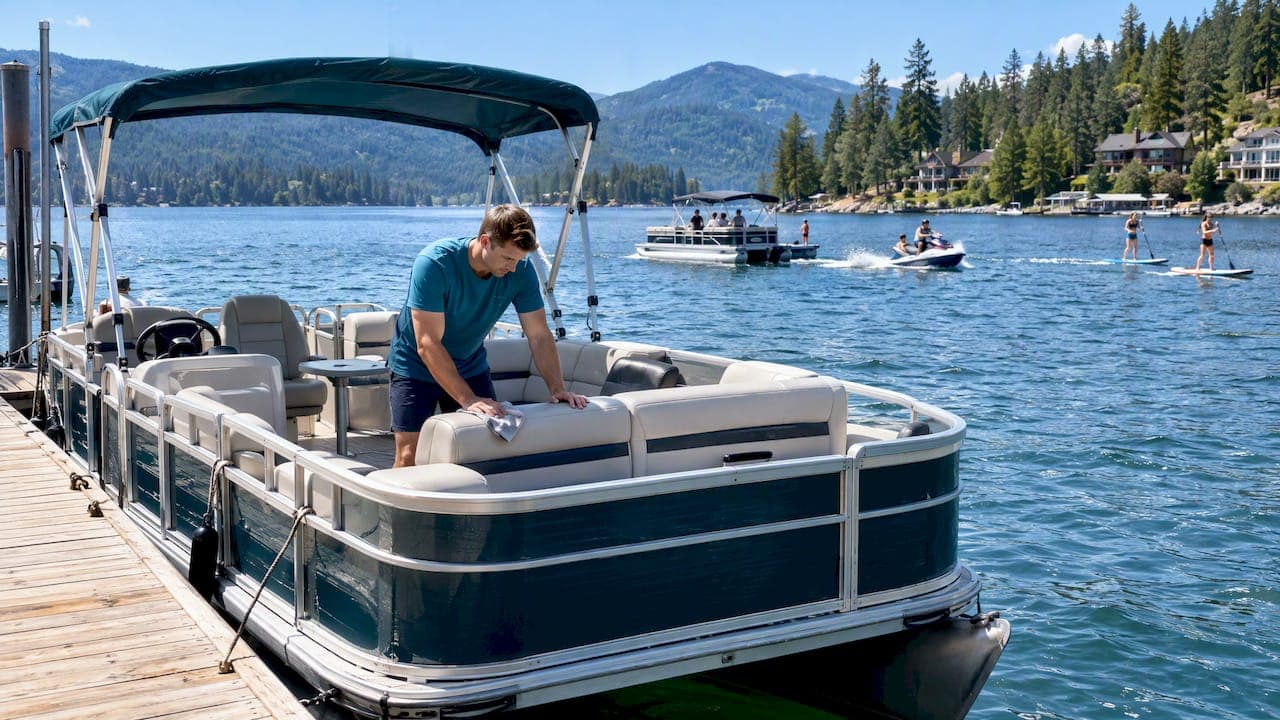
To avoid cleaning fees and deposit disputes, follow the Clean, Drain, Dry routine and a few rental basics. Rinse the boat with fresh water, pull out all trash and personal items, drain and dry every compartment, flush the motor as the owner's manual directs, and take time-stamped photos. At Golden Water Sports, we also suggest confirming cleaning options when you book.
TL;DR:
- Ask at booking what a clean return requires, how deposit deductions work, and whether an optional cleaning service is available; policies vary by operator.
- Take photos before departure and after return, keep any signed condition report, and request an itemized invoice and the operator’s photos if charged.
- Flush the motor as its manual directs, then empty and dry livewells, coolers, lockers, and the bilge; prop compartment lids open to air out.
- Routine care generally needs plain water; use phosphate free, biodegradable soap sparingly for stubborn stains, and wash where runoff cannot reach shorelines or drains.
- Remove visible plants, mud, and animals before leaving the launch, drain water containers, and dry equipment thoroughly to limit the spread of invasive species.
Table of Contents
- What supplies do you need for cleaning a rental boat?
- How do you clean a rental boat at the dock, step by step?
- What do rental companies expect when you return the boat?
- How do you keep invasive species and cleaning products out of the water?
- Why we think most cleaning fees are avoidable
- FAQ
- Sources
What supplies do you need for cleaning a rental boat?
You do not need a boat-detailing kit. A few basics cover almost every return, and many renters already own them. If you are unsure what the rental includes, ask when you book, because some operators supply a hose or buckets at the dock and others do not.
- A fresh water source, either a hose or two or three buckets, plus a plan for where you will rinse.
- Boat-safe soap that is phosphate-free or biodegradable, used sparingly and only where plain water will not do the job.
- A soft-bristled brush, a sponge, microfiber cloths or a chamois, and a dry towel.
- Heavy-duty trash bags, a small hand vacuum or broom, and a pair of gloves.
- A bucket for bilge water, and the manufacturer's guidance on flushing the motor.
Pro Tip: Pack a small "return kit" in a dry bag before you leave the house, with trash bags, a microfiber cloth and a brush, so you are never hunting for supplies when daylight is running out.
How do you clean a rental boat at the dock, step by step?
Work from the top down and from dirtiest to cleanest, and start your cleanup with enough time before your return slot. Rushing is how renters skip the drain and dry steps, which is where most avoidable fees begin. If you want a sense of how return windows work, our guide to boat rental return times explains how to plan the last hour.
- Sweep the boat for trash. Remove food, drink containers, towels, sunscreen bottles and anything else that belongs to you.
- Rinse the hull and deck with fresh water right away so grime does not dry onto the surface. Scrub scuffs and slippery non-skid areas with a soft brush, adding a little boat-safe cleaner only where needed.
- Wipe down and dry the upholstery and vinyl. Treat stains promptly, because sunscreen and drink spills set quickly in the sun.
- Empty and rinse livewells, coolers and storage lockers, then wipe them dry and leave lids propped open so air can circulate.
- Flush the motor and cooling system with fresh water as the owner's manual recommends, and drain the bilge and any other water-holding devices.
- Do a final walk-through. Stow loose gear, close and latch the hatches, and take time-stamped photos of the deck, seats, compartments and any existing damage.
For plain-water cleaning, state clean-marina guidance recommends washing frequently with plain water, using phosphate-free, biodegradable soaps sparingly, and avoiding harsh chemicals such as bleach and ammonia.
Different materials need slightly different care. Fiberglass and gelcoat do best with a soft brush and mild soap. Bare metal trim should be rinsed and wiped dry, which keeps spotting down. Vinyl seats need a damp cloth rather than a stiff brush, since bristles can scuff the surface. Jet skis and water toys follow the same logic: rinse everything with fresh water, wipe the seats, and let inflatables and tubes air-dry before they are stowed.
Plain water goes a long way: University seagrant materials recommend nonabrasive pads and plain water for routine cleaning, with mild options like a baking soda paste for common stains, and they advise minimizing detergent use to protect water quality.
What do rental companies expect when you return the boat?
Most rental contracts ask for the boat to come back reasonably clean. If it does not, the operator may charge a cleaning fee or keep part or all of the deposit, and the exact policy varies from one operator to the next. Our own deposits are listed on our site: $500 per jet ski and $1,000 per boat.
The fix is mostly communication and paperwork:
- Ask at booking what "clean" means in the contract, and whether a cleaning add-on is available if you would rather skip the work.
- Ask how deposit deductions are handled and where the fee schedule is published.
- Photograph the boat before you leave the dock and again when you return, and request a copy of any signed condition report.
- If you are charged, ask for an itemized cleaning invoice, the operator's photos and the signed condition form, then compare them with your own time-stamped images.
Documenting the boat's condition with photos and keeping any signed report can help you explain your side if there is a dispute. Our posts on boat rental deposit rules and damage charges and the dispute checklist walk through what to photograph and what to say. Fuel is a separate item, and our fuel policy overview covers how to avoid surprise charges there.
How do you keep invasive species and cleaning products out of the water?
Cleaning is also about the lake. The U.S. Fish & Wildlife Service Clean, Drain, Dry guidance recommends removing visible plants and mud, rinsing with water (hot water when possible), draining water-containing devices and drying equipment to prevent the spread of aquatic invasive species. It advises against chemical treatments for watercraft.
- Remove plants, mud and any animals at the launch before you leave, then rinse with fresh water.
- Drain the bilge, livewells and bait buckets before you transport anything.
- Let everything dry thoroughly, and check the manufacturer's warnings before any hot-water flush so you do not damage equipment.
- Use phosphate-free, biodegradable cleaners sparingly, and never wash directly into the lake or over a storm drain.
Pro Tip: Do your soapy scrubbing away from the water's edge, on a surface where runoff will not reach a drain or the shoreline, and use plain water for the rinse at the ramp.
Why we think most cleaning fees are avoidable

From our side of the counter, a few slip-ups can lead to disagreements, and each has a quick fix. Food and trash left aboard: do a sweep before you step off. Livewells and compartments left wet: open the lids and let them drain. No photos: take a minute for a quick walk-around before and after.
The bigger lesson is to talk early. Ask about cleaning add-ons and deposit rules when you reserve, not when you are standing at the dock with a line of boats behind you. If you are unsure about anything, ask our staff for a quick condition walk-through at return, and follow the numbered routine above.
— Life is better on water.
FAQ
Is it okay to pressure wash a fiberglass boat?
For routine cleaning, use plain water and a nonabrasive pad. Keep detergent use to a minimum and avoid discharging cleaners into the water.
Can I use dish soap to wash a rental boat?
A small amount of mild, phosphate-free soap is fine for stubborn spots, but plain water handles most routine cleaning. Use soap sparingly and keep it out of the water.
What is the unspoken rule when returning a rental boat?
Return it the way you would want to find it. Take your trash, drain the compartments and tell the operator about any damage up front.
Do I have to clean a rental boat before returning it?
Most contracts expect it to come back reasonably clean, and fees vary by operator. Ask at booking what counts as clean and whether a cleaning add-on is offered.