
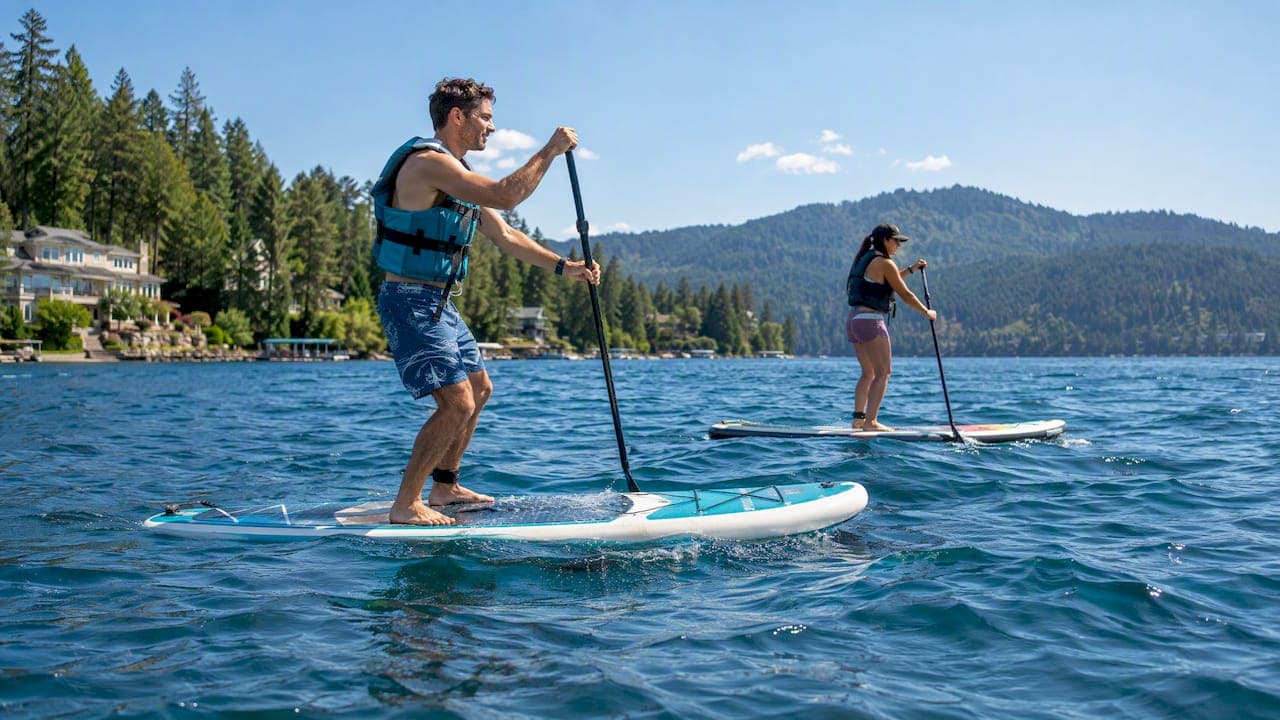
Beginners should stay at 0–5 mph, recreational paddlers can manage roughly 6–10 mph, and only experienced paddlers on sheltered water should push toward the mid-teens. Gusts and wind direction can cancel those numbers fast. Consistent whitecaps or a lake wind advisory mean you stay ashore. Because the Coast Guard treats paddleboards as vessels beyond swimming areas, wear a PFD and plan the trip.
TL;DR:
- Beginners should learn in 0–5 mph, while recreational paddlers should stay near shore at 6–10 mph; gusts or offshore wind require lower limits.
- Return to shore when consistent whitecaps appear, and postpone during a lake wind advisory, which covers 15–25 mph winds with gusts up to 35 mph.
- Paddle into the wind first and set a turnaround point, because offshore breezes carry you away from shore and tailwinds can make the return difficult.
- Paddle UK found the SUP Brake Position slows drift 63% more than standing; at Force 4, paddlers may drift 1 mile in 30 minutes.
- Carry a Coast Guard approved PFD, leash, waterproof phone or radio, and whistle, and tell someone your route and expected return time.
Table of Contents
- What wind speed is safe for your skill level?
- How do wind direction and gusts change the risk?
- What warning signs mean it is time to stop?
- How should you check forecasts and live conditions?
- Which techniques help when the wind picks up?
- What gear and planning keep you safe in wind?
- Why we keep our wind limits conservative
- Rent a paddleboard with local launch advice from us
- FAQ
- Sources
What wind speed is safe for your skill level?
Think in ranges, then adjust for the water you are on. National Park Service beginner guidance treats 0–5 mph as a sensible target for learning, with roughly 6–10 mph already affecting stability and control. Published guides differ a bit, so treat every number as a planning threshold, not a guarantee.
- 0–5 mph: The surface is glassy or lightly rippled. The board tracks straight, balance feels forgiving, and turning around is easy. This is where you should learn.
- 6–10 mph: You will feel the board get pushed. Tracking drifts, upwind progress takes real effort, and a tired paddler loses ground. Fine for recreational paddlers who stay close to shore.
- 11–12 mph sustained: This is a clear red flag for beginners. Your body acts like a sail, small chop makes balance harder, and getting back upwind can become the hardest part of the day.
- Experienced paddlers with good technique may manage stronger winds on sheltered water. Everyone else should skip it.
Use simple decision rules. If sustained wind is nearing the upper end of your range, pick a sheltered cove or a shoreline that blocks the wind. If shelter is not available, shorten the route to stay within an easy swim and paddle of the launch. If the forecast climbs past your limit, postpone. A calm morning is almost always better than a rushed afternoon.
How do wind direction and gusts change the risk?
The same wind speed feels very different depending on where it comes from.
- Offshore wind: It blows from land toward open water and pushes you away from shore while the surface looks calm near the beach. This is the highest-risk direction, and the one that surprises beginners most.
- Onshore wind: It pushes you back toward land, which is safer in an emergency, though it builds chop and makes the paddle out harder.
- Crosswind: It shoves the board sideways, so you spend energy correcting course instead of moving forward.
- Tailwind: The outbound leg feels effortless, but it can trap you downwind with a hard slog home.
Sustained wind is the steady average speed. Gusts are short bursts well above it, and they are what knock you off balance. If the forecast shows gusts, subtract a healthy margin from your normal limit rather than trusting the average.
Pro Tip: Paddle into the wind first, while you are fresh, so the wind carries you home when you are tired. Set a conservative turnaround point before you launch and honor it.
What warning signs mean it is time to stop?
Your eyes give you the fastest read on conditions. UCSB's paddling safety guidelines advise returning to shore if consistent whitecaps are present or developing, because whitecaps signal wind strong enough to stall most paddlers. Wave height and boat wakes raise the risk even at the same wind speed, since a wobbly board in chop is harder to recover. Run through this quick check before launching:
- Is the water mostly flat or lightly rippled, with no whitecaps in sight?
- Are flags, trees and shoreline grass moving gently rather than whipping?
- Can you see the far shore clearly, with no haze of blowing spray?
- Is boat traffic light enough that wakes will not stack on top of wind chop?
- Do the gusts you feel on the beach match the calm forecast?
If any answer is no, you do not launch. If whitecaps appear after you are already out, head in.
How should you check forecasts and live conditions?
Start with the National Weather Service forecast for your lake or marine zone, then cross-check a mainstream wind app. Read four fields every time: sustained wind, gusts, direction, and the hour the wind picks up.
- Sustained wind and gusts: Compare both against your skill range, and plan around the higher number.
- Direction: Check whether it is offshore at your launch spot.
- Timing: Wind often builds through the afternoon, so a morning window is usually calmer.
- Advisory language: NWS lake wind advisories describe 15–25 mph winds with gusts to 35 mph as hazardous because small boats, kayaks and paddleboards become prone to capsizing. Treat that wording as a reason to postpone.
On site, scan the water for whitecaps, notice whether the breeze feels gusty, and remember that points, canyons and gaps between hills can speed wind up locally. For more on reading local weather, see our guide to boating forecasts.
Which techniques help when the wind picks up?
Good technique will not make unsafe wind safe, but it can get you home.
- Start the trip upwind so the return is easier.
- Shorten your strokes and keep them low and steady.
- Drop to your knees as soon as progress slows, which lowers your center of gravity.
- If it keeps building, lie prone and paddle with your hands or arms to cut your wind exposure.
- If you are being blown offshore, use the SUP Brake Position, a low, braced stance that slows your drift.
Paddle UK's offshore-winds research found that in Force 4 conditions (18–20 mph) a paddler could drift about 1 mile in 30 minutes, and that the SUP Brake Position is 63% more effective at slowing drift than standing. A standing paddler and board act like a sail, so stopping the drift matters as much as paddling speed.
Pro Tip: If you fall, stay with your board. It floats, you are attached by the leash, and a board is far easier for rescuers to spot than a swimmer.

What gear and planning keep you safe in wind?
A wind-aware plan starts before you reach the water.
- PFD: Wear a Coast Guard–approved life jacket. Paddleboards beyond narrow swimming areas count as vessels.
- Leash: It keeps the board within reach when wind pushes it faster than you can swim.
- Communication: Carry a waterproof phone case or radio so you can call for help.
- Audible signal: A whistle works when your voice will not carry over wind.
- Shore contact: Tell someone where you are going and when you will be back.
- Turnaround point: Choose it conservatively and avoid long downwind returns.
Abandon the launch if gusts are rising, whitecaps are developing, the forecast is worsening, or the route has no shelter. For rental-specific tips, our paddleboard rental overview and Spokane area safety checklist cover what to expect.
Why we keep our wind limits conservative
When wind climbs, we would rather you reschedule than struggle. We apply conservative limits to paddleboard rentals and suggest sheltered launch times. At checkout, you leave with a turnaround plan and the required safety equipment. Call our team before you head out and we will check the local forecast with you and advise on where to launch.
— Life is better on water.
Rent a paddleboard with local launch advice from us
Paddleboard rentals from us come with safety equipment, so your first windy-weather decision is not a guess. Pick a calm window. Book your paddleboard rental online or call us for a current forecast-and-launch recommendation before you go.
FAQ
How windy is too windy to paddle board?
For beginners, sustained wind approaching 10–12 mph is a reason to choose a sheltered route or postpone. If consistent whitecaps appear, return to shore. Gusts and offshore direction can make conditions riskier.
What is the maximum wind speed that is safe for paddleboarding?
There is no single safe number, since it depends on skill and water. UCSB guidance says most paddlers cannot make progress at roughly 11–17 mph, and experienced paddlers on sheltered water may handle the lower mid-teens.
Is 20 mph wind strong at the beach?
Yes, it is strong for paddleboarding. It falls inside the 15–25 mph range that NWS lake advisories call hazardous for paddleboards.
Is kayaking safe in 10 mph winds?
It can be, for paddlers with some experience who stay near shore on sheltered water. For beginners, 10 mph is already near the point where you should choose calmer water or postpone.
Sources
Several sources point in the same direction. UCSB identifies wind as the number-one cause of its local rescues, and notes that most paddlers cannot make progress once wind reaches roughly 10–15 knots (about 11–17 mph). NWS advisory language backs postponement in the 15–25 mph range. Plan conservatively before heading out.
Most paddlers cannot make progress at roughly 10–15 knots (about 11–17 mph), according to UCSB's guidelines. Wind also tends to increase in the afternoon and farther from shore.
- UCSB Campus Point Paddling (Kayak & SUP) Safety Guidelines
- WWA Summary for Lake Wind Advisory Issued by REV
- Frequently Asked Questions
- Offshore Winds and Their Effects on Stand-up Paddleboards | Paddle UK