
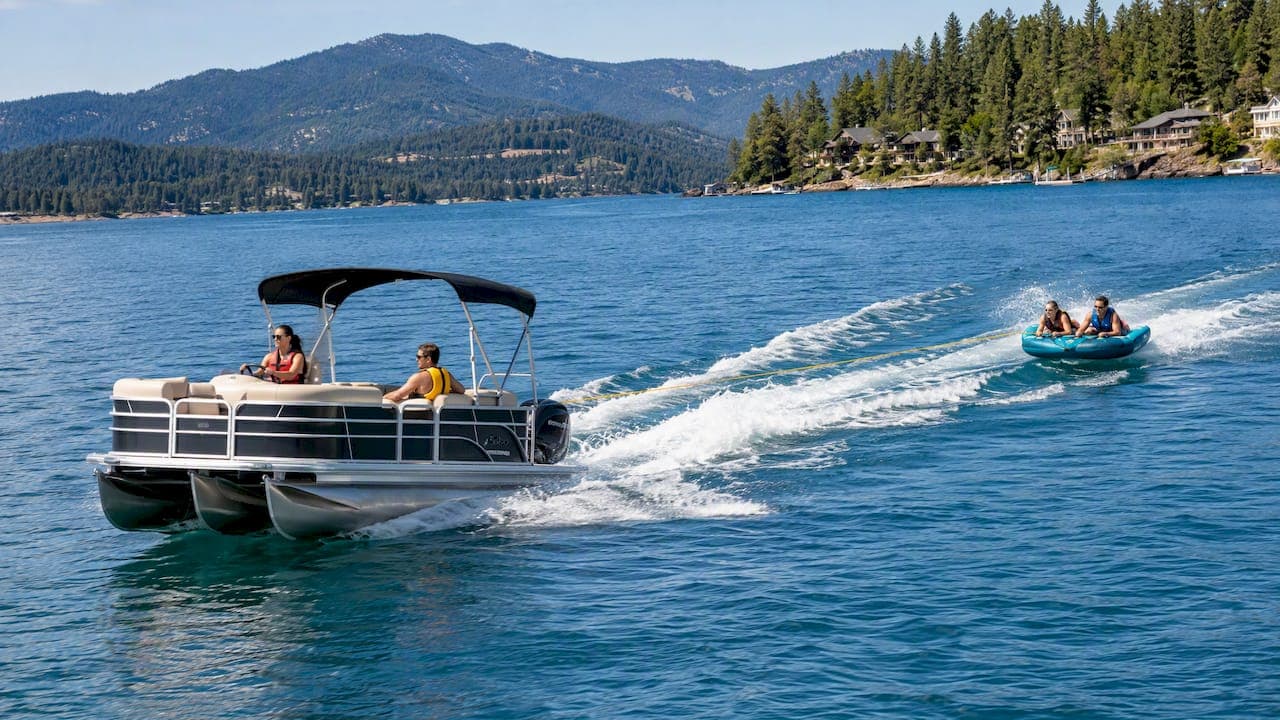
For towing an inflatable tube, use a rope between 50 and 65 feet long. The Water Sports Industry Association (WSIA) guideline, as West Marine explains, is at least 50 feet and no more than 65. Within that window, most riders do best at 55 to 60 feet. The rope also has to be made for tubes and rated for the weight on board, and length is only half of that choice.
TL;DR
- Stay between 50 and 65 feet. Shorter ropes put the tube in the wake's spray and closer to the exhaust.
- Pick 50 to 55 feet for a calmer ride, 60 to 65 feet for more whip and a wider swing across the wake.
- Use a rope made for tubes, not a ski or wakeboard rope, and match its break strength to the tube's rider capacity.
- Tow from the boat's dedicated tow point, not a wakeboard tower, unless the manufacturer approves it.
- Inspect the rope before every outing, and put a life jacket made for towed riders on everyone on the tube.
Table of Contents
- Why 50 to 65 feet is the range
- Choosing a length inside the range
- Strength matters as much as length
- Where the rope attaches
- Our perspective
- Pre-tow checks that take two minutes
- Planning a tubing day with a rental
- FAQ
- Sources
Why 50 to 65 feet is the range
The range exists because of what happens at each end of it.
A rope under 50 feet pulls the tube into the crest of the boat's wake. West Marine says that puts spray in the riders' faces, and it warns that riders end up too close to the exhaust, which raises the risk of carbon monoxide inhalation. Spray also hurts visibility for the rider and for the driver watching them.
The 65 foot cap is about control. A longer line gives the driver less feel for where the tube is, and the tube swings out farther on turns, toward docks, shorelines and other boats. On a crowded lake, that extra reach is a liability.

Choosing a length inside the range
The number you land on depends on who is riding and what kind of ride you want.
| Rope length | Ride feel | Best for |
|---|---|---|
| 50 to 55 ft | Smoother, tube stays closer, less slingshot | Kids, nervous first-timers, small or busy coves |
| 55 to 60 ft | Balanced: some wake bounce, manageable swings | Mixed groups, most rental days |
| 60 to 65 ft | Wider arcs, more speed on turns, more whip | Confident adults on open water |
A few practical notes:
- Start in the middle. If the group is mixed, begin around 55 to 60 feet and adjust after one pass.
- Check your lake. Narrow coves and no-wake zones around docks leave less room for a tube swinging wide. On a tight stretch, go shorter within the legal window, never below 50 feet.
- Count in the whole rig. Many tow ropes are sold by their length without the tow-point connection, so measure from the boat's tow point to the tube's attachment, not just the rope as sold. If you are unsure, pick the middle of the range and measure it.
- Do not tie two ropes together to reach a length. Knots weaken a rope, and a mismatched splice is a weak link you cannot see.
Strength matters as much as length
A rope of the right length can still be the wrong rope. The Water Sports Foundation notes that tubing ropes are much stronger than wakeboard and ski ropes, rated at 2,000, 4,000 or 6,000 pounds of breaking strength for a specified number of riders. A tube pulled with a ski rope puts a sudden, heavy load on a line that was never built for it.
West Marine gives sample WSIA figures: at least 1,500 pounds for a single rider under 170 pounds, rising to 6,100 pounds for five or six riders totalling up to 1,020 pounds. Its numbers for mid-size tubes include 2,375 pounds for two riders and 3,350 pounds for three. Always check the specific rating on your tube's packaging, and size up from the number of riders the tube is rated for, not the number you plan to seat.

One more catch: the Water Sports Foundation says the rope should be made for towing inflatables, just like the towing points. A rope rated for one rider can fail on a multi-person tube, and a rope that is a few feet too long cannot make up for that.
If you want the mechanics behind this, our post on how a tow rope works behind a ski boat covers tension, pull points and why stretch matters. Our comparison of a wakeboard rope versus a ski rope explains why those ropes belong to other sports.
Where the rope attaches
Rope length starts at the tow point. Big Air Wake Towers advises against attaching a tube rope to a wakeboard tower unless the manufacturer explicitly approves it. Tubes generate side loads and drag, especially if one nose-dives, and that can damage a tower or the hull. Use a dedicated transom tow point instead.
The same logic applies on pontoon boats, where tow points and speeds differ from a ski boat. Our pontoon tubing checklist covers the 15 to 25 mph range and what to confirm before you pull anyone.
Our perspective
We rent jet skis, boats, paddleboards and water toys around Spokane Valley, Liberty Lake and Coeur d'Alene, and tubes are on the list at $50 each. Most questions we hear are not about the number of feet. They are about whether the whole setup is right for the people on it.
Our advice is simple. Decide who is riding first: a ten-year-old on a two-person tube and four adults on a larger one need different ropes and different driving. Then pick a length in the middle of the window, keep the first pass slow, and let the rider tell you if they want more. We would rather you shorten a run than push a speed or a line length because the lake looks empty. Open water on a summer weekend rarely stays that way.
We also encourage first-timers to ask questions at the counter. Our lake rental tips for first timers walk through what to ask before you leave the dock.
— Life is better on water.
Pre-tow checks that take two minutes
- Inspect the rope. The Water Sports Foundation stresses checking before every outing. Look for fraying, sun damage and knots, since all of them reduce break strength. Replace a rope that looks worn.
- Match rope to tube. Compare the rope's rating with the tube's rider capacity, as above.
- Confirm the length. Measure or count it. Aim for at least 50 feet and no more than 65.
- Fit the life jackets. Washington State Parks states that towed riders must wear a U.S. Coast Guard-approved life jacket designed for that activity. Our Spokane life jacket guide includes a fit checklist for parents.
- Assign a spotter. The driver watches ahead, and a second adult watches the rider and signals. Our tubing safety guide for Idaho lakes goes deeper on speeds and rules.
- Clear the deck. Keep gear off the rear of the boat or watercraft so nothing snags the rope.
Planning a tubing day with a rental
If you are renting rather than owning, ask what tow gear is included when you book, and confirm it matches the tube you are using. Loading the tube and ropes properly matters too, so see how to load water toys onto a rental boat safely. For ideas on what else to bring for a group, our family water toys guide is a good start.
We rent boats and water toys for lake days near Spokane Valley, Liberty Lake and Coeur d'Alene, with wakeboards and tubes at $50 each. Boats carry a $1,000 damage deposit. Browse the options on our boat and water toy rentals page or check current pricing before you book.
FAQ
What is the best rope length for tubing?
Most boaters do well at 55 to 60 feet, inside the 50 to 65 foot range recommended by the WSIA. Go toward 50 feet for kids and a smoother ride, and toward 65 for more swing. Never go under 50 feet.
Can I use a ski or wakeboard rope for a tube?
No. Those ropes are not rated for the sudden loads an inflatable puts on a line, and a tube rope is built much stronger. Use a rope made for towable tubes with a break strength that fits the tube's rider capacity.
How far behind the boat should a tube be?
At least 50 feet and no more than 65 feet, measured by the rope. Closer than 50 feet puts riders in wake spray and nearer the exhaust, which raises carbon monoxide risk.
Does the number of riders change the rope I need?
Yes, for strength. A rope rated for one rider can fail under a multi-person tube. The rope's length stays the same, but its break strength should match or exceed the tube's rated capacity. Check the tube's packaging for the exact figure.
Sources
- How to Pick a Towable Tube & Tow Rope, West Marine
- Towing Tubes Safely, Water Sports Foundation
- Pulling An Inflatable With A Tower, Big Air Wake Towers
- Wear a Life Jacket, Washington State Parks