
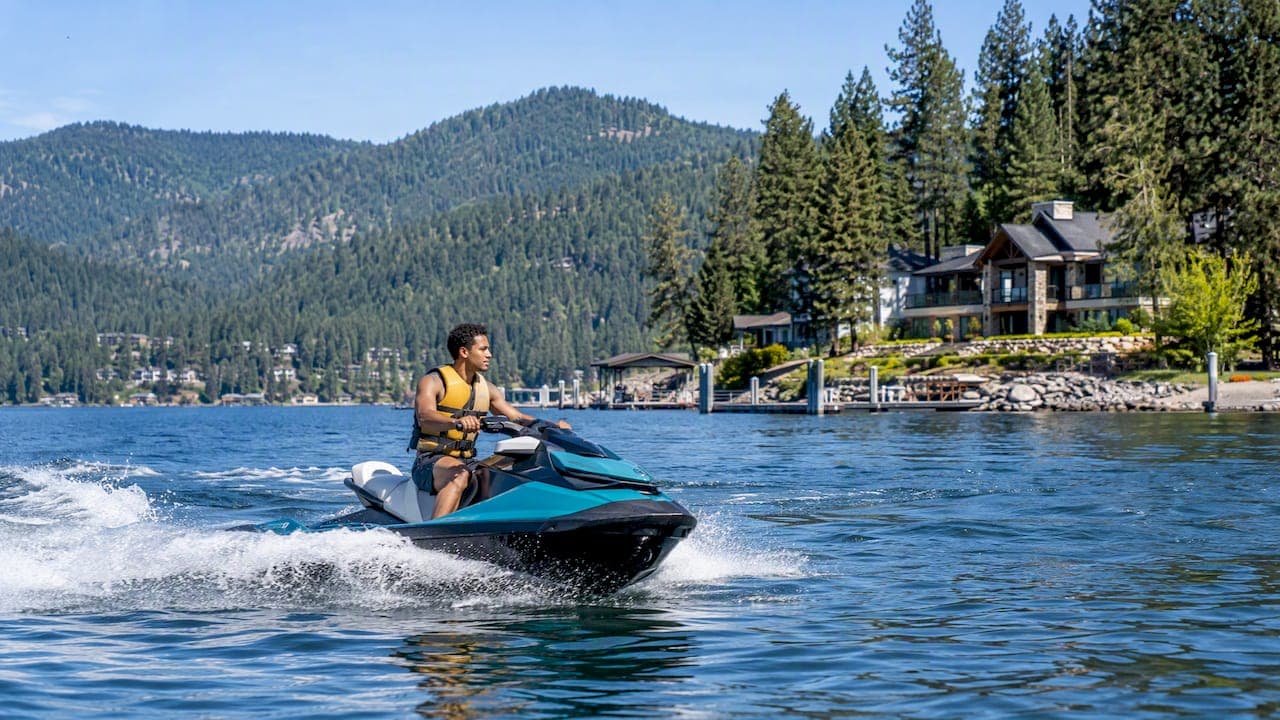
On a 90-degree July afternoon, the lake can still be cold enough to put you in danger within minutes. Safety experts call anything below 70°F cold water and say to treat anything below 60°F with caution, according to Washington State Parks. The fix is simple: wear a properly fitted life jacket, dress for the water and not the air, and know what to do in the first minute if you go in.
TL;DR
- Cold water shock hits in the first minutes and can make you gasp and hyperventilate. A life jacket keeps your head up while it passes.
- Remember 1-10-1: one minute to get your breathing under control, ten minutes of useful movement, one hour before you may lose consciousness.
- Idaho lakes can sit near 52°F even in summer, so this applies to a July jet ski ride as much as an April fishing trip.
- If you can't get back aboard, float, then adopt the HELP position. Don't thrash and don't try to swim far.
- Wear the jacket. Don't just stow it under a seat.
Table of Contents
- Why a warm day doesn't mean warm water
- The 1-10-1 rule, step by step
- Float first, then act
- What to wear and bring
- Cold water risks by activity
- Our perspective
- Plan your lake day with us
- FAQ
- Sources
Why a warm day doesn't mean warm water
Air temperature tells you almost nothing about the lake. Idaho's parks department notes that regional waterways often average around 52°F even in summer, and that a calm ride can turn into an emergency quickly. The National Weather Service adds that water pulls heat from the body 25 times faster than cold air.
The numbers on local accidents are sobering. Idaho reports that nearly 67% of fatal boating accidents in the past ten years happened when someone involuntarily entered the water from a boat. Falls, not sinkings, are the main danger.
If you're visiting Coeur d'Alene, Liberty Lake or Newman Lake from somewhere warmer, expect the lake to feel very different from the beach you know. Our write-up on Coeur d'Alene water temperature shows what the lake actually reads through the season.
The 1-10-1 rule, step by step
The rule gives you a rough timeline for an unexpected fall into cold water. Idaho's parks department teaches it as the core survival framework.
- One minute: cold shock. You gasp, breathe fast and may feel dizzy. Drowning is the risk here, mostly from inhaling water. Don't swim yet. Keep your head up and wait for the urge to pass.
- Ten minutes: useful movement. Your arms and legs cool quickly. Idaho's guidance says grip strength and dexterity can drop by 60% to 80% within 5 to 30 minutes. Use this window to reboard, climb onto the hull, or reach something that floats.
- One hour: hypothermia. If you can't get out, a life jacket is what keeps you afloat if you become unconscious.
The point is that most of this timeline is about the first ten minutes, not the hour. That's why preparation happens before you leave the dock.
Float first, then act
The instinct is to swim hard for shore. Resist it. The RNLI's float-to-live advice is to lean back, keep your ears in the water, and gently move your hands until your breathing settles. Then decide: reboard, signal, or swim a short distance to something solid.
If you can't get back aboard, the National Weather Service describes the Heat Escape Lessening Posture (HELP): knees drawn to the chest, legs together, arms hugging your life jacket. If others are in the water, huddle together. Thrashing speeds up heat loss and exhaustion.
One common myth is that heavy clothes will drag you down. Clothing and waders trap air and add some buoyancy at first. Staying calm does more for you than struggling out of them.

What to wear and bring
The life jacket is the whole plan
The U.S. Coast Guard estimates that 80% of boating fatalities could be prevented by life jackets, and in Washington 85% of boating fatality victims weren't wearing one. A jacket you can't reach in time is no use, because cold shock leaves you no time to put one on in the water.
In Idaho, children 14 and under must wear an approved life jacket on boats 19 feet or less while underway. The same page recommends everyone wear one. A properly fitted, approved jacket matters more than any other piece of gear, and this guide to fitted life jackets explains how to check the fit. For choosing the right type for your activity, see our life jacket guide for water sports, and for rider specifics, why you should wear one on a jet ski.
Clothing and extras
- Layers that insulate when wet: synthetic or wool next to the skin, not cotton.
- A wetsuit or splash layer for jet skiing, where falls are routine and you will get wet.
- A whistle or other signal attached to your jacket.
- A charged phone in a waterproof pouch, and someone ashore who knows your plan and return time.
- A boat you can reboard. Know where the ladder or boarding point is before anyone swims.
Cold water risks by activity
| Activity | Main cold-water risk | What helps |
|---|---|---|
| Jet ski | Frequent falls, immediate immersion | Jacket worn and fastened, wetsuit layer, never ride alone |
| Ski or wake boat | Falls while getting in and out, skiers in the water | Jackets on skiers, boat positioned close for retrieval |
| Pontoon | Slips from the deck or while swimming | Jackets for kids and weak swimmers, working ladder |
| Paddleboard | Falls into cold water far from shore | Jacket or inflatable belt, leash, stay near shore |
| Tubing | Falls at speed | Jacket, tubing safety limits |
Our perspective
We rent jet skis, ski boats, pontoons and paddleboards on Coeur d'Alene, Liberty Lake and Newman Lake, and the most common mistake we see is that guests judge the lake by the weather. A hot afternoon makes people want to leave the jacket in the boat. We would rather you arrive expecting cold water and be pleasantly surprised.
Our advice is plain. Put the jacket on before you leave shore and keep it on. Tell every person in your group where the ladder is and what to do if someone falls in. Start with a short ride close to shore to get used to the water. If you're new to renting, read our first-timer rental tips and the local boating rules and PFD requirements.
— Life is better on water.
Plan your lake day with us
If you'd like a safe, easy day on the water, we provide Yamaha WaveRunners, ski boats, pontoons, paddleboards and safety equipment, with pickup and limited delivery. Jet ski rentals at Liberty Lake and Newman Lake are $250-$425, with additional hours at $75 per hour. A damage deposit of $500 per jet ski or $1,000 per boat applies. See all options on our rental prices page.
FAQ
What is the 50-50-50 rule for hypothermia?
We couldn't find it described by the agencies we checked, so we'd rely on the 1-10-1 rule that Idaho's parks department teaches instead. It gives you three clear time windows: breathing, movement and hypothermia. If you have questions about a particular medical condition, ask your doctor before time on cold water.
How do I prepare a boat for cold water immersion?
Everyone aboard should wear a life jacket, and the boat should have a way to reboard from the water, such as a ladder. Dress in layers that insulate, carry a signal like a whistle, and leave your float plan with someone ashore. Check the lake checklist for local requirements.
What should I do if I fall in cold water?
Stay calm, keep your head above water and wait for the gasping to ease, which usually takes about a minute. Then try to get back on the boat or onto the hull. If you can't, pull into the HELP position and wait for rescue.
Can I prevent cold water shock?
You can't switch it off, but you can reduce the danger. Wear a life jacket so your head stays up during the gasping, and enter the water slowly when swimming on purpose. Voluntary dips are different from a sudden fall, and safety experts stress that even strong swimmers can lose control.
Sources
- Boating | Idaho Department of Parks and Recreation
- Cold Water Safety | Washington State Parks
- Cold Water Hazards and Safety | National Weather Service
- The Dangers of Cold Water Shock | RNLI
- Zwemvesten en Reddingsvesten bij Kamperen